On Earth, looking up usually reveals a bright blue sky during the day and a dazzling blanket of stars at night. It is such a familiar sight that we rarely stop to wonder whether skies elsewhere in the Solar System look the same.
The answer is surprising: they do not.
Every planet has its own unique sky. Some worlds have skies tinted yellow or orange. Others appear pink, gray, or even nearly black. On some planets, thick clouds hide the Sun almost completely. On others, there is barely enough atmosphere to create a sky at all.
The color of a planet’s sky depends on several scientific factors, including the composition of its atmosphere, the size of particles floating in the air, the thickness of the atmosphere, the angle of sunlight, and the distance from the Sun. These ingredients combine to create breathtaking and often unexpected views.
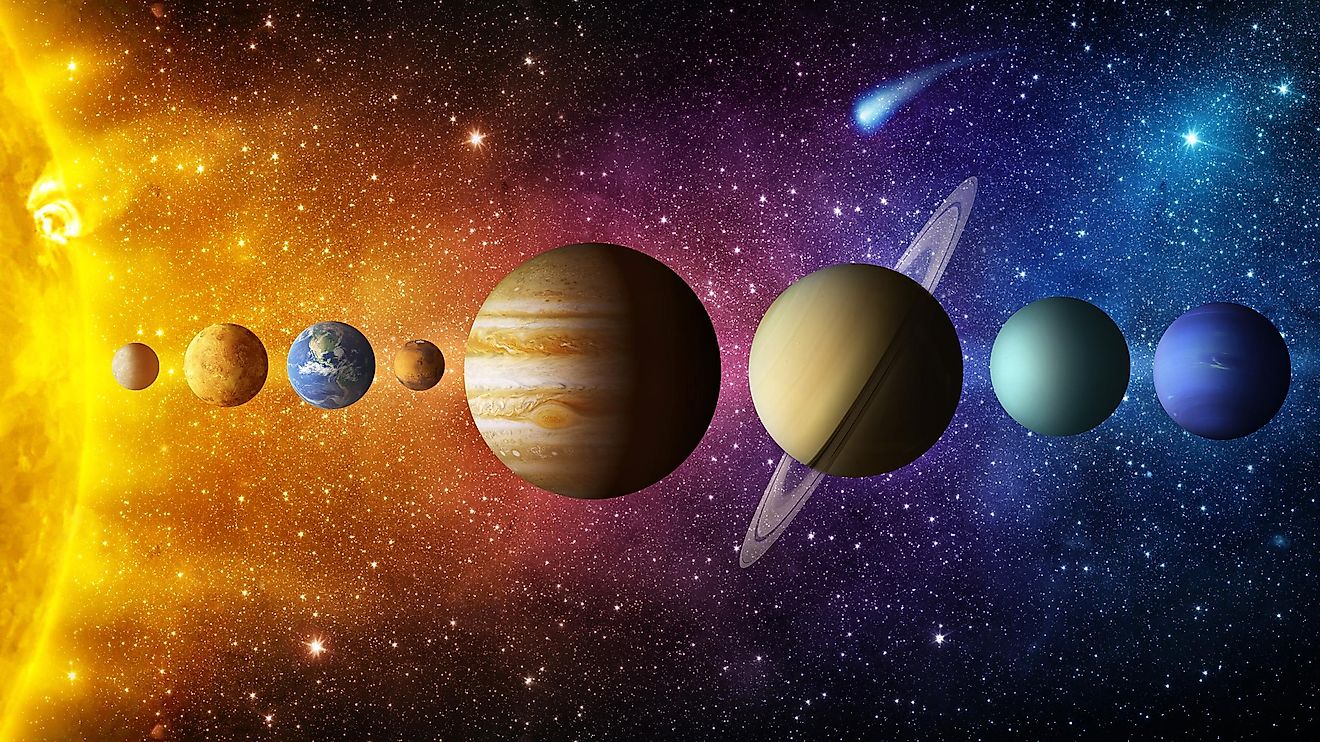
If you could somehow stand safely on every planet in our Solar System, each world would greet you with a completely different sky.
Why Earth’s Sky Is Blue
Before exploring other planets, it helps to understand why Earth’s sky looks blue.
Sunlight may appear white, but it actually contains all the colors of the visible spectrum. As sunlight enters Earth’s atmosphere, it collides with tiny molecules of nitrogen and oxygen. These molecules scatter shorter wavelengths of light much more effectively than longer wavelengths.
Blue light has a shorter wavelength than red light, so it is scattered across the sky in every direction. That scattered blue light reaches our eyes from all parts of the sky, making the daytime sky appear blue.
During sunrise and sunset, sunlight travels through much more of Earth’s atmosphere before reaching an observer. Most of the blue light is scattered away, leaving longer red and orange wavelengths to dominate the sky.
This process, known as Rayleigh scattering, explains why Earth has its beautiful blue days and colorful sunsets.
Mercury: A Sky That Is Always Black
If you stood on Mercury, you would never see a blue sky.
Mercury has almost no atmosphere. Instead, it possesses an extremely thin layer of particles called an exosphere, which is far too sparse to scatter sunlight like Earth’s atmosphere does.
Without enough gas molecules to scatter light, space remains visible even during the daytime.
The Sun would appear much larger and more brilliant than it does from Earth because Mercury orbits much closer to the Sun. Its intense sunlight would illuminate the rocky landscape, but above you, the sky would remain pitch black.
You could even see stars during the day if the Sun’s overwhelming brightness did not make them difficult to notice.
Mercury’s sky resembles the sky astronauts experience on the Moon.
Venus: A Sky Hidden Behind Thick Clouds
Venus is often called Earth’s sister planet because it is similar in size. Yet its sky could hardly be more different.
Venus has an incredibly dense atmosphere composed mainly of carbon dioxide. Thick clouds made of tiny droplets of sulfuric acid permanently cover the entire planet.
From space, these clouds appear creamy white or pale yellow.
If you somehow stood on Venus’s surface—while somehow surviving temperatures hot enough to melt lead and crushing atmospheric pressure—you would not see the Sun clearly at all.
Instead, the sky would likely appear yellowish-orange, amber, or brownish, depending on the amount of sunlight filtering through the thick clouds.
The sunlight reaching the surface is weak and heavily scattered.
There would be no blue sky, no fluffy white clouds, and no clear sunrise or sunset like those on Earth. Instead, the landscape would remain under a dim, hazy glow all day.
Earth: A World of Ever-Changing Colors
Earth’s sky is remarkably dynamic.
Most days, it appears bright blue thanks to Rayleigh scattering.
At sunrise, it often glows orange, pink, gold, and red.
During storms, thick clouds can turn the sky dark gray.
At high altitudes, where the atmosphere becomes thinner, the sky gradually darkens until it approaches the blackness of space.
From orbit, astronauts see Earth’s atmosphere as an incredibly thin blue layer wrapped around the planet.
This delicate blue shell contains nearly all the air that supports life.
Its beauty is a reminder of how unique Earth’s atmosphere truly is.
Mars: A Butterscotch Sky with Blue Sunsets
Mars offers one of the most fascinating skies in the Solar System.
Its atmosphere is very thin—less than one percent as dense as Earth’s—and consists mostly of carbon dioxide.
The Martian air contains enormous amounts of extremely fine dust rich in iron oxide, the same mineral that gives the planet its famous reddish color.
These dust particles scatter sunlight differently than Earth’s atmosphere.
As a result, the daytime sky usually appears butterscotch, tan, salmon-colored, or light reddish-brown.
One of Mars’s greatest surprises appears at sunset.
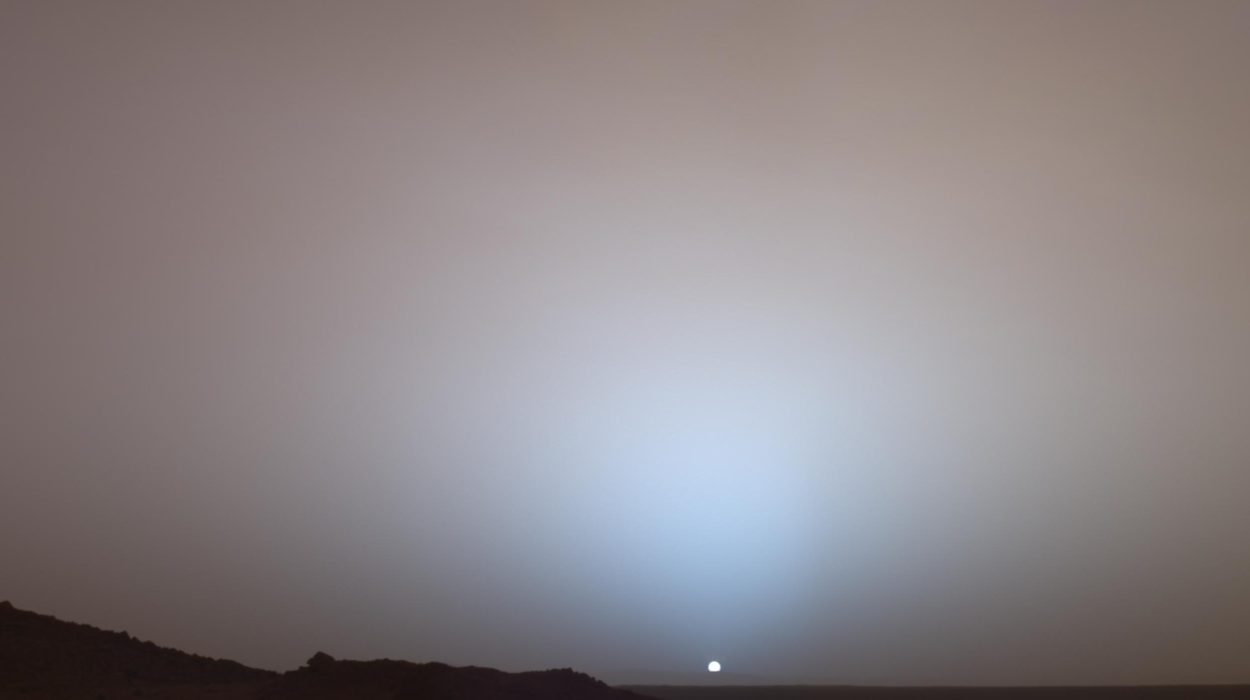
While Earth has red sunsets, Mars often produces blue sunsets.
This happens because the fine dust particles scatter red light widely while allowing more blue light to travel directly toward the Sun.
Robotic explorers such as NASA’s rovers have photographed these unusual blue sunsets, providing stunning confirmation of the unique physics of Martian skies.
Jupiter: A Sky Hidden Beneath Endless Clouds
Jupiter has no solid surface where someone could stand.
Instead, it is a giant world composed mostly of hydrogen and helium.
As you descend through Jupiter’s atmosphere, enormous cloud layers stretch for thousands of kilometers.
These clouds contain ammonia ice, ammonium hydrosulfide, and water.
If it were somehow possible to float within Jupiter’s upper cloud layers, the sky would likely appear in varying shades of white, cream, yellow, orange, and brown, depending on altitude and cloud composition.
Sunlight becomes increasingly dim as you descend deeper into the atmosphere.
Eventually, the atmosphere becomes so thick that darkness dominates.
Far below, pressures become enormous, making human survival impossible.
Saturn: Soft Golden Skies
Like Jupiter, Saturn is a gas giant without a true solid surface.
Its atmosphere consists mainly of hydrogen and helium, with traces of methane and ammonia.
High-altitude haze gives Saturn its beautiful golden appearance when viewed from space.
If someone could somehow remain suspended within Saturn’s upper atmosphere, the sky would likely appear pale yellow, golden, or creamy beige.
Sunlight is much weaker than on Earth because Saturn is nearly ten times farther from the Sun.
The Sun itself would look much smaller but still remarkably bright.
The entire atmosphere would have a softer, more muted appearance than Earth’s vivid blue sky.
Uranus: A Pale Blue-Green World
Uranus is famous for its striking blue-green color.
Its atmosphere contains hydrogen, helium, and methane.
Methane absorbs red wavelengths of sunlight while reflecting and scattering blue and green light.
From above the cloud tops, the planet appears turquoise.
Within the atmosphere, the sky would likely appear pale cyan, bluish-green, or aquamarine, although the exact appearance would depend on altitude and atmospheric haze.
Sunlight reaching Uranus is about 400 times weaker than the sunlight Earth receives.
Even during daytime, everything would appear much dimmer.
The Sun would resemble an exceptionally bright star rather than the brilliant disk familiar to us.
Neptune: Deep Blue Mystery
Neptune lies even farther from the Sun than Uranus.
Like Uranus, its atmosphere contains hydrogen, helium, and methane.
However, Neptune’s richer blue color cannot be explained by methane alone. Scientists believe additional atmospheric processes and particles contribute to its distinctive appearance.
If it were possible to observe Neptune’s atmosphere from within its upper cloud layers, the sky would probably appear deep blue with varying shades of azure depending on atmospheric depth.
The sunlight would be incredibly faint.
Despite being daytime, the illumination would resemble the dim light of Earth’s twilight.
Yet even in this distant darkness, Neptune experiences powerful storms with winds reaching extraordinary speeds.
Pluto: A Blue Sky at the Edge of the Solar System
Although Pluto is classified as a dwarf planet rather than one of the eight major planets, its sky is one of the Solar System’s most beautiful surprises.
When NASA’s New Horizons spacecraft flew past Pluto in 2015, it discovered layers of atmospheric haze extending high above the icy surface.
These haze particles scatter blue light.
As a result, Pluto’s sky appears soft blue despite receiving only a tiny fraction of the sunlight that reaches Earth.
Near the horizon, the atmosphere would look especially striking against the frozen landscape of nitrogen, methane, and water ice.
The Sun would appear as an intensely bright point of light, much smaller than it looks from Earth.
How Distance from the Sun Changes the Sky
The farther a planet lies from the Sun, the weaker the sunlight becomes.
Mercury receives about seven times more sunlight than Earth.
Mars receives less than half.
Jupiter receives only about four percent of Earth’s sunlight.
Neptune receives less than one thousandth.
This enormous difference changes not only brightness but also the overall appearance of each world’s atmosphere.
On distant planets, daytime is much dimmer even if the sky itself has vibrant colors.
The Sun gradually shrinks from a large blazing disk into what looks almost like an unusually brilliant star.
Why Atmospheres Matter
Without an atmosphere, there is almost no colorful sky.
Mercury’s nearly airless environment creates permanent blackness.
The Moon shows the same effect.
Earth’s atmosphere transforms sunlight into brilliant blues, reds, oranges, and purples.
Venus’s thick clouds block direct sunlight almost completely.
Mars’s dusty atmosphere paints the sky tan.
The giant planets use methane, ammonia, hydrogen, and other gases to create completely different colors.
In every case, the atmosphere acts like a giant filter, shaping the light that reaches an observer’s eyes.
Clouds Can Change Everything
Clouds influence sky color on every planet.
On Earth, water clouds reflect white sunlight.
On Venus, sulfuric acid clouds create a bright but permanently overcast world.
Jupiter and Saturn have cloud bands made from frozen ammonia and other chemicals.
Neptune and Uranus contain methane clouds at high altitudes.
Each cloud type reflects and absorbs different wavelengths of light, producing unique colors that make every planet visually distinct.
The Colors We See Are Only Part of the Story
Human eyes detect only visible light.
Many planetary atmospheres reveal additional details in infrared, ultraviolet, microwave, and radio wavelengths.
Spacecraft equipped with specialized instruments often detect storms, cloud layers, and atmospheric structures invisible to human vision.
False-color images released by space agencies sometimes highlight these hidden features to help scientists better understand planetary weather and atmospheric chemistry.
Although these images are scientifically valuable, they do not always represent what a human observer would actually see.
Could Alien Worlds Have Purple or Green Skies?
The planets in our Solar System already demonstrate that skies can appear black, blue, yellow, orange, tan, brown, turquoise, and deep blue.
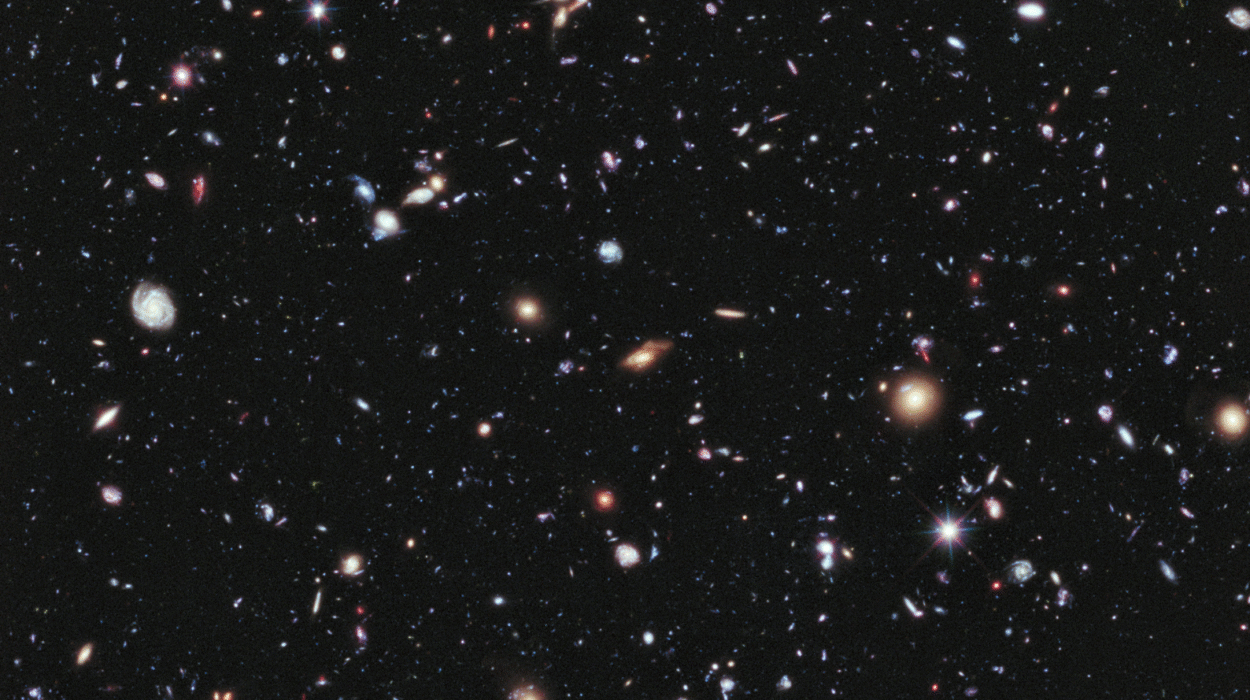
Beyond our Solar System, thousands of exoplanets orbit distant stars.
Scientists believe many of these worlds could have entirely different atmospheric compositions.
An atmosphere rich in unusual gases, different cloud particles, or orbiting a star unlike our Sun could produce skies with colors rarely—or never—seen in our own Solar System.
Some theoretical models suggest certain alien worlds might have violet, lavender, emerald, copper, or even nearly white skies under specific conditions.
Future telescopes may eventually reveal whether these predictions are correct.
A Sky Is More Than a Beautiful View
The color of a planet’s sky is much more than a visual curiosity. It tells scientists about the atmosphere, climate, chemistry, weather, and even the planet’s history. By studying how sunlight interacts with gases and tiny particles, researchers can learn what an atmosphere is made of, how it changes over time, and whether a planet might once have been—or could someday become—habitable.
Every sky in the Solar System tells a different story. Mercury’s endless blackness speaks of an almost airless world. Venus’s yellow haze reveals an atmosphere so thick that sunlight struggles to reach the surface. Earth’s brilliant blue sky reflects a life-supporting atmosphere rich in nitrogen and oxygen. Mars glows beneath dusty butterscotch skies with remarkable blue sunsets. The giant planets surround themselves with colorful layers of hydrogen, helium, methane, and ammonia, while distant Pluto surprises us with a delicate blue haze at the frozen edge of the Solar System.
Looking up from each of these worlds would feel like standing on an entirely different planet—because you would be. Every sky is a window into the unique physics and chemistry of its world, reminding us that even something as familiar as looking upward can reveal the extraordinary diversity of our cosmic neighborhood.