Far beyond the familiar worlds of Mercury, Venus, Earth, and even Neptune lies a distant region of the Solar System where sunlight is faint, temperatures are unimaginably cold, and icy worlds drift silently through space. Among these remote objects is Makemake, one of the largest known dwarf planets orbiting the Sun. Although it is more than six billion kilometers (about four billion miles) from Earth, Makemake has become an important piece of the puzzle in understanding how our Solar System formed and evolved.
Unlike the bright planets that have been known since ancient times, Makemake remained hidden from humanity until the twenty-first century. Its discovery reminded astronomers that the Solar System is far larger, richer, and more complex than once imagined. Today, Makemake stands alongside Pluto, Eris, Haumea, and Ceres as one of the officially recognized dwarf planets, offering scientists a glimpse into a frozen frontier that has remained largely unchanged for billions of years.
A Frozen World on the Edge of the Solar System
Makemake is a dwarf planet located in the Kuiper Belt, a vast ring-shaped region beyond Neptune filled with icy bodies, dwarf planets, and countless smaller objects left over from the formation of the Solar System.
The Kuiper Belt begins just beyond Neptune’s orbit and stretches billions of kilometers into space. It is often compared to the asteroid belt between Mars and Jupiter, but the Kuiper Belt is much larger and contains objects made mostly of ice mixed with rock rather than primarily rocky material.
Makemake is one of the brightest and largest objects in this distant region. Despite its enormous distance from Earth, modern telescopes have allowed astronomers to study many of its properties.
The Discovery of Makemake
Makemake was discovered on March 31, 2005, by a team of astronomers led by Michael E. Brown at the Palomar Observatory in California.
Interestingly, the discovery was not announced immediately. The team delayed the announcement while completing additional observations and analyses. However, events surrounding the announcement of another distant object prompted the researchers to reveal Makemake’s existence earlier than originally planned.
At first, Makemake received the provisional designation 2005 FY9, following the standard naming system used for newly discovered Solar System objects.
Later, the International Astronomical Union officially named it Makemake, after the creator deity of the Rapa Nui people of Easter Island. The choice reflected a tradition of naming distant icy bodies after mythological figures associated with creation or fertility.
Why Is Makemake Called a Dwarf Planet?
Many people wonder why Makemake is not simply considered a planet.
In 2006, the International Astronomical Union established three main criteria for classifying a planet.
A body must orbit the Sun.
It must have enough mass for its gravity to pull it into a nearly spherical shape.
It must have cleared the neighborhood around its orbit by becoming gravitationally dominant.
Makemake satisfies the first two conditions but not the third. It shares its orbital region with many other icy objects in the Kuiper Belt.
Because it has not cleared its orbital neighborhood, it is classified as a dwarf planet rather than a full-sized planet.
This same definition also applies to Pluto, Haumea, Eris, and Ceres.
How Big Is Makemake?
Makemake is one of the largest known dwarf planets.
Its diameter is approximately 1,430 kilometers (890 miles), making it about two-thirds the size of Pluto.
Although much smaller than Earth’s Moon, Makemake is large enough for its own gravity to shape it into a nearly spherical object.
Its estimated mass is only a tiny fraction of Earth’s, yet it remains one of the most massive known objects in the Kuiper Belt.
Even at this size, Makemake would appear as little more than a bright point of light through most telescopes because of its incredible distance.
Where Is Makemake Located?
Makemake orbits the Sun far beyond Neptune.
On average, it is about 45.8 astronomical units (AU) from the Sun. One astronomical unit is the average distance between Earth and the Sun, about 150 million kilometers (93 million miles).
This means Makemake is, on average, nearly 46 times farther from the Sun than Earth is.
At such distances, sunlight is extremely weak. The Sun would appear as an intensely bright star rather than the large glowing disk we see from Earth.
Despite this faint sunlight, Makemake still reflects enough light to be one of the brightest Kuiper Belt objects.
A Very Long Year
Because Makemake is so far from the Sun, it travels around our star very slowly.
One complete orbit takes approximately 305 Earth years.
This means that if a person could somehow stand on Makemake from birth, they would never experience even a single Makemake year during their lifetime.
Since its discovery, Makemake has completed only a small fraction of its enormous journey around the Sun.
The Orbit of Makemake
Makemake follows an elliptical orbit rather than a perfectly circular one.
Its path is moderately tilted compared to the orbits of the major planets, and its distance from the Sun changes throughout its long year.
Even at its closest approach, Makemake remains far beyond Neptune.
This remote orbit places it among a population of ancient icy worlds that preserve clues about the earliest history of the Solar System.
How Cold Is Makemake?
Makemake is one of the coldest known worlds.
Surface temperatures are estimated to average around 40 kelvins, or about −233°C (−387°F).
At these temperatures, substances that are gases on Earth become frozen solids.
Nitrogen, methane, carbon monoxide, and other volatile compounds can freeze directly onto the surface.
This extreme cold has preserved Makemake in much the same state it has occupied for billions of years.
What Is Makemake Made Of?
Makemake is composed primarily of ice mixed with rock.
Its surface is covered by frozen methane, and observations have also detected ethane, likely produced when sunlight gradually alters methane ice through chemical reactions.
Unlike Pluto, Makemake appears to have much less nitrogen ice on its surface.
This difference has intrigued scientists because nitrogen behaves differently under extreme cold and can influence whether a dwarf planet develops an atmosphere.
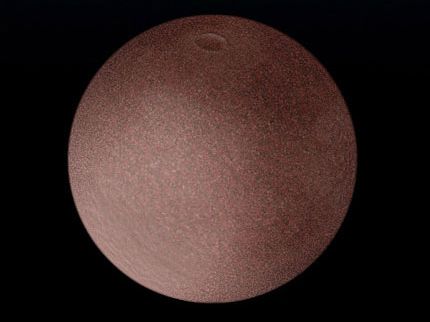
The reddish appearance of Makemake is thought to result from complex organic molecules known as tholins.
These compounds form when ultraviolet sunlight and energetic particles interact with simple frozen gases such as methane.
Although tholins are organic in a chemical sense because they contain carbon, they are not evidence of life.
What Does Makemake Look Like?
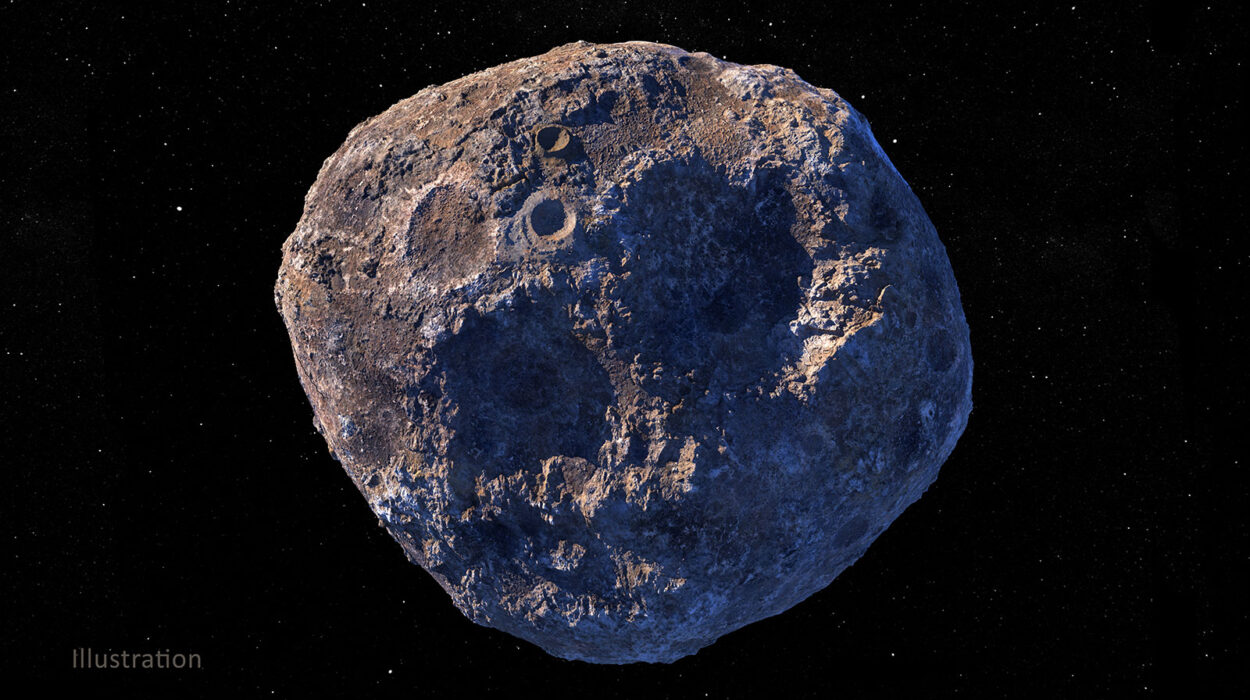
If someone could fly close to Makemake, they would likely see a bright icy world with subtle reddish or brownish coloration.
Its surface reflects a significant portion of the sunlight that reaches it, making it one of the most reflective large objects in the Kuiper Belt.
Scientists believe its surface contains frozen methane ice covering darker materials beneath.
Because Makemake is so distant, even the most powerful telescopes cannot yet reveal detailed surface features comparable to those seen on Pluto by NASA’s New Horizons spacecraft.
Future missions may someday provide much sharper views.
Does Makemake Have an Atmosphere?
Makemake does not appear to possess a permanent atmosphere like Earth.
However, astronomers think it may develop a temporary atmosphere when it approaches the closest part of its orbit around the Sun.
As temperatures rise slightly, tiny amounts of frozen gases may sublimate directly into gas, forming an extremely thin atmosphere.
When Makemake moves farther away, these gases freeze back onto the surface.
This seasonal process may resemble what happens on Pluto, although Makemake’s atmosphere is expected to be much thinner.
Does Makemake Have Moons?
For many years, astronomers believed Makemake had no moons.
That changed in 2016, when observations by the Hubble Space Telescope revealed a tiny natural satellite.
The moon is officially designated S/2015 (136472) 1 and is commonly nicknamed MK2.
MK2 is much smaller and darker than Makemake itself, making it difficult to detect.
The discovery was important because studying the moon’s orbit allows scientists to estimate Makemake’s mass more accurately.
It also provides clues about how dwarf planets and their satellites form.
Can Life Exist on Makemake?
Everything currently known suggests that Makemake is not a suitable place for life as we understand it.
Its surface is intensely cold.
Liquid water cannot remain stable on the surface.
The atmosphere, if present at all, is extremely thin.
Sunlight is extraordinarily weak.
Nevertheless, studying worlds like Makemake helps scientists understand the range of environments that exist within our Solar System and how planets evolve under vastly different conditions.
Why Is Makemake Important?
Makemake is much more than a distant frozen object.
It represents one of the surviving building blocks from the birth of the Solar System about 4.6 billion years ago.
Unlike Earth, whose surface has been constantly reshaped by geology, weather, and life, Makemake has remained relatively unchanged in the deep freeze of the outer Solar System.
By studying Makemake, astronomers learn about the original materials that formed the planets.
Its composition, orbit, and surface chemistry provide valuable evidence about the early Solar System’s structure and evolution.
Makemake also helps scientists compare the different dwarf planets.
Although Pluto, Haumea, Eris, and Makemake all occupy the Kuiper Belt, each has distinct characteristics that reveal different aspects of planetary formation.
How Do Scientists Study Makemake?
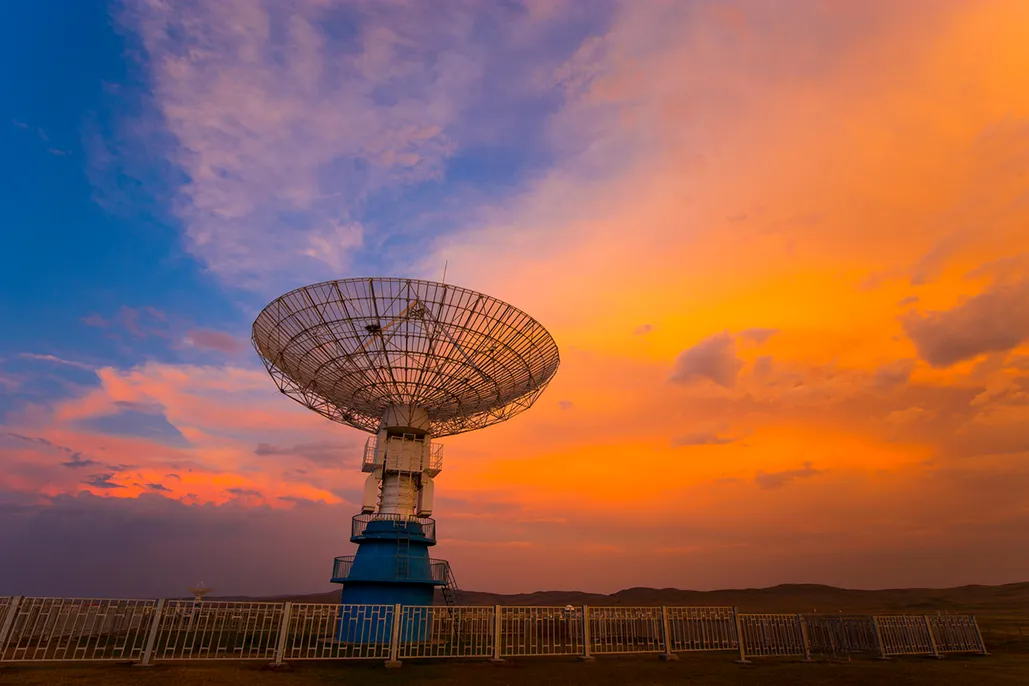
Because no spacecraft has visited Makemake, astronomers rely primarily on powerful telescopes.
Ground-based observatories equipped with adaptive optics allow researchers to measure its brightness, size, and orbital motion.
The Hubble Space Telescope has played an especially important role by discovering its moon and refining measurements of its physical properties.
Infrared observations reveal the chemical composition of its surface by identifying how different molecules absorb sunlight.
Occultation events, in which Makemake passes in front of distant stars, provide valuable information about its size, shape, and the possible presence of an atmosphere.
Each observation gradually improves our understanding of this distant world.
Could a Spacecraft Visit Makemake?
No mission to Makemake has yet been approved.
Its enormous distance presents major engineering challenges.
Even the fastest spacecraft launched from Earth would require many years, and likely decades, to reach it using current technology.
However, the success of NASA’s New Horizons mission to Pluto demonstrated that exploring distant dwarf planets is possible.
Future advances in propulsion technology may one day make a dedicated mission to Makemake a reality.
Such a mission could reveal landscapes, craters, icy plains, mountains, and other geological features that remain invisible today.
Makemake and the Expanding View of the Solar System
The discovery of Makemake helped transform our understanding of the Solar System.
For much of the twentieth century, scientists believed Pluto marked the outer edge of the planetary family.
Today we know that beyond Neptune lies an enormous population of icy worlds, many of which remain undiscovered.
Makemake is among the largest and brightest members of this hidden realm.
Its existence reminds us that the Solar System extends far beyond the familiar eight planets, into a vast frontier where ancient worlds continue orbiting quietly in the darkness.
Conclusion
Makemake is one of the Solar System’s most fascinating distant worlds. Orbiting deep within the Kuiper Belt, this icy dwarf planet preserves a record of conditions that existed when the Solar System first formed billions of years ago. Though small compared with the major planets, Makemake plays an outsized role in helping scientists understand planetary evolution, surface chemistry, and the population of frozen objects beyond Neptune.
As telescopes become more powerful and future space missions venture farther into the outer Solar System, Makemake will continue to reveal new secrets. What now appears as a tiny point of light in the night sky is, in reality, an ancient world with its own unique history—one that reminds us how much there is still to discover in the vastness of our cosmic neighborhood.