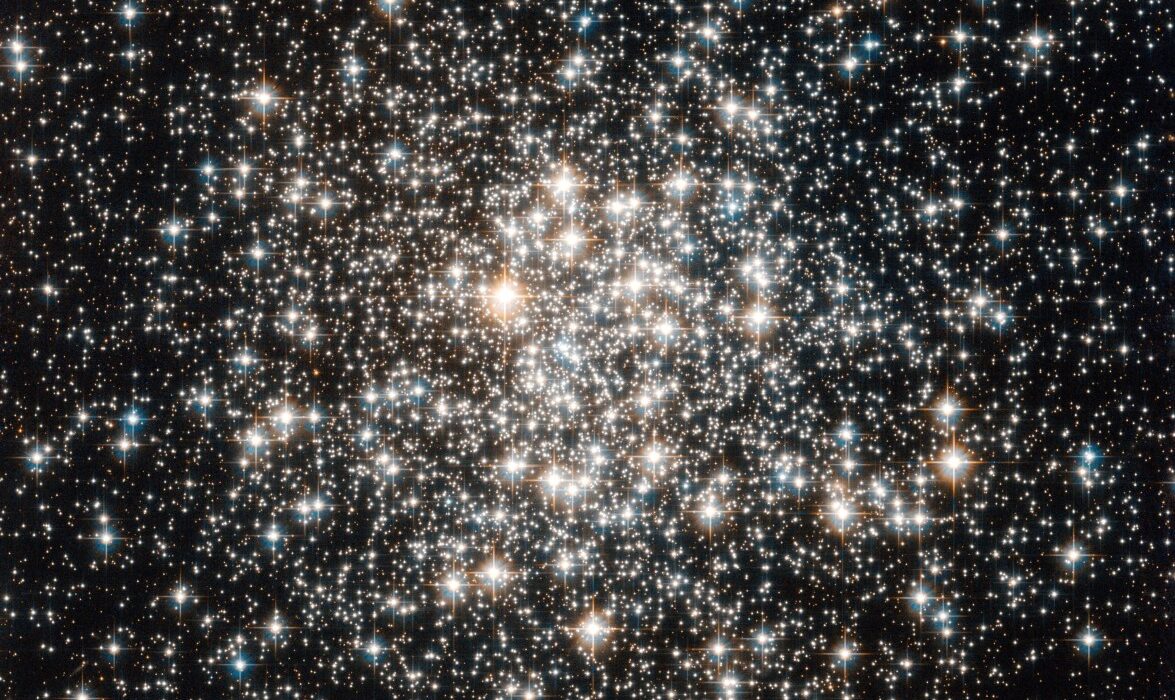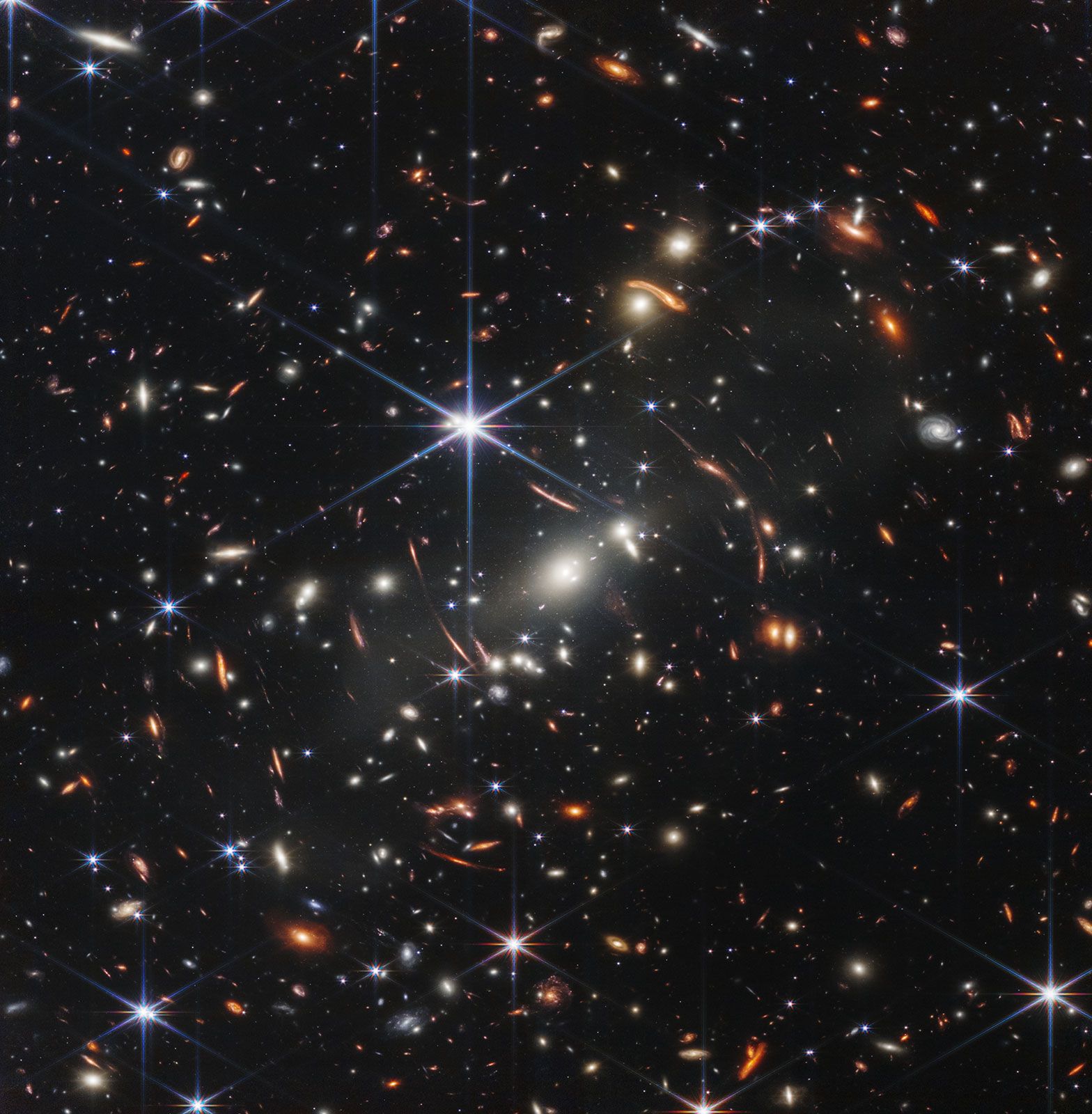
Look up at the night sky, and you are looking into the past. Every star, every glowing nebula, and every distant galaxy sends light across the vastness of space before it reaches your eyes. Some of that light began its journey years ago, some millions of years ago, and some billions of years ago. As incredible as the night sky appears, what we can actually see is only a tiny fraction of everything that exists.
The universe is unimaginably vast, and scientists believe it extends far beyond what we can observe. The portion we can detect using light and other forms of radiation is known as the observable universe. It is the largest region of the cosmos from which light has had enough time to reach us since the universe began approximately 13.8 billion years ago.
Understanding the observable universe takes us on a journey through space, time, the history of the cosmos, and the limits of human knowledge. It is a story that begins with the Big Bang and stretches across hundreds of billions of galaxies to the edge of what we can ever hope to see.
What Is the Observable Universe?
The observable universe is the part of the entire universe that is visible—or more accurately, detectable—from Earth at the present time. It includes every galaxy, star, planet, cloud of gas, black hole, and other cosmic object whose light or other signals have reached us since the universe came into existence.
This does not mean the observable universe is the entire universe. Instead, it represents the portion of the cosmos that has been able to communicate with us through light or other forms of electromagnetic radiation over the universe’s lifetime.
Anything beyond this limit is currently invisible to us, not because it does not exist, but because its light has not yet had enough time to arrive.
In this sense, the observable universe is like standing in a dense forest with a flashlight. You can only see as far as the light reaches, even though the forest continues beyond the illuminated area.
Why Is There a Limit to What We Can See?
The universe has a speed limit.
According to Albert Einstein’s theory of special relativity, nothing carrying information can travel faster than the speed of light in a vacuum, which is approximately 299,792,458 meters per second, or about 186,282 miles per second.
Although this speed is astonishingly fast, space itself is so enormous that light still requires time to travel.
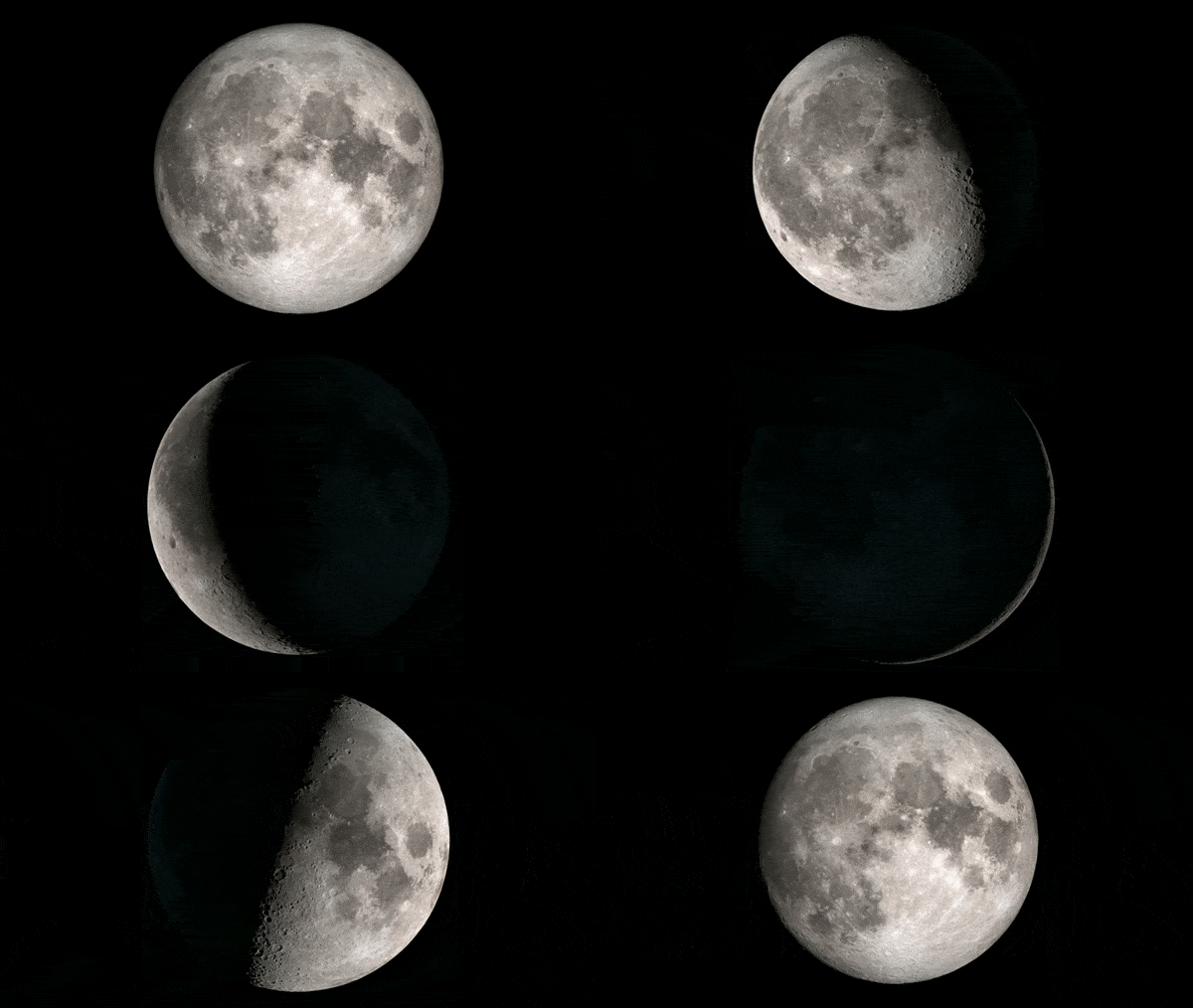
Light from the Moon reaches Earth in about 1.3 seconds.
Sunlight takes approximately 8 minutes and 20 seconds to arrive.
Light from the nearest star beyond the Sun, Proxima Centauri, takes more than four years.
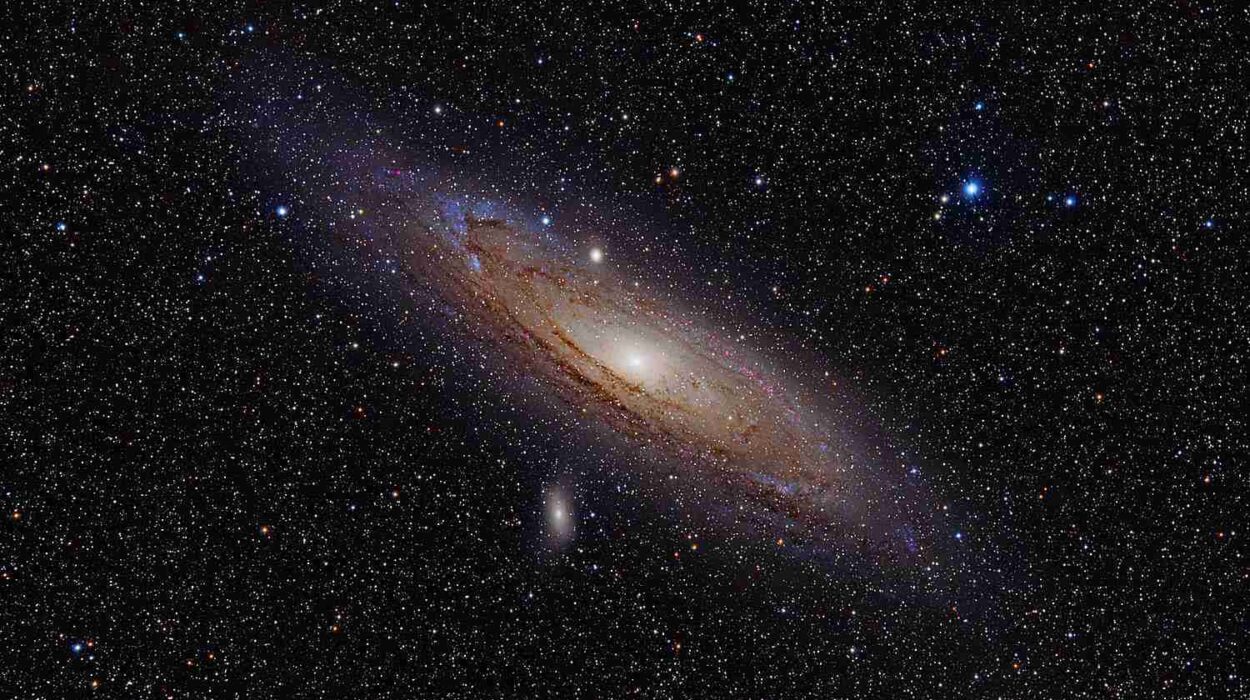
Light from the Andromeda Galaxy travels about 2.5 million years before reaching us.
The most distant galaxies observed by powerful telescopes emitted their light over 13 billion years ago.
Because light needs time to travel, observing distant objects is equivalent to looking back in time.
Looking Back Through Cosmic History
Every astronomical observation is a glimpse into history.
When astronomers observe Jupiter, they see it as it was about 40 minutes earlier, depending on its distance from Earth.
When they observe the Andromeda Galaxy, they see it as it existed long before modern humans appeared.
Looking at galaxies billions of light-years away allows scientists to witness the early universe when galaxies were still forming.
The farther away an object lies, the younger it appears because its light began traveling toward us earlier in cosmic history.
Modern telescopes function as time machines, allowing astronomers to reconstruct the evolution of the universe from its infancy to the present day.
How Old Is the Universe?
Measurements from multiple independent observations indicate that the universe is approximately 13.8 billion years old.
Scientists determine this age using several methods, including observations of the cosmic microwave background, the expansion rate of the universe, the distribution of galaxies, and the ages of the oldest known stars.
Since the universe has existed for about 13.8 billion years, it might seem reasonable to assume that the observable universe should have a radius of 13.8 billion light-years.
Surprisingly, that is not the case.
Why the Observable Universe Is About 46.5 Billion Light-Years Across in Radius
One of the most fascinating discoveries in cosmology is that the observable universe has a radius of about 46.5 billion light-years, giving it a diameter of roughly 93 billion light-years.
At first glance, this seems impossible. How can we observe objects farther away than 13.8 billion light-years if the universe is only 13.8 billion years old?
The answer lies in the expansion of space.
As light travels toward Earth, the space through which it moves continues expanding. This means the galaxies that emitted the light are now much farther away than when the light first began its journey.
Imagine drawing dots on the surface of a balloon and then inflating it. The dots move farther apart not because they are moving across the balloon, but because the balloon itself expands.
The universe behaves similarly on enormous scales.
As a result, the most distant objects we can observe today are currently about 46.5 billion light-years away, even though their light has been traveling for approximately 13.8 billion years.
The Expanding Universe
In the early twentieth century, astronomers discovered that distant galaxies are moving away from one another.
This observation revealed that the universe is expanding.
The galaxies themselves are generally not flying through space away from a central point. Instead, the fabric of space between galaxies stretches over time.
This expansion means that distant galaxies continuously become more distant.
The farther away a galaxy lies, the faster its distance from us increases due to the expansion of space.
This relationship is described by Hubble’s Law and has become one of the foundations of modern cosmology.
Does the Observable Universe Have an Edge?
The observable universe does have a boundary, but it is not a physical wall or barrier.
Instead, it represents the greatest distance from which light has had enough time to reach us.
If humanity could somehow travel to another galaxy billions of light-years away, the observable universe from that new location would be different.
Observers in different parts of the universe have different observable horizons because they occupy different positions in space.
The edge of the observable universe is therefore a limit created by the finite age of the universe and the finite speed of light, not by the universe ending there.
Beyond this horizon, the universe may continue indefinitely.
Is There Anything Beyond the Observable Universe?
Almost certainly.
Current cosmological models strongly suggest that the universe extends beyond what we can observe.
The observable universe is only the region from which information has reached us.
There could be countless additional galaxies, stars, planets, and perhaps even structures unlike anything we have ever seen beyond our cosmic horizon.
Because no information from those regions has reached Earth, scientists cannot directly observe or measure them.
This distinction is important.
Scientists distinguish between the observable universe, which can be studied through evidence, and the entire universe, whose total size remains unknown.
The Cosmic Microwave Background
One of the most remarkable discoveries in astronomy is the cosmic microwave background, often called the oldest light in the universe.
About 380,000 years after the Big Bang, the universe cooled enough for electrons and atomic nuclei to combine into neutral atoms.
Before this time, the universe was filled with a hot, dense plasma that scattered light in every direction, making the cosmos opaque.
Once atoms formed, light could travel freely for the first time.
That ancient light has continued traveling through space ever since.
Today, after billions of years of cosmic expansion, it has stretched into microwave wavelengths.
The cosmic microwave background fills the entire observable universe and provides a snapshot of the infant cosmos.
It offers scientists invaluable information about the universe’s age, composition, geometry, and evolution.
What Exists Inside the Observable Universe?
The observable universe contains an astonishing variety of cosmic structures.
It includes planets orbiting stars, moons circling planets, asteroids, comets, and vast clouds of gas and dust where new stars are born.
It contains billions of stars gathered into galaxies, which themselves form clusters and enormous superclusters connected by immense filaments of matter.
Between these structures lie enormous cosmic voids where very few galaxies exist.
The observable universe also contains black holes, neutron stars, white dwarfs, pulsars, quasars, and mysterious dark matter that cannot be seen directly but reveals its presence through gravity.
Every known object ever observed by humanity exists somewhere within this observable region.
How Many Galaxies Are There?
Advances in telescope technology have dramatically changed our understanding of the universe.
Earlier estimates suggested the observable universe contained around one hundred billion galaxies.
Later studies, incorporating observations from deep-space surveys and computer models, indicate that the actual number may be closer to hundreds of billions or even around two trillion galaxies, including many extremely faint dwarf galaxies that are difficult to detect individually.
As telescopes become more powerful, astronomers continue discovering galaxies that formed remarkably early in cosmic history.
How Many Stars Are There?
The number of stars in the observable universe is almost beyond imagination.
Astronomers estimate that there are roughly 10²² to 10²⁴ stars.
That means there are vastly more stars than grains of sand on all the beaches and deserts of Earth combined.
Around many of these stars orbit planets.
Thousands of exoplanets have already been confirmed, and scientists estimate that planets are likely common throughout the Milky Way and other galaxies.
This raises one of humanity’s most intriguing questions: could life exist elsewhere in the observable universe?
What Is the Observable Universe Made Of?
Surprisingly, everything humans can directly see—including stars, planets, gas clouds, and galaxies—accounts for only a small fraction of the universe’s total contents.
According to current cosmological measurements, ordinary matter makes up only about 5% of the universe.
Approximately 27% appears to consist of dark matter, an invisible substance that interacts primarily through gravity.
The remaining 68% is thought to be dark energy, a mysterious form of energy associated with the accelerating expansion of the universe.
Although dark matter and dark energy cannot yet be directly observed, multiple independent lines of evidence strongly support their existence.
How Do Scientists Observe the Universe?
Astronomers use far more than visible light.
Modern observatories detect radio waves, infrared radiation, visible light, ultraviolet radiation, X-rays, gamma rays, neutrinos, and gravitational waves.
Each reveals different aspects of the universe.
Radio telescopes study cold hydrogen gas.
Infrared telescopes peer through cosmic dust.
X-ray observatories reveal black holes and exploding stars.
Gravitational-wave detectors measure ripples in spacetime produced by collisions between black holes and neutron stars.
Together, these tools provide an increasingly complete picture of the observable universe.
The Role of Space Telescopes
Space telescopes have transformed modern astronomy.
Freed from Earth’s atmosphere, they can observe wavelengths blocked or distorted before reaching the ground.
The Hubble Space Telescope revolutionized our understanding of distant galaxies and helped refine the age of the universe.
More recently, the James Webb Space Telescope has observed galaxies that formed only a few hundred million years after the Big Bang, allowing scientists to study some of the earliest stages of cosmic evolution.
Each new generation of telescopes pushes humanity’s observable horizon slightly farther back in time.
Will the Observable Universe Keep Growing?
Yes.
As time passes, light from increasingly distant regions has more time to reach Earth.
This means the observable universe slowly becomes larger.
However, the accelerating expansion driven by dark energy introduces an important complication.
Some galaxies are receding from us so rapidly because of the expansion of space that their future light may never reach Earth.
As a result, there are regions of the universe that are effectively disappearing from our future view.
The observable universe grows, but there are also limits imposed by cosmic expansion.
Can We Ever Observe the Entire Universe?
Current scientific understanding suggests the answer is probably no.
The finite speed of light and the ongoing expansion of space create a permanent observational horizon.
Even if technology improves dramatically, there will always be regions so distant that their light cannot reach us.
This means the observable universe may forever remain only a portion of the total cosmos.
There could be unimaginably vast regions beyond our horizon that remain permanently inaccessible.
Why the Observable Universe Matters
The observable universe represents everything humanity has ever been able to study beyond Earth. Every galaxy photographed, every star analyzed, every black hole detected, and every exoplanet discovered lies within this enormous cosmic sphere.
By studying this accessible portion of the universe, scientists learn not only about distant galaxies but also about the history of the cosmos itself. Observations of faraway objects reveal how galaxies formed, how stars evolved, how chemical elements were created, and how the universe has changed over billions of years.
The observable universe is therefore much more than a boundary. It is a vast cosmic archive that preserves the history of the universe in the light arriving at Earth today.
Conclusion
The observable universe is the immense region of space from which light has had enough time to reach us since the universe began about 13.8 billion years ago. Although it has a radius of approximately 46.5 billion light-years because space itself has expanded over time, it is almost certainly only a portion of the entire universe. Beyond its horizon may lie countless more galaxies and structures that remain hidden simply because their light has not yet arrived.
As telescopes become more powerful and new technologies reveal previously invisible phenomena, humanity continues to deepen its understanding of this extraordinary cosmic realm. Yet the observable universe also reminds us of the limits of our perspective. No matter how far we look, there is always the possibility that the universe extends far beyond what we can currently see, inviting future generations to continue exploring one of the greatest mysteries in science.