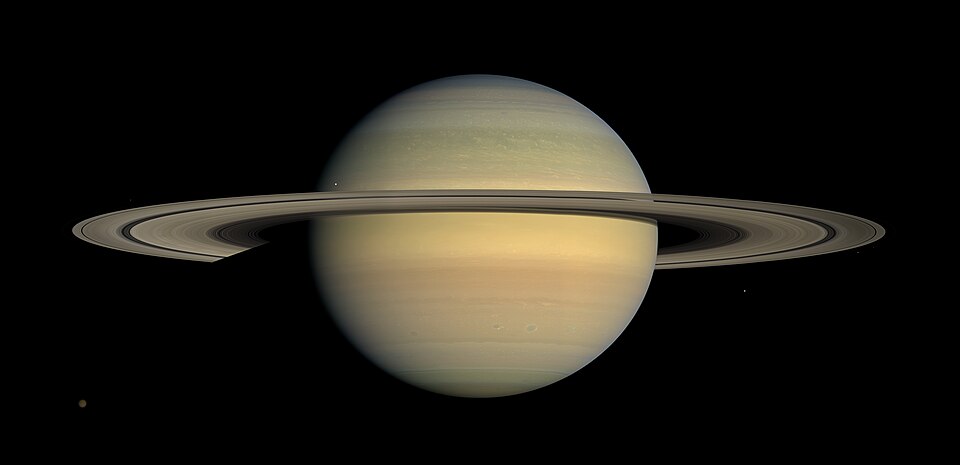
Imagine standing on the icy surface of one of Saturn’s distant moons and looking up at the sky. Instead of seeing a familiar blue planet like Earth, you would see the magnificent golden globe of Saturn filling the heavens, wrapped in its spectacular rings. Around you, countless other moons would silently travel through space, each following its own path around the giant planet.
Saturn is often called the jewel of the Solar System because of its breathtaking rings. Yet its rings are only part of the story. Saturn is also the undisputed king of moons. More natural satellites orbit this gas giant than any other known planet, making it one of the most fascinating destinations in our cosmic neighborhood.
Scientists continue discovering new moons around Saturn as telescope technology improves. Each discovery helps us better understand how planets and their satellite systems formed billions of years ago.
Saturn Currently Has 274 Confirmed Moons
As of today, Saturn has 274 officially confirmed moons, making it the planet with the largest known number of moons in the Solar System.
These moons have been confirmed by astronomers through repeated observations and recognized by the international astronomical community. The number has increased dramatically over the past few decades as more powerful telescopes have detected many small, faint moons that were previously impossible to see.
For many years, Jupiter held the record for the most known moons. However, recent discoveries around Saturn have pushed it well ahead. Many of Saturn’s newly discovered moons are tiny irregular objects that orbit far from the planet.
Although hundreds of moons have now been identified, scientists expect that even more small moons may still be waiting to be discovered.
Why Does Saturn Have So Many Moons?
Saturn’s enormous collection of moons is no accident.
The planet is the second-largest in the Solar System, containing about 95 times the mass of Earth. Its immense gravity allows it to capture and hold many natural satellites.
Some moons likely formed alongside Saturn more than 4.5 billion years ago from the disk of gas, dust, and ice surrounding the young planet.
Others may have been captured later as they wandered through the outer Solar System.
Some small moons are probably fragments left behind after larger moons or captured objects collided and broke apart millions or even billions of years ago.
The result is an incredibly diverse family of worlds, each with its own unique story.
Saturn’s Moons Come in Every Shape and Size
Saturn’s moons are astonishingly diverse.
Some are giant worlds hundreds or even thousands of kilometers across.
Others are tiny objects only a few kilometers wide.
Many are nearly spherical because their own gravity has pulled them into rounded shapes.
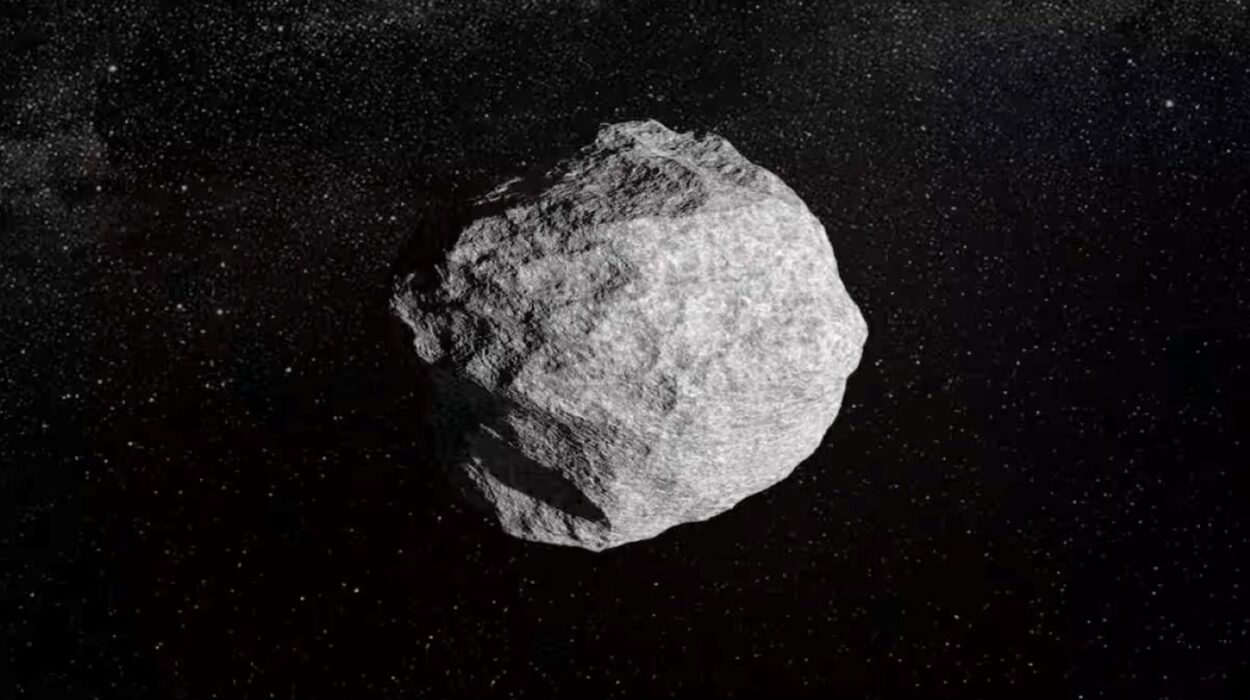
Smaller moons often resemble irregular potatoes or oddly shaped rocks drifting through space.
Some moons are made mostly of ice.
Others contain mixtures of rock and ice.
Several show evidence of geological activity, while many remain cold, ancient worlds covered with impact craters.
No two Saturnian moons are exactly alike.
Titan Is Saturn’s Largest Moon
Among Saturn’s many moons, one stands above all the others.
Titan is Saturn’s largest moon and the second-largest moon in the Solar System, surpassed only by Jupiter’s Ganymede.
Titan is even larger than the planet Mercury, although it is much less massive because it contains a great deal of water ice.
What makes Titan truly extraordinary is its thick atmosphere.
It is the only moon in the Solar System with a dense atmosphere, composed primarily of nitrogen along with methane and other compounds.
Rivers, lakes, seas, clouds, rain, and dunes all exist on Titan—but they are not made of water.
Instead, they consist mainly of liquid methane and liquid ethane because Titan’s surface temperature is so cold that water is frozen solid like rock.
Scientists consider Titan one of the most Earth-like worlds in terms of having active weather, even though its chemistry is very different.
Enceladus May Hide an Ocean Filled with Possibilities
One of Saturn’s smaller moons has become one of the most exciting places in the search for life beyond Earth.
Enceladus is only about 500 kilometers (310 miles) across, yet it has surprised scientists again and again.
Spacecraft observations revealed enormous geysers erupting from cracks near its south pole.
These towering plumes spray water vapor, ice particles, salts, and organic molecules into space.
The evidence strongly indicates that Enceladus hides a global ocean of liquid water beneath its icy shell.
Scientists believe this ocean remains liquid because Saturn’s gravity constantly flexes the moon’s interior, generating heat through tidal forces.
The discovery of liquid water, organic compounds, and chemical energy sources makes Enceladus one of the most promising places in the Solar System to search for signs of microbial life.
Mimas Looks Like the Death Star
Among Saturn’s moons, Mimas is instantly recognizable because of one enormous impact crater.
The crater, called Herschel, is so large that it makes the moon resemble the fictional Death Star from Star Wars.
Despite its dramatic appearance, Mimas is a real world shaped by billions of years of impacts.
For many years, scientists believed it was a frozen, inactive object.
However, recent studies suggest that Mimas may possess a hidden subsurface ocean beneath its icy crust, although this possibility is still being investigated.
Iapetus Has a Remarkable Two-Tone Appearance
Another of Saturn’s remarkable moons is Iapetus.
One hemisphere is extremely dark, while the opposite side is bright and reflective.
This striking contrast makes Iapetus look almost like two completely different worlds joined together.
Scientists think the dark material probably originated from dust that accumulated on one side of the moon. As that side absorbed more sunlight, ice gradually sublimated away, increasing the contrast between the bright and dark regions.
Iapetus also features an enormous mountain ridge running almost exactly along its equator.
This unusual ridge remains one of the Solar System’s most intriguing geological mysteries.
Rhea, Dione, and Tethys Are Ancient Ice Worlds
Several of Saturn’s larger moons are ancient frozen worlds marked by countless impact craters.
Rhea is Saturn’s second-largest moon and consists mostly of water ice mixed with rock.
Dione displays towering cliffs and evidence that it experienced geological activity in the distant past.
Tethys contains one of the largest impact craters on any moon in the Solar System.
These moons preserve ancient records of the violent history of the early Solar System.
Tiny Moons Help Shape Saturn’s Rings
Not all of Saturn’s moons are large.
Many tiny moons orbit within or near Saturn’s magnificent ring system.
Some act as “shepherd moons.”
Their gravity helps keep ring particles confined to narrow bands and creates beautiful gaps, waves, and intricate structures within the rings.
Without these small moons, Saturn’s rings would look very different.
Their gravitational influence continuously sculpts one of the Solar System’s most beautiful natural wonders.
Are Saturn’s Rings Creating New Moons?
Scientists have long wondered whether Saturn’s rings and its moons are connected.
The rings consist mostly of countless pieces of water ice ranging from microscopic grains to objects several meters across.
Some researchers think the rings formed when an ancient moon was torn apart by Saturn’s powerful gravity after venturing too close to the planet.
Others suggest that small moons can gradually form from ring material under the right conditions.
The relationship between Saturn’s rings and its moons remains an active area of research.
Understanding this connection could reveal how moons form around giant planets throughout the universe.
How Do Scientists Discover New Moons?
Finding a new moon is far more difficult than it might seem.
Many of Saturn’s recently discovered moons are incredibly small and faint.
Astronomers use powerful ground-based telescopes equipped with sensitive digital cameras to capture repeated images of the region around Saturn.
By comparing these images over time, they can identify tiny objects moving in ways consistent with orbiting the planet.
Before a new moon is officially recognized, scientists must carefully confirm that it follows a stable orbit around Saturn rather than simply passing nearby.
Only after repeated observations can the object receive official confirmation and eventually a permanent name.
How Are Saturn’s Moons Named?
Most of Saturn’s moons are named after figures from mythology.
Many take their names from Titans, Giants, and other mythological beings associated with Greek, Roman, Inuit, Gallic, or Norse traditions.
This naming tradition helps organize the growing family of Saturn’s satellites while honoring cultures from around the world.
As more moons are discovered, astronomers continue selecting names that fit these established themes.
Could Humans Visit Saturn’s Moons Someday?
Although Saturn lies nearly 1.4 billion kilometers (about 886 million miles) from the Sun on average, its moons remain important targets for future exploration.
The Cassini-Huygens mission revolutionized our understanding of the Saturn system between 2004 and 2017.
Cassini studied dozens of moons in remarkable detail and transformed many long-standing ideas about these icy worlds.
The Huygens probe successfully landed on Titan in 2005, becoming the first spacecraft to land in the outer Solar System.
Future missions are expected to return to Titan and perhaps someday investigate Enceladus more closely.
NASA’s Dragonfly mission, currently planned for launch in the late 2020s, is designed to explore Titan using a nuclear-powered rotorcraft that will fly from location to location after arriving in the 2030s. Scientists hope it will reveal how complex organic chemistry develops on this extraordinary moon.
Could There Be Life on Saturn’s Moons?
When people think about searching for alien life, Mars often comes to mind first.
Yet Saturn’s moons have become some of the most exciting places in that search.
Titan possesses abundant organic molecules and a rich atmosphere where complex chemistry occurs.
Enceladus offers liquid water, organic compounds, and internal energy sources beneath its icy shell.
Although no evidence of life has yet been found on either moon, both satisfy several conditions considered important for habitability.
Future missions may one day answer one of humanity’s greatest questions: Are we alone in the universe?
Will Saturn Keep Breaking Records?
Saturn’s moon count has grown dramatically over the past two decades.
Each improvement in telescope technology allows astronomers to detect smaller and fainter objects than ever before.
Because many tiny moons remain extremely difficult to observe, researchers believe Saturn’s total number of confirmed moons could continue increasing in the future.
Whether another planet eventually claims the record remains uncertain, but for now Saturn stands as the undisputed moon champion of our Solar System.
Conclusion
Saturn is far more than the planet with the spectacular rings. It is the home of an astonishing 274 confirmed moons, each offering a unique glimpse into the history and diversity of our Solar System. From the methane lakes of Titan to the water-rich geysers of Enceladus, from the cratered landscapes of Mimas to the mysterious two-toned surface of Iapetus, Saturn’s moons are worlds filled with scientific surprises.
Every new discovery around Saturn reminds us that our Solar System is far more complex and fascinating than early astronomers could have imagined. As future spacecraft journey to these distant icy worlds, they may uncover new moons, reveal hidden oceans, and perhaps even find clues about the origins of life itself. Saturn’s remarkable family of moons is not just a collection of orbiting rocks and ice—it is one of the greatest natural laboratories for exploring the mysteries of the universe.