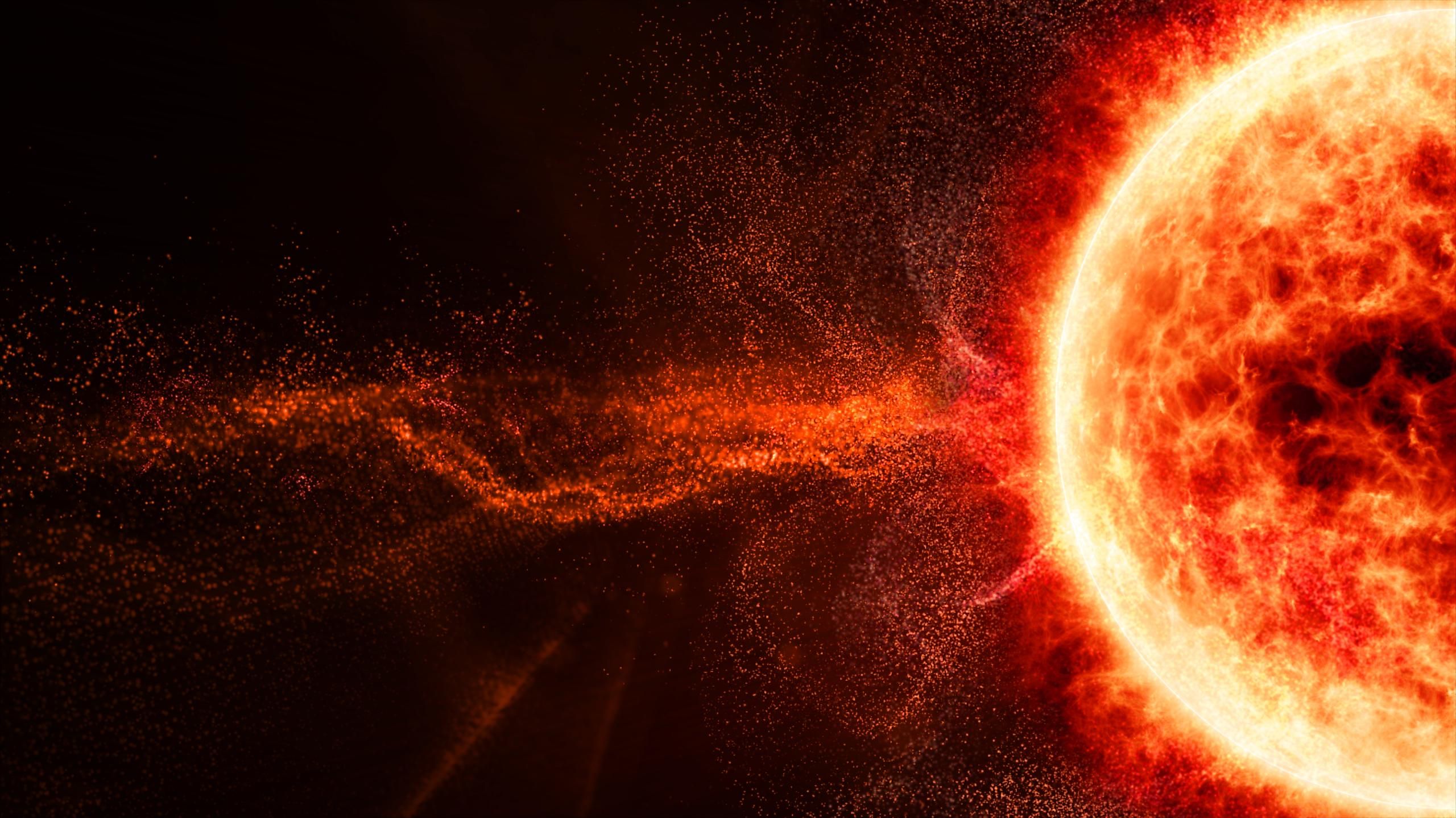
Every moment of every day, an invisible stream of particles races outward from the Sun, sweeping across the entire solar system at astonishing speeds. We cannot see it with our eyes, we cannot hear it, and we cannot feel it directly on Earth’s surface. Yet this powerful flow shapes the space around every planet, creates dazzling auroras near the poles, influences satellites, and even determines how far the Sun’s influence extends into interstellar space.
This invisible flow is known as the solar wind.
Although the name suggests something like the breeze we experience on Earth, solar wind is something entirely different. It is not made of moving air but of electrically charged particles streaming continuously away from the Sun. These particles carry energy and magnetic fields across billions of kilometers, making the solar wind one of the most important forces in our solar system.
Understanding solar wind is essential for understanding how the Sun affects Earth, astronauts, spacecraft, and even the future of space exploration.
The Sun Is More Than a Giant Ball of Light
When we look at the Sun, we usually think of it as a bright, glowing sphere that provides warmth and daylight. But the Sun is much more than a source of light and heat.
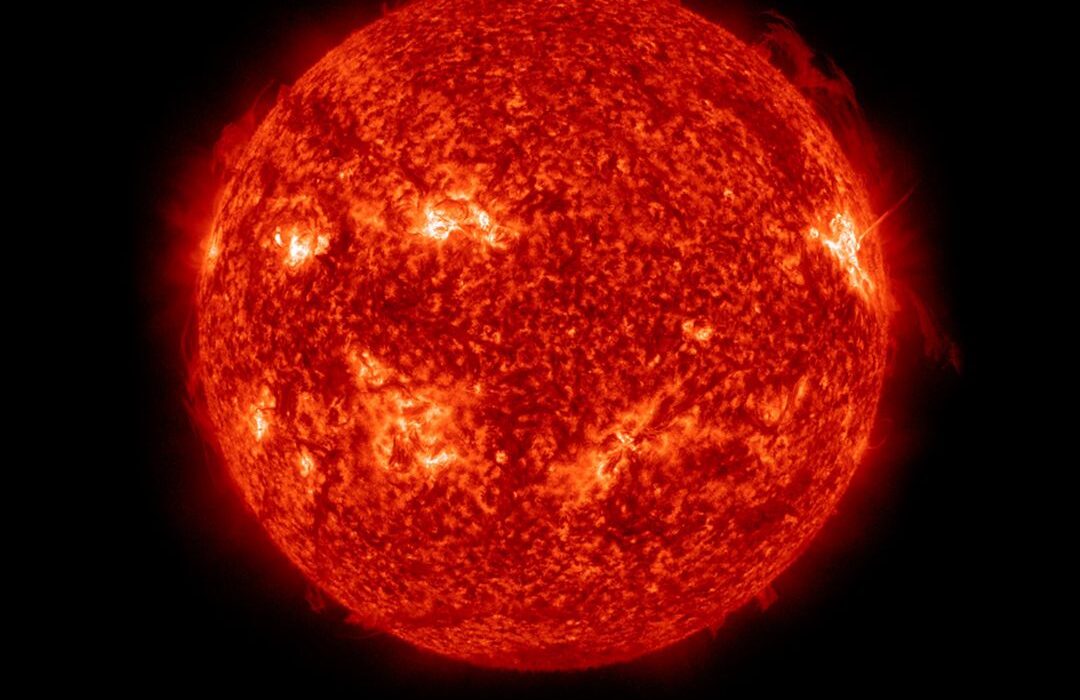
The Sun is an enormous star made primarily of hydrogen and helium. At its core, nuclear fusion converts hydrogen into helium, releasing an immense amount of energy. That energy travels outward through the Sun before escaping into space as light, heat, and streams of charged particles.
The Sun is incredibly active. Its surface is constantly changing, with powerful magnetic fields twisting and reconnecting. Gigantic eruptions, massive loops of glowing plasma, and violent explosions occur regularly. All of this activity contributes to the continuous release of solar wind.
Rather than ending at its visible surface, the Sun extends its influence throughout the solar system through this ever-flowing stream of particles.
What Exactly Is Solar Wind?
Solar wind is a continuous flow of plasma escaping from the Sun.
Plasma is often called the fourth state of matter. Unlike solids, liquids, or gases, plasma consists of atoms that have become so energetic that their electrons have separated from their nuclei. This creates a mixture of positively charged ions and negatively charged electrons.
The Sun is almost entirely made of plasma.
The solar wind mainly consists of protons, electrons, and a smaller number of heavier ions such as helium nuclei. These particles travel outward from the Sun at speeds ranging from about 250 to more than 800 kilometers per second (roughly 155 to 500 miles per second), depending on the type of solar wind.
Although the particles are spread very thinly through space, they carry enormous amounts of energy because they are constantly moving at such extraordinary speeds.
Where Does Solar Wind Come From?
The solar wind originates in the Sun’s outer atmosphere, known as the corona.
The corona is a mysterious region that stretches millions of kilometers into space. Surprisingly, it is much hotter than the Sun’s visible surface.
While the Sun’s surface has a temperature of about 5,500 degrees Celsius (9,900 degrees Fahrenheit), the corona reaches temperatures of more than one million degrees Celsius.
Scientists are still studying exactly why the corona becomes so incredibly hot. The Sun’s magnetic fields appear to play a major role, transferring energy into the corona through complex magnetic processes.
At such extreme temperatures, particles move so rapidly that many gain enough energy to escape the Sun’s gravity. Once free, they stream outward in every direction, forming the solar wind.
Why Doesn’t the Sun Hold On to These Particles?
Gravity pulls everything toward the Sun, so it may seem surprising that particles can escape.
The answer lies in the tremendous energy inside the corona.
The particles there move so rapidly that many exceed the speed needed to escape the Sun’s gravitational pull. Once they break free, nothing stops them from traveling outward through the solar system.
Unlike the Earth’s atmosphere, which gradually fades into space, the Sun’s outer atmosphere expands continuously into interplanetary space. This expanding atmosphere becomes the solar wind.
In a sense, the Sun is constantly shedding tiny pieces of itself.
Solar Wind Fills the Entire Solar System
Solar wind does not travel only toward Earth.
It spreads outward in every direction, creating an enormous bubble around the Sun known as the heliosphere.
The heliosphere surrounds all the planets, extending far beyond the orbit of Pluto. It forms a protective shield that helps reduce the number of high-energy cosmic rays entering the inner solar system from deep space.
At the outer edge of the heliosphere, the solar wind eventually slows down as it encounters the thin gas between the stars. This distant boundary marks where the Sun’s influence begins to give way to interstellar space.
NASA’s Voyager 1 and Voyager 2 spacecraft have crossed this boundary, providing scientists with the first direct measurements of the region where our solar system meets the rest of the galaxy.
Fast and Slow Solar Wind
Scientists have discovered that solar wind is not always the same.
There are two primary forms.
The slow solar wind typically travels at around 300 to 500 kilometers per second. It often originates from regions near the Sun’s equator where magnetic fields are especially complex.
The fast solar wind travels at about 600 to 800 kilometers per second. It usually comes from coronal holes, which are regions where the Sun’s magnetic field opens directly into space, allowing particles to escape more easily.
Both forms of solar wind constantly interact, creating complex patterns throughout the solar system.
The Sun’s Magnetic Field Travels with the Solar Wind
Solar wind carries more than particles.
It also carries the Sun’s magnetic field.
As the Sun rotates approximately once every 27 days, its magnetic field becomes twisted into a spiral shape known as the Parker Spiral, named after American astrophysicist Eugene Parker, who first proposed the existence of the solar wind in the late 1950s.
This spiral magnetic field stretches throughout the solar system, connecting planets, spacecraft, and distant regions of space to the Sun.
Modern spacecraft have repeatedly confirmed Parker’s groundbreaking predictions.
How Solar Wind Reaches Earth
Earth orbits about 150 million kilometers (93 million miles) from the Sun.
Even across this enormous distance, solar wind reaches our planet surprisingly quickly.
Depending on its speed, particles released by the Sun typically arrive at Earth in about two to four days.
When scientists observe major eruptions on the Sun, they can often estimate when stronger streams of solar wind will arrive at Earth.
This ability has become an important part of modern space weather forecasting.
Earth’s Magnetic Field Acts Like a Shield
Fortunately, Earth is not defenseless against solar wind.
Our planet generates a powerful magnetic field deep within its molten outer core.
This magnetic field creates the magnetosphere, a vast protective region surrounding Earth.
When solar wind reaches Earth, most particles are deflected around the magnetosphere instead of reaching the atmosphere directly.
Without this magnetic shield, life on Earth’s surface would be exposed to far greater amounts of harmful space radiation.
The magnetosphere is one of the reasons Earth has remained such a hospitable world for billions of years.
Solar Wind Creates the Beautiful Aurora
One of the most spectacular effects of solar wind is the creation of the aurora, also known as the Northern and Southern Lights.
Near Earth’s magnetic poles, some charged particles from the solar wind are guided along magnetic field lines into the upper atmosphere.
There they collide with oxygen and nitrogen atoms.
These collisions excite the atmospheric atoms, causing them to emit light.
Oxygen often produces brilliant green and red colors.
Nitrogen contributes blue and purple shades.
The result is a breathtaking display of shimmering curtains, arcs, and ribbons dancing across the night sky.
Every aurora is a visible reminder that our planet is constantly interacting with the Sun.
Solar Storms Can Intensify the Solar Wind
The Sun occasionally produces especially violent eruptions.
One type is called a coronal mass ejection (CME).
A CME launches billions of tons of plasma and magnetic fields into space.
If such an eruption is directed toward Earth, it can greatly strengthen the solar wind reaching our planet.
These powerful disturbances may trigger geomagnetic storms, which can temporarily disturb Earth’s magnetic field.
Large geomagnetic storms can produce exceptionally bright auroras visible much farther from the poles than usual.
Space Weather and Modern Technology
Solar wind is a major component of what scientists call space weather.
Just as Earth’s weather can affect daily life, space weather can influence modern technology.
Strong solar wind disturbances may interfere with radio communications, reduce GPS accuracy, disrupt satellite operations, and create electrical currents in long power lines.
Space agencies and weather organizations continuously monitor the Sun to provide warnings before major space weather events arrive.
These forecasts help satellite operators, airlines, astronauts, and power companies prepare for possible impacts.
Solar Wind and Astronaut Safety
Astronauts living aboard the International Space Station receive some protection from Earth’s magnetic field.
However, astronauts traveling beyond Earth—especially on future missions to the Moon or Mars—will spend much more time exposed to solar wind and other forms of space radiation.
Engineers are developing better spacecraft shielding and improved forecasting systems to help protect future explorers.
Understanding solar wind is therefore not only a scientific challenge but also a practical necessity for humanity’s expansion into deep space.
Solar Wind Shapes Other Planets
Every planet responds differently to solar wind.
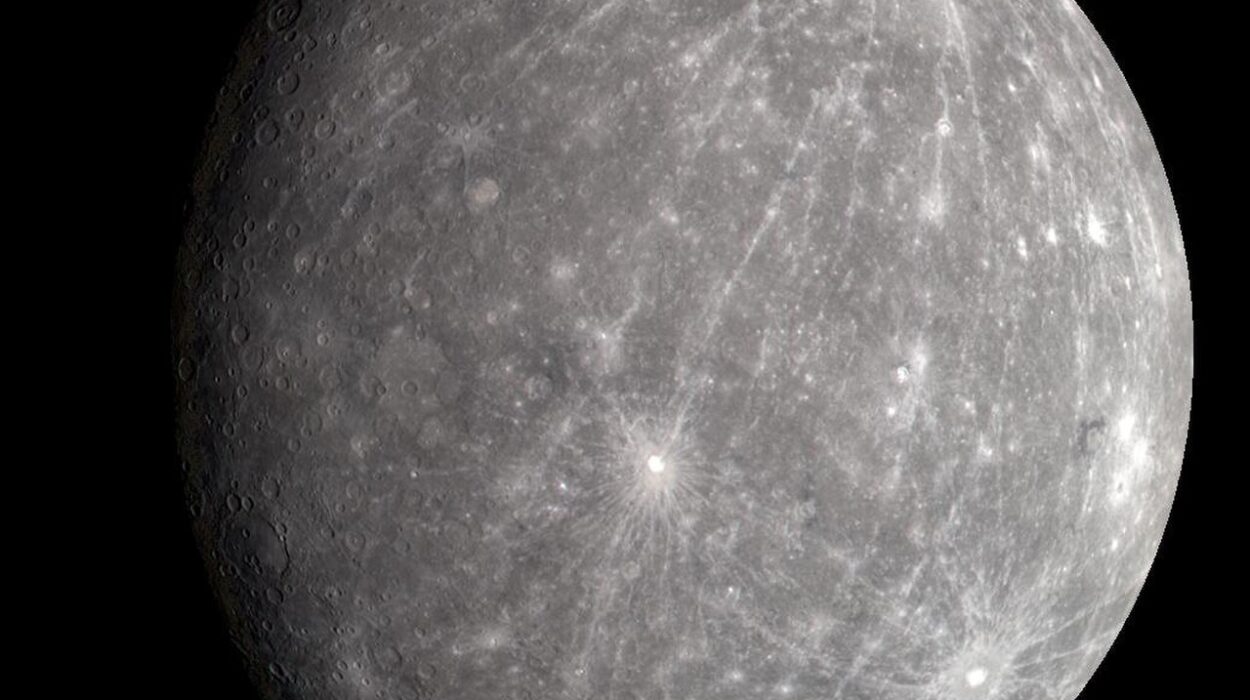
Mercury has only a weak magnetic field, allowing solar wind to interact much more directly with its surface.
Venus lacks a global magnetic field, so the solar wind interacts with its atmosphere in unique ways, gradually stripping away some atmospheric particles over time.
Mars once had a much thicker atmosphere than it does today. After Mars lost its global magnetic field billions of years ago, the solar wind began slowly eroding much of its atmosphere into space. This process contributed to the transformation of Mars from a warmer, wetter world into the cold, dry planet we see today.
Jupiter possesses the strongest planetary magnetic field in the solar system, creating an enormous magnetosphere that interacts dramatically with the solar wind.
Each planet tells a different story about the influence of the Sun.
Scientists Study Solar Wind with Spacecraft
Because solar wind cannot be studied fully from Earth’s surface, scientists rely on spacecraft.
NASA’s Parker Solar Probe is the closest spacecraft ever sent to the Sun. It flies through the Sun’s outer atmosphere, measuring particles, magnetic fields, and temperatures directly.
The Solar Orbiter, developed by the European Space Agency with NASA participation, studies both the Sun and the solar wind from unique viewing angles.
Together with other spacecraft near Earth, these missions are revealing how solar wind forms, evolves, and spreads across the solar system.
Each new observation helps scientists improve their understanding of our dynamic star.
Why Solar Wind Matters
At first glance, solar wind may seem like an obscure scientific topic.
Yet it affects nearly every aspect of space around us.
It shapes planetary magnetic fields.
It creates beautiful auroras.
It influences satellites and communication systems.
It affects astronaut safety.
It helps define the boundary of our solar system.
It even contributes to the long-term evolution of planetary atmospheres.
Studying solar wind also teaches scientists about other stars. Many stars throughout the galaxy produce stellar winds similar to our Sun’s, meaning the lessons learned here can help us understand countless distant planetary systems.
The Sun’s Invisible Breath
Solar wind is often described as the Sun’s invisible breath—a continuous stream of charged particles flowing endlessly into space. Though unseen, it connects the Sun with every planet, moon, asteroid, comet, and spacecraft in the solar system.
From painting the skies with shimmering auroras to shaping the vast heliosphere that surrounds our planetary neighborhood, solar wind reminds us that space is far from empty. It is a dynamic environment filled with energy, motion, and constant interaction.
Every second, as sunlight reaches Earth and warms our world, the solar wind is arriving too, carrying with it the magnetic heartbeat of our nearest star. By studying this remarkable phenomenon, scientists continue to uncover not only the secrets of the Sun but also the invisible forces that bind our solar system together.