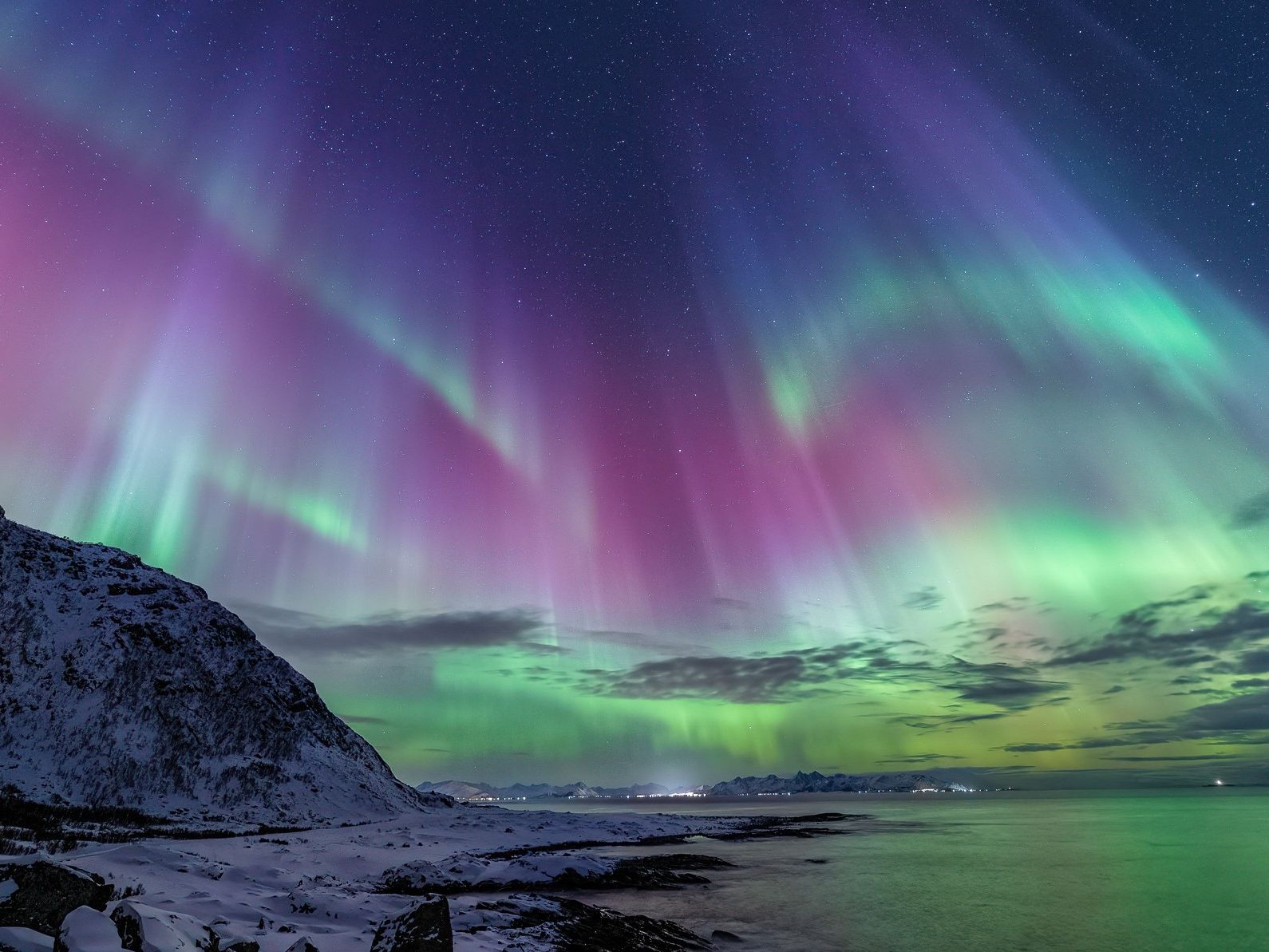
Few natural wonders inspire as much awe as the aurora. Imagine standing beneath a dark, star-filled sky when shimmering curtains of green suddenly begin to dance overhead. Moments later, streaks of purple, pink, and red ripple across the heavens like glowing silk caught in an invisible breeze. It feels almost magical, as though the sky itself has come alive.
For centuries, people around the world created fascinating legends to explain these mysterious lights. Some believed they were the spirits of ancestors, while others thought they were messages from the gods. Today, science has revealed the true story behind the aurora—and it is every bit as extraordinary as the myths.
The aurora is not magic. It is the result of an incredible interaction between the Sun and Earth, powered by streams of energetic particles traveling through space. Every shimmering wave of light tells the story of our planet’s invisible magnetic shield protecting us from the Sun’s powerful activity.
What Is the Aurora?
The aurora is a natural light display that appears in Earth’s upper atmosphere near the polar regions. In the Northern Hemisphere, it is known as the Aurora Borealis, or the Northern Lights. In the Southern Hemisphere, it is called the Aurora Australis, or the Southern Lights.
Although they occur in opposite hemispheres, both are created by exactly the same physical process.
The aurora usually appears as glowing curtains, arcs, rays, spirals, or shimmering ribbons that move gracefully across the night sky. Sometimes the display is faint and subtle. At other times, it fills the entire sky with brilliant colors that seem to dance overhead.
No two auroras are ever exactly alike.
The Sun Is the Source of the Aurora
The story of the aurora begins nearly 150 million kilometers (93 million miles) away on the Sun.
The Sun is far more than a bright ball of light. It is an enormous, active star where incredibly hot gases are constantly moving and interacting with powerful magnetic fields. These magnetic fields can suddenly twist, snap, and reconnect, releasing enormous amounts of energy.
During these energetic events, the Sun ejects vast numbers of electrically charged particles into space. These particles are mainly electrons and protons.
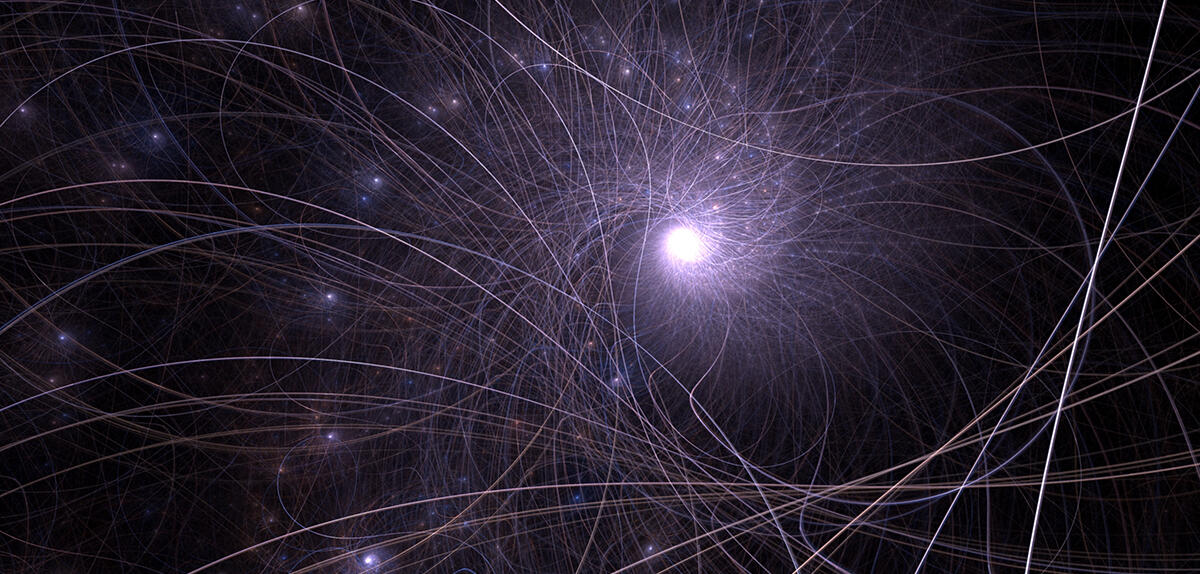
Even when the Sun appears calm, it continuously releases a stream of charged particles known as the solar wind. This invisible wind flows outward in every direction, carrying billions of particles through the Solar System every second.
Earth is constantly immersed in this flow.
The Journey Through Space
The charged particles released by the Sun travel through space at tremendous speeds. Some move at hundreds of kilometers per second, while others, during powerful solar eruptions, travel even faster.
Most of these particles simply continue past Earth without causing noticeable effects.
However, when particularly strong streams of solar particles arrive, they collide with Earth’s magnetic environment and create the conditions necessary for spectacular auroral displays.
This journey from the Sun to Earth usually takes between one and several days, depending on the speed of the solar wind.
Earth’s Invisible Magnetic Shield
If Earth had no magnetic field, life on our planet would face constant bombardment from energetic solar particles.
Fortunately, Earth behaves like a giant magnet.
Deep beneath the surface, the movement of molten iron in Earth’s outer core generates a vast magnetic field that extends tens of thousands of kilometers into space.
This protective region is called the magnetosphere.
The magnetosphere acts as a shield, deflecting most of the charged particles coming from the Sun. Instead of allowing them to strike Earth’s atmosphere everywhere, the magnetic field guides many of them toward the North and South Poles.
This is why auroras are usually seen in polar regions rather than near the equator.
Why the Poles?
Earth’s magnetic field resembles the field around a giant bar magnet.
Near the equator, the magnetic field lines run mostly parallel to Earth’s surface. Near the poles, however, these invisible lines curve downward into the atmosphere.
Charged particles naturally follow these magnetic field lines.
As a result, many solar particles are funneled toward the polar regions, where they eventually plunge into Earth’s upper atmosphere.
There, the real light show begins.
Collisions High Above Earth
The colorful aurora forms high above Earth’s surface, usually between about 80 and 500 kilometers (50 to 310 miles) above the ground.
At these heights, the atmosphere is extremely thin.
When fast-moving electrons from space collide with atoms and molecules in the upper atmosphere, they transfer energy to them.
These atmospheric particles briefly become excited.
However, excited atoms cannot remain in this energized state forever.
Within fractions of a second—or sometimes longer—they release the extra energy as tiny packets of visible light called photons.
Billions upon billions of these microscopic flashes combine to create the glowing curtains we see from the ground.
In many ways, the process is similar to how neon signs produce light, although the atmosphere contains different gases and operates on a much larger scale.
Why the Aurora Has Different Colors
One of the most beautiful features of the aurora is its incredible variety of colors.
These colors depend mainly on which gases are glowing and the altitude where the collisions occur.
The most common auroral color is green.
Green light is produced when energetic particles excite oxygen atoms roughly 100 to 250 kilometers above Earth’s surface. This is why many auroras appear bright green.
Red auroras are also produced by oxygen but occur much higher in the atmosphere, often above 250 kilometers. Because the air is thinner there, oxygen atoms release energy more slowly, creating the beautiful crimson glow sometimes visible above green auroras.
Blue and purple colors usually come from nitrogen molecules. These colors often appear near the lower edges of active auroras where energetic particles penetrate deeper into the atmosphere.
Pink shades can appear when emissions from oxygen and nitrogen overlap, blending together into stunning displays.
The exact mix of colors depends on the energy of the incoming particles, atmospheric conditions, and altitude.
Why the Aurora Moves
Auroras are famous for their graceful motion.
They ripple.
They wave.
They brighten.
They fade.
They twist into spirals.
Sometimes they explode into brilliant bursts that race across the sky in just a few seconds.
This movement occurs because the flow of charged particles from space is constantly changing. Earth’s magnetic field is also dynamic, continually responding to changing conditions in the solar wind.
As new particles enter the atmosphere along different magnetic field lines, different regions begin glowing while others fade.
The result is the mesmerizing dance that makes every aurora unique.
Solar Storms Create the Brightest Auroras
The most spectacular auroras usually occur during periods of intense solar activity.
Sometimes the Sun releases enormous eruptions known as coronal mass ejections, or CMEs.
These eruptions hurl billions of tons of magnetized plasma into space.
If one of these massive clouds is directed toward Earth, it can strongly disturb our planet’s magnetosphere.
Scientists call these disturbances geomagnetic storms.
During powerful geomagnetic storms, far more charged particles enter Earth’s atmosphere than usual, producing exceptionally bright auroras.
In rare cases, auroras become visible much farther from the poles than normal.
People living in regions that seldom see auroras may suddenly witness glowing skies after particularly strong solar storms.
Why Auroras Are Usually Green
Green dominates most auroral displays because oxygen is abundant in the upper atmosphere, and the conditions there often favor the production of green light.
The specific wavelength of green light emitted by excited oxygen atoms is especially efficient under typical auroral conditions.
Although photographs sometimes show vivid reds, purples, and blues, many people observing with their own eyes mainly notice shades of green, especially during moderate displays.
During stronger auroras, however, the sky can become filled with multiple colors at once.
Where Can You See the Aurora?
Auroras are most common in regions close to Earth’s magnetic poles.
In the Northern Hemisphere, they frequently appear across northern Canada, Alaska, Greenland, Iceland, Norway, Sweden, Finland, and parts of northern Russia.
In the Southern Hemisphere, they are often visible from Antarctica and occasionally from southern parts of Australia, New Zealand, and nearby islands.
The best viewing locations are usually far from city lights, where dark skies allow even faint auroras to become visible.
When Is the Best Time to See the Aurora?
Auroras can occur throughout the year, but they are easiest to observe when the sky is dark.
In polar regions, this generally means autumn, winter, and early spring.
They usually become visible after sunset and may continue through the night.
However, darkness alone is not enough.
The level of solar activity must also be favorable, and skies need to be clear of clouds.
Even in excellent locations, seeing the aurora always involves a little patience and a bit of luck.
Can Auroras Be Predicted?
Scientists cannot predict auroras with perfect accuracy, but they can forecast the likelihood of displays.
Spacecraft continuously monitor the Sun and the solar wind.
When strong eruptions are detected heading toward Earth, researchers can estimate when the particles will arrive.
Organizations around the world use these observations to issue aurora forecasts, helping photographers, travelers, and skywatchers prepare for potential displays.
Forecasts become more accurate as the solar particles approach Earth.
Do Auroras Make Sound?
For centuries, some people claimed they could hear faint crackling, rustling, or hissing sounds during bright auroras.
For a long time, scientists were skeptical because auroras occur far too high in the atmosphere for sound waves to travel directly to the ground.
More recent research suggests that under certain atmospheric conditions, electrical processes much closer to Earth’s surface may generate faint sounds that coincide with intense auroral activity.
However, these sounds appear to be rare, subtle, and are still being actively studied.
Most auroras are completely silent to observers.
Do Auroras Affect Technology?
While auroras themselves are harmless, the solar storms that produce them can sometimes affect modern technology.
Strong geomagnetic storms may interfere with radio communications, disrupt GPS signals, affect satellite operations, and even induce electrical currents in long power lines.
Spacecraft orbiting Earth are particularly exposed to increased radiation during periods of intense solar activity.
For astronauts outside Earth’s protective atmosphere, powerful solar storms require careful monitoring.
Fortunately, scientists continuously observe the Sun and issue space weather alerts to help reduce these risks.
Auroras on Other Planets
Earth is not the only world that experiences auroras.
Several planets in our Solar System have their own versions.
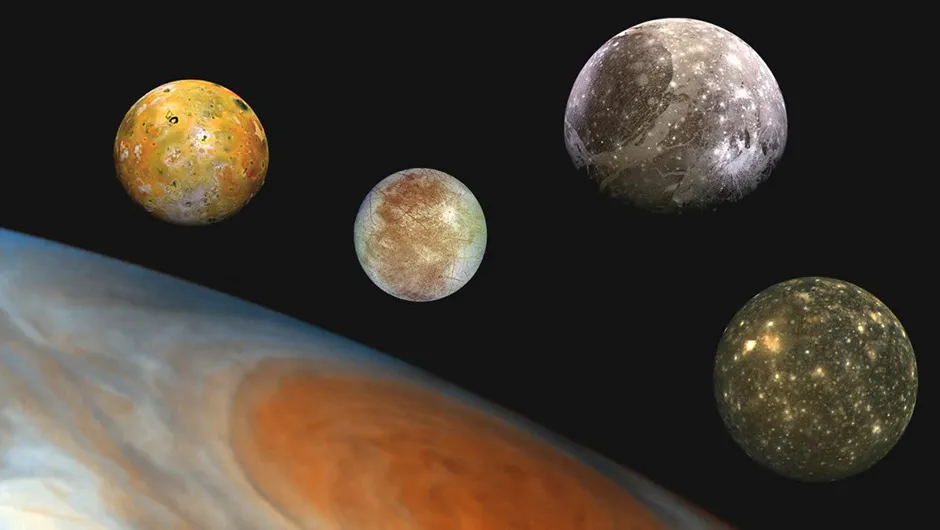
Jupiter has extraordinarily powerful auroras generated by its immense magnetic field and interactions with charged particles from the volcanic moon Io.
Saturn also displays beautiful auroral rings around its poles.
Even Uranus and Neptune have auroras, although they differ because of their unusual magnetic fields.
Mars has localized auroras despite lacking a global magnetic field like Earth’s.
These discoveries show that auroras are a common feature wherever energetic particles interact with magnetic fields and atmospheres.
How Scientists Study the Aurora
Auroras are more than beautiful light shows.
They provide valuable information about the complex relationship between the Sun and Earth.
Scientists study auroras using ground-based cameras, all-sky imagers, radar systems, weather balloons, rockets, and satellites.
These observations help researchers better understand space weather, Earth’s magnetosphere, atmospheric chemistry, and the behavior of charged particles.
Improved understanding also helps protect satellites, astronauts, communication systems, navigation networks, and electrical infrastructure from the effects of solar storms.
The Aurora Reminds Us That Earth Is Connected to the Sun
Although the aurora appears in Earth’s sky, its story begins on the Sun.
Every glowing curtain and shimmering ribbon is evidence that our planet is part of a much larger cosmic system. Invisible streams of particles travel across millions of kilometers of space, guided by Earth’s magnetic field, before colliding with atoms high above our heads and producing one of nature’s most breathtaking spectacles.
The next time you see an image of the Northern or Southern Lights—or perhaps witness them yourself—you will know that you are watching an extraordinary conversation between our planet and its star. It is a reminder that even from millions of kilometers away, the Sun continues to shape life on Earth in remarkable ways, and that the universe often creates its greatest beauty through the elegant laws of physics.