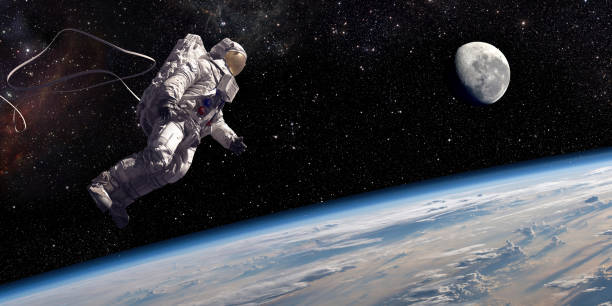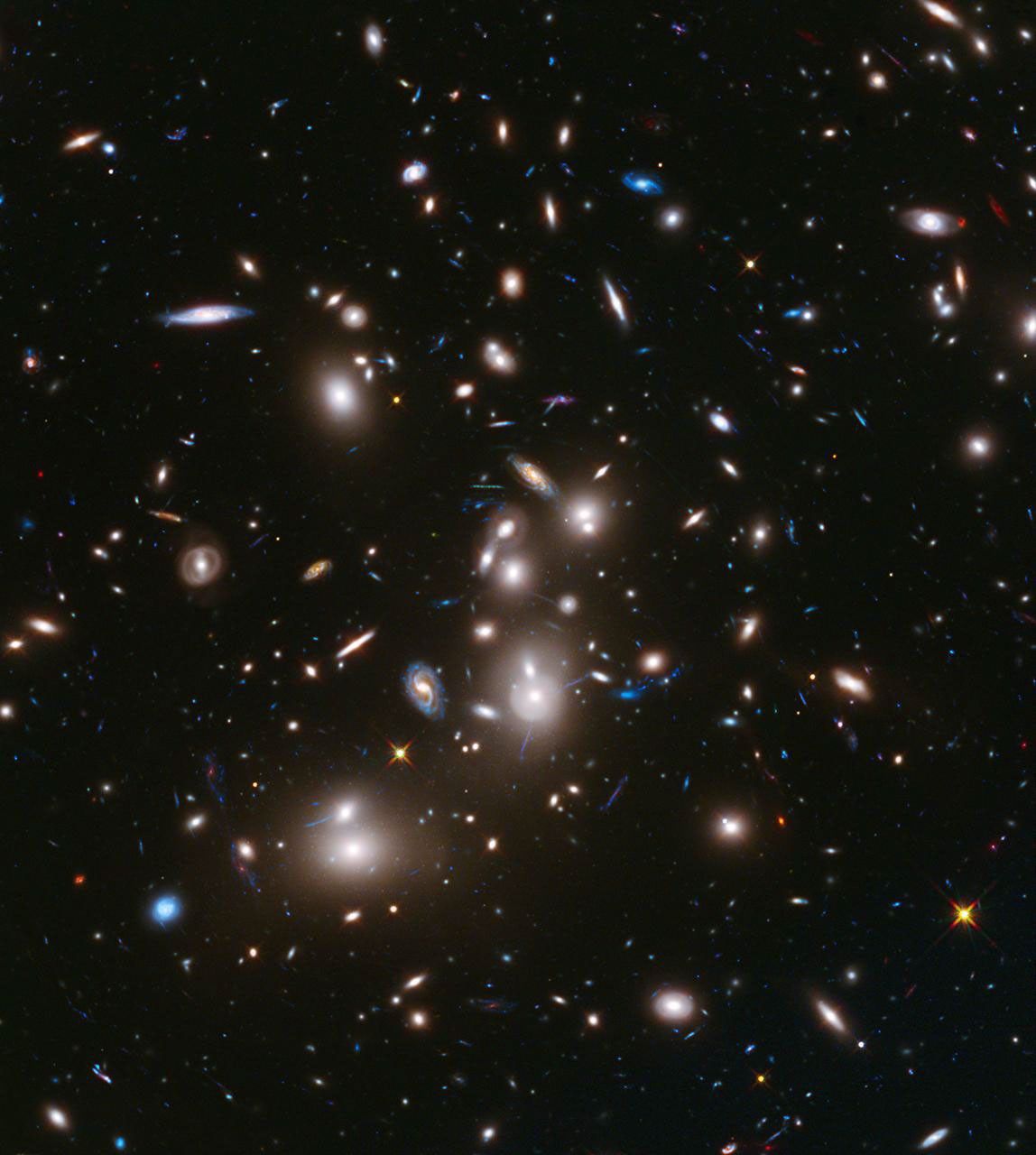
On a clear night, when the sky is free from clouds and city lights, countless glowing points appear overhead. Some shine steadily, while others seem to twinkle. A bright Moon may dominate the sky, and if you’re lucky, you might even spot a planet glowing among the stars. Beyond what our eyes can see, billions of other fascinating objects fill the universe—galaxies, nebulae, black holes, comets, asteroids, and countless worlds yet to be explored.
Everything that naturally exists in space is known as a celestial object. These objects are the building blocks of the universe, ranging from tiny grains of cosmic dust to enormous galaxy clusters that span millions of light-years. They tell the story of how the universe formed, evolved, and continues to change.
Understanding celestial objects is one of the first steps toward understanding astronomy and our place in the cosmos.
What Is a Celestial Object?
A celestial object is any naturally occurring physical object that exists in outer space. The term includes objects within our Solar System, throughout the Milky Way Galaxy, and across the observable universe.
Celestial objects come in an extraordinary variety of sizes, shapes, temperatures, and compositions. Some are solid, while others are made of hot gases or plasma. Some emit their own light, whereas others simply reflect the light of nearby stars. Some are relatively small, measuring only a few meters across, while others are so massive that they contain trillions of stars.
Scientists use the term “celestial object” broadly because it refers to almost every natural object found beyond Earth’s atmosphere. This includes planets, moons, stars, asteroids, comets, dwarf planets, nebulae, galaxies, black holes, pulsars, quasars, and even clouds of interstellar gas and dust.
Artificial satellites and spacecraft orbiting Earth are not celestial objects because they are human-made rather than naturally formed.
Why Are They Called Celestial Objects?
The word celestial comes from the Latin word caelestis, meaning “heavenly” or “of the sky.” Long before telescopes existed, people looked up at the night sky and referred to everything above as part of the heavens.
Today, scientists understand that these “heavenly” objects are real physical bodies located throughout the universe. They are governed by the same laws of physics that operate on Earth, including gravity, electromagnetism, and the laws of motion.
Although the name has ancient origins, the modern scientific meaning is simple: a celestial object is a naturally occurring object in space.
Where Are Celestial Objects Found?
Celestial objects exist everywhere in the universe.
Many are located within our own Solar System, including the Sun, the planets, their moons, asteroids, comets, and dwarf planets.
Beyond the Solar System lie billions of stars within the Milky Way. Many of these stars have planetary systems of their own, containing exoplanets that orbit distant suns.
Farther still are countless galaxies scattered across the observable universe. Each galaxy contains millions, billions, or even trillions of celestial objects interacting through gravity and other physical forces.
Modern telescopes continue discovering new celestial objects every year, expanding our understanding of the cosmos.
Stars Are Celestial Objects
Stars are among the most familiar celestial objects because many are visible to the naked eye.
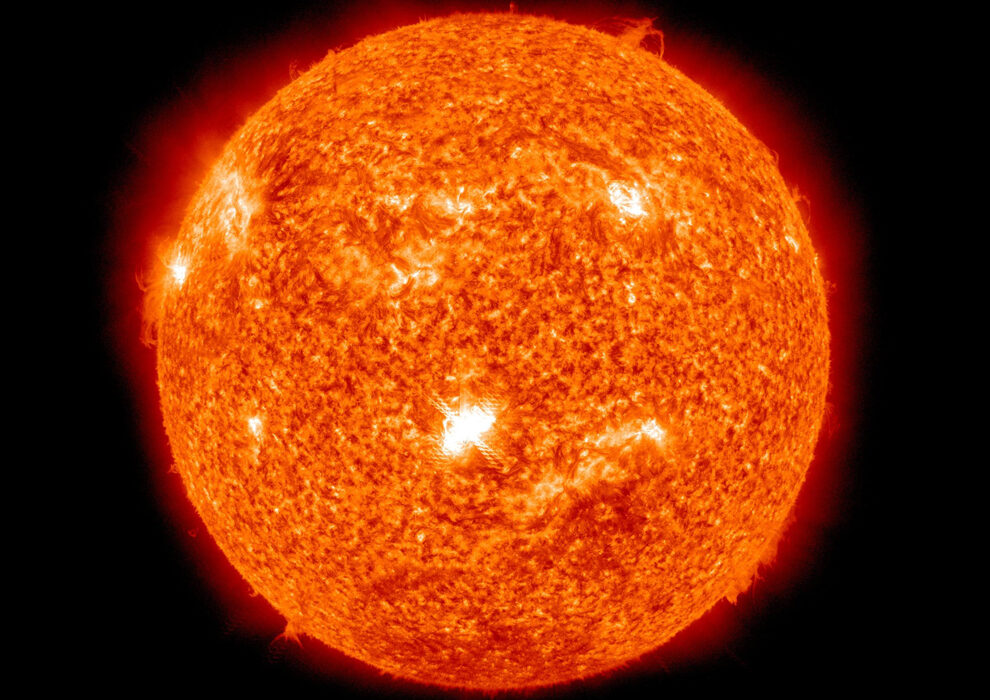
A star is a massive sphere of extremely hot plasma held together by gravity. At its core, nuclear fusion converts hydrogen into helium, releasing enormous amounts of energy as light and heat.
Our Sun is a star, and it is the closest one to Earth. Without the Sun, life as we know it could not exist. Its energy drives Earth’s climate, powers photosynthesis, and provides the warmth necessary for liquid water.
The night sky contains thousands of visible stars, but astronomers estimate that the observable universe contains hundreds of billions of galaxies, each with vast numbers of stars.
Planets Are Celestial Objects
Planets are large celestial objects that orbit stars.
Unlike stars, planets do not produce their own visible light through nuclear fusion. Instead, they reflect the light of their parent stars.
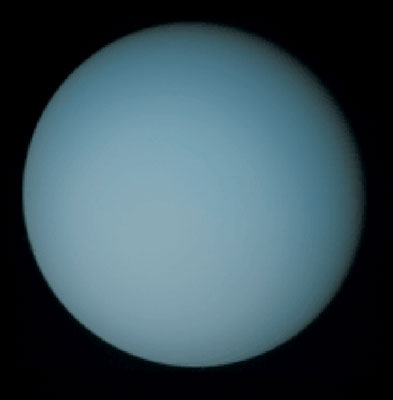
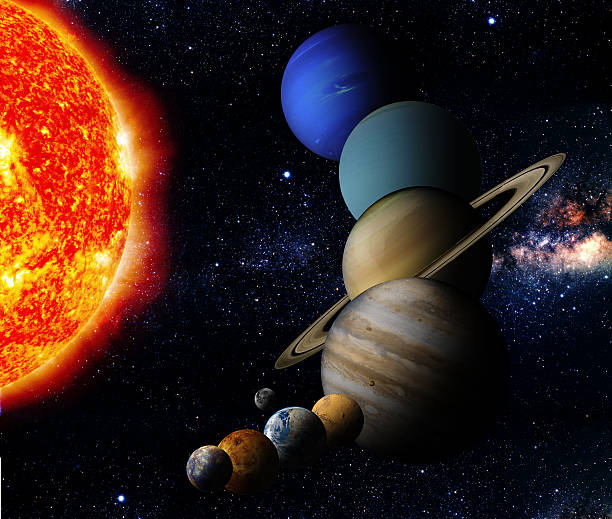
Our Solar System contains eight recognized planets: Mercury, Venus, Earth, Mars, Jupiter, Saturn, Uranus, and Neptune.
Outside our Solar System, scientists have confirmed thousands of exoplanets orbiting other stars. These distant worlds vary enormously, including rocky planets, gas giants, icy worlds, and planets unlike anything found in our own planetary system.
The discovery of exoplanets has transformed astronomy and increased the possibility that habitable environments may exist elsewhere in the universe.
Moons Are Natural Celestial Objects
A moon, also called a natural satellite, is a celestial object that orbits a planet or dwarf planet.
Earth has one natural moon, but many planets possess numerous moons. Jupiter and Saturn each have well over one hundred confirmed natural satellites.
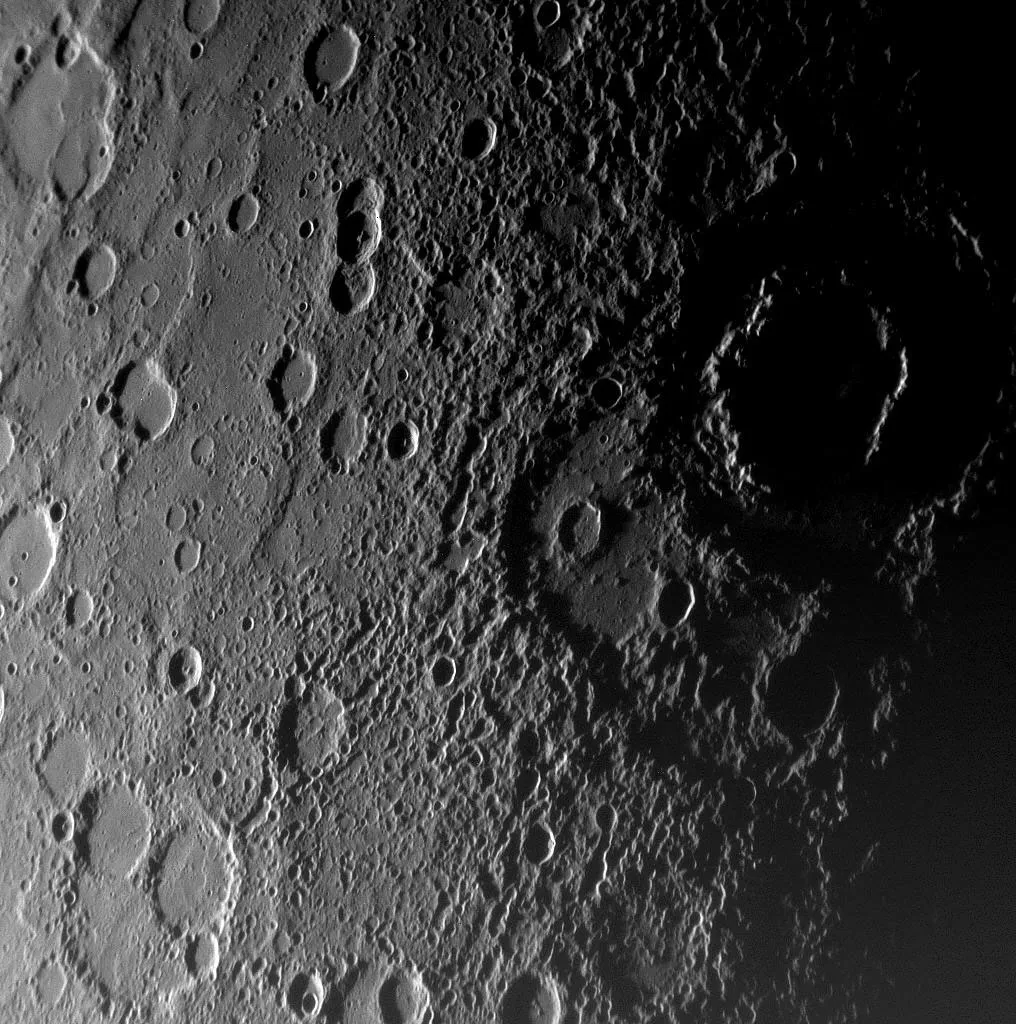
Some moons are icy worlds hiding oceans beneath frozen surfaces, while others are volcanic, heavily cratered, or covered in thick atmospheres.
Studying moons helps scientists better understand planetary formation and the potential for life beyond Earth.
Dwarf Planets and Small Worlds
Not every round object orbiting the Sun is classified as a planet.
Some belong to a category called dwarf planets. These objects orbit the Sun and have enough gravity to become nearly spherical, but they have not cleared other objects from the region around their orbits.
Pluto is the best-known dwarf planet, although several others have also been recognized, including Eris, Haumea, Makemake, and Ceres.
Dwarf planets remind us that the Solar System is more diverse and complex than once believed.
Asteroids and Comets
Asteroids are rocky celestial objects that primarily orbit the Sun. Most are found within the asteroid belt located between Mars and Jupiter, although many travel through other parts of the Solar System.
Most asteroids are remnants left over from the formation of the Solar System about 4.6 billion years ago.
Comets are different because they contain significant amounts of ice mixed with dust and rocky material. When a comet approaches the Sun, heat causes its ice to vaporize, producing a glowing cloud called a coma and often a spectacular tail that points away from the Sun due to the solar wind and radiation pressure.
These ancient objects preserve valuable information about the early Solar System.
Meteoroids, Meteors, and Meteorites
Small rocky or metallic fragments traveling through space are called meteoroids.
When one enters Earth’s atmosphere, friction with the atmosphere causes it to heat up and glow brightly, producing a meteor, commonly called a “shooting star.”
If part of the object survives its journey through the atmosphere and reaches Earth’s surface, it becomes a meteorite.
Although these terms are sometimes confused, they describe different stages of the same object’s journey.
Nebulae: The Cosmic Clouds
Nebulae are enormous clouds of gas and dust floating through interstellar space.
Some nebulae are stellar nurseries where gravity causes gas and dust to collapse, eventually forming new stars and planetary systems.
Other nebulae represent the remains of dying stars that have expelled their outer layers into space.
These colorful cosmic clouds are among the most beautiful celestial objects observed by modern telescopes.
Nebulae also play a crucial role in recycling matter throughout galaxies, providing the raw materials for future generations of stars.
Galaxies: Cities of Stars
A galaxy is a massive collection of stars, planets, gas, dust, dark matter, and other celestial objects held together by gravity.
Our home galaxy is the Milky Way, which contains hundreds of billions of stars and countless planets.
The nearest large neighboring galaxy is Andromeda, located about 2.5 million light-years away.
Galaxies come in several shapes, including spiral, elliptical, and irregular forms. Some are relatively small, while giant galaxies may contain trillions of stars.
Astronomers estimate that the observable universe contains hundreds of billions of galaxies.
Black Holes Are Extraordinary Celestial Objects
Black holes are among the most fascinating objects in the universe.
A black hole forms when an extremely massive object collapses under its own gravity, compressing matter into an incredibly small region of space. The gravitational pull becomes so strong that nothing—not even light—can escape once it crosses the event horizon.
Although black holes cannot be observed directly, scientists detect them by studying their effects on nearby stars, gas, and light.
Supermassive black holes reside at the centers of most large galaxies, including the Milky Way.
Neutron Stars and Pulsars
When certain massive stars explode as supernovae, their cores may collapse into neutron stars.
These incredibly dense objects can contain more mass than the Sun while measuring only about 20 kilometers (12 miles) across.
A teaspoon of neutron-star material would weigh billions of tons under Earth’s gravity.
Some neutron stars rotate rapidly while emitting beams of electromagnetic radiation. As these beams sweep across Earth like lighthouse beams, astronomers observe regular pulses, giving rise to the name pulsars.
These remarkable celestial objects help scientists study matter under some of the most extreme conditions in nature.
Exoplanets Expand Our Cosmic Perspective
For centuries, people wondered whether planets existed around other stars.
Today, astronomers have confirmed thousands of exoplanets using advanced telescopes and observation techniques.
Some are larger than Jupiter, while others are rocky worlds similar in size to Earth.
A few orbit within regions where temperatures might allow liquid water to exist under suitable conditions, although this alone does not guarantee the presence of life.
Each newly discovered exoplanet adds another chapter to humanity’s exploration of the universe.
How Do Scientists Discover Celestial Objects?
Modern astronomy relies on powerful instruments capable of detecting objects across the entire electromagnetic spectrum.
Optical telescopes collect visible light.
Radio telescopes observe radio waves emitted by distant objects.
Infrared telescopes reveal cool dust clouds and newly forming stars.
X-ray and gamma-ray observatories detect energetic cosmic events such as exploding stars and matter falling into black holes.
Space telescopes avoid the blurring effects of Earth’s atmosphere, allowing astronomers to observe distant celestial objects with extraordinary detail.
Scientists also use spectroscopy, computer simulations, gravitational-wave observatories, and space probes to study the universe in increasingly sophisticated ways.
How Are Celestial Objects Formed?
Celestial objects form through a variety of natural processes.
Stars develop when dense regions within giant molecular clouds collapse under gravity.
Planets emerge from disks of gas and dust surrounding young stars.
Galaxies grow through star formation and mergers with other galaxies.
Black holes may form from the collapse of massive stars or through the growth of supermassive objects in galactic centers.
Every celestial object has its own life cycle, shaped by gravity, nuclear reactions, collisions, and cosmic evolution over millions or billions of years.
Do Celestial Objects Move?
Nothing in the universe is truly stationary.
Earth rotates on its axis while orbiting the Sun.
The Moon orbits Earth.
The Sun orbits the center of the Milky Way.
The Milky Way itself moves through space while interacting gravitationally with neighboring galaxies.
Even distant galaxies are moving relative to one another as the universe expands.
The apparent stillness of the night sky is an illusion caused by the immense distances involved.
Why Are Celestial Objects Important?
Celestial objects are more than distant points of light. They are natural laboratories that allow scientists to test the laws of physics under conditions impossible to reproduce on Earth.
By studying stars, astronomers learn how elements such as carbon, oxygen, iron, and gold are created. These elements eventually become part of planets and living organisms.
Investigating galaxies reveals how the universe has evolved over billions of years.
Studying asteroids and comets provides clues about the Solar System’s earliest history.
Observing black holes, neutron stars, and gravitational waves deepens our understanding of gravity, matter, and spacetime.
Every celestial object contributes a unique piece to the vast puzzle of cosmic history.
Celestial Objects and Human Curiosity
For thousands of years, celestial objects have inspired wonder, navigation, storytelling, philosophy, and scientific discovery. Ancient civilizations tracked the movements of the Sun, Moon, and stars to create calendars and understand the changing seasons. Today, advanced observatories and spacecraft continue that tradition, revealing a universe far more complex and beautiful than anyone once imagined.
Each new discovery reminds us that the universe is dynamic rather than static. Stars are born and die, galaxies collide, planets form, and black holes grow. The cosmos is constantly changing, and celestial objects are the evidence of these ongoing processes.
Conclusion
A celestial object is any naturally occurring object in outer space, from tiny meteoroids and icy comets to blazing stars, majestic galaxies, and mysterious black holes. Together, these objects make up the vast and diverse universe we observe today. Although they differ enormously in size, composition, and behavior, they are all governed by the same fundamental laws of physics.
The study of celestial objects allows us to explore the origins of the universe, understand the evolution of stars and planets, and search for answers to some of humanity’s greatest questions. Every observation brings new discoveries, reminding us that the night sky is not just a beautiful backdrop—it is a window into the history, structure, and future of the cosmos.