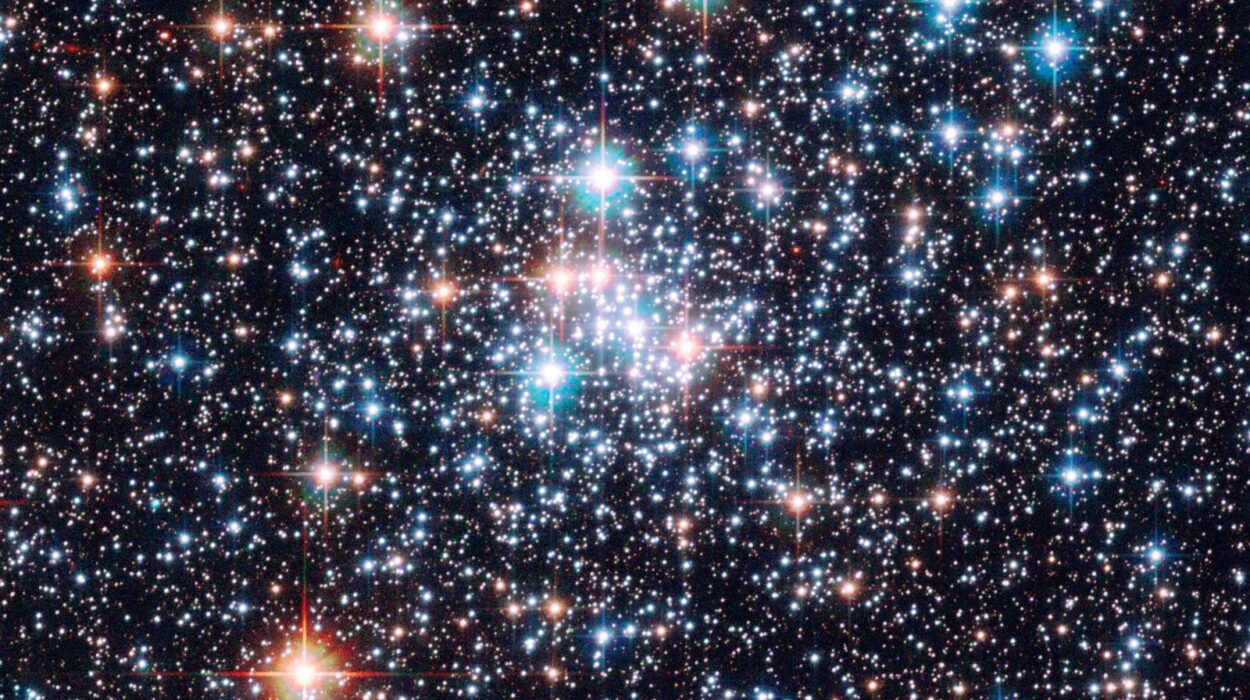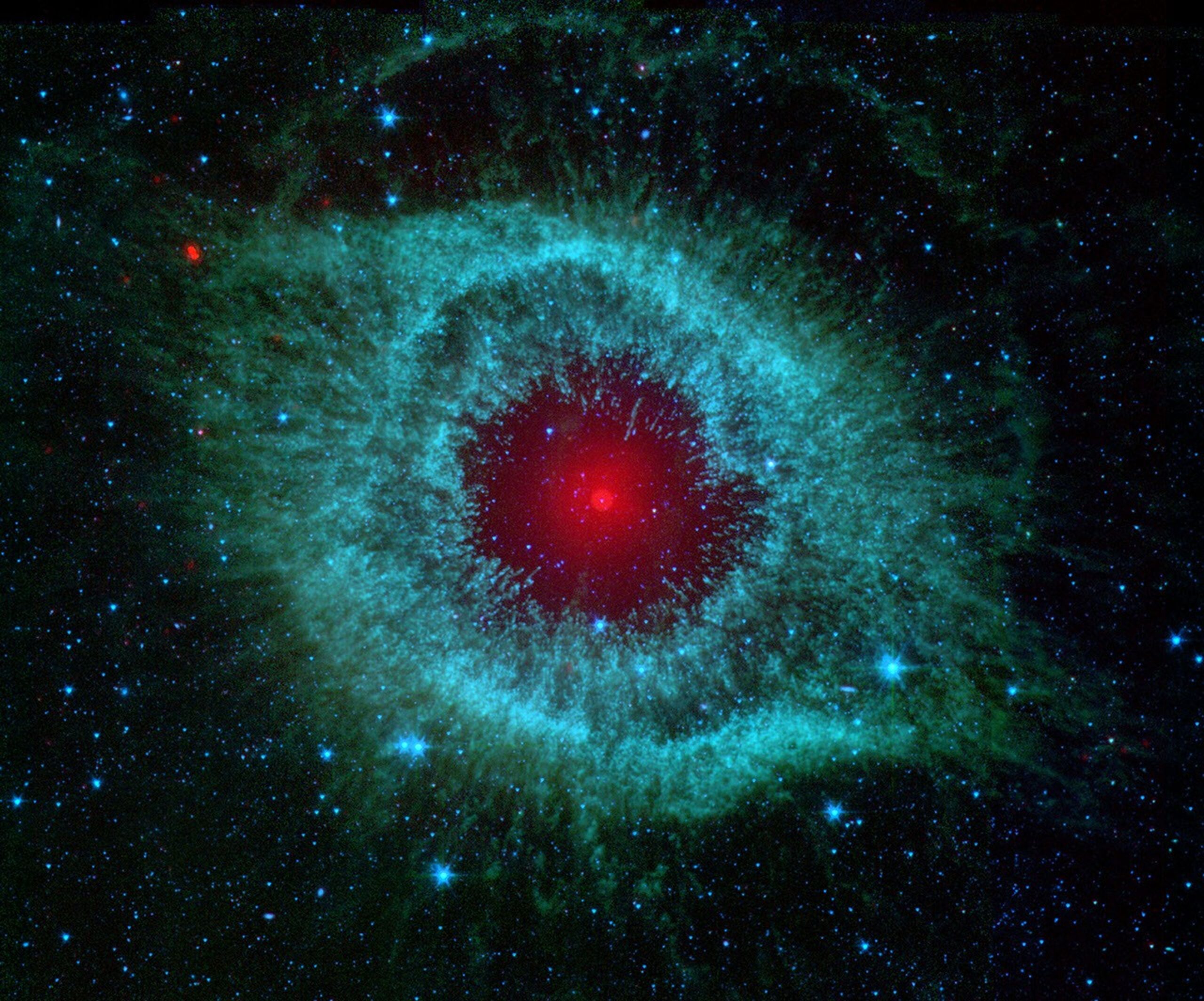
Look up at the night sky on a clear evening, and it is easy to feel both amazed and humbled. Thousands of stars sparkle overhead, but those bright points of light are only a tiny fraction of the stars that exist in our galaxy. Beyond them lie billions of other galaxies, each filled with countless stars and planets. The universe is so vast that the distances involved are almost impossible to imagine.
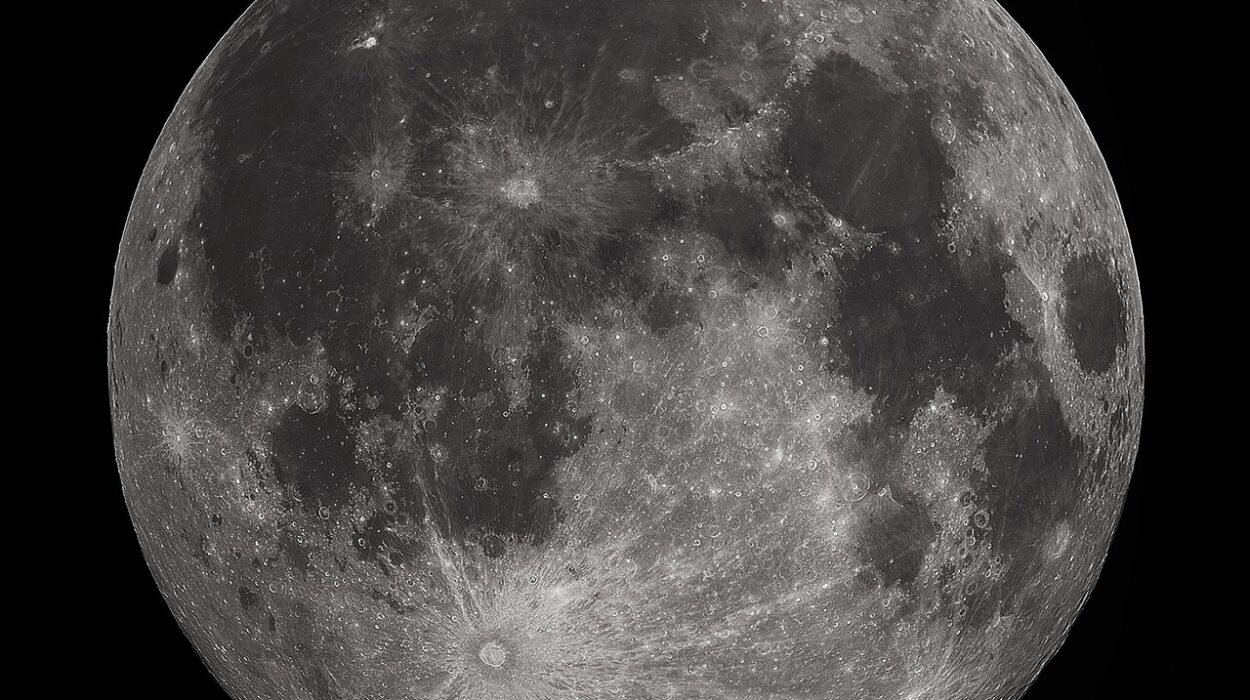
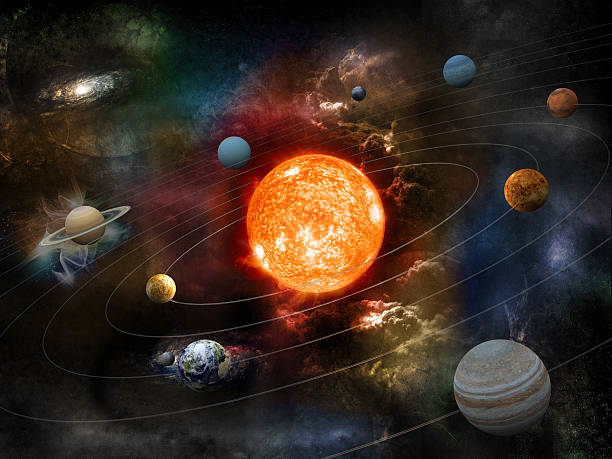
If someone asked how far away the Moon is, we could answer in kilometers or miles. The average distance between Earth and the Moon is about 384,400 kilometers (238,855 miles). The Sun is much farther away, roughly 150 million kilometers (93 million miles). But once we begin talking about the stars, these familiar units become awkward. The numbers grow so enormous that writing them becomes impractical.
To solve this problem, astronomers use special units designed for measuring the immense distances of the universe. One of the most important of these is the parsec. Although the word may sound mysterious, it has a clear scientific meaning and plays a central role in modern astronomy.
Understanding the Meaning of a Parsec
A parsec is a unit of distance used mainly by astronomers to measure how far away stars, nebulae, galaxies, and other celestial objects are from Earth.
Unlike a kilometer or a mile, a parsec is based on geometry rather than everyday travel. It is defined using the way nearby stars appear to shift slightly against the background of much more distant stars as Earth moves around the Sun.
One parsec equals approximately:
3.26 light-years
30.86 trillion kilometers
19.17 trillion miles
About 206,265 times the distance between Earth and the Sun
These numbers are enormous because space itself is enormous. Even the closest stars beyond our Sun are several light-years away, making the parsec a much more convenient unit for astronomical measurements.
Where the Word “Parsec” Comes From
The word parsec is actually a combination of two words:
Parallax
Arcsecond
The name reflects exactly how the unit is defined.
“Parallax” refers to the apparent change in an object’s position when viewed from different locations.
An “arcsecond” is an extremely small unit used to measure angles in the sky.
Together, these ideas form the basis of the parsec.
Although the name sounds technical, it simply describes the distance at which a star would show a parallax angle of one arcsecond when observed from opposite sides of Earth’s orbit around the Sun.
What Is Parallax?
To understand a parsec, you first need to understand parallax.
Parallax is something you experience every day without realizing it.
Hold your thumb at arm’s length.
Close your left eye while keeping your right eye open.
Now switch eyes.
Your thumb seems to move against the background, even though it has not actually moved.
This apparent shift occurs because your two eyes view the thumb from slightly different positions.
Astronomers use exactly the same principle.
Instead of using two eyes, they observe a nearby star from two different positions in Earth’s orbit around the Sun.
Since Earth travels around the Sun once each year, astronomers can observe the same star six months apart. During that time, Earth has moved to the opposite side of its orbit, providing two observation points separated by about 300 million kilometers (186 million miles).
Nearby stars appear to shift slightly compared with much more distant stars.
The amount of this tiny shift allows astronomers to calculate the star’s distance.
How a Parsec Is Defined
Imagine Earth on one side of its orbit around the Sun.
Six months later, Earth reaches the opposite side.
The distance between these two observing positions equals twice the average Earth-Sun distance.
Now imagine observing a nearby star from both positions.
If that star appears to move by exactly two arcseconds between the observations, then half of that shift—the parallax angle—is one arcsecond.
A star showing a parallax angle of one arcsecond is defined to be exactly one parsec away.
This definition comes directly from geometry and does not depend on the brightness of the star or its physical size.
Because it relies on measurable angles, it provides one of the most reliable methods for determining distances to nearby stars.
Why Astronomers Do Not Use Kilometers
Kilometers work well on Earth.
They also work for measuring distances within the Solar System.
But beyond that, the numbers become overwhelming.
For example, Proxima Centauri, the nearest known star to the Sun, is about:
40 trillion kilometers away
Writing and comparing such enormous numbers repeatedly would be inconvenient.
Instead, astronomers simply say that Proxima Centauri is about 1.3 parsecs away.
This is much easier to understand and communicate.
As distances increase into millions or billions of light-years, using parsecs becomes even more practical.
Parsec Versus Light-Year
Many people confuse parsecs with light-years.
Both measure distance—not time.
A light-year is the distance that light travels in one year.
Since light moves at approximately 299,792 kilometers per second (186,282 miles per second) in a vacuum, one light-year equals about 9.46 trillion kilometers.
A parsec is slightly larger.
One parsec equals approximately 3.26 light-years.
Neither unit measures how long something takes to travel.
Instead, they describe how far away an object is.
Astronomers often choose between the two depending on the context.
Popular science articles frequently use light-years because the concept is easier for the public to imagine.
Professional astronomers often prefer parsecs because many astronomical calculations naturally produce distances in parsecs.
Measuring the Distance to Stars
Parallax provides one of the oldest and most accurate methods for measuring nearby stars.
The closer a star is, the larger its apparent shift.
More distant stars show much smaller shifts.
Eventually, stars become so distant that the parallax angle is too tiny to measure accurately using Earth-based observations alone.
Modern space telescopes have dramatically improved these measurements.
The European Space Agency’s Gaia mission has measured the positions and distances of more than a billion stars with extraordinary precision.
These observations allow astronomers to create the most detailed three-dimensional map of our Milky Way ever produced.
Why the Parsec Is So Useful
The parsec offers several advantages for astronomy.
Because it is based on geometry, it provides direct distance measurements rather than estimates based on brightness or other indirect methods.
Many astronomical equations become simpler when distances are expressed in parsecs.
Researchers studying stars, galaxies, and the structure of the universe often use parsecs as their standard unit.
Scientific papers commonly describe distances in parsecs, kiloparsecs, or megaparsecs rather than light-years.
Kiloparsecs, Megaparsecs, and Gigaparsecs
The universe is far too large for even single parsecs to describe every distance conveniently.
Astronomers therefore use larger versions of the same unit.
A kiloparsec equals one thousand parsecs.
A megaparsec equals one million parsecs.
A gigaparsec equals one billion parsecs.
These larger units are especially useful when discussing galaxies and the large-scale structure of the universe.
For example, the diameter of the Milky Way is about 30 kiloparsecs.
Nearby galaxies are often measured in hundreds of kiloparsecs or several megaparsecs.
The most distant known galaxies lie billions of light-years away, corresponding to several gigaparsecs.
The Milky Way in Parsecs
Using parsecs helps astronomers describe the enormous scale of our own galaxy.
The Sun lies roughly 8 kiloparsecs from the center of the Milky Way.
The galaxy itself spans approximately 30 kiloparsecs across.
Its central bulge, spiral arms, star clusters, and giant clouds of gas are all commonly described using parsecs.
This consistent unit makes it easier for astronomers around the world to compare observations and develop models of galactic structure.
Measuring Galaxies Beyond the Milky Way
For nearby galaxies, astronomers can sometimes use parallax indirectly by calibrating other distance measurement techniques.
As distances become greater, they rely on objects whose intrinsic brightness is already known, such as Cepheid variable stars or Type Ia supernovae.
These methods are calibrated using nearby stars whose distances were originally measured through parallax.
In this way, the parsec forms the foundation of what astronomers call the cosmic distance ladder—a sequence of methods that extends our ability to measure distances from nearby stars to galaxies billions of light-years away.
Without the parsec, accurately measuring the size of the observable universe would be far more difficult.
Is a Parsec a Unit of Time?
One of the most common misconceptions about the parsec comes from science fiction.
Some people mistakenly believe it measures time.
It does not.
A parsec is always a unit of distance.
It is comparable to kilometers, miles, or light-years—not seconds, hours, or years.
This misunderstanding became especially famous after an early line in the Star Wars films referred to completing a route in “less than twelve parsecs.” While fans and later stories have offered explanations within the fictional universe, in real astronomy a parsec has always been a measure of distance.
How Modern Technology Measures Parallax
For centuries, measuring stellar parallax was incredibly difficult because the apparent shifts are extremely small.
One arcsecond is equal to just one 3,600th of a degree.
Modern observatories equipped with highly sensitive detectors can measure angles far smaller than a single arcsecond.
Space telescopes avoid the blurring effects of Earth’s atmosphere, allowing even greater precision.
The Gaia spacecraft has measured stellar positions with accuracies reaching microarcseconds for many stars—millions of times smaller than the angle subtended by the full Moon in the sky.
These remarkable measurements have transformed our understanding of the Milky Way’s structure and evolution.
Why Distance Matters in Astronomy
Knowing how far away an object is is essential for understanding almost everything else about it.
Distance allows astronomers to calculate a star’s true brightness, size, mass, and energy output.
It helps determine the age of star clusters, the structure of galaxies, and the expansion rate of the universe.
Without accurate distances, many astronomical observations would be impossible to interpret correctly.
The parsec therefore serves as one of the most important building blocks in modern astrophysics.
The Future of Measuring Cosmic Distances
Astronomy continues to improve its methods for measuring distances across the universe.
Future space missions and more powerful telescopes will determine stellar positions with even greater accuracy.
Combined with advances in computer modeling and observational technology, these measurements will help scientists better understand dark matter, galaxy formation, stellar evolution, and the history of cosmic expansion.
Although new technologies continue to emerge, the parsec will remain one of astronomy’s fundamental units because it is rooted in the simple geometry of Earth’s orbit around the Sun.
Conclusion
A parsec may sound like a complicated scientific term, but its purpose is straightforward: it helps astronomers measure the vast distances between Earth and the stars. Defined through the geometric method of stellar parallax, one parsec equals about 3.26 light-years, making it an ideal unit for describing the immense scale of the universe.
From mapping nearby stars to measuring galaxies millions of light-years away, the parsec has become an indispensable tool in astronomy. It connects careful observations with precise mathematics, allowing scientists to build an increasingly accurate picture of the cosmos. Every time astronomers calculate the distance to a star or chart the structure of the Milky Way, the parsec quietly plays its part, helping humanity understand just how vast—and how extraordinary—the universe truly is.