Every morning, the Sun rises without fail. It warms our planet, powers our climate, fuels the growth of plants, and makes life on Earth possible. Because it has shone steadily for billions of years, it is easy to think of the Sun as something permanent—an eternal beacon that will never fade.
But the universe tells a different story.
Like every other star, the Sun was born, it has lived for billions of years, and one day it will reach the end of its life. Although that end is unimaginably far in the future, astronomers understand the Sun’s life cycle remarkably well. By studying stars throughout our galaxy and applying the laws of physics, scientists can predict how the Sun will evolve over billions of years.
The reassuring news is that humanity does not need to worry about the Sun dying anytime soon. The Sun is still in the prime of its life, and its dramatic final chapters lie billions of years ahead.
The Sun Is a Star
The Sun is not unique in the universe. It is one of hundreds of billions of stars in the Milky Way galaxy and one of trillions upon trillions of stars across the observable universe.
It is classified as a G-type main-sequence star, often called a “yellow dwarf.” Despite the name, the Sun actually appears white when viewed from space. Earth’s atmosphere scatters shorter wavelengths of light, making it look yellow from the ground, especially near sunrise and sunset.
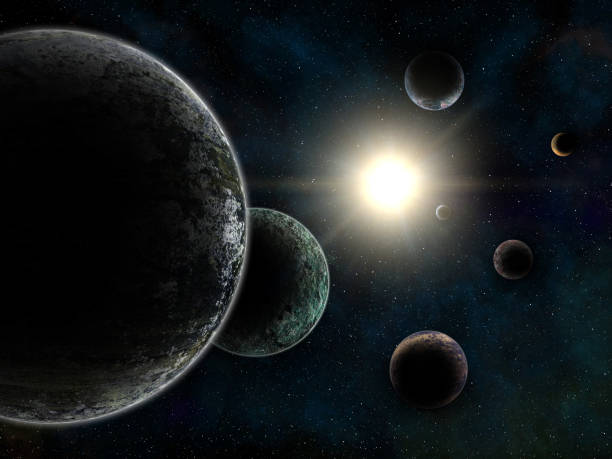
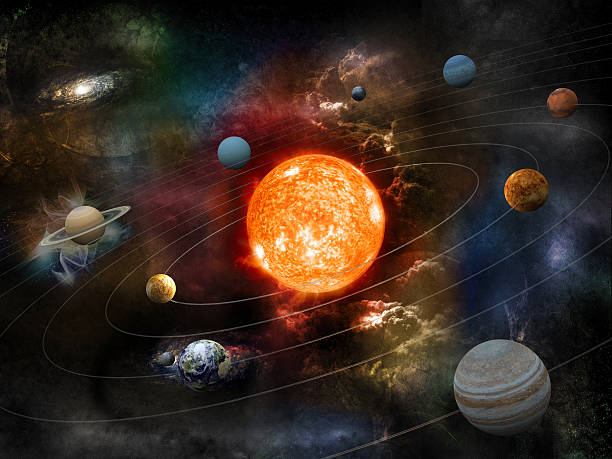
The Sun contains about 99.8% of the total mass of our Solar System. Everything else—planets, moons, asteroids, comets, and dust—orbits this enormous ball of hot plasma.
At its core, temperatures reach about 15 million degrees Celsius (27 million degrees Fahrenheit). Under these extreme conditions, hydrogen atoms fuse together to form helium, releasing enormous amounts of energy. This process, known as nuclear fusion, is what allows the Sun to shine.
How Old Is the Sun?
Scientists estimate that the Sun formed about 4.6 billion years ago.
It was born from a giant cloud of gas and dust known as a molecular cloud. Gravity slowly pulled this material together, forming a dense center that became hotter and hotter.
Eventually, the pressure and temperature became high enough to ignite nuclear fusion.
That moment marked the birth of our Sun.
Today, after billions of years, the Sun has reached roughly the middle of its expected lifetime.
How Long Will the Sun Live?
Stars spend most of their lives in a stable phase called the main sequence.
During this stage, hydrogen in the core continuously fuses into helium. The outward pressure produced by fusion perfectly balances the inward pull of gravity.
This balance keeps the Sun remarkably stable.
Astronomers estimate that the Sun’s total main-sequence lifetime will be about 10 billion years.
Since it is currently about 4.6 billion years old, the Sun has approximately 5 billion years of stable life remaining.
In other words, the Sun is roughly halfway through its life.
Will the Sun Suddenly Die?
Many people imagine the Sun exploding one day without warning.
That is not what will happen.
The Sun is simply not massive enough to end its life as a supernova.
Instead, its death will be slow, gradual, and unfold over billions of years.
The changes will occur so slowly that no human lifetime could ever notice them directly.
Even compared to the age of civilizations, the Sun appears almost perfectly constant.
The Sun Is Slowly Getting Brighter
Although the Sun seems unchanged from day to day, it is gradually becoming brighter.
Since its birth, the Sun has increased its brightness by roughly 30%.
This happens because helium gradually accumulates in the core as hydrogen is consumed.
The growing helium core becomes denser and hotter, causing fusion to proceed more efficiently.
As a result, the Sun slowly emits more energy.
Today, this increase is far too gradual to notice.
However, over hundreds of millions of years, it has important consequences.
What Will Happen to Earth First?
Long before the Sun actually dies, life on Earth will face increasing challenges.
In approximately one billion years, the Sun’s higher brightness is expected to make Earth’s climate much warmer than today.
Oceans will gradually evaporate.
Water vapor, itself a greenhouse gas, would likely accelerate the warming process.
Eventually, Earth’s surface could become too hot for liquid water to remain stable over long periods.
Without liquid water, life as we know it would become increasingly difficult to sustain.
This transformation would occur billions of years before the Sun reaches the end of its life.
Running Out of Hydrogen
Around 5 billion years from now, the Sun’s core will have used up nearly all of its hydrogen fuel.
Without enough hydrogen fusion in the core, gravity will begin compressing the central region.
As the core contracts, it heats up dramatically.
Meanwhile, hydrogen fusion continues in a shell surrounding the core.
This extra energy causes the Sun’s outer layers to expand enormously.
The Sun will no longer resemble the familiar star we know today.
The Red Giant Phase
The next major stage of the Sun’s life is called the red giant phase.
During this transformation, the Sun will grow hundreds of times larger than it is today.
Its surface temperature will actually decrease, giving it a reddish appearance, even though its total brightness will become much greater.
From Earth, if our planet still existed, the Sun would dominate the sky in an astonishing way.
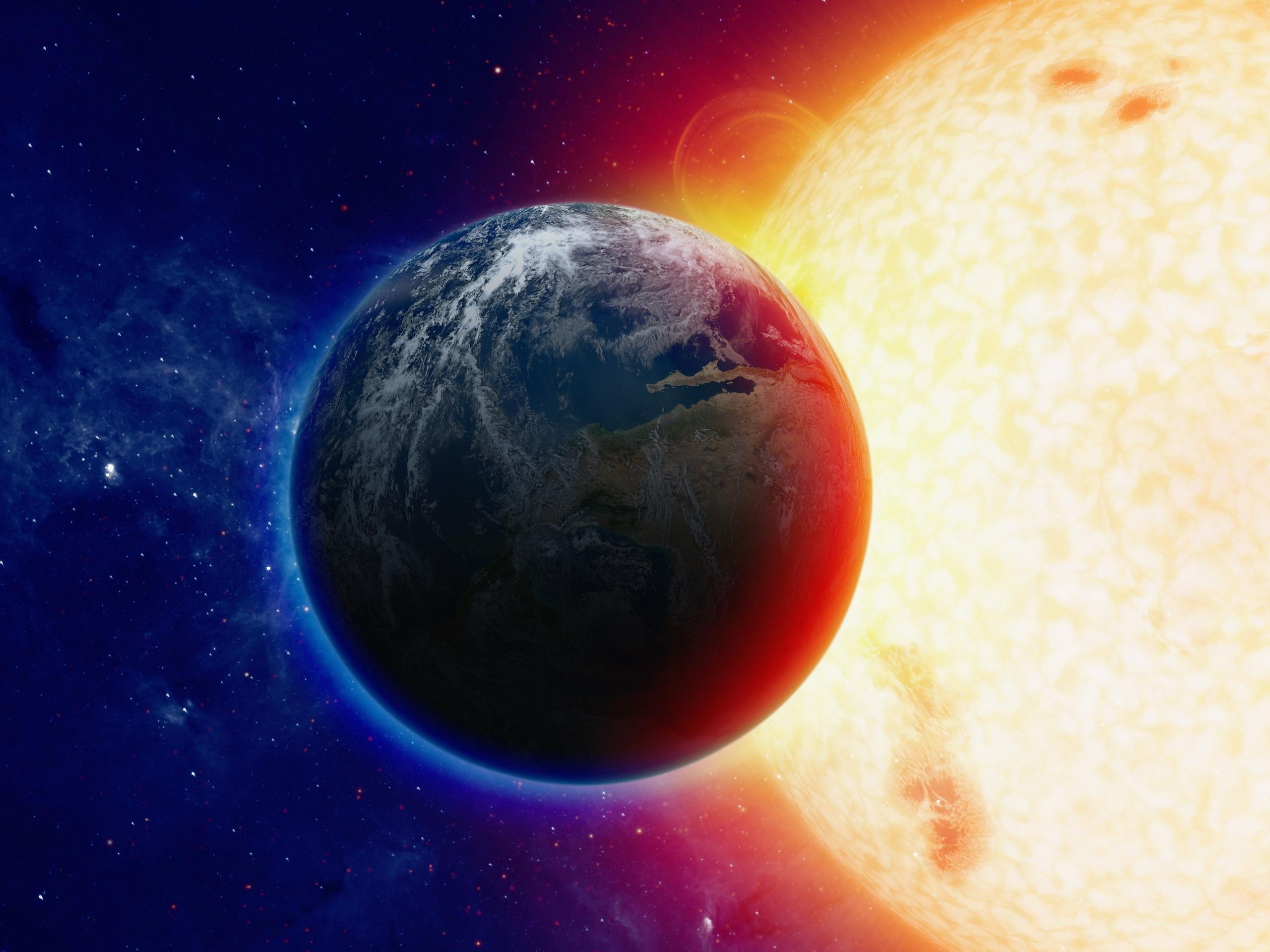
Its diameter may eventually extend close to Earth’s present orbit.
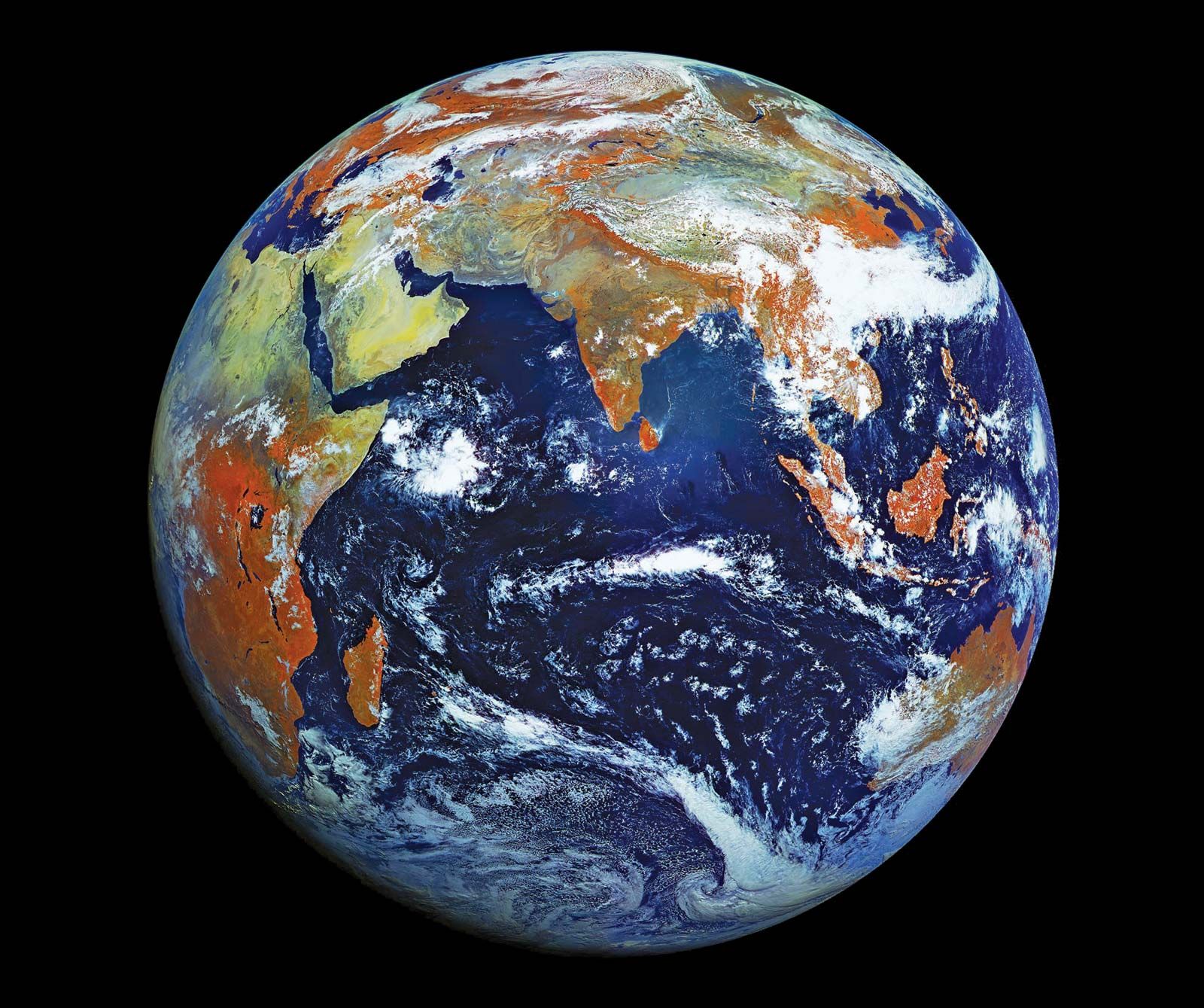
Whether Earth will ultimately be swallowed by the expanding Sun remains an active area of scientific research. Current models suggest that increasing solar mass loss during the red giant phase causes Earth’s orbit to drift outward, while tidal interactions with the Sun work in the opposite direction. Depending on the balance of these effects, Earth could be engulfed or survive in a scorched, uninhabitable orbit. Regardless of the outcome, the planet would no longer be capable of supporting life.
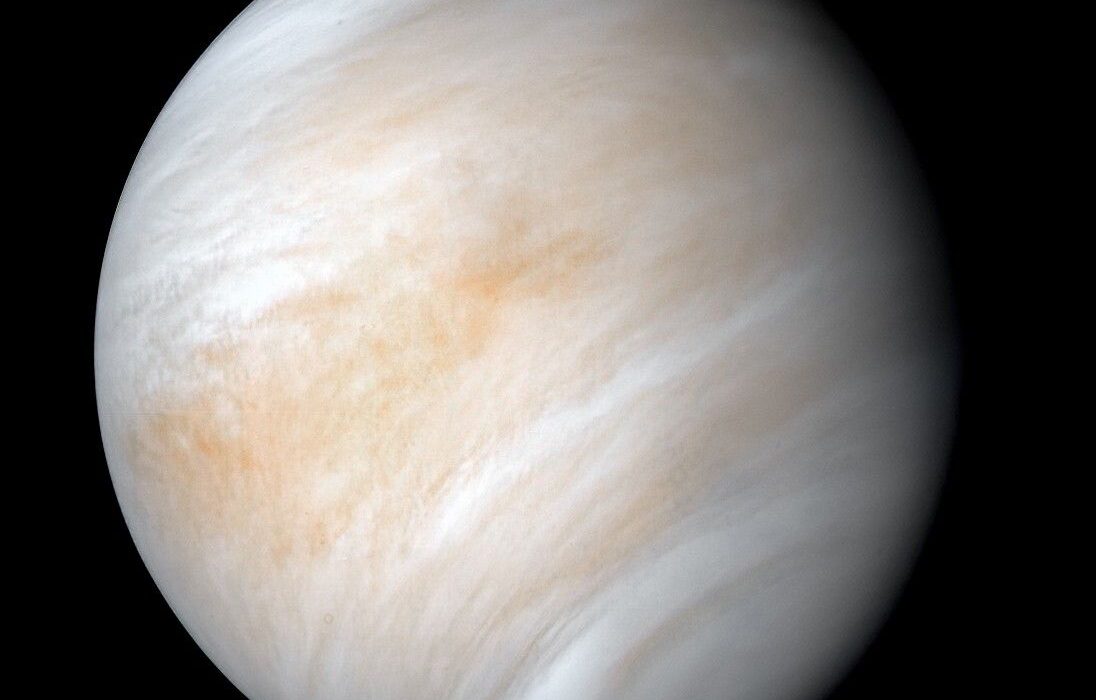
Mercury and Venus are expected to be engulfed by the expanding Sun.
Helium Fusion Begins
As the Sun’s core continues contracting, temperatures eventually become high enough for helium fusion.
Helium atoms begin fusing into carbon and oxygen.
For stars like the Sun, this ignition occurs suddenly in an event called the helium flash.
Despite its dramatic name, the flash would be hidden deep inside the Sun and would not produce a visible explosion.
Following this event, the Sun settles into another relatively stable phase for a much shorter period than its hydrogen-burning lifetime.
The Final Giant Stage
Eventually, helium in the core also becomes exhausted.
The Sun lacks enough mass to continue fusion of heavier elements such as carbon.
Instead, it becomes unstable.
Its outer layers repeatedly expand and contract.
Strong stellar winds begin blowing vast amounts of gas into surrounding space.
The Sun gradually sheds a significant fraction of its mass.
The Birth of a Planetary Nebula
As the Sun’s outer layers drift away, they create one of the most beautiful sights in astronomy.
The glowing shell of gas surrounding the dying star is called a planetary nebula.
The name is somewhat misleading because planetary nebulae have nothing to do with planets. Early astronomers simply thought these objects resembled planets through small telescopes.
Ultraviolet radiation from the hot stellar core causes the expanding gas to glow in brilliant colors.
These glowing clouds enrich the galaxy with elements such as carbon, nitrogen, and oxygen.
Future generations of stars and planets will incorporate this material.
In a sense, dying stars help create the ingredients for future worlds.
The White Dwarf
After shedding its outer layers, only the Sun’s hot core will remain.
This remnant is known as a white dwarf.
Although roughly similar in size to Earth, a white dwarf contains about half the Sun’s original mass packed into an incredibly small volume.
Its density is astonishing.
A teaspoon of white dwarf material would weigh many tons on Earth.
No nuclear fusion occurs inside a white dwarf.
Instead, it shines because it retains enormous amounts of heat from its previous life.
Initially, the white dwarf will be extremely hot.
Over billions and eventually trillions of years, it will slowly cool.
The Black Dwarf That Doesn’t Yet Exist
As a white dwarf loses heat, it becomes dimmer and cooler.
Eventually, after an extraordinarily long time, it would become a black dwarf.
A black dwarf is a completely cooled stellar remnant that no longer emits significant heat or light.
However, there is an interesting fact.
The universe is only about 13.8 billion years old.
That is far too young for any white dwarf to have cooled into a black dwarf.
As a result, astronomers believe that no black dwarfs currently exist anywhere in the universe.
They remain purely theoretical objects that may appear only in the unimaginably distant future.
Could the Sun Explode?
No.
This is one of the biggest misconceptions about the Sun.
Massive stars, typically those with at least about eight times the Sun’s mass, can end their lives in spectacular supernova explosions.
The Sun is far too small for this fate.
Instead of exploding, it will gently shed its outer layers and leave behind a white dwarf.
Its ending will be peaceful compared with the violent deaths of much larger stars.
Could Humans Survive the Sun’s Death?
The Sun’s death is so far in the future that it is impossible to predict where humanity—or any descendants of humanity—might be by then.
Five billion years is an almost incomprehensible span of time.
For perspective, complex animals have existed on Earth for only about 600 million years.
Modern humans have existed for roughly 300,000 years.
Recorded history covers only a few thousand years.
Compared with the Sun’s remaining lifetime, all of human civilization occupies only a tiny instant.
If intelligent life still exists billions of years from now, it may have developed technologies unimaginable today or expanded far beyond our Solar System.
Why Do Scientists Know the Sun’s Future?
No one can watch a single star evolve over billions of years.
Instead, astronomers observe millions of stars at different stages of their lives.
Some stars are young.
Others resemble the Sun today.
Some have already become red giants.
Others exist as white dwarfs.
By comparing these stars and applying well-tested theories of stellar physics, scientists reconstruct the complete life cycle of stars.
Computer simulations based on gravity, nuclear fusion, thermodynamics, and atomic physics closely match what astronomers observe across the universe.
This gives scientists great confidence in predictions about the Sun’s future.
The Sun’s Legacy
Although the Sun will eventually die, its influence will continue long afterward.
Throughout its lifetime, it has created the conditions necessary for life on Earth.
The heavier elements produced by stars throughout cosmic history—including carbon in our bodies, oxygen in the air, calcium in our bones, and iron in our blood—were forged in earlier generations of stars.
When the Sun eventually releases its outer layers into space, it will contribute more material to the galaxy.
That gas may one day become part of entirely new stars, planets, and perhaps even living worlds.
In this way, the death of one star becomes the beginning of something new.
Conclusion
The Sun will not live forever, but neither will it disappear anytime soon. At approximately 4.6 billion years old, it remains in the stable middle of its life and is expected to continue shining for about another 5 billion years. Only after exhausting its hydrogen fuel will it transform into a red giant, shed its outer layers to form a planetary nebula, and finally settle as a slowly cooling white dwarf.
For us, the Sun’s eventual death is not a cause for fear but a reminder that change is woven into the fabric of the universe. Even stars, the seemingly eternal lights of the night sky, are born, evolve, and eventually fade. Yet their endings are also acts of creation, scattering the raw materials that help build future stars, planets, and perhaps new forms of life. In the grand story of the cosmos, the Sun’s death is not truly an ending—it is another chapter in the never-ending cycle of the universe.