The night sky has inspired human curiosity for thousands of years. Long before telescopes existed, people watched bright objects slowly wander across the heavens, wondering what they were. Today, thanks to centuries of scientific discovery and space exploration, we know that these wandering lights are planets—worlds that orbit our Sun, each with its own remarkable story.
One of the most common questions people ask about astronomy is, “How many planets are in the Solar System?” The answer is both simple and fascinating. According to modern astronomy, there are eight planets in the Solar System. These eight worlds vary enormously in size, composition, temperature, and appearance, yet all are bound together by the Sun’s gravity.
Understanding why there are eight planets—and why Pluto is no longer considered one—opens the door to a much deeper understanding of how our cosmic neighborhood formed and continues to evolve.
The Solar System at a Glance
The Solar System is a vast collection of celestial objects held together by the Sun’s gravity. At its center is the Sun, a medium-sized star that contains more than 99.8% of the Solar System’s total mass. Its enormous gravitational pull keeps planets, dwarf planets, moons, asteroids, comets, and countless smaller objects moving in stable orbits.
The eight planets travel around the Sun along paths called orbits. Although diagrams often show them lined up neatly, the planets are usually spread across billions of kilometers of space.
The Solar System formed about 4.6 billion years ago from a giant cloud of gas and dust known as the solar nebula. As gravity caused this cloud to collapse, the Sun formed at the center, while the remaining material gradually came together to create the planets and other objects we see today.
The Eight Planets of the Solar System
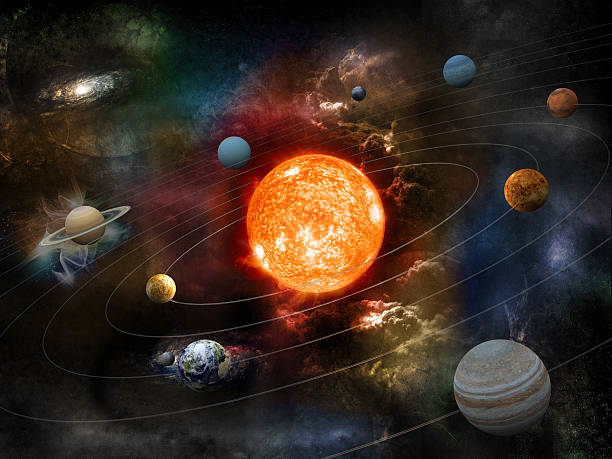
Modern astronomy recognizes eight official planets. Starting from the Sun, they are Mercury, Venus, Earth, Mars, Jupiter, Saturn, Uranus, and Neptune.
Each planet is unique, offering scientists valuable clues about how planets form and evolve.
Mercury: The Smallest Planet
Mercury is the closest planet to the Sun and also the smallest planet in the Solar System.
Because it has almost no atmosphere, temperatures on Mercury vary dramatically. During the day, its surface becomes extremely hot, while nighttime temperatures plunge far below freezing.
A single day on Mercury, measured from one sunrise to the next, lasts longer than its year.
Its crater-covered landscape resembles Earth’s Moon, revealing billions of years of impacts from space rocks.
Venus: Earth’s Mysterious Twin
Venus is often called Earth’s twin because the two planets are nearly the same size.
However, their similarities end there.
Venus has an incredibly dense atmosphere made mostly of carbon dioxide, creating a powerful greenhouse effect. Surface temperatures reach about 465°C (869°F), making Venus the hottest planet in the Solar System—even hotter than Mercury.
Thick clouds of sulfuric acid permanently hide its rocky surface from ordinary view.
Earth: Our Home Planet
Earth is the third planet from the Sun and the only world known to support life.
Its unique combination of liquid water, a protective atmosphere, moderate temperatures, and a magnetic field has allowed life to flourish for billions of years.
About 71% of Earth’s surface is covered by oceans, making it appear as a beautiful blue world from space.
Scientists continue searching for planets around other stars that share similar characteristics.
Mars: The Red Planet
Mars has fascinated humans for generations.
Its reddish color comes from iron oxide—essentially rust—covering much of its surface.
Mars has enormous volcanoes, vast canyons, polar ice caps, and evidence that rivers and lakes existed billions of years ago.
Today, numerous robotic spacecraft explore Mars, searching for signs that ancient microbial life may once have existed there and preparing for future human missions.
Jupiter: The Giant King
Jupiter is the largest planet in the Solar System.
Its diameter is about eleven times greater than Earth’s, and its mass exceeds that of all the other planets combined.
Unlike Earth, Jupiter has no solid surface. It is primarily composed of hydrogen and helium.
One of Jupiter’s most famous features is the Great Red Spot, a gigantic storm that has been raging for centuries.
Jupiter also has a powerful magnetic field and dozens of known moons, including Ganymede, the largest moon in the Solar System.
Saturn: The Ringed Wonder
Saturn is famous for its breathtaking ring system.
Although all four giant planets have rings, Saturn’s are by far the most spectacular.
The rings consist mainly of countless particles of water ice mixed with rocky material. Some particles are as small as grains of dust, while others are as large as mountains.
Like Jupiter, Saturn is mostly hydrogen and helium.
Its moon Titan possesses a thick atmosphere and lakes filled with liquid methane and ethane, making it one of the most intriguing places in the Solar System.
Uranus: The Tilted Planet
Uranus is unlike any other planet.
Its rotation axis is tilted by about 98 degrees, causing it to appear as though it rolls around the Sun on its side.
Scientists believe this unusual orientation may have resulted from a massive collision early in the Solar System’s history.
Uranus has a pale blue-green color because methane in its atmosphere absorbs red light while reflecting blue and green wavelengths.
It is classified as an ice giant because much of its interior consists of water, ammonia, and methane under extreme pressure.
Neptune: The Windy Blue World
Neptune is the eighth and most distant known planet from the Sun.
Despite receiving very little sunlight, Neptune has the fastest winds measured anywhere in the Solar System, reaching speeds greater than 2,000 kilometers per hour.
Like Uranus, Neptune is an ice giant with a deep blue appearance caused by methane in its atmosphere.
Its largest moon, Triton, orbits in the opposite direction of Neptune’s rotation, suggesting it was likely captured from the Kuiper Belt long ago.
Why Are There Only Eight Planets?
For much of the twentieth century, schoolchildren learned that the Solar System had nine planets.
The ninth planet was Pluto.
However, as astronomers discovered many other icy objects beyond Neptune, they realized Pluto was only one member of a much larger population of distant worlds.
Some newly discovered objects were nearly as large as Pluto.
This raised an important question.
If Pluto was considered a planet, should these newly found objects also become planets?
To resolve the issue, astronomers needed a clear scientific definition of the word “planet.”
What Makes a Planet?
In 2006, the International Astronomical Union (IAU), the organization responsible for naming astronomical objects, established a formal definition for planets in the Solar System.
According to this definition, a planet must orbit the Sun, have enough mass for its own gravity to pull it into a nearly round shape, and have cleared the neighborhood around its orbit of most other objects.
The first two conditions describe Pluto perfectly.
However, Pluto does not satisfy the third condition because it shares its orbital region with many similar icy bodies in the Kuiper Belt.
As a result, Pluto was reclassified as a dwarf planet rather than a full-sized planet.
Is Pluto Still Important?
Absolutely.
Although Pluto is no longer classified as one of the eight planets, it remains one of the most fascinating worlds in the Solar System.
The New Horizons spacecraft flew past Pluto in 2015, revealing an unexpectedly complex landscape featuring mountains of water ice, enormous plains of frozen nitrogen, glaciers, possible cryovolcanoes, and a surprisingly thin atmosphere.
Far from being a forgotten object, Pluto has become one of the most scientifically exciting destinations ever explored.
What Is a Dwarf Planet?
A dwarf planet resembles a planet in many ways.
It orbits the Sun and is large enough for gravity to make it nearly spherical.
However, unlike the eight planets, it has not cleared its orbital neighborhood.
Several dwarf planets are officially recognized, including Pluto, Eris, Haumea, Makemake, and Ceres.
Astronomers continue discovering additional candidates in the outer Solar System.
The Two Main Types of Planets
The eight planets naturally fall into two broad groups.
The four inner planets—Mercury, Venus, Earth, and Mars—are known as terrestrial planets.
They are relatively small, dense, and composed primarily of rock and metal.
The four outer planets—Jupiter, Saturn, Uranus, and Neptune—are giant planets.
Jupiter and Saturn are gas giants dominated by hydrogen and helium, while Uranus and Neptune are ice giants containing larger amounts of water, ammonia, and methane beneath their atmospheres.
This distinction reflects the different conditions under which these worlds formed billions of years ago.
How Far Apart Are the Planets?
The Solar System is far larger than many illustrations suggest.
If Earth were the size of a marble, Jupiter would be several meters away, and Neptune would be much farther still.
Light from the Sun takes about eight minutes to reach Earth but more than four hours to reach Neptune.
The enormous distances between planets mean that spacecraft often require years to travel from one world to another.
Do All Planets Have Moons?
Not all planets have natural satellites.
Mercury and Venus have no moons.
Earth has one.
Mars has two small moons.
The giant planets possess extensive moon systems.
Jupiter alone has nearly one hundred confirmed moons, while Saturn has even more known moons than any other planet.
Many of these moons are remarkable worlds in their own right.
Europa likely hides a vast ocean beneath its icy crust.
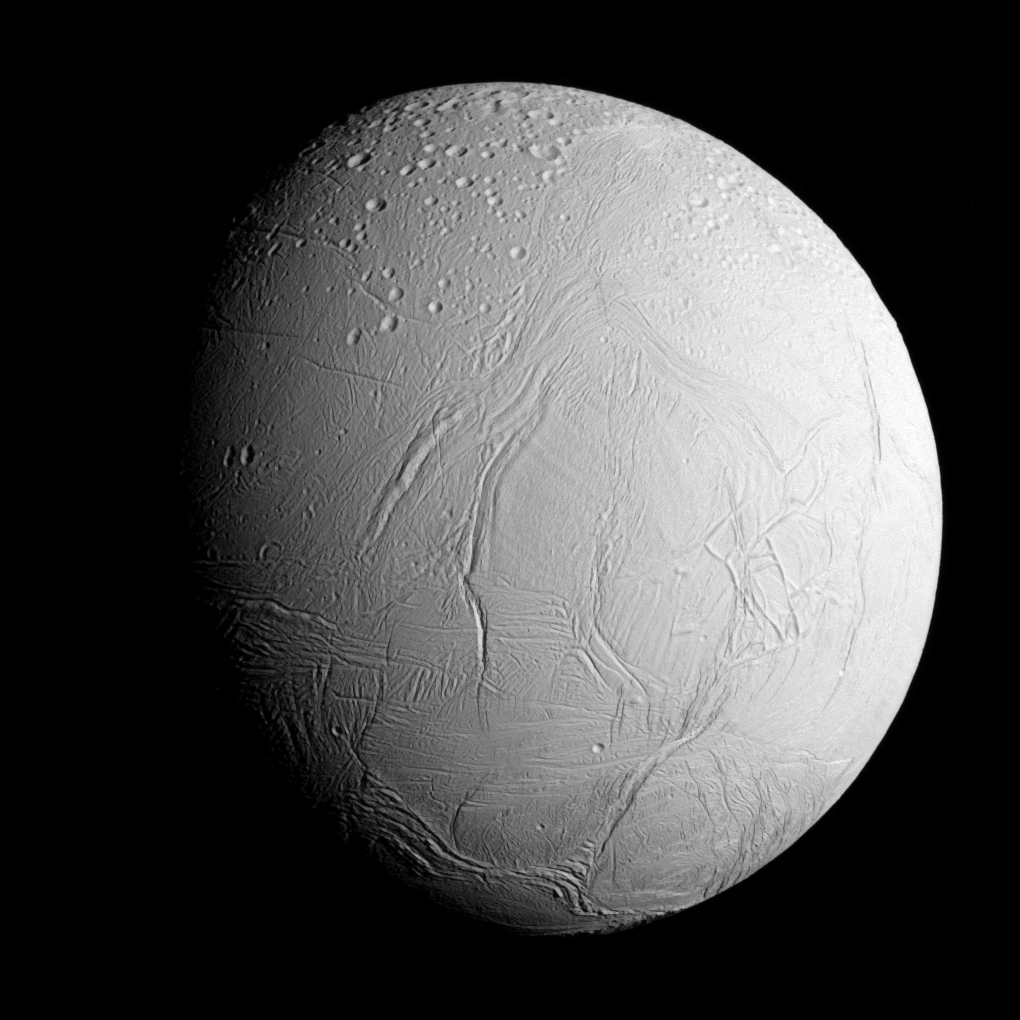
Enceladus ejects towering plumes of water vapor into space.
Titan has rivers and lakes—not of water, but of liquid methane and ethane.
These discoveries have expanded the search for environments where life might exist beyond Earth.
Are There More Planets Waiting to Be Found?
Within the officially recognized Solar System, there are eight known planets.
However, astronomers continue searching for additional large objects far beyond Neptune.
One intriguing possibility is the hypothetical Planet Nine.
Some distant icy bodies follow unusual orbits that could potentially be explained by the gravitational influence of an undiscovered giant planet.
So far, no direct observations have confirmed Planet Nine’s existence.
Whether it truly exists remains one of modern astronomy’s most exciting unanswered questions.
How Do Scientists Study the Planets?
Planetary science has entered an extraordinary era.
Powerful telescopes observe planets from Earth and from space.
Orbiters continuously map planetary surfaces and atmospheres.
Landers investigate conditions directly on alien worlds.
Rovers drive across the Martian landscape, collecting rocks and searching for evidence of ancient environments.
Spacecraft have flown past every major planet in the Solar System, while some have entered orbit or landed on their surfaces or moons.
Each mission reveals new surprises, reminding us that the Solar System remains full of mysteries.
How Does Our Solar System Compare With Others?
Since the 1990s, astronomers have discovered thousands of planets orbiting stars beyond our Sun.
These worlds, known as exoplanets, come in astonishing varieties.
Some are larger than Jupiter.
Others are rocky worlds similar in size to Earth.
Some orbit extremely close to their stars, completing an orbit in just a few days, while others travel on elongated paths unlike any planet in our Solar System.
Studying these distant planetary systems helps scientists better understand how our own Solar System formed and whether it is typical or unusual in the universe.
Why Learning About the Planets Matters
The planets are more than distant objects in the sky.
They are natural laboratories that help scientists answer some of humanity’s biggest questions.
How do planets form?
Why did Earth become habitable while Venus became scorching hot?
Could life exist elsewhere?
What can other worlds teach us about Earth’s future?
Every mission, every telescope observation, and every new discovery brings us closer to answering these questions.
The study of planets also inspires technological innovation, international cooperation, and a deeper appreciation for our place in the cosmos.
Conclusion
The Solar System contains eight officially recognized planets, each representing a unique chapter in the story of our cosmic neighborhood. From tiny Mercury racing around the Sun to distant Neptune with its powerful winds, every planet has distinctive characteristics that reveal how diverse planetary worlds can be.
Although Pluto is no longer classified as a planet, its exploration has shown that scientific understanding continues to evolve as new evidence emerges. The Solar System is not simply a collection of planets—it is a dynamic family of worlds, moons, asteroids, comets, and dwarf planets that together tell the remarkable story of our origins.
As new spacecraft journey farther into space and more powerful telescopes peer deeper into the universe, our understanding of these eight planets will continue to grow. Each discovery reminds us that while we have learned an incredible amount about our celestial neighborhood, countless wonders still await exploration.