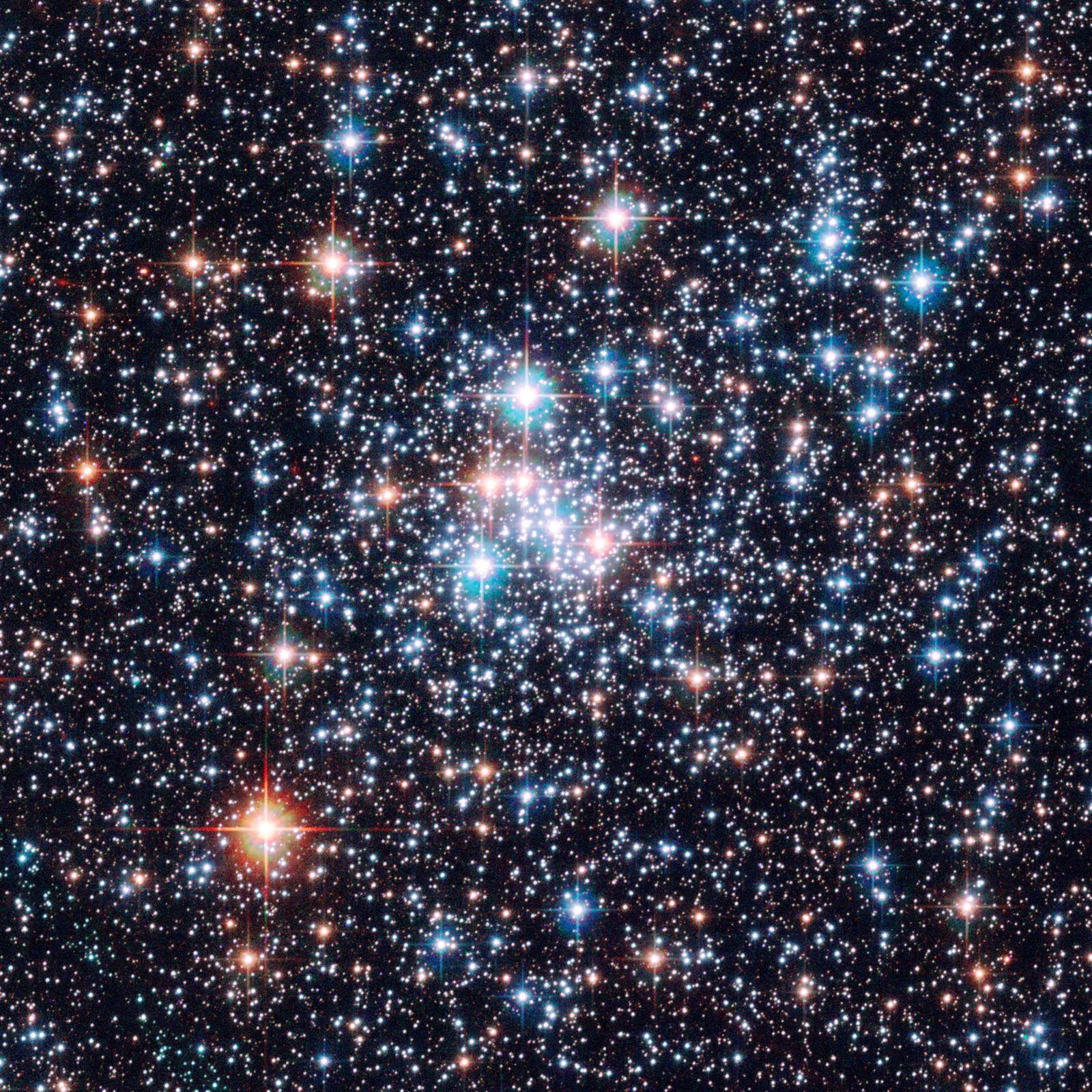
Every clear night, countless tiny points of light decorate the sky, creating one of nature’s most breathtaking sights. For thousands of years, people have looked up at the stars with wonder, using them to navigate oceans, tell stories, create calendars, and ask some of humanity’s biggest questions. Yet those sparkling lights are far more than beautiful decorations. Each one is an enormous, blazing sphere of hot gas, producing incredible amounts of energy and illuminating the vast darkness of space.
Our own Sun is a star. It may seem different because it appears much larger and brighter than the stars we see at night, but that is only because it is much closer to Earth. Every star in the night sky is another sun, often many times larger or brighter than our own, located at extraordinary distances across the universe.
Understanding stars is one of the greatest achievements of modern astronomy. They are the engines that light up galaxies, create the elements needed for planets and life, and shape the evolution of the cosmos itself.
What Is a Star?
A star is a massive, self-luminous ball of hot plasma held together by its own gravity. Plasma is often called the fourth state of matter. It is similar to a gas, but the particles are so hot that electrons become separated from atoms, creating a mixture of charged particles.
Inside a star’s core, temperatures and pressures become so extreme that atomic nuclei fuse together in a process called nuclear fusion. This fusion releases enormous amounts of energy, which travels outward through the star before radiating into space as light, heat, and other forms of electromagnetic radiation.
Unlike planets, stars generate their own light. Planets shine only because they reflect the light of nearby stars.
How Stars Form
Every star begins its life inside a giant cloud of gas and dust floating through space. These clouds, known as molecular clouds or stellar nurseries, contain vast amounts of hydrogen, the most abundant element in the universe.
Over time, gravity slowly pulls parts of the cloud together. As more material accumulates, the growing clump becomes denser and hotter. Eventually, it forms a young object called a protostar.
During this stage, the protostar continues gathering material from its surrounding cloud. The temperature in its center rises steadily as gravity compresses the gas.
When the core reaches roughly 10 million degrees Celsius (18 million degrees Fahrenheit), hydrogen nuclei begin to fuse into helium. At this moment, a true star is born.
The outward pressure created by nuclear fusion balances the inward pull of gravity, allowing the star to remain stable for millions or even billions of years.
What Are Stars Made Of?
Most stars consist primarily of hydrogen and helium.
Hydrogen usually makes up about three-quarters of a star’s mass, while helium accounts for most of the remainder. Small amounts of heavier elements such as oxygen, carbon, nitrogen, iron, silicon, and calcium are also present.
Although these heavier elements represent only a tiny fraction of a star’s total mass, they play an important role in stellar evolution and planetary formation.
Interestingly, almost every atom in your body except hydrogen was created inside stars or during stellar explosions. In a very real sense, humans are made from stardust.
Why Do Stars Shine?
A star shines because of nuclear fusion occurring deep within its core.
In the Sun and many other stars, hydrogen atoms collide under tremendous pressure and temperature. These collisions fuse hydrogen nuclei together to form helium.
The newly formed helium weighs slightly less than the combined mass of the original hydrogen nuclei. The tiny amount of missing mass is converted into energy according to Albert Einstein’s famous equation:
E = mc²
Even a small amount of mass produces an enormous amount of energy.
Every second, the Sun converts about 600 million tons of hydrogen into helium. This process releases enough energy to warm Earth, power its climate, and support nearly all life on our planet.
The Sun Is a Star
Although it feels unique to us, the Sun is actually an ordinary star by cosmic standards.
It belongs to a class known as G-type main-sequence stars, often called yellow dwarfs. The Sun formed approximately 4.6 billion years ago and is expected to continue producing energy for about another 5 billion years.
The Sun contains more than 99.8% of the total mass of our solar system. Its gravity keeps all the planets, moons, asteroids, and comets in orbit.
Without the Sun, Earth would become a frozen, lifeless world within a relatively short time.
How Big Are Stars?
Stars come in an astonishing variety of sizes.
Some stars are only slightly larger than Jupiter, despite having much greater mass.
Others are truly gigantic.
Red supergiants can become hundreds or even more than a thousand times wider than the Sun. If one of these enormous stars replaced the Sun at the center of our solar system, it could extend beyond the orbit of Mars or even Jupiter.
Despite their immense size, many giant stars are surprisingly less dense than smaller stars because their outer layers are spread across enormous volumes.
How Hot Are Stars?
Stars are incredibly hot objects.
The temperature at the Sun’s surface is about 5,500 degrees Celsius (9,900 degrees Fahrenheit), while its core reaches approximately 15 million degrees Celsius (27 million degrees Fahrenheit).
Some stars are much hotter.
Blue stars may have surface temperatures exceeding 30,000 degrees Celsius.
Cooler red stars may have surfaces below 3,500 degrees Celsius.
Despite being called “cool,” these stars are still thousands of degrees hotter than almost anything found on Earth.
Why Are Stars Different Colors?
A star’s color mainly depends on its surface temperature.
Cooler stars appear red or reddish-orange.
Moderately hot stars appear yellow or white.
The hottest stars shine with brilliant blue or blue-white colors.
This relationship follows the principles of thermal radiation, which describe how hot objects emit light at different wavelengths.
The Sun appears white when viewed from space, although Earth’s atmosphere often gives it a yellow appearance during the day.
How Far Away Are Stars?
Stars are separated by enormous distances.
Even the nearest star beyond the Sun, Proxima Centauri, is about 4.24 light-years away.
A light-year is the distance light travels in one year, nearly 9.46 trillion kilometers (5.88 trillion miles).
Because light takes time to travel, looking at distant stars means looking into the past.
When astronomers observe a star located 100 light-years away, they see it as it was 100 years ago.
Some of the most distant stars observed by powerful telescopes emitted their light billions of years before humans even existed.
The Life Cycle of a Star
Like living organisms, stars experience birth, growth, aging, and death.
Their life cycles depend mainly on their mass.
Small stars burn their fuel slowly and may survive for hundreds of billions or even trillions of years.
Stars similar to the Sun spend most of their lives steadily converting hydrogen into helium.
Eventually, hydrogen in the core becomes depleted. The core contracts while the outer layers expand dramatically, transforming the star into a red giant.
Later, the star sheds its outer layers into space, creating a colorful planetary nebula. The remaining core becomes a white dwarf, an extremely dense object roughly the size of Earth.
Massive stars follow a much more dramatic path.
After exhausting their nuclear fuel, they collapse under their own gravity before exploding as spectacular supernovae.
These explosions briefly outshine entire galaxies.
The remaining core may become a neutron star or, if massive enough, collapse further into a black hole.
How Stars Create the Elements
The earliest stars contained mostly hydrogen and helium.
Inside stellar cores, nuclear fusion gradually created heavier elements such as carbon, oxygen, neon, magnesium, silicon, and iron.
When massive stars exploded as supernovae, they forged and scattered even heavier elements including gold, platinum, uranium, and many others throughout space.
These materials later became part of new stars, planets, and eventually living organisms.
Every breath you take contains oxygen produced inside ancient stars. The calcium in your bones, the iron in your blood, and the carbon that forms the basis of life all originated through stellar processes.
Stars are truly the cosmic factories that build the chemical ingredients of the universe.
Why Stars Twinkle
Stars appear to twinkle because of Earth’s atmosphere.
As starlight passes through layers of air with constantly changing temperatures and densities, the light bends slightly in different directions.
This continual shifting causes stars to appear to flicker or sparkle.
Planets usually twinkle much less because they appear as tiny disks rather than nearly perfect points of light.
Astronauts in space do not see stars twinkling because there is no atmosphere to disturb the light.
How Astronomers Study Stars
Although stars are incredibly far away, astronomers have developed remarkable techniques for studying them.
By analyzing a star’s light using spectroscopy, scientists can determine its temperature, chemical composition, motion, magnetic field, and even estimate its age.
The brightness of a star helps reveal its size and distance.
Observations over time allow astronomers to detect planets orbiting distant stars by measuring tiny changes in brightness or subtle shifts in the star’s motion.
Modern telescopes operating across the electromagnetic spectrum—from radio waves to gamma rays—provide increasingly detailed views of stellar activity.
Space telescopes avoid Earth’s atmosphere, allowing even clearer observations of distant stars and galaxies.
Stars and Galaxies
Stars rarely exist alone.
Most belong to galaxies—vast collections of stars, gas, dust, and dark matter bound together by gravity.
Our home galaxy, the Milky Way, contains an estimated 100 billion to 400 billion stars.
The observable universe contains hundreds of billions of galaxies, each filled with countless stars.
This means the total number of stars in the observable universe is extraordinarily large—far exceeding the number of grains of sand on all Earth’s beaches.
Can Stars Have Planets?
Yes. Many stars host planetary systems.
These planets, called exoplanets when they orbit stars other than the Sun, come in an astonishing variety of sizes and environments.
Some are giant gas planets larger than Jupiter.
Others are rocky worlds similar to Earth.
Thousands of exoplanets have already been confirmed, and astronomers continue discovering new ones every year.
Some orbit within regions known as habitable zones, where temperatures may allow liquid water to exist under suitable conditions.
Although no confirmed evidence of extraterrestrial life has yet been found, the enormous number of stars and planets suggests that potentially habitable worlds may be common throughout the universe.
Variable Stars
Not all stars shine with constant brightness.
Some stars naturally vary in brightness over time.
These are known as variable stars.
Changes may occur because the star expands and contracts, rotates while carrying large starspots, or interacts with a companion star.
Variable stars have become valuable tools for measuring cosmic distances and understanding stellar evolution.
One important type, called Cepheid variables, helped astronomers determine the size of the Milky Way and discover that the universe extends far beyond our own galaxy.
Double and Multiple Star Systems
Many stars are not solitary.
A large fraction of stars exist in binary systems, where two stars orbit a common center of mass.
Others belong to systems containing three, four, or even more stars.
Studying these systems helps astronomers measure stellar masses with remarkable precision, improving our understanding of how stars form and evolve.
Why Stars Matter
Stars are among the most important objects in the universe.
They provide light and heat.
They create the chemical elements needed for planets and life.
They shape galaxies through gravity and stellar winds.
They trigger the formation of new stars.
They help scientists understand the history and future of the cosmos.
Without stars, there would be no planets, no oceans, no atmosphere, and no living organisms.
Our existence is deeply connected to the lives of countless stars that lived and died long before Earth formed.
Stars in Human History
Long before telescopes existed, stars guided explorers across oceans and deserts. Ancient civilizations used them to develop calendars, predict seasonal changes, and inspire myths and legends.
Even today, stars continue to inspire art, literature, philosophy, and scientific exploration.
Modern observatories and space telescopes allow humanity to see farther into space than ever before, revealing stars being born, evolving, and dying across the universe.
Every new observation helps answer old questions while raising exciting new ones.
The Future of Stellar Research
Astronomers continue studying stars with increasingly powerful instruments. New space telescopes and ground-based observatories are revealing details about stellar interiors, magnetic fields, exoplanets, and the earliest generations of stars that formed after the Big Bang.
Researchers are also searching for stars that may host Earth-like planets capable of supporting life. As technology advances, our understanding of stars—and our place among them—will continue to grow.
Conclusion
A star is far more than a distant point of light in the night sky. It is a gigantic sphere of hot plasma powered by nuclear fusion, producing the energy that illuminates galaxies and makes life possible. Stars are born from clouds of gas and dust, spend millions to billions of years shining steadily, and eventually die in ways that enrich the universe with the elements needed to build new stars, planets, and living organisms.
Every star tells a story about the universe’s past and future. The Sun gives us warmth and sustains life on Earth, while distant stars reveal the immense scale and beauty of the cosmos. By studying them, scientists uncover the history of galaxies, the origins of the elements, and the processes that shaped the universe itself. Every time we look up at the night sky, we are not simply seeing lights in the darkness—we are witnessing the remarkable engines that have powered the universe for billions of years.