What reaches the gut from a mulberry product can vary substantially depending on which part of the plant is used, which species it comes from and how it is processed. Across animal experiments and laboratory fermentation studies, water extracts, purified polysaccharides, polyphenol-rich fractions, fermented leaves and other preparations produced different changes in gut microbes, short-chain fatty acids, intestinal barriers and metabolic measures.
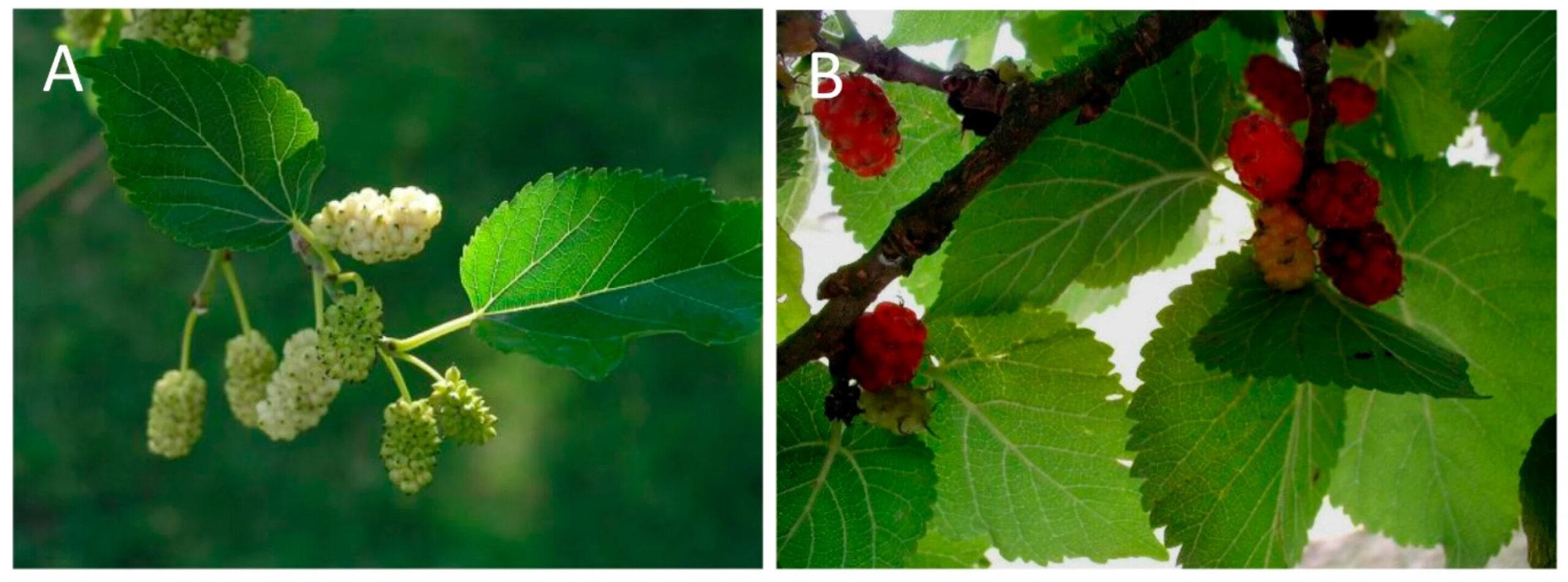
Mulberry belongs to the genus Morus, which includes white mulberry (Morus alba), black mulberry (Morus nigra) and several other species. The plant’s leaves and fruits contain very different mixtures of compounds.
Leaves are particularly rich in protein and fiber and contain compounds such as the iminosugar 1-deoxynojirimycin, or DNJ, along with flavonoids and polysaccharides. Fruits contain more soluble sugars and, especially in black mulberry, substantial amounts of anthocyanins and other phenolic compounds. Even within the same species, cultivar, growing conditions, maturity and other factors can change the chemical composition.
Processing adds another layer of variation. Drying, extraction with water or alcohol, fermentation, enzymatic hydrolysis, purification and formulation can change which compounds are present, their concentrations and their physical properties. The review therefore treats processing not simply as a way of preparing mulberry for an experiment, but as a factor that can change the biological activity of the resulting material.
That distinction is important because much of the evidence linking mulberry with the gut does not involve the intact plant. Researchers have tested whole leaves, leaf powders, aqueous and alcoholic extracts, purified polysaccharides, oligosaccharides, polyphenol-rich fractions, fruit preparations, fermented products and combinations of different fractions. Most of the microbiota-related evidence concerns M. alba, while direct evidence for M. nigra and other species is considerably more limited.
Much of the evidence comes from altered gut ecosystems
One recurring pattern in the reviewed studies is that mulberry preparations can change the composition or activity of gut microbial communities, particularly in animals with metabolic dysfunction, inflammation or experimentally induced dysbiosis.
Whole mulberry leaf powder produced relatively modest changes in the gut microbiota of healthy mice in one study, although it changed fecal metabolites involved in carbohydrate and amino-acid metabolism. In diabetic rats, by contrast, mulberry leaf supplementation produced more pronounced changes. After nine weeks, microbial communities had shifted toward a composition more similar to that of healthy controls, alongside improvements in blood glucose, lipid metabolism and insulin sensitivity.
The review emphasizes that such findings should not be interpreted as proof that mulberry universally reshapes a healthy human microbiome. The studies involved different species of mulberry, animal models, doses and preparations. The authors note that the more pronounced responses often occurred in disturbed microbial ecosystems, raising the possibility that mulberry preparations may act differently depending on the host’s starting physiological state.
Aqueous leaf extracts provide some of the more extensive evidence. In several mouse models of diabetes, obesity and high-fat feeding, water extracts from M. alba were associated with changes in microbial communities, including increases in taxa such as Akkermansia, Bifidobacterium and members of Muribaculaceae. Some studies also reported increased concentrations of short-chain fatty acids, or SCFAs, along with changes in intestinal barrier proteins and inflammatory signaling.
But even closely related experiments do not necessarily show identical microbial responses. In one study comparing aqueous and 50% hydroethanolic extracts prepared from the same plant material, both preparations were associated with increased fecal SCFAs and changes in microbial composition. The hydroethanolic extract contained more total flavonoids and chlorogenic acid. Yet the study’s statistical analyses did not directly compare the two extracts against each other, so the review cautions that it remains unclear whether their different chemical profiles produced meaningfully different biological effects.
Polysaccharides can become food for gut microbes
Some of the clearest evidence for a prebiotic-like effect comes from mulberry polysaccharides.
These large carbohydrates are not simply absorbed and removed from the digestive system. Some can reach the colon, where intestinal microbes can use them as substrates. What happens next depends partly on the structure of the polysaccharide.
Laboratory experiments with defined M. alba leaf polysaccharide fractions showed that fractions with different molecular weights and sugar compositions supported different bacterial species. One fraction favored Bacteroides cellulosilyticus, another supported Bacteroides ovatus, while a lower-molecular-weight fraction supported both and promoted production of acetate and propionate.
Digestion itself can change this behavior. A mulberry leaf polysaccharide fraction called MLP-2 and its simulated intestinally digested form, MLP-2I, differed in molecular weight and composition. When tested in human fecal fermentation systems, the digested material produced changes in fermentation and increased acetate, propionate and butyrate. The finding illustrates why the chemical structure of the material before digestion does not necessarily tell the whole story about what reaches the colon.
Enzymatic processing can push that transformation further. Researchers have isolated nondigestible oligosaccharides from mulberry leaves that resisted simulated gastrointestinal digestion. In laboratory cultures, one fraction promoted growth of Bifidobacterium bifidum, Bifidobacterium adolescentis, Lacticaseibacillus rhamnosus and Lactobacillus acidophilus while increasing acetate and lactate. Another fraction increased acetate and butyrate in human fecal fermentation and selectively enriched Ligilactobacillus murinus.
The same principle appears in fruit-derived polysaccharides. In human fecal fermentation experiments, black mulberry polysaccharides extracted using different enzymes behaved differently. All of the preparations were fermented and increased SCFA production, but water-extracted and pectin-lyase-extracted fractions showed the greatest fermentability. They also produced different shifts in bacterial groups.
That means the phrase “mulberry polysaccharide” can conceal important differences. Extraction can change molecular structure, fermentability and the microbial response.
The fruit tells a similar story
Mulberry fruit preparations have produced many of the same broad patterns, although the specific microbial changes vary.
In mice with obesity or diabetes, purified black mulberry fruit polysaccharides were associated with lower weight gain and improved hyperglycemia, along with increases in Lactobacillus, Allobaculum, Bacteroides and Akkermansia. A galacto-oligosaccharide derived from enzymatically hydrolyzed M. nigra fruit polysaccharides had an average molecular weight of about 987 daltons and, in diabetic mice, was associated with improved hyperglycemia, insulin resistance and oxidative stress while changing the abundance of Prevotellaceae and Lactobacillus.
Other fruit polysaccharide preparations produced different microbial patterns. In high-fat-diet-fed mice with metabolic syndrome, an M. alba fruit polysaccharide fraction was associated with enrichment of Muribaculum and the Lachnospiraceae NK4A136 group and reductions in several other genera. The authors of the review point out that apparently conflicting microbiota findings may partly reflect differences in taxonomic resolution, extraction methods, host models and experimental design.
Polyphenols add another layer. In a high-fat-diet mouse model, a preparation combining mulberry fruit polyphenols and polysaccharides produced stronger metabolic and microbiota-related effects than individual fractions in the studies reviewed. It generated a distinct fecal metabolite signature involving 23 metabolites and produced changes in bacterial communities. Fecal microbiota transplantation provided additional evidence that at least part of the effect could be transmitted through the microbiota: microbiota from treated mice improved several metabolic and tissue outcomes in recipient mice.
The transplant experiment is among the stronger pieces of mechanistic evidence in the review because it moves beyond simply observing that a plant preparation and a microbiome change occurred together. Even so, it was conducted in mice, and it does not establish that the same mechanism operates in people.
Short-chain fatty acids connect microbes with the intestine
Across many of the studies, one recurring measurement is the production of acetate, propionate and butyrate, the three major short-chain fatty acids produced when gut microbes ferment carbohydrates.
Several mulberry preparations increased these metabolites in animal experiments or laboratory fermentation systems. Fruit polysaccharides fermented with human fecal material increased acetate, propionate and butyrate while lowering the fermentation pH. Solid-state-fermented mulberry leaves increased acetic acid. Fermented mulberry pomace increased total SCFAs and lactic acid, and fermented mulberry juice increased SCFAs alongside changes in bacterial groups including Bifidobacteriaceae and Lactobacillaceae.
The review describes SCFAs as one of the most consistent links between mulberry-derived substrates, microbial activity and host responses. These compounds can participate in intestinal barrier function, mucus production and immune regulation, and some mulberry studies connected SCFA changes with activation of receptors such as GPR43 and GPR109A and with hepatic AMPK signaling.
But the SCFA response was not uniform. Water extracts, alkaloid fractions and polysaccharide fractions of mulberry leaves differed in their effects on acetate, propionate and butyrate in diabetic mice. Fruit polysaccharides also showed extraction-dependent differences in fermentability and SCFA production. The review therefore treats SCFAs as an important proposed mediator rather than a single, predictable response to all mulberry products.
The intestinal barrier changes alongside the microbiota
The reviewed studies also repeatedly measured the physical barrier separating the contents of the intestine from surrounding tissues.
In weaned piglets, a white mulberry leaf extract added at 0.1% of the diet increased villus height and the villus-to-crypt ratio. It also increased expression of the barrier-associated proteins ZO-1 and claudin-1 and the mucus-associated protein MUC2. Blood levels of lipopolysaccharide, a bacterial component that can enter circulation when the intestinal barrier is compromised, decreased. These changes occurred alongside increases in Bifidobacterium and Lactobacillus, fewer Escherichia coli, higher levels of lactate, acetate and butyrate, and lower levels of several protein-fermentation metabolites.
Fermented mulberry leaves produced similar barrier-related changes in finishing pigs. At 10% of the diet, they increased villus height and the villus-height-to-crypt-depth ratio and reduced crypt depth. They also increased MUC1 and claudin-2 expression, improved mucosal immunoglobulin levels and reduced activity of inflammatory signaling pathways involving TLR4, NF-κB and MyD88.
Other preparations showed related effects. Mulberry leaf polysaccharides improved markers of intestinal injury in cyclophosphamide-treated chicks while increasing expression of Claudin-1, ZO-1 and MUC2. An anthocyanin-rich fraction from mulberry fruit restored ZO-1, occludin and claudin-3 expression in a mouse model of colitis and was associated with reduced inflammation and changes in microbial composition, including increased Akkermansia.
DNJ, the characteristic mulberry leaf iminosugar, also affected barrier-associated genes in fattening rabbits, including genes related to tight junctions and mucus. But the higher supplementation level was associated with shorter villi and poorer growth performance, illustrating another recurring feature of the evidence: dose can change the response.
Fermentation can change the plant before it reaches the gut
Fermentation is one of the clearest examples of processing changing the biological properties of mulberry.
Fermenting mulberry leaves can reduce antinutritional compounds, transform phenolics and increase the availability of some constituents. Fermented white mulberry leaf preparations have also shown roughly 6.7- to 10.5-fold increases in GABA, depending on the preparation. In laboratory digestion and fermentation experiments, fermented leaves had greater phenolic bioaccessibility, antioxidant activity and SCFA production than unfermented leaves.
Fermentation can also increase recovery of particular compounds. In one study, mixed fermentation with Lactobacillus fermentum and Saccharomyces cerevisiae increased extracted DNJ from 3.24 to 5.97 milligrams per gram. Purified DNJ subsequently improved glucose regulation and insulin sensitivity in diabetic mice and was associated with changes in their gut microbial communities.
Similar effects have been reported for fruit products. Fermentation of Morus atropurpurea fruit reduced fructose and glucose while retaining hypoglycemic activity. In diabetic mice, the fermented preparation was associated with increased SCFA production and greater abundance of Lactobacillus, Bifidobacterium and Akkermansia. Fermented mulberry pomace also increased antioxidant activity, promoted the transformation of phenolic compounds and increased SCFA production.
Fermentation does not, however, guarantee a beneficial response. In crucian carp, 5% fermented mulberry leaves in feed improved several measures, while inclusion levels of 10% or more impaired growth and disturbed microbial homeostasis. The review therefore emphasizes that the outcome depends on the dose, matrix, animal species and background diet.
The plant’s effects can also change with the extraction method
The contrast between processing methods extends beyond fermentation.
Water extraction tends to recover more hydrophilic constituents, including polysaccharides and DNJ, and in the studies reviewed it was more frequently associated with SCFA production, barrier-related effects and regulation of glucose metabolism. Alcohol-based extracts and purified anthocyanin fractions more often produced pronounced changes in microbial composition, inflammatory responses and oxidative stress. The review attributes these differences to variation in the compounds recovered by each process rather than to extraction method as an independent biological agent.
Even the extraction of polysaccharides can substantially change the final material. One comparison of six methods for mulberry fruit polysaccharides produced yields ranging from 2.10% with water ultrasound extraction to 13.32% with 50% ethanol-assisted ultrasound extraction. The resulting fractions also differed in total sugar content. For mulberry leaves, hot-water extraction is common, but temperature, extraction time and the ratio of plant material to water affect yield, while enzyme-assisted methods can produce substantially higher yields than conventional approaches.
Purification and formulation can alter the material further. A hot-melt-extruded M. alba leaf formulation enriched in rutin and isoquercitrin improved barrier-related measures in an intestinal cell model and supported probiotic strains while inhibiting pathogenic bacteria. An anthocyanin-enriched fruit fraction, meanwhile, contained approximately 75% cyanidin-3-O-glucoside and cyanidin-3-O-rutinoside and showed barrier-protective and anti-inflammatory effects in a mouse colitis model.
These experiments point to a recurring pattern in the review: the biological behavior of a mulberry product cannot necessarily be predicted from the name of the plant alone.
The evidence does not yet show which preparation works in people
The central limitation is that most of the evidence remains preclinical.
The review’s literature search covered PubMed, Scopus and Web of Science and included studies involving mulberry leaves, fruits and derived products in relation to phytochemical composition, processing, microbiota, intestinal barrier function and other aspects of gut functionality. But the resulting evidence base is dominated by animal models and in vitro systems.
That creates several uncertainties. Studies often use different mulberry species, plant parts, extraction solvents, purification procedures, fermentation methods, doses and experimental models. Reporting of extract composition and processing conditions is also incomplete or inconsistent. These differences make direct comparisons difficult and complicate attempts to identify which compounds are responsible for particular microbiota changes.
The evidence for M. nigra is particularly limited when it comes to whole-gut microbiota studies, and the review notes that direct comparisons between M. alba and M. nigra for microbiota composition, intestinal integrity, SCFA production or inflammation have not yet been reported.
The authors also caution that several proposed mechanisms remain unresolved. Changes in microbiota, SCFAs, intestinal barrier integrity, immune signaling and direct actions of plant compounds can occur together, making it difficult to determine the relative contribution of each process. Some studies provide evidence for microbiota involvement, including experiments using germ-free-mimic animals or fecal microbiota transplantation, but these findings do not establish a single mechanism for all mulberry preparations.
The review calls for human trials using chemically characterized and standardized preparations. Such studies would need to distinguish between leaves and fruits, fermented and unfermented products, and preparations enriched in polysaccharides, polyphenols or alkaloids. The authors also identify standardized extraction and fermentation protocols, microbiome sequencing, metabolomics, SCFA measurements, intestinal permeability markers and inflammatory measures as important components of future work.
The evidence assembled in the review therefore points to a biological effect that is more specific than simply saying that “mulberry affects the gut.” Different mulberry materials can interact with gut microbes in different ways, and the plant’s species, tissue, chemical composition and processing history all help determine what that interaction looks like. The available experiments support these differences, while the question of which preparations produce reproducible effects in humans remains open.
The study was published in Biomolecules.