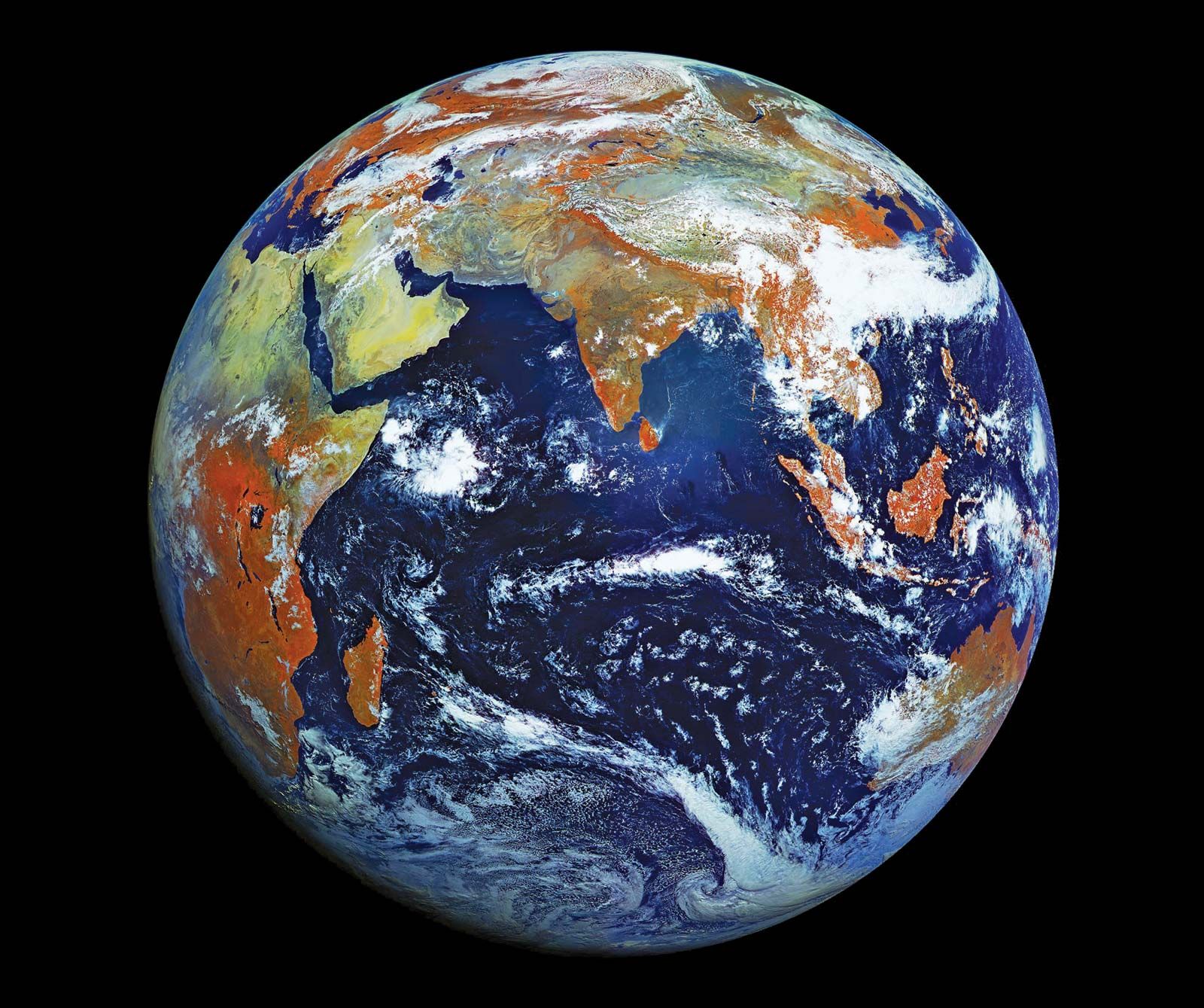
Every day, we walk across Earth’s surface without giving much thought to the incredible world beneath our feet. We watch the sunrise, breathe fresh air, drink water, and enjoy the beauty of forests, mountains, oceans, and skies. Earth feels familiar because it is our home. Yet, the more scientists study our planet, the more astonishing it becomes.
Earth is far more than a giant ball of rock floating through space. It is a dynamic, ever-changing world where continents drift, mountains rise, oceans move, storms develop, and life thrives in extraordinary diversity. It is the only known planet in the universe that supports life, making it one of the rarest and most remarkable places we have ever discovered.
How much do you really know about Earth? The answer might surprise you.
Earth Is the Only Known Planet With Life
Among the billions of planets believed to exist in our galaxy and the countless galaxies across the universe, Earth remains the only world where life has been confirmed.
Scientists have discovered thousands of planets orbiting other stars, known as exoplanets. Some are rocky like Earth, while others are giant gas planets or worlds unlike anything in our Solar System. A few orbit within what astronomers call the “habitable zone,” where temperatures could allow liquid water to exist.
However, despite decades of searching, no evidence has yet confirmed life beyond Earth.
What makes Earth so special is the unique combination of conditions that support living organisms. Our planet has abundant liquid water, a protective atmosphere rich in nitrogen and oxygen, moderate temperatures, a magnetic field that shields us from harmful solar radiation, and a stable climate that has allowed life to evolve for billions of years.
Every tree, bird, whale, insect, fungus, and human shares this extraordinary home.
Earth Is About 4.54 Billion Years Old
Earth has an incredibly long history.
Scientists estimate that our planet formed approximately 4.54 billion years ago, shortly after the birth of the Solar System. This age has been determined by studying ancient rocks on Earth and radioactive isotopes found in meteorites.
When Earth first formed, it looked nothing like it does today.
Its surface was extremely hot, volcanoes erupted constantly, and giant impacts from space were common. One of these massive collisions likely created the Moon when a Mars-sized object struck the young Earth.
Over hundreds of millions of years, Earth’s surface gradually cooled. Water condensed into oceans, continents began forming, and eventually the first simple life appeared.
Everything we see today is the result of billions of years of continuous change.
Earth Is Not a Perfect Sphere
Many people imagine Earth as a perfectly round ball.
In reality, it is slightly flattened at the poles and bulges outward around the equator because of its rotation.
Scientists describe Earth’s shape as an oblate spheroid.
The difference is small but measurable.
Earth’s equatorial diameter is about 43 kilometers (27 miles) larger than its polar diameter.
This subtle shape affects satellite orbits, GPS systems, and even precise scientific measurements.
Earth Is Constantly Moving
Even when you feel perfectly still, you are traveling through space at astonishing speeds.
Earth rotates once approximately every 24 hours, creating the cycle of day and night.
At the equator, this rotation carries you at about 1,670 kilometers (1,040 miles) per hour.
At the same time, Earth orbits the Sun at an average speed of nearly 107,000 kilometers (67,000 miles) per hour.
The entire Solar System also orbits the center of the Milky Way galaxy at roughly 828,000 kilometers (514,000 miles) per hour.
Our galaxy itself is moving through the universe.
Although we never notice these motions, they are happening every second.
Most of Earth Is Covered by Water
When viewed from space, Earth appears as a brilliant blue planet.
That is because about 71 percent of its surface is covered by water.
The remaining 29 percent consists of continents and islands.
The oceans regulate Earth’s climate by absorbing and redistributing heat around the globe. They also produce much of the oxygen we breathe through microscopic marine organisms such as phytoplankton.
Yet despite water covering most of the planet, fresh water is surprisingly scarce.
Only about 2.5 percent of Earth’s water is freshwater, and most of that is locked away in glaciers, ice sheets, or underground.
The water we use for drinking, farming, and industry represents only a tiny fraction of Earth’s total water supply.
Earth’s Atmosphere Protects Life
Life would not survive without Earth’s atmosphere.
This invisible blanket of gases extends hundreds of kilometers above the surface and performs several vital functions.
It provides oxygen for animals, carbon dioxide for plants, and nitrogen that supports the global nitrogen cycle.
The atmosphere also burns up most incoming meteoroids before they reach the ground.
It traps enough heat to keep Earth’s average surface temperature suitable for liquid water through the natural greenhouse effect.
High above the surface, the ozone layer absorbs much of the Sun’s harmful ultraviolet radiation.
Without the atmosphere, Earth would resemble the lifeless environments found on many other worlds.
Earth Has a Powerful Magnetic Shield
Deep beneath Earth’s surface lies a molten outer core made primarily of liquid iron and nickel.
As this molten metal moves, it generates Earth’s magnetic field through a process known as the geodynamo.
This magnetic field stretches far into space, forming the magnetosphere.
The magnetosphere protects Earth by deflecting many charged particles carried by the solar wind.
Without this magnetic shield, the Sun could gradually strip away much of Earth’s atmosphere, as appears to have happened to Mars.
The magnetic field also creates one of nature’s most beautiful displays.
When charged particles collide with gases high in the atmosphere, they produce the colorful auroras, also known as the Northern and Southern Lights.
Continents Never Stop Moving
Although continents appear permanent, they are actually drifting across Earth’s surface.
Earth’s outer shell is divided into enormous tectonic plates that slowly move over the softer mantle beneath them.
This process is known as plate tectonics.
The movement is slow—usually only a few centimeters each year—but over millions of years, it dramatically reshapes the planet.
Mountains rise where plates collide.
Earthquakes occur when stress builds up along faults.
Volcanoes often form where plates separate or one plate sinks beneath another.
Scientists believe that around 300 million years ago, nearly all of Earth’s continents were joined together in a supercontinent called Pangaea.
Over time, Pangaea broke apart, eventually forming today’s continents.
The process continues today and will continue far into the future.
Earth Has Layers Like an Onion
Earth is built from several distinct layers.
The outermost layer is the crust, where we live.
Beneath the crust lies the mantle, a thick region of hot rock that slowly flows over geological timescales.
Below the mantle is the liquid outer core.
At the center lies the solid inner core, which is primarily composed of iron and nickel.
Temperatures inside Earth’s core are estimated to reach around 5,000 to 6,000 degrees Celsius (9,000–10,800 degrees Fahrenheit)—comparable to the surface of the Sun.
Even though the core is incredibly hot, the immense pressure keeps the inner core solid.
Earth Is Home to Millions of Species
Scientists have identified around 2 million species of living organisms, but they estimate that millions more remain undiscovered.
Life exists almost everywhere.
Tiny microbes survive deep beneath Earth’s surface.
Fish live in the darkest parts of the ocean.
Plants grow in deserts, rainforests, mountains, and wetlands.
Animals thrive from the freezing Arctic to tropical coral reefs.
Every species plays a role in Earth’s ecosystems.
Together they help recycle nutrients, pollinate plants, regulate populations, and maintain the balance that supports life.
Humans are only one species among this extraordinary diversity.
The Deep Ocean Remains Largely Unexplored
People often assume that Earth has been fully explored.
In reality, much of the deep ocean remains poorly understood.
The oceans reach an average depth of about 3.7 kilometers (2.3 miles), while the deepest known point, Challenger Deep in the Mariana Trench, extends nearly 11 kilometers (7 miles) below sea level.
The pressure at these depths is immense.
Despite these extreme conditions, scientists have discovered remarkable creatures adapted to life in complete darkness.
New species continue to be found during deep-sea expeditions.
In many ways, Earth’s oceans remain one of the final frontiers of scientific exploration.
Earth Experiences Incredible Weather
Earth’s weather is driven by energy from the Sun, the movement of air and water, and the planet’s rotation.
Every day, clouds form, winds blow, storms develop, and rain falls somewhere on Earth.
Some weather events are truly extraordinary.
Lightning flashes millions of times each day around the world.
Powerful hurricanes and typhoons can release energy equivalent to many nuclear explosions over their lifetimes.
Tornadoes generate some of the strongest winds on Earth.
Meanwhile, deserts can experience scorching daytime heat followed by surprisingly cold nights.
Weather is constantly changing because Earth’s atmosphere is always in motion.
Earth Is Rich in Natural Wonders
Earth’s landscapes are among the most diverse in the Solar System.
Towering mountain ranges stretch across continents.
Volcanoes create new land.
Massive glaciers carve valleys.
Rivers shape landscapes over millions of years.
Coral reefs support some of the richest ecosystems on Earth.
Dense rainforests help regulate the global climate while providing habitats for countless species.
From the frozen ice sheets of Antarctica to the lush Amazon rainforest, every region tells a story of geological and biological evolution.
Earth’s Moon Has a Powerful Influence
Earth’s only natural satellite is much more important than many people realize.
The Moon’s gravity creates the ocean tides.
It also helps stabilize Earth’s rotational axis, reducing dramatic changes in climate over long periods.
Scientists believe this stability has contributed to the long-term environmental conditions that allowed complex life to evolve.
The Moon also preserves a record of the early Solar System because, unlike Earth, it has no atmosphere or active plate tectonics to erase ancient impact craters.
Earth Is Made From Recycled Stardust
Every atom in your body has an extraordinary history.
Hydrogen atoms formed shortly after the Big Bang.
Many heavier elements, including carbon, oxygen, iron, calcium, and gold, were created inside stars through nuclear fusion or during powerful stellar explosions known as supernovae.
These elements eventually became part of giant clouds of gas and dust that formed new stars and planets.
Earth itself formed from this cosmic material.
In a very real sense, every mountain, ocean, tree, and person is made from matter that once existed inside ancient stars.
Earth Is Still Changing
Earth is not a finished planet.
Its continents continue moving.
Volcanoes continue erupting.
Mountains continue rising and eroding.
Glaciers advance and retreat.
New islands occasionally emerge from volcanic activity beneath the oceans.
Species evolve over time while others become extinct.
Even Earth’s climate changes naturally over long periods, although modern climate change is being strongly influenced by human activities through increased greenhouse gas emissions.
The Earth we know today is only one chapter in a much longer planetary story.
Millions of years from now, the continents will occupy different positions, ecosystems will change, and future generations will inherit a planet that continues to evolve.
Earth Is Our Only Home
Perhaps the most amazing fact about Earth is also the simplest.
It is home.
Every person who has ever lived, every civilization ever built, every scientific discovery, every work of art, every animal, every forest, every ocean, and every known living thing has existed on this small rocky planet orbiting an ordinary star in one corner of the Milky Way.
From space, national borders disappear. Mountains become tiny wrinkles. Oceans blend into a brilliant blue sphere wrapped in a thin atmosphere. This perspective reminds us how precious and fragile our planet truly is.
Despite all the worlds scientists have discovered beyond our Solar System, Earth remains unique. It provides everything life needs—air to breathe, water to drink, fertile soil to grow food, and a climate capable of sustaining an extraordinary diversity of living organisms.
The more we learn about Earth, the more remarkable it becomes. Its history stretches back billions of years, its natural systems are deeply interconnected, and its future depends in part on the choices humanity makes today. Understanding our planet is not only a scientific journey—it is also a reminder of the responsibility we all share to protect the only known world that supports life.