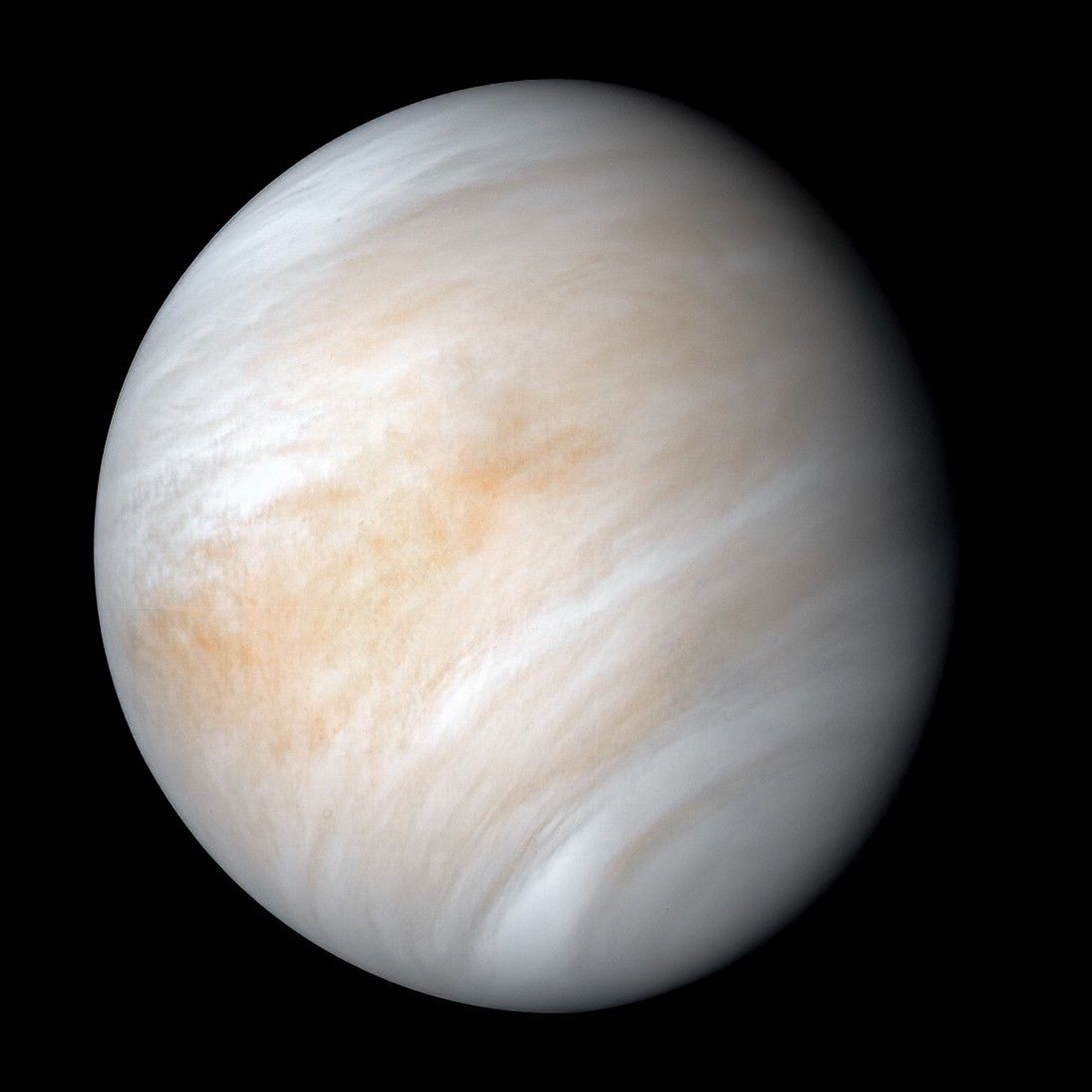
For centuries, Venus has fascinated humanity. When it shines brilliantly in the morning or evening sky, it is often called the Morning Star or the Evening Star, glowing brighter than any other planet visible to the naked eye. At first glance, Venus looks like it could be Earth’s twin. It is almost the same size as our planet, has a similar mass, and formed around the same time in the history of the Solar System.
But appearances can be deceiving.
If astronauts were somehow dropped onto the surface of Venus without extraordinary protection, they would not survive for even a moment. Venus is not just inhospitable—it is one of the most extreme worlds in the Solar System. Temperatures are hot enough to melt lead, the atmospheric pressure is crushing, and clouds contain corrosive sulfuric acid.
Yet despite these terrifying conditions, scientists continue to ask an extraordinary question: Could humans ever live on Venus?
The answer is more complicated than a simple yes or no. While living on the surface is far beyond our current capabilities and may never be practical, some researchers believe another part of Venus could one day become surprisingly suitable for human exploration.
Venus: Earth’s Mysterious Twin
Venus is the second planet from the Sun and the closest planetary neighbor to Earth. It has a diameter of about 12,100 kilometers (7,520 miles), making it only slightly smaller than Earth. Its gravity is also remarkably similar, about 90 percent of Earth’s gravity, meaning a person weighing 100 pounds on Earth would weigh about 90 pounds on Venus.
Because of these similarities, scientists sometimes call Venus Earth’s “sister planet.”
Billions of years ago, Venus may have looked very different. Some computer models suggest that ancient Venus could have possessed shallow oceans, moderate temperatures, and conditions capable of supporting liquid water for extended periods. If this idea is correct, Venus might once have been far more Earth-like than it is today.
Over time, however, the planet experienced one of the most dramatic climate transformations known in planetary science.
Why Venus Became So Hot
The overwhelming heat on Venus is caused by a runaway greenhouse effect.
A greenhouse effect is a natural process in which gases in a planet’s atmosphere trap heat. Earth also has a greenhouse effect, and without it our planet would be far too cold for life.
On Venus, however, this process became extreme.
The atmosphere is made of about 96.5 percent carbon dioxide, an exceptionally powerful greenhouse gas. Thick layers of carbon dioxide trap enormous amounts of heat, preventing it from escaping into space.
As temperatures increased, any ancient oceans that may have existed would have evaporated. Water vapor itself is also a greenhouse gas, which would have trapped even more heat. Eventually, much of the water was lost to space, leaving behind the scorching world we see today.
The result is a surface temperature of about 465°C (869°F), making Venus even hotter than Mercury, despite Mercury being much closer to the Sun.
A World with Crushing Pressure
Heat is only one challenge.
Standing on the surface of Venus would expose a human to atmospheric pressure about 92 times greater than Earth’s sea-level pressure.
Imagine diving nearly one kilometer beneath Earth’s oceans. The pressure experienced there is similar to the pressure on Venus’ surface.
Such pressure would crush ordinary spacecraft and destroy unprotected equipment within moments.
Every spacecraft that has successfully landed on Venus has survived only a short time before being overwhelmed by the harsh environment.
The Thick Atmosphere of Venus
Venus has an atmosphere unlike any other rocky planet.
Its dense blanket of carbon dioxide stretches high above the surface, creating thick yellowish clouds that completely hide the planet below.
These clouds are made largely of tiny droplets containing sulfuric acid.
Although the acid clouds sound terrifying, they exist mainly in the upper atmosphere. They do not continuously rain onto the surface because the droplets evaporate before reaching the ground due to the intense heat below.
The thick atmosphere also blocks much of the sunlight, creating an orange-colored landscape with dim lighting even during the daytime.
Could Humans Live on the Surface?
With today’s technology, the answer is no.
The combination of extreme heat, crushing pressure, lack of breathable oxygen, corrosive atmospheric chemistry, and absence of liquid water makes the surface of Venus one of the least hospitable places in the Solar System.
Even constructing buildings capable of surviving these conditions would be an enormous engineering challenge.
Electronics fail rapidly under such temperatures. Metals weaken. Cooling systems would consume tremendous amounts of energy. Every aspect of daily life would require technology far beyond anything humans currently possess.
Even if protective habitats were built, supplying food, water, oxygen, and energy would remain incredibly difficult.
For these reasons, scientists generally do not consider permanent surface settlements on Venus to be realistic with foreseeable technology.
The Surprising Possibility Above the Clouds
Interestingly, the story changes dramatically if we move higher into Venus’ atmosphere.
About 50 to 60 kilometers (31 to 37 miles) above the surface, conditions become much more Earth-like.
At these altitudes, temperatures range roughly between 20°C and 75°C (68°F to 167°F) depending on height, with some layers offering temperatures comparable to a warm day on Earth.
The atmospheric pressure also becomes similar to Earth’s sea-level pressure.
This region has led scientists to imagine something remarkable: floating cities.
Instead of living on the surface, humans might someday inhabit enormous airships or floating habitats suspended within Venus’ atmosphere.
Why Floating Habitats Could Work
One fascinating feature of Venus’ atmosphere is that breathable air—a mixture of nitrogen and oxygen—is naturally less dense than the surrounding carbon dioxide.
That means air itself could act as a lifting gas.
Unlike balloons on Earth, which often require helium or hydrogen, giant habitats filled with breathable air could theoretically float in Venus’ dense atmosphere.
Inside these habitats, people could experience temperatures and pressures similar to those on Earth while remaining far above the deadly surface.
Although the outside atmosphere would still contain sulfuric acid droplets, protective materials and specialized coatings might shield habitats from corrosion.
While this idea remains purely theoretical, it is considered scientifically plausible.
Challenges of Living in the Sky
Floating cities would still face enormous obstacles.
The sulfuric acid clouds could slowly damage exposed materials, requiring durable protective coatings and frequent maintenance.
Venus also experiences powerful winds in its upper atmosphere. These winds circle the planet much faster than the planet itself rotates, carrying clouds around Venus in only a few Earth days.
Habitats would need to safely navigate or drift with these atmospheric currents.
Food production would require carefully controlled greenhouses.
Water would need to be recycled almost perfectly.
Energy systems would likely depend on solar power, which is actually abundant above much of the thick cloud cover.
Every resource would need to be carefully managed because regular supply missions from Earth would be expensive and infrequent.
The Long Venusian Day
Venus has one of the strangest rotations in the Solar System.
It spins incredibly slowly.
One rotation takes about 243 Earth days, making a Venusian day longer than its year.
Even more unusual, Venus rotates backward compared with most planets. If you stood on Venus, the Sun would appear to rise in the west and set in the east.
Fortunately, floating habitats carried by high-altitude winds would experience changing lighting conditions that differ from those on the surface, reducing some challenges associated with the planet’s slow rotation.
Can We Breathe on Venus?
Unfortunately, no.
The atmosphere contains almost no oxygen.
Instead, it consists overwhelmingly of carbon dioxide with small amounts of nitrogen and trace gases.
Humans would require completely enclosed habitats supplying oxygen while removing carbon dioxide produced through breathing.
Reliable life-support systems would therefore be absolutely essential.
Is There Water on Venus?
Liquid water does not exist on Venus’ surface because temperatures are far too high.
Tiny amounts of water vapor exist in the atmosphere, but Venus is extremely dry compared with Earth.
Future human settlements would need to recycle water with exceptional efficiency.
Scientists have also proposed extracting hydrogen from imported materials or producing water through chemical reactions, although these concepts remain theoretical.
Could Plants Grow on Venus?
Plants cannot survive naturally in Venus’ atmosphere.
They require liquid water, moderate temperatures, nutrients, and protection from harsh chemicals.
Inside carefully controlled habitats, however, plants could potentially thrive.
Indoor farms could provide food, produce oxygen through photosynthesis, and help recycle carbon dioxide.
Such biological systems would likely become an essential part of any long-term human presence.
Terraforming Venus
Some people imagine transforming Venus into another Earth.
This process, known as terraforming, would involve changing an entire planet’s environment to make it habitable.
For Venus, this would require removing enormous amounts of carbon dioxide, dramatically lowering temperatures, reducing atmospheric pressure, creating oceans, and rebuilding a stable climate.
The amount of energy and technology needed would be almost unimaginable.
Scientists currently have no practical method capable of accomplishing this.
Terraforming Venus therefore remains a fascinating concept in science fiction rather than a realistic engineering project.
What Missions Have Explored Venus?
Although humans have never visited Venus, robotic spacecraft have taught us an enormous amount about the planet.
Beginning in the 1960s, the Soviet Union’s Venera missions became the first spacecraft to successfully land on Venus and transmit data from its surface.
NASA’s Magellan mission later used radar to map nearly the entire planet, revealing volcanoes, mountains, valleys, and enormous lava plains hidden beneath the thick clouds.
More recently, spacecraft from several space agencies have continued studying Venus from orbit, improving our understanding of its atmosphere, geology, and climate.
Future missions are expected to investigate whether Venus was once more Earth-like and to better understand how its runaway greenhouse effect developed.
Why Scientists Still Care About Venus
Despite its hostile environment, Venus may hold important clues about Earth’s future.
Studying Venus helps scientists understand how planetary climates evolve.
It provides valuable information about greenhouse gases, atmospheric chemistry, volcanic activity, and planetary evolution.
As astronomers discover rocky planets orbiting distant stars, Venus also serves as an important example of how two planets that begin with similar sizes can develop into dramatically different worlds.
Learning why Earth remained habitable while Venus became an inferno may help scientists identify potentially life-supporting planets elsewhere in the universe.
Could Humans Visit Before They Live There?
Before permanent settlements become possible, scientists expect robotic missions and short-term crewed exploration would come first.
Future astronauts might visit floating research stations in Venus’ upper atmosphere rather than attempting to land on the surface.
Such missions could study atmospheric chemistry, weather patterns, cloud formation, and the planet’s geological history while testing technologies for long-duration habitation.
These early explorers would pave the way for any future human presence.
Comparing Venus and Mars
When discussing future human colonies, Mars usually receives far more attention than Venus.
Mars has a thin atmosphere, cold temperatures, and lower gravity, but its surface is accessible with current engineering concepts.
Venus, by contrast, has Earth-like gravity but an extremely hostile surface.
Interestingly, some scientists argue that the upper atmosphere of Venus may actually offer more comfortable temperatures and pressures than the surface of Mars.
Each planet presents unique advantages and enormous challenges.
Rather than asking which world is “better,” researchers continue studying both because each teaches us something different about planetary science and humanity’s future in space.
Could Humans Ever Truly Live on Venus?
The dream of living on Venus remains one of the most imaginative ideas in space exploration.
The surface itself is almost certainly beyond human habitation with any technology currently envisioned. Its overwhelming heat, crushing pressure, and toxic atmosphere make it one of the harshest environments known.
Yet the skies above tell a different story.
High above the inferno, where temperatures and pressures become surprisingly similar to those on Earth, scientists see a small window of possibility. Floating research stations or even airborne settlements are not impossible according to the laws of physics, although they would require technologies far beyond what humanity has built so far.
Whether these floating cities are ever constructed remains uncertain. But history has repeatedly shown that ideas once considered impossible—from powered flight to landing on the Moon—can eventually become reality through scientific discovery and engineering innovation.
Venus reminds us that the universe is full of surprises. A planet that seems utterly uninhabitable at first glance may still hold opportunities for exploration, discovery, and perhaps one day, a new chapter in humanity’s journey beyond Earth.