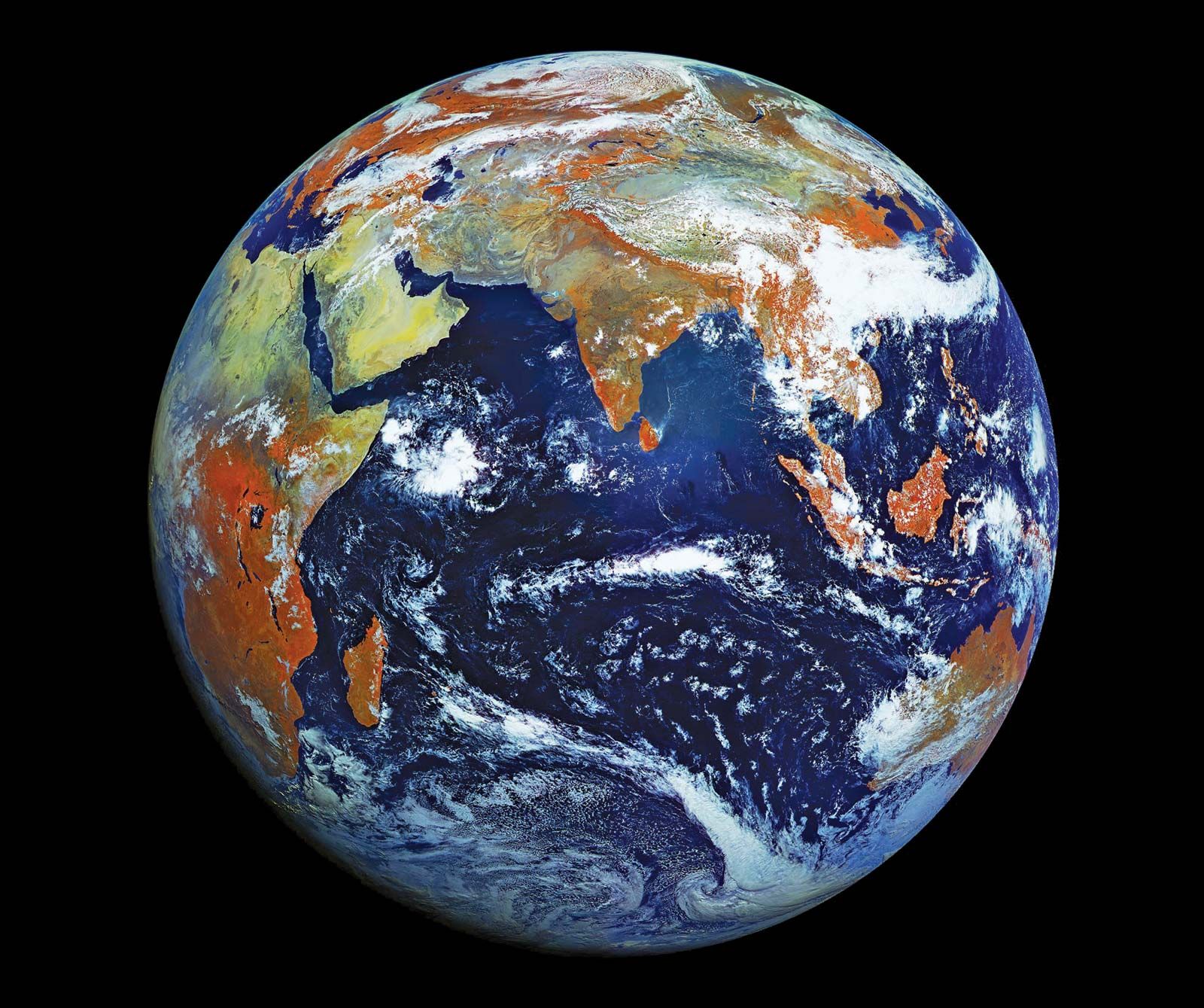
When astronauts look back at Earth from space, one thing immediately stands out. Against the endless darkness of the cosmos, our planet shines as a brilliant blue world wrapped in swirling white clouds. It appears calm, vibrant, and alive. So far, despite decades of searching, Earth remains the only place in the universe where life is known to exist.
This fact is both astonishing and deeply mysterious.
Our galaxy alone contains hundreds of billions of stars. Beyond it lie hundreds of billions of other galaxies, each filled with countless planets. Statistically, it seems unlikely that Earth would be the only world capable of supporting life. Yet after exploring our Solar System, studying distant planets, and searching the skies with powerful telescopes, scientists have found no confirmed evidence of life anywhere else.
Why is that?
Is Earth truly unique, or have we simply not looked far enough? What special conditions allowed life to begin here? And could there be other living worlds waiting to be discovered?
The answers lie in a remarkable combination of astronomy, geology, chemistry, biology, and a little bit of cosmic luck.
A Universe Filled With Planets
For most of human history, people wondered whether planets existed around other stars.
Today, the answer is a resounding yes.
Since the 1990s, astronomers have discovered thousands of planets beyond our Solar System, known as exoplanets. These discoveries have transformed our understanding of the universe. We now know that planets are incredibly common. Some are rocky like Earth, others are giant gas worlds larger than Jupiter, and some orbit two stars instead of one.
Many of these planets are located in regions where temperatures might allow liquid water to exist on their surfaces.
At first glance, this seems encouraging. If Earth supports life, perhaps these worlds do too.
But scientists have learned that having a planet is only the beginning. Supporting life appears to require an extraordinary combination of favorable conditions.
Life Needs More Than Just Water
One of the most famous sayings in astronomy is “follow the water.”
That is because every known living organism on Earth depends on liquid water.
Water acts as a solvent, allowing chemical reactions to occur inside cells. It transports nutrients, regulates temperature, and participates directly in many biological processes.
Without liquid water, life as we know it would not exist.
However, scientists now recognize that water alone is not enough.
A planet also needs the right temperature, a stable environment, essential chemical elements, a reliable energy source, and enough time for life to develop.
Earth possesses all of these ingredients simultaneously.
That combination may be much rarer than we once imagined.
Earth Orbits in the Habitable Zone
One reason Earth is special is its location around the Sun.
Our planet lies within what astronomers call the habitable zone, sometimes nicknamed the “Goldilocks zone.”
This is the region where temperatures are neither too hot nor too cold for liquid water to remain stable on a planet’s surface.
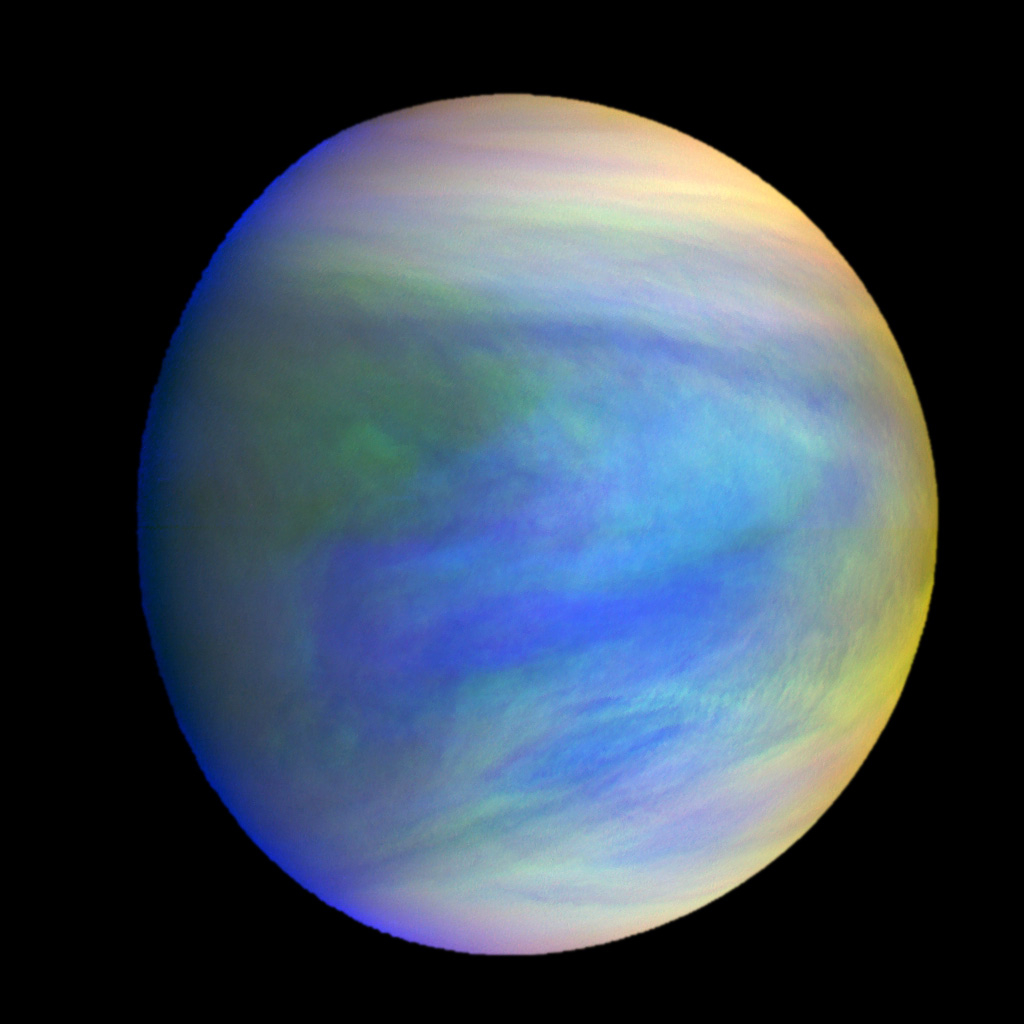
If Earth were significantly closer to the Sun, its oceans might have evaporated, creating conditions similar to Venus.
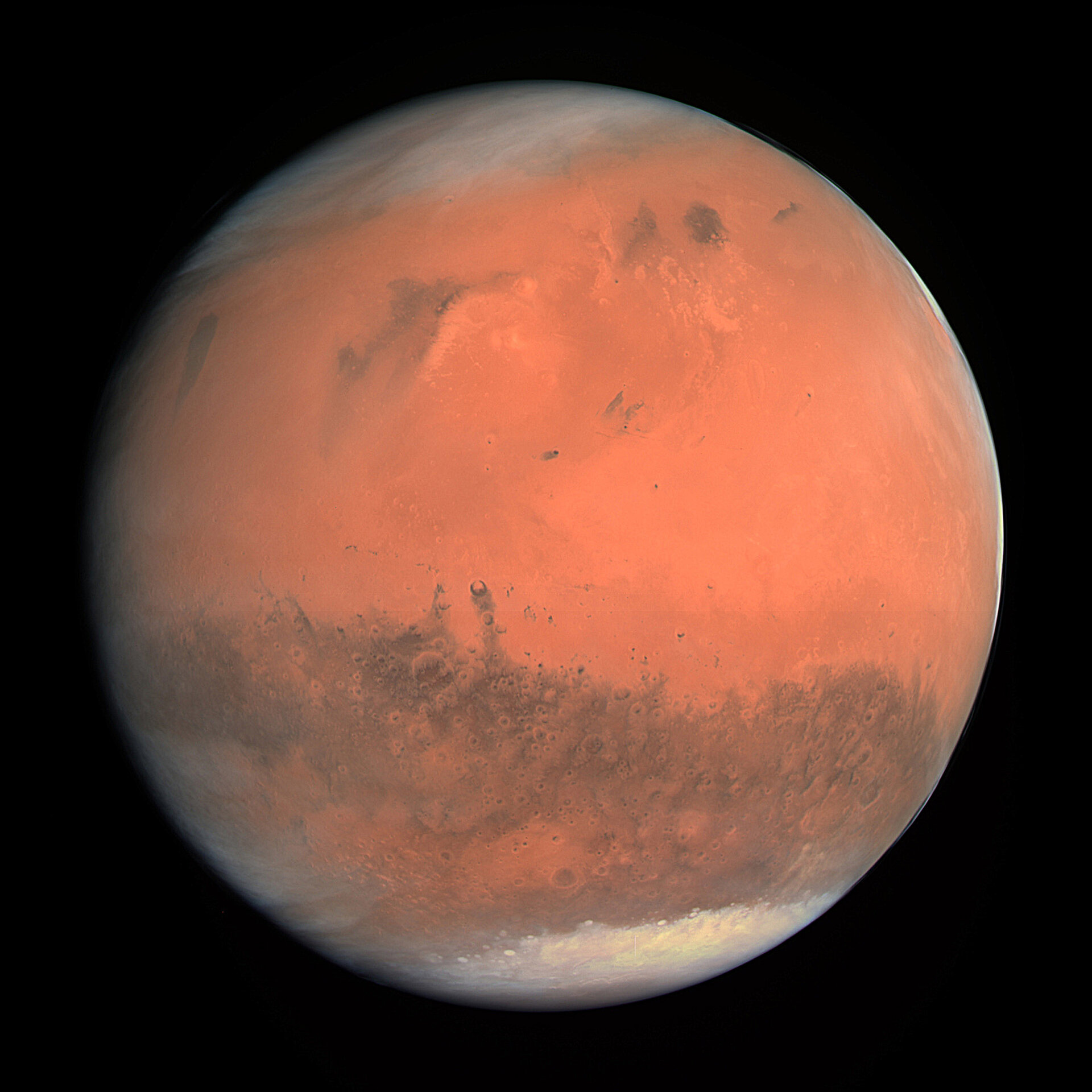
If it were much farther away, the oceans could have frozen, making Earth resemble Mars.
Earth sits at just the right distance for long-term liquid water.
But even this is only part of the story.
A Stable and Friendly Star
The Sun plays a crucial role in making Earth habitable.
Compared with many stars, the Sun is remarkably stable.
It provides a steady supply of energy that has remained relatively consistent for billions of years.
Some stars produce violent bursts of radiation capable of stripping away planetary atmospheres or damaging complex molecules needed for life.
Others burn through their fuel so quickly that life may not have enough time to evolve.
The Sun’s long lifetime has given life on Earth nearly four billion years to emerge, diversify, and evolve into the astonishing variety of organisms seen today.
The Perfect Temperature Range
Earth’s average surface temperature allows water to remain liquid over much of the planet.
This seemingly simple fact has enormous consequences.
Liquid water fills oceans, lakes, rivers, underground aquifers, glaciers, clouds, and even living cells.
Water continuously cycles between the atmosphere, land, and oceans through evaporation, condensation, precipitation, and runoff.
This global water cycle helps regulate climate and distributes heat around the planet.
Without it, Earth would become a far less hospitable place.
A Protective Atmosphere
Earth’s atmosphere does much more than provide oxygen for animals.
It protects life in countless ways.
The atmosphere contains gases that trap enough heat to keep the planet warm without causing extreme overheating. This natural greenhouse effect maintains temperatures suitable for liquid water.
It also shields the surface from many harmful forms of solar radiation.
As meteoroids enter Earth’s atmosphere, most burn up before reaching the ground.
The atmosphere also helps maintain pressure that allows liquid water to exist.
Without atmospheric pressure, water would boil or freeze much more easily.
Mars, for example, has an atmosphere that is only a tiny fraction as dense as Earth’s, making stable surface water extremely difficult.
Earth’s Magnetic Shield
Hidden beneath our feet lies another remarkable feature.
Earth possesses a powerful magnetic field generated by the movement of molten iron within its outer core.
This magnetic field extends far into space, forming the magnetosphere.
The magnetosphere acts like an invisible shield against charged particles streaming from the Sun in the solar wind.
Without this protection, the solar wind could gradually erode Earth’s atmosphere.
Scientists believe this process contributed to Mars losing much of its atmosphere billions of years ago.
Earth’s magnetic field has helped preserve the conditions needed for life over immense spans of time.
Plate Tectonics Keep Earth Alive
Earth’s surface is constantly changing.
Huge tectonic plates slowly move across the planet, driven by heat from the interior.
This process creates mountains, earthquakes, volcanoes, and new ocean crust.
Although these events can be destructive, plate tectonics also plays a vital role in maintaining Earth’s long-term habitability.
It helps recycle carbon between Earth’s surface and interior through the carbon cycle.
This recycling prevents too much carbon dioxide from building up in the atmosphere while ensuring enough remains to keep the planet warm.
Without plate tectonics, Earth’s climate might become unstable over geological timescales.
Interestingly, scientists have not yet found convincing evidence that any other planet in our Solar System currently has Earth-like plate tectonics.
The Right Chemical Ingredients
Life requires certain chemical elements.
Among the most important are carbon, hydrogen, oxygen, nitrogen, phosphorus, and sulfur.
Earth contains these elements in abundance.
Carbon is especially important because it can form an enormous variety of stable molecules.
These molecules make up proteins, DNA, fats, carbohydrates, and countless other compounds essential for living organisms.
Earth’s oceans, rocks, atmosphere, and living organisms constantly exchange these elements through natural cycles.
This ongoing recycling supports life across the entire planet.
A Long Period of Stability
Life did not appear overnight.
The earliest evidence suggests that life emerged on Earth more than 3.5 billion years ago, and possibly even earlier.
Complex animals appeared much later.
Human beings arrived only within the last tiny fraction of Earth’s history.
This means life required billions of years of relatively stable conditions.
If Earth had experienced constant catastrophic events that repeatedly sterilized the planet, complex life might never have evolved.
Although Earth has endured asteroid impacts, volcanic eruptions, ice ages, and mass extinctions, life repeatedly recovered and continued evolving.
That long-term stability may be one of Earth’s greatest advantages.
The Moon’s Important Role
Earth’s Moon may also contribute to our planet’s habitability.
The Moon stabilizes Earth’s axial tilt, reducing dramatic swings in climate over long periods.
It also generates ocean tides through gravity.
Tides may have played an important role in early chemical evolution by repeatedly concentrating and mixing organic molecules along ancient shorelines, although scientists continue to investigate this possibility.
Without the Moon, Earth’s climate might have varied much more dramatically over millions of years.
The Story of Life Begins With Chemistry
One of the greatest scientific mysteries is how life first began.
Scientists believe that before the first living cells existed, Earth contained simple chemical compounds.
Over time, these molecules became increasingly complex through natural chemical processes.
Eventually, some molecules gained the ability to store information, reproduce imperfectly, and evolve through natural selection.
Exactly how this happened remains unknown.
Several scientific hypotheses exist, including ideas involving deep-sea hydrothermal vents, shallow ponds, mineral surfaces, or other environments where complex chemistry could occur.
Researchers continue investigating these possibilities through laboratory experiments and geological evidence.
Although we do not yet know the exact pathway, the evidence strongly suggests that life arose naturally from non-living chemistry on the early Earth.
Evolution Turned Simplicity Into Complexity
Once the first simple organisms appeared, evolution transformed life over billions of years.
Tiny microbes gradually diversified.
Some evolved photosynthesis, releasing oxygen into the atmosphere.
This oxygen eventually enabled the evolution of more complex cells.
Over immense periods, plants, fungi, animals, insects, dinosaurs, mammals, birds, whales, and humans all emerged through evolution by natural selection.
The incredible diversity of life seen today originated from ancient microscopic ancestors.
This long evolutionary journey required extraordinary amounts of time.
Why Venus Is Not Like Earth
Venus is often called Earth’s twin because it is similar in size and composition.
Yet today it is one of the most hostile places in the Solar System.
Its surface temperature is hot enough to melt lead.
The atmosphere is composed mostly of carbon dioxide and is more than 90 times denser than Earth’s atmosphere at sea level.
Clouds of sulfuric acid cover the planet.
Scientists think Venus may once have possessed liquid water.
However, a runaway greenhouse effect likely caused temperatures to rise dramatically, evaporating any oceans that existed.
Today, Venus demonstrates how small differences can lead to dramatically different planetary outcomes.
Why Mars Lost Its Opportunity
Mars almost certainly had rivers, lakes, and perhaps even oceans billions of years ago.
Its ancient surface preserves clear evidence that liquid water once flowed there.
So why did Mars become cold and dry?
Being smaller than Earth, Mars cooled more rapidly.
Its interior became less active, and its global magnetic field disappeared early in its history.
Without strong magnetic protection, much of its atmosphere was gradually stripped away by the solar wind.
As atmospheric pressure fell, stable liquid water disappeared from the surface.
Mars may still harbor underground water ice and perhaps temporary salty liquids under certain conditions, but no confirmed evidence of present or past life has yet been found.
Could Life Exist Elsewhere?
The answer is simple.
Yes—it is possible.
But we do not yet know.
Scientists are actively searching for life throughout the universe.
Robotic missions explore Mars, icy moons, and asteroids.
Powerful telescopes examine the atmospheres of distant exoplanets for gases that might indicate biological activity.
Researchers also search for radio signals from technologically advanced civilizations.
Some of the most promising places in our own Solar System include Jupiter’s moon Europa and Saturn’s moon Enceladus.
Both contain global oceans beneath thick layers of ice.
These hidden oceans may possess the water, chemistry, and energy sources needed for simple microbial life.
Whether life actually exists there remains unknown.
Why Finding Alien Life Is So Difficult
Even if life is common, detecting it is extremely challenging.
The universe is unimaginably vast.
The nearest star beyond the Sun is over four light-years away.
Most exoplanets are dozens, hundreds, or even thousands of light-years from Earth.
Current technology cannot directly visit them.
Instead, astronomers must study tiny changes in starlight or analyze faint signals passing through distant planetary atmospheres.
These observations can reveal clues about a planet’s composition, but they rarely provide definitive proof of life.
Scientists must carefully distinguish between biological processes and non-biological explanations.
Extraordinary claims require extraordinarily strong evidence.
Are We Alone?
This question has inspired philosophers, scientists, and dreamers for centuries.
The honest scientific answer is that we simply do not know.
Earth is the only planet where life has been confirmed.
That does not mean life exists nowhere else.
It means no confirmed evidence has yet been found elsewhere.
The universe is so vast that many scientists consider it plausible that life has arisen on other worlds.
At the same time, the combination of conditions that made Earth habitable may be exceptionally rare.
Only future discoveries will tell us which possibility is correct.
What Earth Teaches Us
Perhaps the greatest lesson from studying Earth’s uniqueness is how delicate and interconnected our planet truly is.
Life depends on oceans, air, sunlight, geology, chemistry, climate, and countless natural processes working together over billions of years.
Even small changes in these systems can have profound consequences.
Understanding why Earth supports life also helps us appreciate the importance of protecting the only living world we currently know.
Every forest, coral reef, glacier, desert, wetland, and ecosystem is part of an extraordinary planetary story that began billions of years ago.
Conclusion
Earth is the only known planet with life not because it is necessarily the only living world in the universe, but because it is the only one where life has been confirmed through scientific observation. Its remarkable habitability arises from an extraordinary combination of factors: the right distance from a stable star, abundant liquid water, a protective atmosphere, a powerful magnetic field, active plate tectonics, rich chemical resources, and billions of years of environmental stability.
The search for life beyond Earth is one of the greatest scientific adventures of our time. Every new exoplanet discovered, every spacecraft sent to another world, and every improvement in telescope technology brings us closer to answering one of humanity’s oldest questions.
Until that day comes, Earth remains our only known oasis in the vast cosmic ocean—a rare and beautiful world where the universe became aware of itself through life.