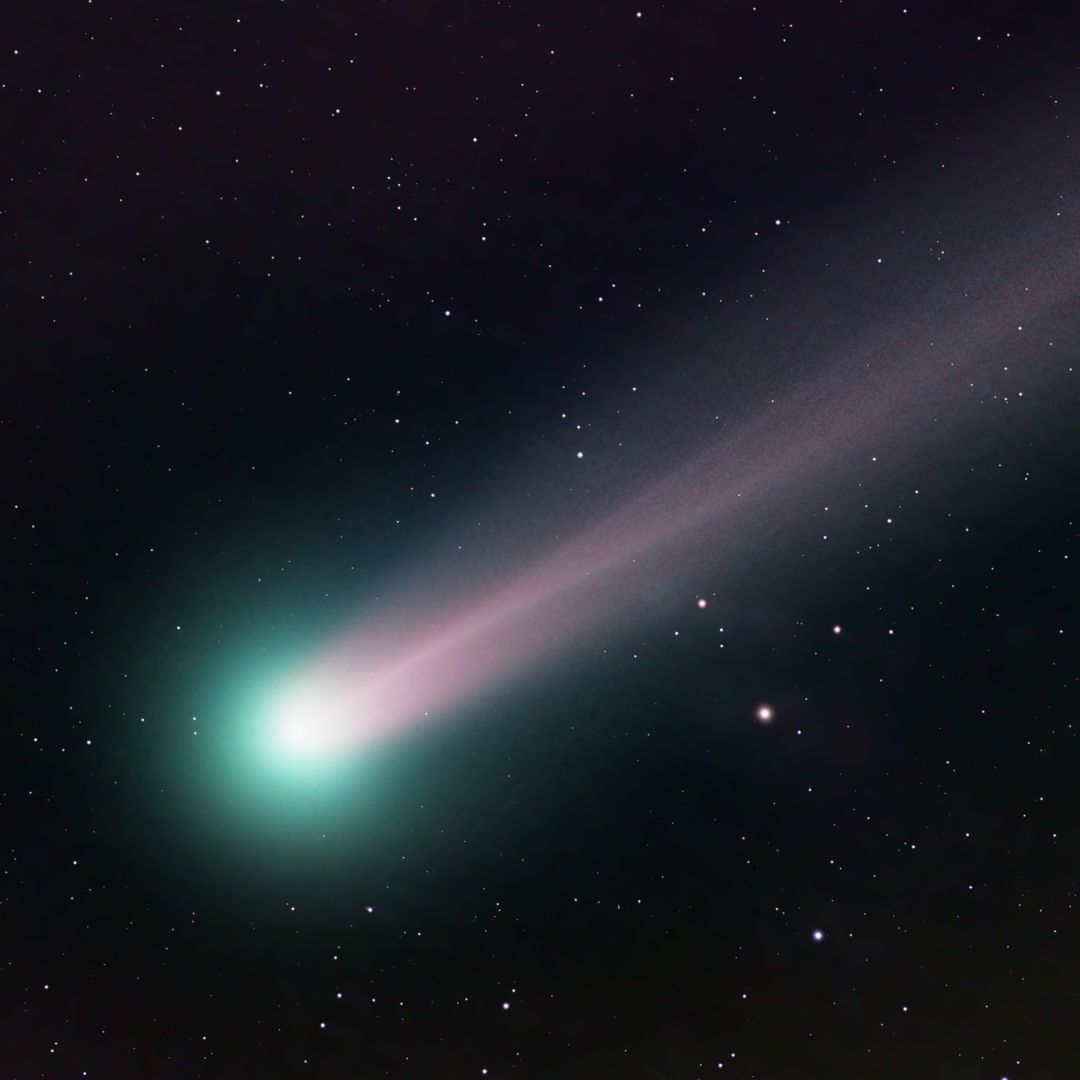
On a clear night, a bright comet stretching across the sky can feel almost magical. With its glowing head and long, shimmering tail, it looks unlike any other object in the heavens. For thousands of years, people viewed comets as mysterious omens, believing they foretold great events, disasters, or the rise and fall of kingdoms. Today, thanks to modern astronomy, we know that comets are not supernatural signs—they are ancient travelers carrying some of the oldest material in the Solar System.
In many ways, comets are frozen time capsules. They preserve ingredients that existed more than 4.5 billion years ago, long before Earth became the blue planet we know today. By studying them, scientists are not only learning how comets form but also uncovering clues about the birth of planets, the origins of water on Earth, and perhaps even the chemical building blocks that helped make life possible.
Understanding how comets form is like looking back to the very beginning of our cosmic story.
What Is a Comet?
A comet is a small icy body that orbits the Sun. Unlike rocky asteroids, comets are made primarily of frozen water, carbon dioxide, carbon monoxide, methane, ammonia, and a mixture of dust and rocky material.
The solid central part of a comet is called the nucleus. Most comet nuclei are only a few kilometers across, although some are much larger. Despite their relatively small size, they can become spectacular objects when they travel close to the Sun.
As sunlight warms a comet, its frozen ices change directly into gas through a process called sublimation. The escaping gas carries dust away from the nucleus, forming a glowing cloud known as the coma. Solar radiation and the solar wind then push this material away from the Sun, creating the comet’s famous tails.
Interestingly, a comet can have more than one tail. One tail is made of dust, while another consists of ionized gas, often called the ion tail. These tails always point generally away from the Sun because they are shaped by sunlight and the solar wind rather than by the comet’s direction of travel.
The Birth of the Solar System
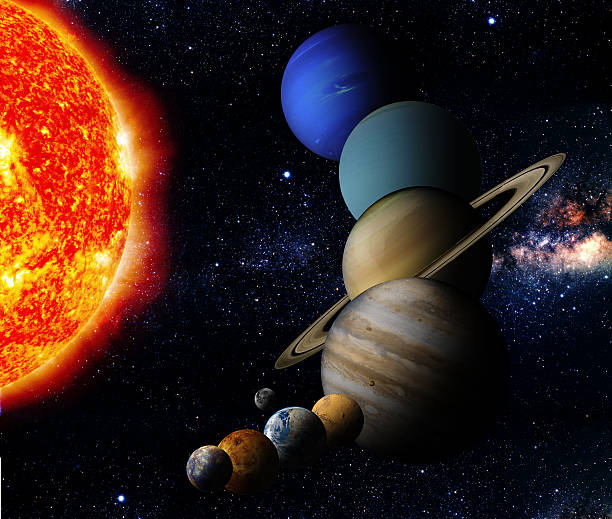
To understand how comets form, we must travel back about 4.6 billion years, when the Solar System did not yet exist.
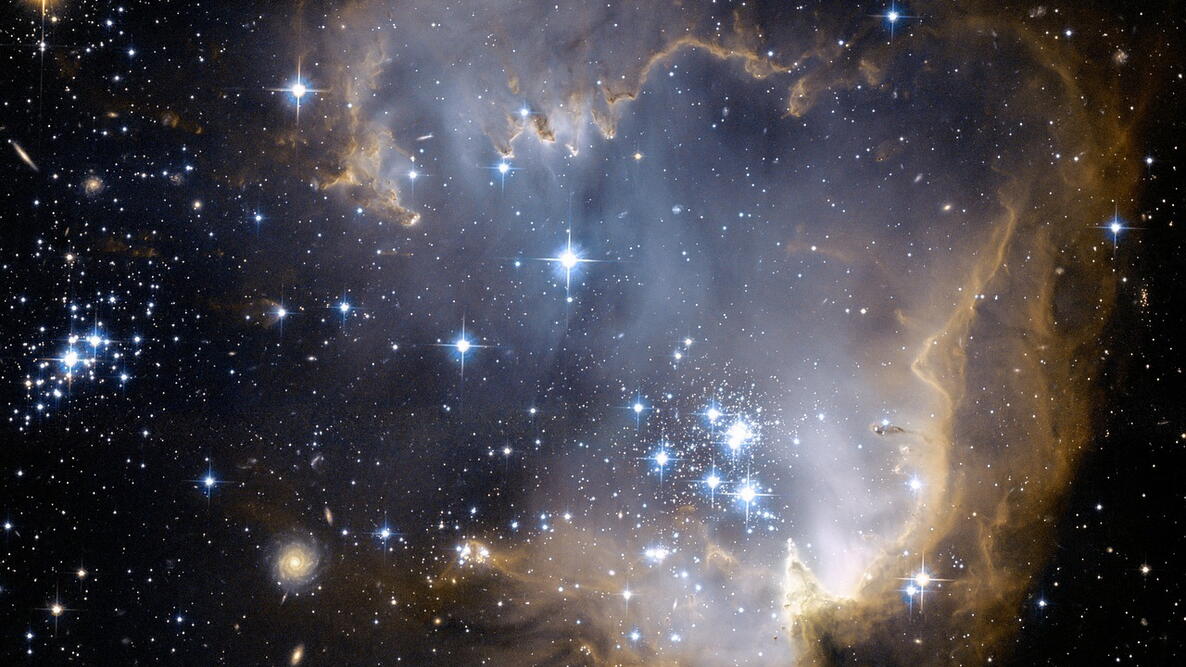
Everything began with a giant cloud of gas and dust called a molecular cloud. This enormous cloud, composed mostly of hydrogen and helium along with tiny amounts of heavier elements and dust grains, drifted through our region of the Milky Way Galaxy.
Eventually, something disturbed this cloud. It may have been the shock wave from a nearby exploding star, known as a supernova, or another gravitational event.
The cloud began collapsing under its own gravity.
As it collapsed, most of the material collected at the center, where increasing pressure and temperature eventually ignited nuclear fusion. The Sun was born.
The remaining material flattened into a vast spinning disk called the protoplanetary disk. This disk contained billions upon billions of tiny particles of dust and ice.
It was within this swirling disk that comets first began to take shape.
Tiny Dust Grains Begin to Stick Together
In the cold outer regions of the young Solar System, temperatures were extremely low.
Far from the newborn Sun, water, carbon dioxide, methane, ammonia, and many other compounds remained frozen as ice.
Tiny dust grains coated with these frozen materials occasionally collided with one another.
Most collisions were gentle.
Electrostatic forces and the sticky nature of icy particles allowed these microscopic grains to cling together instead of bouncing apart.
Over time, countless collisions formed larger and larger clumps.
These gradually became pebble-sized objects.
Pebbles merged into rocks.
Rocks joined to form kilometer-sized bodies.
This process, called accretion, is one of the fundamental mechanisms responsible for building many objects throughout the Solar System.
The Snow Line and Why It Matters
One of the most important concepts in comet formation is the snow line, sometimes called the frost line.
The snow line marked the distance from the young Sun where temperatures became cold enough for water ice to remain stable.
Inside this boundary, water existed mainly as vapor.
Outside it, water froze into solid ice.
This made an enormous difference.
Beyond the snow line, particles had access not only to rocky material but also to abundant ice.
The additional frozen material greatly increased the amount of solid matter available for building larger objects.
As a result, icy planetesimals formed much more efficiently in the outer Solar System.
Many of these icy planetesimals eventually became comets.
Building Comet Nuclei
As icy planetesimals continued growing, they formed the nuclei of future comets.
Unlike planets, these bodies never became large enough for gravity to reshape them into perfect spheres.
Instead, most comet nuclei remained irregular in shape.
Spacecraft observations have revealed that comet nuclei often resemble oddly shaped mountains or giant potatoes rather than smooth balls.
Their interiors are surprisingly porous.
Instead of being solid blocks of ice, they often contain empty spaces and fragile mixtures of dust and frozen gases.
This loose structure explains why comets can sometimes split apart when heated by the Sun or pulled by the gravity of planets.
Why Comets Remained Primitive
Many objects in the Solar System changed dramatically after they formed.
Planets melted internally.
Volcanoes erupted.
Atmospheres developed.
Collisions reshaped surfaces.
Comets experienced far less change.
Because they formed in the cold outer Solar System and spent most of their existence far from the Sun, many remained frozen for billions of years.
They preserve materials that have changed very little since the Solar System’s earliest days.
This is why astronomers often describe comets as fossils of Solar System formation.
Studying them allows scientists to examine matter that existed before Earth itself fully formed.
The Kuiper Belt
Not all comets occupy the same region of space.
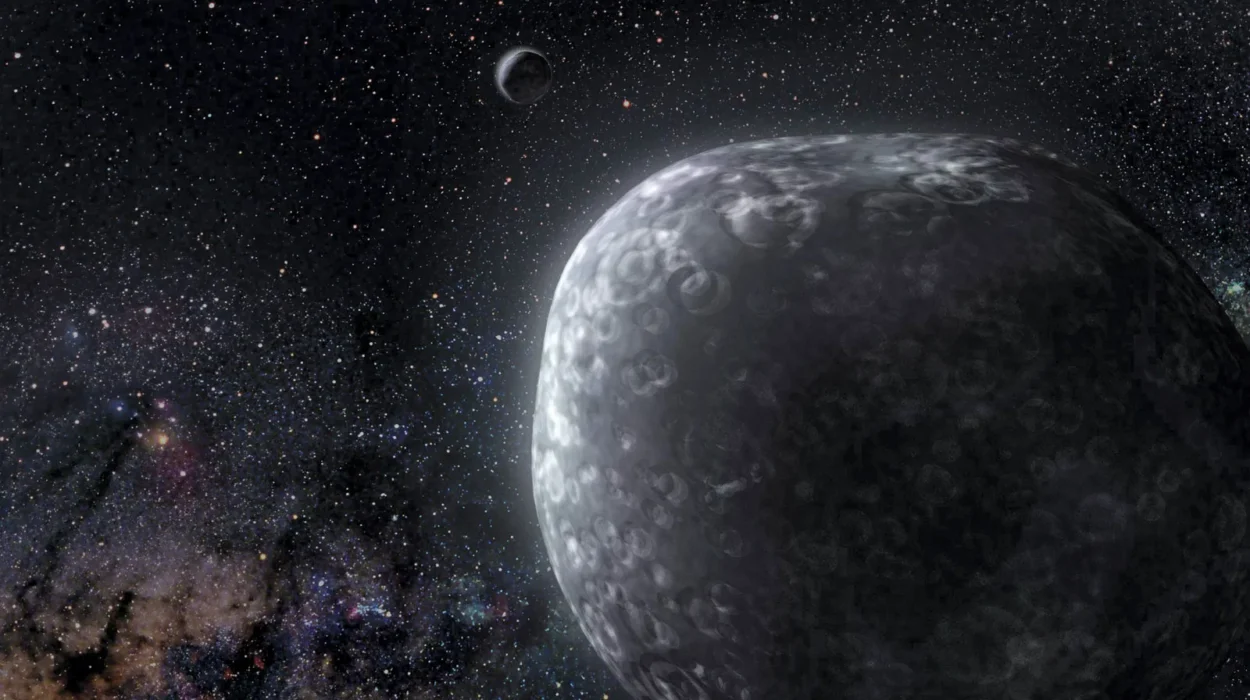
Many originated in the Kuiper Belt, a vast ring of icy bodies beyond Neptune.
The Kuiper Belt extends roughly from 30 to about 50 astronomical units from the Sun, although its outer boundary is not perfectly defined.
It contains countless icy objects left over from the formation of the Solar System.
Some of these objects occasionally experience gravitational disturbances.
A close encounter with Neptune can alter an object’s orbit.
Instead of remaining safely in the Kuiper Belt, it may begin moving inward toward the Sun.
These become short-period comets, completing one orbit in less than about 200 years.
One famous example is Halley’s Comet, which returns approximately every 76 years, although its orbit is technically classified as intermediate-period because of its longer cycle compared with many Jupiter-family comets.
The Oort Cloud
Even farther away lies one of the most mysterious regions of the Solar System.
The Oort Cloud is thought to be a vast spherical shell surrounding the Solar System.
Unlike the Kuiper Belt, it has never been directly observed. Its existence is inferred from the orbits of long-period comets.
Scientists believe the Oort Cloud may begin thousands of astronomical units from the Sun and extend tens of thousands of astronomical units into interstellar space.
During the early Solar System, the giant planets—especially Jupiter and Saturn—gravitationally scattered countless icy bodies outward.
Many escaped into extremely distant orbits.
These objects became the Oort Cloud.
Occasionally, the gravity of passing stars or the tidal forces of the Milky Way slightly disturb these distant objects.
One may begin a slow journey toward the inner Solar System.
After traveling for millions of years, it finally appears as a brilliant long-period comet.
Some of these comets may never return after passing the Sun.
What Happens When a Comet Approaches the Sun?
Far from the Sun, a comet is dark, cold, and inactive.
Its surface temperature can be hundreds of degrees below freezing.
Little happens for millions or even billions of years.
Everything changes as it moves inward.
Sunlight becomes increasingly intense.
The surface begins warming.
Frozen gases start sublimating into vapor.
Jets of escaping gas burst through the surface, carrying dust into space.
A glowing coma develops around the nucleus.
Eventually, sunlight and the solar wind shape the escaping material into long tails that can stretch millions of kilometers across space.
Ironically, the tail is often much larger than the nucleus itself.
A nucleus only a few kilometers wide can produce a tail extending farther than the distance between Earth and the Sun.
Why Comets Lose Material
Every close pass around the Sun causes a comet to lose some of its frozen material.
Each orbit removes ice and dust from the nucleus.
Eventually, many comets become less active.
Some lose nearly all their volatile ices.
Others break apart completely.
A few evolve into dark, inactive objects that resemble asteroids.
This means comets do not remain spectacular forever.
They gradually change with every journey around the Sun.
What Are Comets Made Of?
Although people often describe comets as “dirty snowballs,” scientists now recognize that this description is somewhat oversimplified.
Comets contain a complex mixture of materials.
Water ice is usually the dominant ingredient, but carbon dioxide, carbon monoxide, methane, ammonia, methanol, and many organic molecules are also common.
Mixed with these frozen substances are minerals, silicate dust, and rocky particles.
Some comets even contain surprisingly complex carbon-based molecules.
These organic compounds are not evidence of life.
Instead, they demonstrate that the chemistry needed for life’s building blocks existed long before Earth formed.
Did Comets Bring Water to Earth?
One of the most fascinating questions in planetary science is whether comets delivered some of Earth’s water.
During the early Solar System, countless comets and asteroids bombarded the young Earth.
These impacts certainly brought water and organic molecules.
However, modern measurements suggest that many comets have water with a different ratio of hydrogen isotopes than Earth’s oceans.
This indicates that while comets likely contributed some water, many scientists believe water-rich asteroids probably supplied a larger fraction.
Even so, comets almost certainly played an important role in delivering complex organic compounds to the early Earth.
Their contribution remains an active area of scientific research.
How Space Missions Have Changed Our Understanding
For centuries, astronomers could observe comets only from Earth.
Everything changed with spacecraft exploration.
NASA’s Deep Impact mission intentionally collided with Comet Tempel 1 in 2005, revealing material beneath its surface.
The European Space Agency’s Rosetta mission transformed comet science even further.
After traveling for more than ten years through space, Rosetta entered orbit around Comet 67P/Churyumov–Gerasimenko in 2014.
Its small lander, Philae, made the first successful landing on a comet nucleus.
Rosetta discovered towering cliffs, dust-covered plains, active gas jets, and a surprisingly complex landscape.
It also detected numerous organic molecules and provided unprecedented insight into how comet surfaces evolve over time.
These missions confirmed that comets are far more diverse and geologically interesting than scientists once imagined.
Why Scientists Study Comets
Comets offer a unique window into the earliest history of the Solar System.
Unlike planets, which have undergone billions of years of geological activity, many comets have preserved ancient material almost unchanged.
By analyzing their composition, scientists learn about the conditions that existed when the Sun and planets first formed.
Comets also help researchers understand how planetary systems develop around other stars.
Observations of young stellar systems show icy material beyond their own snow lines, suggesting that comet formation may be a common process throughout the galaxy.
Studying comets therefore teaches us not only about our own origins but also about the formation of countless other planetary systems.
Can New Comets Still Form Today?
The vast majority of comets in our Solar System formed during its earliest history, when abundant gas, dust, and ice surrounded the newborn Sun.
Today, the Solar System no longer contains the dense protoplanetary disk needed to create large numbers of new comets.
Instead, the comets we observe are ancient survivors from that distant era.
However, astronomers have observed young stars elsewhere in the universe surrounded by protoplanetary disks where comet formation is likely occurring right now.
In this sense, while our Solar System has largely finished making comets, the universe continues producing them around newly forming stars.
Comets as Cosmic Time Capsules
Every comet carries a story that began before Earth existed.
Hidden inside its icy nucleus are frozen molecules that witnessed the birth of the Sun, the formation of the planets, and the earliest chapters of our Solar System.
Each time a comet brightens in our sky, it offers a rare glimpse into a world that has remained largely unchanged for billions of years.
Rather than being mere celestial spectacles, comets are invaluable scientific archives. They preserve clues about the materials that built planets, the chemistry that preceded life, and the dynamic processes that shaped our cosmic neighborhood. As new telescopes and ambitious space missions continue to explore these ancient wanderers, they promise to reveal even more about how the Solar System came to be—and how our own story began among the dust and ice of a young star.