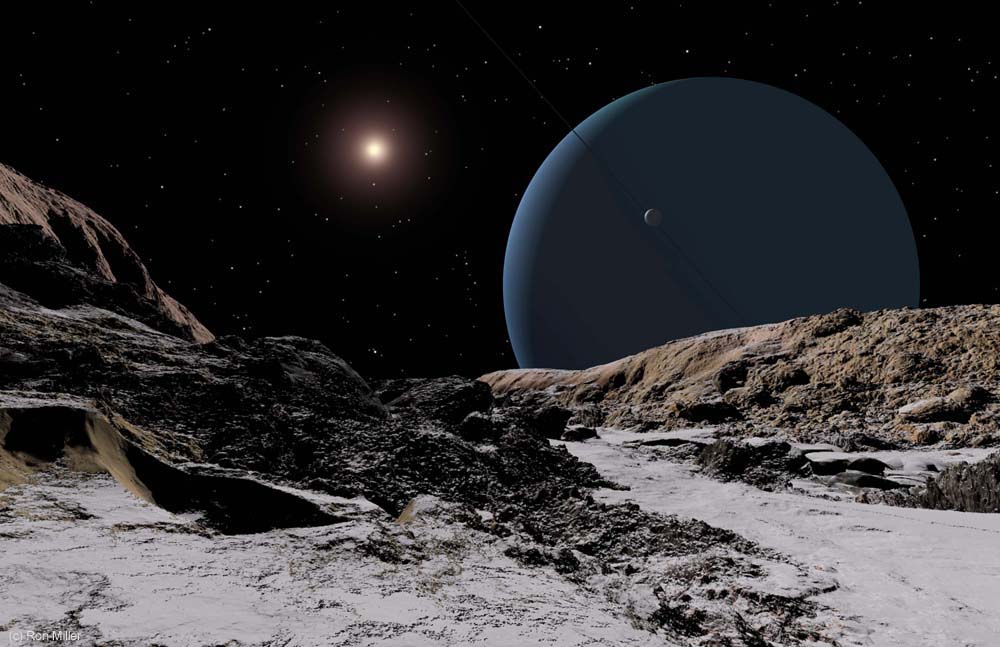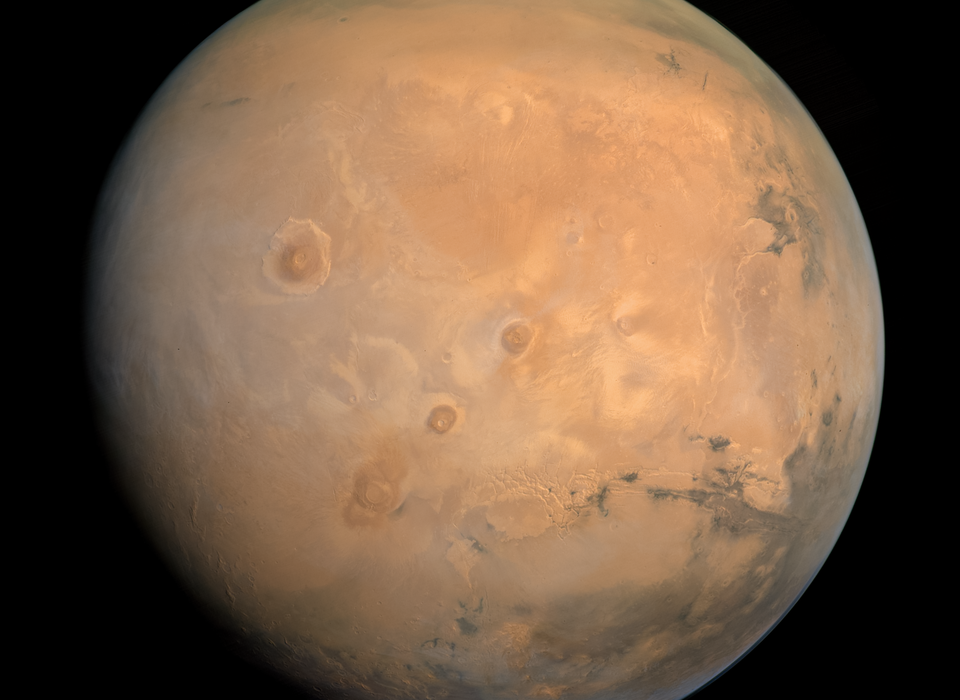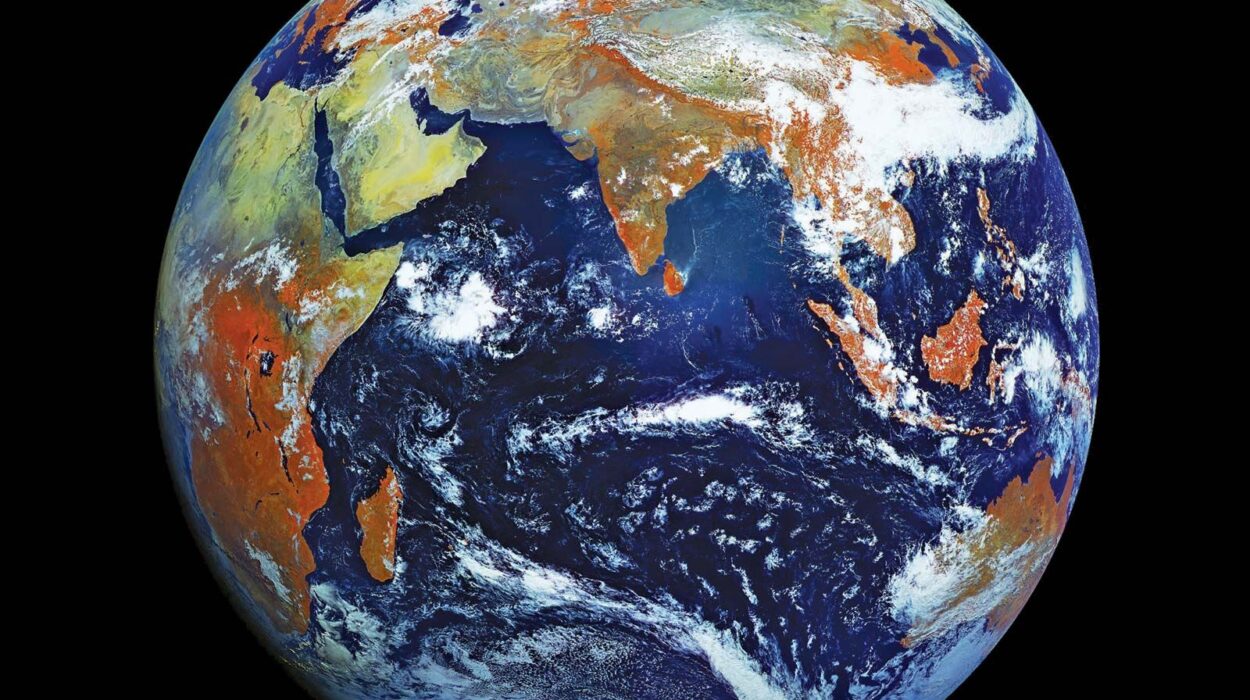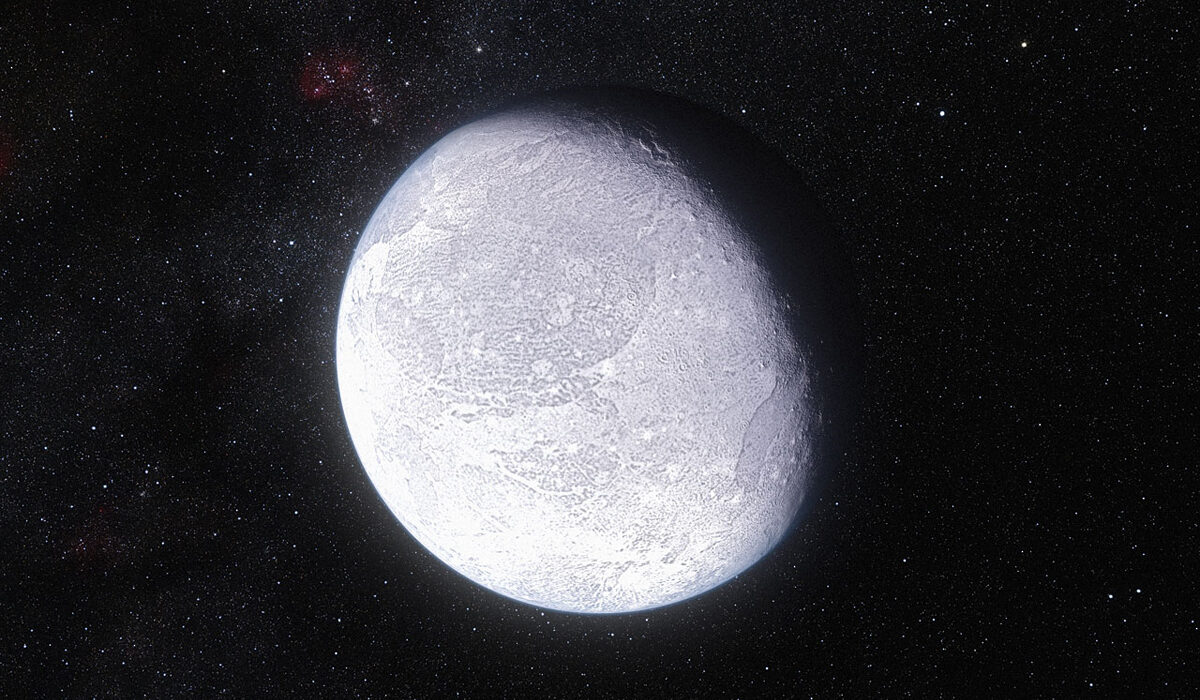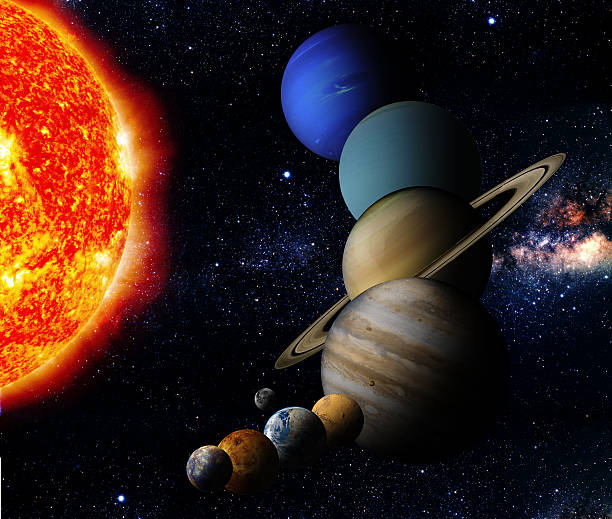
On a clear night, the sky tells a story that began about 4.6 billion years ago. The Moon quietly circles Earth. Earth races around the Sun at nearly 30 kilometers (18.5 miles) every second. Jupiter, Saturn, Mars, and the other planets follow their own paths with astonishing precision. Far beyond Neptune, icy worlds continue their slow journeys through the darkness.
At first glance, it may seem almost magical that these worlds never drift away into space or crash into one another. After billions of years, the Solar System remains remarkably stable. Every planet, moon, asteroid, comet, and dwarf planet moves according to a set of natural laws that scientists have spent centuries uncovering.
So what holds the Solar System together?
The answer begins with one of the most familiar yet mysterious forces in nature: gravity.
Gravity Is the Invisible Glue of the Solar System
Gravity is the force that attracts objects with mass toward one another. Every object in the universe has gravity. A pebble attracts another pebble. You attract the chair you’re sitting on. Earth attracts you, which is why your feet stay firmly on the ground.
The more massive an object is, the stronger its gravitational pull becomes.
Because the Sun contains about 99.86% of all the mass in the Solar System, it has by far the strongest gravitational influence. Its immense gravity reaches across billions of kilometers, keeping planets, dwarf planets, asteroids, comets, and countless smaller objects moving through space in predictable paths.
Without gravity, the Solar System simply could not exist.
Why the Planets Don’t Fall Into the Sun
If the Sun’s gravity is so powerful, why doesn’t Mercury—or Earth, or Jupiter—fall straight into it?
The answer lies in motion.
Every planet is constantly moving sideways as it travels through space. At the same time, the Sun’s gravity pulls the planet inward.
These two motions balance each other.
Imagine swinging a ball attached to a string. The string continuously pulls the ball inward, while the ball’s motion keeps it moving around you instead of flying straight away. In a similar way, gravity acts like the inward pull, while a planet’s forward motion keeps it orbiting the Sun.
The result is an orbit—a continuous state of free fall around the Sun.
In other words, Earth is always falling toward the Sun, but it is moving sideways so quickly that it keeps missing it.
What Is an Orbit?
An orbit is the curved path one object follows around another because of gravity.
Many people imagine planetary orbits as perfect circles, but they are actually slightly stretched circles called ellipses.
This was one of the great discoveries made by the German astronomer Johannes Kepler in the early 1600s.
Each planet follows its own unique elliptical orbit. Some are nearly circular, while others are more elongated. Even comets, which can travel enormous distances from the Sun, follow predictable orbital paths.
Gravity continually bends these paths, preventing objects from flying away into interstellar space.
The Sun Is the Solar System’s Anchor
The Sun is much more than a giant glowing ball of hot gas.
It is the central gravitational anchor of the entire Solar System.
Containing about 333,000 times Earth’s mass, the Sun’s gravity dominates everything nearby.
The eight planets orbit the Sun.
Most dwarf planets orbit the Sun.
Asteroids orbit the Sun.
Comets orbit the Sun.
Even distant icy bodies in the Kuiper Belt and the faraway Oort Cloud remain gravitationally connected to the Sun.
Without its enormous mass, there would be no stable Solar System.
Every Object Pulls on Every Other Object
Although the Sun provides the strongest gravitational pull, it is not acting alone.
Every object in the Solar System attracts every other object.
Earth’s gravity keeps the Moon in orbit.
Jupiter’s enormous gravity influences nearby asteroids.
Saturn’s moons affect one another.
Even tiny asteroids exert gravitational forces, although they are incredibly weak.
These countless gravitational interactions make the Solar System a dynamic place rather than a perfectly simple machine.
Scientists use powerful computer simulations to calculate these interactions and predict how objects move over time.
Jupiter Plays the Role of a Giant Guardian
Among all the planets, Jupiter has a particularly important influence.
Jupiter is more than twice as massive as all the other planets combined.
Its tremendous gravity shapes the architecture of the Solar System in several ways.
It helps stabilize many asteroid orbits.
It captures some passing comets.
Its gravity can redirect or eject small objects from the Solar System.
At times, Jupiter also sends comets and asteroids toward the inner Solar System, where they may occasionally cross Earth’s orbit.
Rather than acting purely as a protective shield, Jupiter influences the movement of countless small bodies in complex ways that scientists continue to study.
Its immense gravity has helped shape the Solar System throughout its history.
The Moon Is Held by Earth’s Gravity
Our own Moon provides a smaller example of the same process.
Earth’s gravity keeps the Moon in orbit.
The Moon moves at an average speed of about 1 kilometer (0.6 miles) per second as it circles Earth.
Meanwhile, Earth and the Moon together orbit the Sun.
This creates a beautiful chain of motion.
The Moon orbits Earth.
Earth orbits the Sun.
The Sun orbits the center of the Milky Way galaxy.
Everything is moving simultaneously.
Gravity Never Turns Off
One remarkable feature of gravity is that it has an unlimited range.
Unlike many forces that weaken quickly over short distances, gravity extends across enormous stretches of space.
Its strength decreases with distance, but it never completely disappears.
The Sun’s gravity reaches far beyond Neptune.
It extends through the Kuiper Belt.
It continues into the distant Oort Cloud, where trillions of icy objects may exist.
Although gravity becomes weaker farther away, it still influences objects across vast cosmic distances.
Einstein Changed Our Understanding of Gravity
For over 200 years, Isaac Newton’s theory of gravity successfully explained how planets move.
Then, in 1915, Albert Einstein introduced a revolutionary new idea.
Instead of describing gravity as an invisible force pulling objects together, Einstein explained it as the curvature of spacetime.
Massive objects like the Sun bend the fabric of spacetime around them.
Planets move along these curved paths, much like a marble rolling around a curved surface.
Although this idea sounds strange, it has passed every major experimental test.
For most everyday situations in the Solar System, Newton’s equations remain extremely accurate. But Einstein’s theory becomes essential when studying very strong gravity or making highly precise measurements, such as those needed for GPS satellites.
The Solar System Is Constantly Moving
It is easy to imagine the Solar System sitting still in space.
In reality, nothing is standing still.
Every planet races around the Sun.
The Sun itself orbits the center of the Milky Way at roughly 220 kilometers (137 miles) per second.
Meanwhile, the Milky Way is also moving through the universe.
The Solar System is therefore not a stationary collection of planets. It is an incredibly fast-moving system traveling together through our galaxy while remaining bound by gravity.
Tiny Changes Can Have Big Effects
Although the Solar System is remarkably stable, it is not perfectly unchanging.
The gravitational pull of planets slowly alters one another’s orbits over millions and billions of years.
Asteroids occasionally collide.
Comets are nudged into new paths.
Moons can migrate outward.
Earth’s rotation gradually slows because of tidal interactions with the Moon.
These changes happen so slowly that human civilizations notice almost none of them, but over geological timescales they become significant.
The Solar System is stable, yet constantly evolving.
Gravity Also Creates Tides
Gravity does more than hold planets in orbit.
It also creates tides.
The Moon’s gravity pulls slightly more strongly on the side of Earth facing it than on the opposite side. This difference stretches Earth’s oceans, producing the familiar rise and fall of sea levels.
The Sun also contributes to tides.
When the Sun, Earth, and Moon align, their combined gravitational effects create especially high tides known as spring tides.
When they form a right angle, the tidal range is smaller, producing neap tides.
Tides are another reminder that gravity is always at work, even in our daily lives.
Could the Solar System Ever Fall Apart?
For the foreseeable future, the Solar System is extraordinarily stable.
Computer simulations suggest that the planets are likely to remain in roughly their current configuration for billions of years.
However, nothing in the universe lasts forever.
About 5 billion years from now, the Sun is expected to exhaust the hydrogen fuel in its core and expand into a red giant.
During this phase, the Sun will become much larger and brighter. Mercury and Venus will almost certainly be engulfed. Whether Earth survives as an intact planet remains uncertain, depending on how the Sun loses mass and expands.
Eventually, the Sun will shed its outer layers and leave behind a dense white dwarf.
The remaining planets will continue orbiting this stellar remnant, but their orbits will gradually expand because the Sun will have lost much of its mass.
Even then, gravity will continue holding the surviving Solar System together.
Gravity Shapes the Entire Universe
The same force that keeps Earth orbiting the Sun also shapes galaxies, stars, black holes, and galaxy clusters.
Gravity causes giant clouds of gas to collapse into new stars.
It governs the lives of planets.
It controls the motion of galaxies.
It even bends light itself, creating spectacular phenomena known as gravitational lenses.
Wherever there is mass, gravity is at work.
The Solar System is just one beautiful example of this universal force.
Why Understanding Gravity Matters
Learning what holds the Solar System together is about more than satisfying curiosity.
Gravity allows scientists to predict eclipses decades in advance.
It helps engineers send spacecraft to distant planets.
It guides missions that land robots on Mars and fly probes past Pluto.
It allows astronomers to discover planets around distant stars by observing how gravity affects their host stars.
Nearly every achievement in space exploration depends on understanding gravity.
Without it, humanity would never have ventured beyond Earth.
A Universe Bound by an Invisible Force
The Solar System is not held together by ropes, magnetic fields, or mysterious cosmic glue. It is held together by gravity—an invisible but universal force that acts between every object with mass. The Sun’s immense gravity provides the dominant pull, while the motion of planets keeps them in stable orbits that have endured for billions of years.
Every sunrise, every season, every eclipse, and every journey of a spacecraft is made possible by this delicate balance between gravity and motion. It is a balance that has shaped our cosmic neighborhood since the birth of the Sun and will continue to guide its evolution for billions of years to come.
The next time you look up at the night sky, remember that every planet, moon, comet, and asteroid is part of an extraordinary celestial dance. Though no strings are visible, the entire Solar System is bound together by one of nature’s most fundamental forces—a force that reaches across the vastness of space and quietly keeps our cosmic home intact.