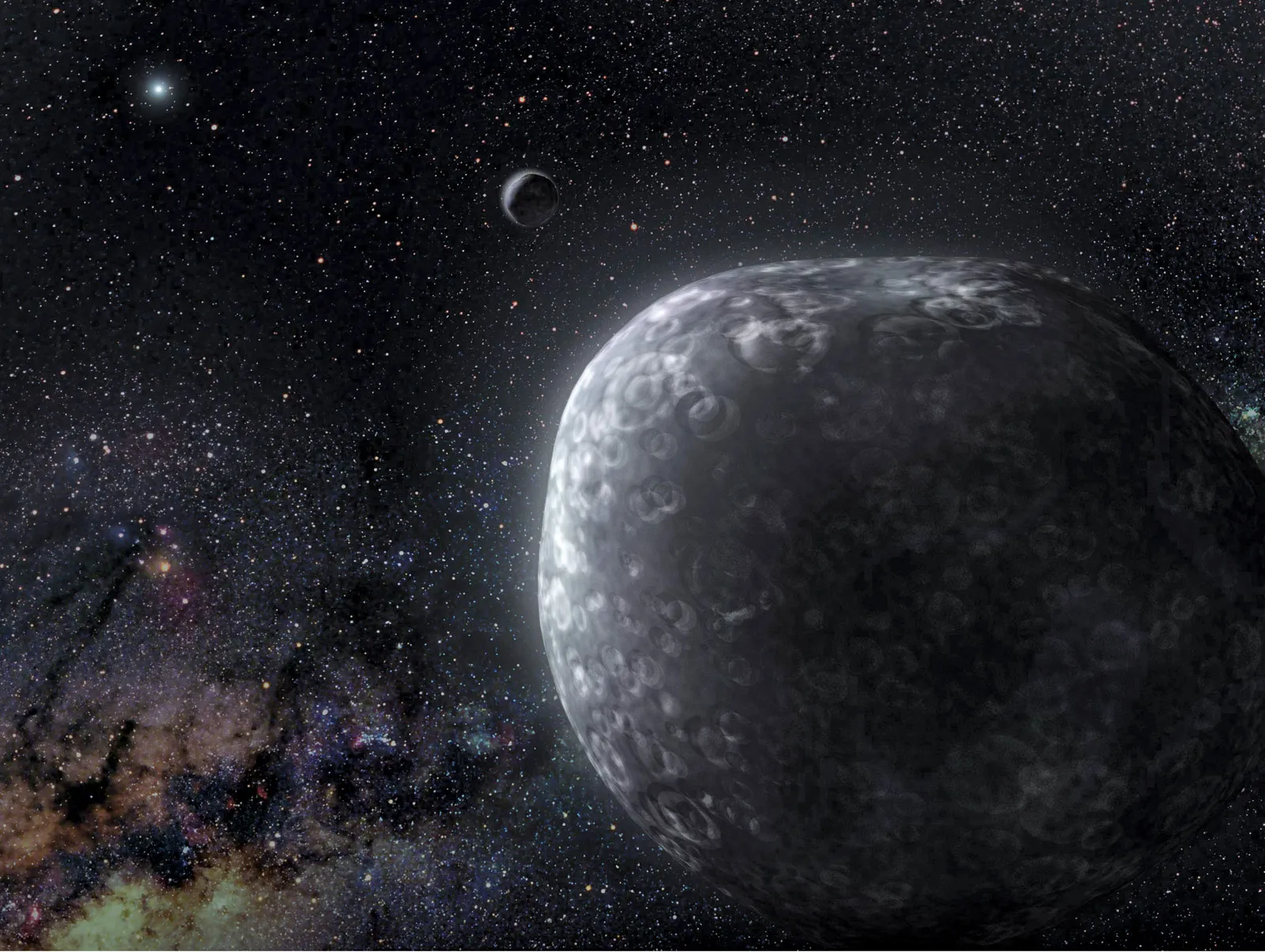
Far beyond the warm glow of the Sun, past the familiar orbits of Mercury, Venus, Earth, Mars, Jupiter, Saturn, Uranus, and Neptune, lies a mysterious region where sunlight is faint, temperatures are unimaginably cold, and billions of icy worlds quietly circle our star. This distant frontier, known as the Kuiper Belt, is one of the most fascinating places in our Solar System.
For centuries, humanity believed that Neptune marked the edge of the Solar System. But modern astronomy has revealed that the Solar System stretches much farther than anyone once imagined. Beyond Neptune exists a vast population of frozen objects that preserve clues from the earliest days of planetary formation. These ancient bodies have remained largely unchanged for more than 4.5 billion years, making the Kuiper Belt something like a cosmic time capsule.
The Kuiper Belt is home to dwarf planets, icy rocks, mysterious worlds, and countless comets. It is also where NASA’s New Horizons spacecraft made history by exploring Pluto and later another small Kuiper Belt object, giving humanity its first close-up look at this distant realm.
Understanding the Kuiper Belt helps scientists understand not only how our Solar System formed but also how planetary systems around other stars may have evolved.
What Is the Kuiper Belt?
The Kuiper Belt is a vast, doughnut-shaped region of the Solar System that lies beyond the orbit of Neptune. It is filled primarily with icy bodies left over from the formation of the Solar System about 4.6 billion years ago.
Unlike the planets, which gathered enough material to become large spherical worlds, most Kuiper Belt objects remained relatively small. They are considered remnants of the original cloud of gas, dust, and ice from which the planets formed.
The Kuiper Belt extends roughly from about 30 astronomical units (AU) from the Sun—where Neptune orbits—to approximately 50 AU, although its exact outer boundary is not sharply defined. One astronomical unit is the average distance between Earth and the Sun, about 150 million kilometers (93 million miles).
Even though this region spans billions of kilometers, the objects within it are incredibly spread out. If someone could stand on one Kuiper Belt object, neighboring objects would usually be far beyond the horizon, separated by millions of kilometers.
Why Is It Called the Kuiper Belt?
The Kuiper Belt is named after the Dutch-American astronomer Gerard Kuiper, who discussed the possibility of small icy bodies existing beyond Neptune in the mid-20th century. Although Kuiper’s ideas were not identical to today’s understanding of the region, his work contributed to the scientific discussions that eventually led to the belt bearing his name.
Interestingly, several astronomers predicted or suggested the existence of such distant objects before the Kuiper Belt was actually discovered. The modern concept developed gradually as observations improved.
The first confirmed Kuiper Belt object after Pluto was discovered in 1992. This discovery transformed scientists’ understanding of the outer Solar System, revealing that Pluto was not alone but part of a vast population of icy worlds.
How the Kuiper Belt Formed
To understand the Kuiper Belt, we need to travel back to the birth of the Solar System.
Around 4.6 billion years ago, the Sun formed from a collapsing cloud of gas and dust. Surrounding the young Sun was a rotating disk of material known as the protoplanetary disk.
Within this disk, countless tiny particles collided and stuck together. Over millions of years, some of these growing bodies became planets.
Closer to the Sun, temperatures were too warm for many volatile substances like water, methane, and ammonia to remain frozen. Farther away, however, these materials existed as ice, allowing the outer Solar System to accumulate large amounts of frozen material.
Not every object became a planet.
The enormous gravity of the giant planets—especially Neptune—disturbed the orbits of many smaller bodies. Instead of merging into a single large planet, many objects remained scattered throughout the region beyond Neptune.
These leftover building blocks became today’s Kuiper Belt.
Because they have changed relatively little since their formation, Kuiper Belt objects provide scientists with valuable information about conditions in the early Solar System.
Where Is the Kuiper Belt?
The Kuiper Belt begins just beyond Neptune’s orbit.
Neptune circles the Sun at an average distance of about 30 AU.
Most Kuiper Belt objects orbit between approximately 30 and 50 AU, although some extend even farther and interact with neighboring regions of the outer Solar System.
At these enormous distances, sunlight is extremely weak. The Sun appears much smaller than it does from Earth and shines only as a very bright star.
Temperatures commonly fall below −220°C (−364°F), making the Kuiper Belt one of the coldest places in the Solar System.
What Is Inside the Kuiper Belt?
The Kuiper Belt contains an astonishing variety of frozen worlds.
Most objects are composed of mixtures of water ice, methane ice, ammonia ice, nitrogen ice, rock, and organic compounds that have been chemically altered by radiation over billions of years.
Some objects measure only a few kilometers across.
Others are hundreds of kilometers wide.
A handful are large enough for their own gravity to pull them into nearly spherical shapes, earning them the classification of dwarf planets.
Scientists estimate that the Kuiper Belt contains millions of objects larger than one kilometer and many more smaller fragments.
Despite these enormous numbers, the total mass of the Kuiper Belt is estimated to be only a small fraction of Earth’s mass.
Pluto and the Kuiper Belt
For much of the twentieth century, Pluto was considered the Solar System’s ninth planet.
Discovered in 1930 by Clyde Tombaugh, Pluto remained unique for decades because no similar worlds were known.
Everything changed in the 1990s.
Astronomers began discovering many other icy objects beyond Neptune.
Some were surprisingly similar to Pluto.
Then, in 2005, astronomers discovered Eris, an object comparable in size to Pluto.
These discoveries forced scientists to rethink the definition of a planet.
In 2006, the International Astronomical Union introduced a new category called dwarf planets.
Pluto became the best-known dwarf planet in the Kuiper Belt.
Rather than losing importance, Pluto gained new significance as the largest known member of an entire population of distant icy worlds.
Other Dwarf Planets in the Kuiper Belt
Pluto is not alone.
The Kuiper Belt contains several recognized dwarf planets and many candidates awaiting further study.
Among the best known are Haumea, famous for its elongated shape and rapid rotation, and Makemake, another large icy world with a reflective surface.
Scientists continue searching for additional dwarf planets hidden among the countless icy objects beyond Neptune.
As telescopes become more powerful, new discoveries are expected.
The Many Types of Kuiper Belt Objects
Not every Kuiper Belt object follows the same path around the Sun.
Some travel in relatively circular orbits.
Others move along highly elongated paths.
Certain objects orbit in a special gravitational relationship with Neptune.
For example, Pluto completes two orbits around the Sun for every three orbits made by Neptune. This stable orbital resonance prevents the two worlds from ever colliding, even though their orbital paths overlap in distance from the Sun.
These orbital patterns provide valuable evidence of how Neptune migrated outward during the early history of the Solar System.
Comets from the Kuiper Belt
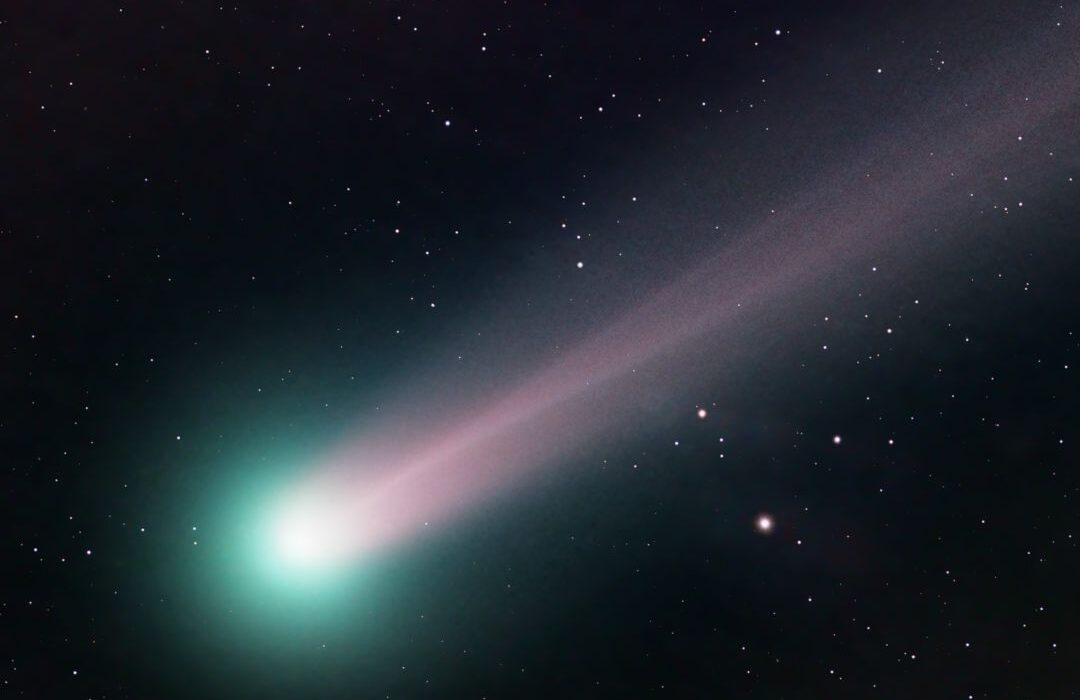
Many of the short-period comets that occasionally brighten Earth’s skies begin their journeys in the Kuiper Belt.
Over time, gravitational interactions with the giant planets can disturb the orbits of Kuiper Belt objects.
Some are sent inward toward the Sun.
As these icy bodies approach warmer regions of the Solar System, sunlight heats their surfaces.
Frozen materials change directly from solid ice into gas through sublimation, carrying dust into space and forming the glowing coma and spectacular tails that make comets so beautiful.
Eventually, many of these comets return to the outer Solar System, while others may break apart or lose much of their ice after repeated passages near the Sun.
How Scientists Study the Kuiper Belt
Studying the Kuiper Belt is extraordinarily challenging.
The objects are incredibly distant, faint, and small.
Even the largest appear as tiny points of light in most telescopes.
Astronomers use powerful ground-based observatories and space telescopes to detect these distant worlds by carefully measuring their movement against the background stars.
By observing changes in brightness, orbit, color, and reflected sunlight, scientists estimate their sizes, compositions, and surface properties.
Computer models also help researchers reconstruct how the Kuiper Belt evolved over billions of years.
The New Horizons Mission
Humanity’s greatest exploration of the Kuiper Belt began with NASA’s New Horizons spacecraft.
Launched in 2006, New Horizons traveled for nearly a decade before reaching Pluto in July 2015.
The mission transformed Pluto from a blurry point of light into a remarkably complex world.
Scientists discovered towering mountains made of water ice, enormous plains of frozen nitrogen, possible cryovolcanic features, atmospheric hazes, and evidence of surprisingly active geology.
Rather than being a frozen, inactive world, Pluto proved to be dynamic and diverse.
After leaving Pluto, New Horizons continued deeper into the Kuiper Belt.
In 2019, it flew past the small Kuiper Belt object Arrokoth, providing humanity’s first close-up observations of a primordial object that had remained largely unchanged since the Solar System formed.
Arrokoth appeared as two gently merged lobes, supporting theories that some planetesimals formed through relatively gentle accumulation rather than violent collisions.
These discoveries have greatly improved scientists’ understanding of the earliest stages of planet formation.
How Is the Kuiper Belt Different from the Asteroid Belt?
People often confuse the Kuiper Belt with the asteroid belt, but they are very different regions.
The asteroid belt lies between Mars and Jupiter and consists mainly of rocky and metallic bodies.
The Kuiper Belt lies far beyond Neptune and contains mostly icy objects.
Temperatures in the asteroid belt are far warmer than those in the Kuiper Belt.
The materials found in each region reflect where they formed in the young Solar System. Close to the Sun, volatile substances could not remain frozen, leading to mostly rocky asteroids. Farther from the Sun, ices remained stable, producing the frozen worlds of the Kuiper Belt.
Although both regions contain remnants from the Solar System’s formation, they preserve different chapters of its history.
The Kuiper Belt and the Oort Cloud
The Kuiper Belt is not the outermost part of the Solar System.
Far beyond it lies the Oort Cloud, a vast, hypothetical spherical reservoir of icy bodies thought to extend thousands to perhaps over one hundred thousand astronomical units from the Sun.
While the Kuiper Belt resembles a flattened disk aligned roughly with the planetary orbits, the Oort Cloud is believed to surround the Solar System in all directions.
The Oort Cloud is thought to be the source of many long-period comets, whereas the Kuiper Belt supplies many short-period comets.
Although no spacecraft has reached the Oort Cloud, its existence is strongly supported by the observed orbits of long-period comets.
Why the Kuiper Belt Is Important
The Kuiper Belt is much more than a distant collection of frozen rocks.
It represents one of the most ancient surviving regions of the Solar System.
Because many Kuiper Belt objects have remained largely unchanged since they formed, they preserve valuable information about the materials and processes that existed billions of years ago.
Studying these objects helps scientists answer fundamental questions about how planets formed, how giant planets migrated, and how water and organic molecules may have been distributed throughout the early Solar System.
The Kuiper Belt also provides an important comparison with planetary systems around other stars. Astronomers have discovered similar debris disks surrounding many distant stars, suggesting that Kuiper Belt-like structures may be common throughout the galaxy.
Mysteries That Remain
Despite decades of research, the Kuiper Belt still holds many unanswered questions.
Scientists continue to investigate why some Kuiper Belt objects have unusual colors, why others rotate so rapidly, and how binary systems—pairs of objects orbiting each other—formed in such large numbers.
Researchers are also searching for additional large dwarf planets hidden in the distant reaches of the Kuiper Belt.
Another ongoing mystery involves the possibility of an undiscovered large planet, often called Planet Nine, whose gravity has been proposed to explain certain unusual orbital patterns among some distant trans-Neptunian objects. Although intriguing, no such planet has yet been directly observed, and its existence remains unconfirmed.
Future telescopes and space missions may help resolve these mysteries.
The Future of Kuiper Belt Exploration
The exploration of the Kuiper Belt has only just begun.
New observatories, including the Vera C. Rubin Observatory, are expected to discover thousands of additional distant Solar System objects, dramatically expanding our knowledge of this region.
Astronomers are also developing more advanced telescopes capable of studying the surfaces, compositions, and atmospheres of the largest Kuiper Belt objects in unprecedented detail.
Future robotic spacecraft may one day visit additional dwarf planets, investigate more primordial bodies, or even return samples from these frozen worlds.
Each new discovery has the potential to reshape our understanding of how planetary systems are born and evolve.
Conclusion
The Kuiper Belt is one of the Solar System’s most extraordinary frontiers—a vast ring of ancient icy worlds stretching beyond Neptune, where dwarf planets, comets, and countless frozen remnants of the Solar System’s birth continue their silent journeys around the Sun.
Once thought to be an empty region beyond the planets, it is now recognized as a rich and dynamic realm that preserves the history of our cosmic origins. Every new object discovered, every spacecraft image returned, and every scientific breakthrough adds another piece to the story of how our Solar System came to be.
Although it lies billions of kilometers from Earth, the Kuiper Belt brings us closer to answering some of humanity’s oldest questions: How did the Solar System form? How common are planetary systems like ours? And what other remarkable worlds are still waiting to be found in the cold darkness beyond Neptune?