Every night, tiny pieces of the Solar System travel silently through the darkness of space. Most are too small to notice, yet they move at incredible speeds, carrying with them stories that began billions of years ago. Occasionally, one of these tiny travelers streaks across the night sky as a brilliant flash of light, capturing the attention of anyone lucky enough to witness it. Some survive the fiery journey through Earth’s atmosphere and land on the ground, becoming priceless scientific treasures.
Before any of that happens, however, these space rocks have another name: meteoroids.
Although the words meteoroid, meteor, and meteorite are often used interchangeably, they describe different stages of the same object’s journey. Understanding what a meteoroid is opens a fascinating window into the history of our Solar System and helps scientists piece together how planets, moons, and even life itself may have formed.
Defining a Meteoroid
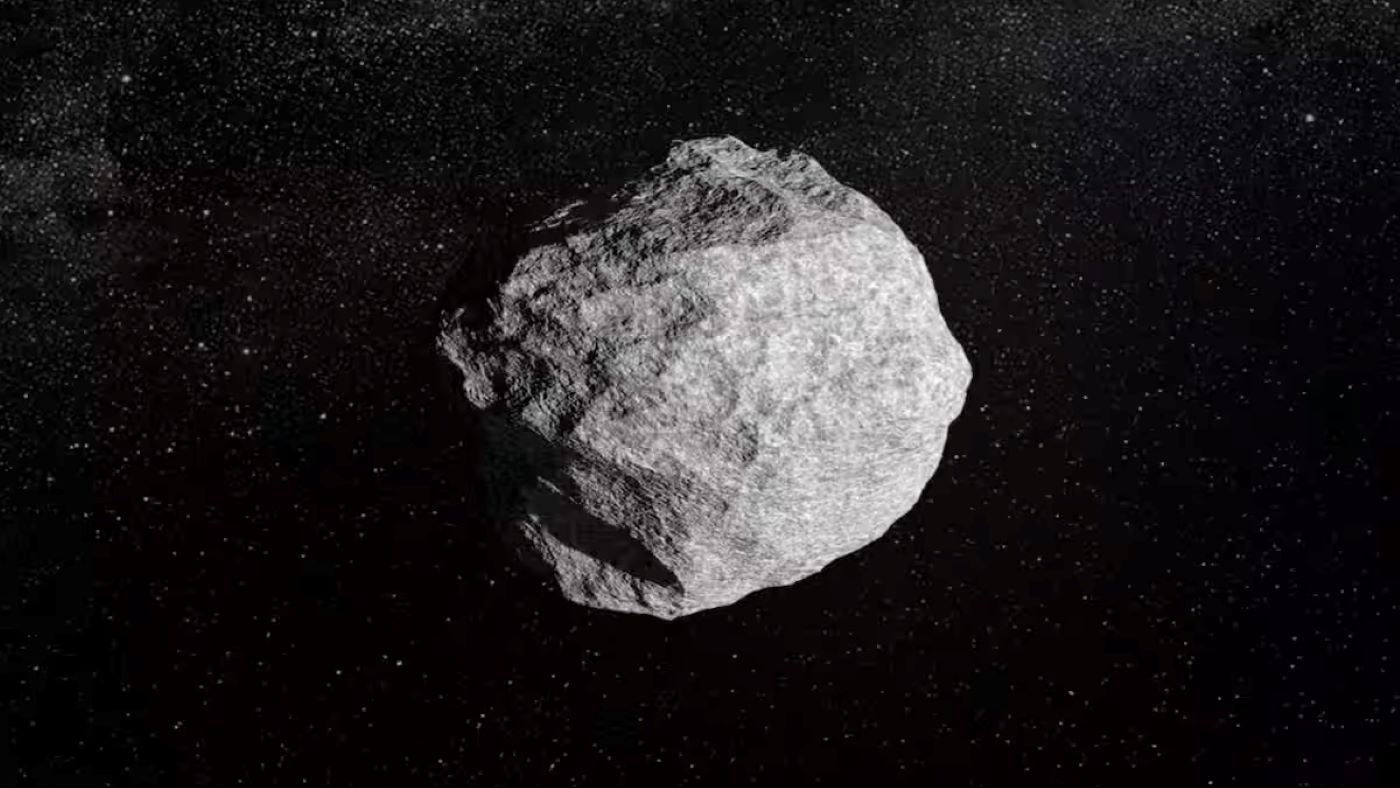
A meteoroid is a small natural rocky or metallic object traveling through space. It is significantly smaller than an asteroid but larger than tiny particles of cosmic dust.
The International Astronomical Union generally considers meteoroids to range from about the size of a grain of dust up to objects about one meter (roughly 3.3 feet) across. Objects larger than this are typically classified as asteroids, although there is some overlap in scientific discussions because size alone is not always the deciding factor.
Meteoroids travel throughout the Solar System, orbiting the Sun just as planets and asteroids do. Most remain in space for millions or even billions of years unless they collide with a planet, moon, or another object.
Meteoroid, Meteor, and Meteorite: What’s the Difference?
One of the most common misconceptions in astronomy is confusing these three closely related terms.
A meteoroid is the object while it is still traveling through space.
When that meteoroid enters Earth’s atmosphere at extremely high speed, friction with the atmosphere causes the air around it to become intensely hot and ionized. The glowing streak of light that appears is called a meteor, often known as a “shooting star.” Despite the popular name, a shooting star has nothing to do with actual stars.
If part of the meteoroid survives its fiery passage through the atmosphere and reaches Earth’s surface, the remaining piece is called a meteorite.
These three names describe different stages of the same object’s journey from space to Earth.
Where Do Meteoroids Come From?
Most meteoroids are ancient leftovers from the formation of the Solar System about 4.6 billion years ago.
During the birth of the planets, countless rocky and metallic fragments remained after the larger bodies formed. Many of these fragments still orbit the Sun today.
Some meteoroids originate from collisions between asteroids. When two asteroids crash into one another, enormous amounts of debris are blasted into space. These fragments may continue orbiting for millions of years before encountering a planet.
Other meteoroids come from comets. As a comet approaches the Sun, solar heat causes its icy surface to vaporize, releasing dust and rocky particles into space. These particles spread out along the comet’s orbit, forming long streams of debris.
When Earth passes through one of these streams, the result is a meteor shower.
In rarer cases, meteoroids can even come from the Moon or Mars. Powerful asteroid impacts on these worlds can launch pieces of rock into space, where they eventually may reach Earth.
What Are Meteoroids Made Of?
Meteoroids vary greatly in composition depending on their origin.
Many are made primarily of silicate minerals similar to those found in Earth’s rocks.
Others contain large amounts of iron and nickel, making them exceptionally dense and metallic.
Some are mixtures of rock and metal.
Primitive meteoroids, especially those originating from certain asteroids, may contain carbon-rich compounds, water-bearing minerals, and even complex organic molecules. These ancient materials provide valuable clues about the chemical environment that existed when the Solar System first formed.
Scientists study meteorites that originated as meteoroids to better understand these early building blocks of planets.
How Big Is a Meteoroid?
Meteoroids come in an astonishing variety of sizes.
Some are microscopic grains smaller than a grain of sand.
Others are pebble-sized objects that weigh only a few grams.
Some are as large as baseballs, cars, or even nearly one meter across.
Although larger meteoroids exist, scientists usually classify objects exceeding roughly one meter as asteroids.
Size plays an important role in determining what happens when a meteoroid encounters Earth’s atmosphere.
Tiny particles usually burn up completely.
Larger ones may produce brilliant fireballs.
Only the largest and strongest meteoroids survive long enough to reach the ground as meteorites.
How Fast Do Meteoroids Travel?
Meteoroids are among the fastest natural objects regularly encountered by Earth.
Their speed depends on their orbit around the Sun and the direction in which they approach Earth.
When entering Earth’s atmosphere, meteoroids typically travel between about 11 kilometers per second (25,000 miles per hour) and 72 kilometers per second (161,000 miles per hour).
At these extraordinary speeds, even a tiny pebble carries enormous kinetic energy.
This tremendous energy is what produces the bright glow of a meteor.
What Happens When a Meteoroid Enters Earth’s Atmosphere?
The journey through Earth’s atmosphere is one of the most dramatic events in a meteoroid’s existence.
As the object plunges into the atmosphere, it compresses the air in front of it. The compressed air becomes extremely hot, heating both the surrounding gases and the meteoroid’s outer surface.
This intense heating causes material to vaporize from the surface in a process called ablation.
The glowing gases surrounding the object create the brilliant streak that observers see as a meteor.
Most meteoroids completely disintegrate high above Earth’s surface.
Only the strongest and largest fragments survive long enough to become meteorites.
Why Do Meteors Glow?
Many people assume meteors glow because they are simply “on fire.”
The reality is more fascinating.
The intense brightness comes primarily from the tremendous heating of the surrounding air caused by the meteoroid’s high-speed passage. The hot, ionized gases emit light, while vaporized material from the meteoroid also contributes to the glowing trail.
Different chemical elements can produce different colors.
Sodium often creates yellow-orange light.
Magnesium may appear bluish-white.
Iron can produce yellow tones.
Calcium sometimes contributes violet colors.
The exact appearance depends on the meteoroid’s composition, its speed, and atmospheric conditions.
Meteor Showers Begin With Meteoroids
Meteor showers are among the most beautiful astronomical events visible without a telescope.
They occur because Earth passes through streams of countless meteoroids left behind by comets or, less commonly, by asteroids.
As these tiny particles enter Earth’s atmosphere, they create numerous meteors that seem to radiate from one part of the sky.
Well-known annual meteor showers include the Perseids, Geminids, Leonids, and Quadrantids.
Although hundreds of meteors may be seen during an active shower, each one began as an individual meteoroid traveling through space.
Can Meteoroids Hit Earth?
Yes. Earth is constantly bombarded by meteoroids.
Fortunately, the overwhelming majority are extremely small.
Every day, millions of tiny meteoroids enter Earth’s atmosphere. Most burn up completely before reaching the ground.
Scientists estimate that tens of thousands of tons of extraterrestrial dust settle onto Earth’s surface each year, although individual estimates vary depending on the measurement methods used.
Larger impacts are much less common.
Objects several meters across may enter Earth’s atmosphere every few years, sometimes producing spectacular fireballs.
Much larger impacts capable of causing regional or global effects are extremely rare, occurring over timescales of thousands to millions of years.
Famous Meteoroid Events
Throughout history, several remarkable meteoroid events have captured worldwide attention.
In 1908, a powerful explosion over the Tunguska region of Siberia flattened millions of trees across more than 2,000 square kilometers (about 770 square miles). Scientists believe the event was caused by the atmospheric explosion of a large meteoroid or small asteroid before it reached the ground.
In 2013, a meteoroid entered Earth’s atmosphere over Chelyabinsk, Russia. The object exploded high in the atmosphere, producing a brilliant fireball and a powerful shock wave that shattered thousands of windows and injured more than a thousand people, mostly from flying glass.
These events remind us that Earth remains part of a dynamic cosmic environment.
Studying Meteoroids
Scientists use many techniques to study meteoroids before and during their journey into Earth’s atmosphere.
Ground-based cameras monitor fireballs.
Radar systems detect meteors invisible to the human eye.
Specialized telescopes search for small near-Earth objects.
Spacecraft have directly collected tiny meteoroid particles from space, allowing researchers to analyze material that formed during the earliest stages of Solar System history.
When meteorites are recovered on Earth, laboratories examine their minerals, chemical composition, crystal structures, and isotopic signatures.
These studies reveal information about the age, origin, and evolution of their parent bodies.
Why Meteoroids Matter
Although many meteoroids are no larger than pebbles, they hold enormous scientific value.
They preserve materials that have remained largely unchanged since the Solar System formed billions of years ago.
Some contain microscopic grains that are even older than the Sun itself, originating in ancient stars that existed before our Solar System was born.
By studying meteoroids and meteorites, scientists gain insights into how planets formed, how water and organic molecules were distributed throughout the early Solar System, and how Earth’s own history unfolded.
Some researchers also investigate whether meteoroids may have helped deliver water and complex organic compounds to the young Earth, contributing ingredients that later became important for life.
Meteoroids Beyond Earth
Earth is not the only world affected by meteoroids.
The Moon, Mars, Mercury, and countless other planetary bodies experience impacts as well.
Because the Moon has virtually no atmosphere, meteoroids strike its surface directly, creating impact craters that remain visible for billions of years.
Mars has a much thinner atmosphere than Earth, allowing more meteoroids to survive and reach its surface.
Even spacecraft traveling through the Solar System are designed to withstand impacts from tiny meteoroids moving at tremendous speeds.
Are Meteoroids Dangerous?
Most meteoroids pose no threat to people.
Tiny particles burn up harmlessly high in the atmosphere every day.
Occasionally, larger meteoroids produce bright fireballs that are spectacular to watch but cause no damage.
Only very large objects present a significant hazard.
For this reason, astronomers actively search for larger near-Earth asteroids that could potentially collide with our planet in the future. Detecting these objects early provides time to study their orbits and assess any potential risk.
The Endless Journey Through Space
Long before a meteoroid lights up the night sky, it has often spent millions or even billions of years orbiting the Sun. It may have broken away from an asteroid during a violent collision or drifted away from a comet as it shed dust near the Sun. Throughout its long journey, it silently circles the Solar System until chance brings it close to a planet.
Some continue traveling through space indefinitely. Others briefly become dazzling meteors before disappearing forever. A fortunate few survive the fiery descent and reach Earth’s surface as meteorites, where they offer scientists a tangible connection to the earliest chapters of our cosmic history.
Conclusion
A meteoroid is much more than a small rock drifting through space. It is a fragment of the Solar System’s ancient past, carrying valuable clues about the formation of planets, the evolution of asteroids and comets, and the processes that shaped the universe we see today.
Though often tiny in size, meteoroids play an outsized role in astronomy. They create the beautiful shooting stars that inspire skywatchers, provide scientists with pristine samples from space, and remind us that Earth is part of a vast and ever-changing cosmic neighborhood. Every meteoroid traveling silently through the darkness is a messenger from deep time, preserving a story that began billions of years before humanity first looked up at the stars.