Dark matter may leave no obvious trace as it passes through ordinary matter, but its interactions with atomic nuclei could allow planets and stars to trap it over time. As captured particles accumulate and annihilate, they could produce detectable neutrinos or add heat to their surroundings. New theoretical calculations suggest that Earth and massive white dwarfs can place some of the strongest existing constraints on these interactions, probing regions of dark matter parameter space that conventional underground detectors struggle to reach.
Dark matter remains one of the most important unresolved questions in physics. Its gravitational influence is evident in observations of the universe, but its underlying particle nature remains unknown. Scientists do not yet know what dark matter is made of, how massive its constituent particles might be, or precisely how they interact with ordinary matter.
One possibility is that dark matter particles interact with photons through subtle electromagnetic properties. Even if a particle carries no ordinary electric charge, it could still possess a magnetic dipole moment, an electric dipole moment, a charge radius, or an anapole moment. These properties could allow it to scatter off atomic nuclei through electromagnetic interactions.
Such interactions offer another way to investigate dark matter, beyond searching for the particles directly in underground laboratories.
A new theoretical investigation by physicists Alejandro Ibarra, Merlin Reichard, and Gaurav Tomar examines how four celestial bodies could help constrain these properties. The researchers considered the Sun, Earth, Jupiter, and massive white dwarfs, calculating how efficiently each could capture dark matter particles and what observable effects might follow.
Their results identify different strengths for different celestial bodies. Earth provides particularly strong constraints on dark matter carrying a tiny electric charge, while massive white dwarfs offer powerful sensitivity to several other electromagnetic interactions, including the charge radius and anapole moment.
The calculations also suggest that white dwarfs could test certain models of Majorana dark matter in mass ranges where existing direct-detection and collider searches have difficulty probing them.
Five possible electromagnetic properties of dark matter
The researchers focused on spin-1/2 dark matter, a hypothetical particle whose intrinsic angular momentum is the same as that of familiar fermions such as electrons.
At low momentum transfer, the electromagnetic interactions of such a particle can be described using five properties.
The first is the electric charge. The study considers millicharged dark matter, meaning particles that carry an extremely small fraction of the elementary electric charge.
The second is the magnetic dipole moment, which describes how a particle responds to a magnetic field. The third is the electric dipole moment, which describes an analogous interaction involving electric fields.
The fourth is the charge radius. This characterizes how electric charge is distributed within a particle and can describe an electromagnetic interaction even when the particle has no net electric charge.
The fifth is the anapole moment, a more unusual electromagnetic property associated with an interaction involving the particle’s axial current and the electromagnetic field.
These properties do not necessarily have to exist together. Different theoretical models can produce different combinations, and some particles are restricted by their underlying quantum properties from possessing certain electromagnetic moments.
For example, a neutral Dirac fermion can have several of these electromagnetic properties, whereas a Majorana fermion has much more restrictive possibilities. The distinction becomes important when the researchers examine specific dark matter models later in their analysis.
If any of these interactions exists, dark matter could scatter off atomic nuclei through the electromagnetic field. The probability of such an interaction depends on the particle’s electromagnetic properties, its velocity, the target nucleus, and the amount of momentum transferred during the collision.
That dependence is particularly important because different interactions respond differently to the motion of dark matter particles and the composition of the material they encounter.
Why planets and stars can act as dark matter detectors
Most conventional direct-detection experiments search for dark matter inside underground laboratories. They attempt to identify the tiny recoil produced when a dark matter particle collides with an atomic nucleus.
However, these experiments face a difficulty when dark matter interacts relatively strongly with ordinary matter.
A particle traveling toward an underground detector must first pass through the rock above it. If its interactions are sufficiently strong, it may scatter repeatedly and lose energy before reaching the detector.
The researchers point out that this attenuation can prevent some dark matter particles from reaching underground experiments, even when their interactions with ordinary matter are relatively large.
Celestial bodies offer a different approach.
As dark matter particles pass through a planet or star, they can collide with nuclei inside it. If a collision removes enough kinetic energy, a particle that would otherwise escape can become gravitationally bound to the object.
The captured particles then remain inside the celestial body, potentially accumulating over time.
As their population increases, dark matter annihilation can become more frequent. In the scenarios considered by the researchers, pairs of captured particles annihilate into Standard Model particles, producing energy and other secondary particles.
The observable consequences depend on the celestial body.
Inside the Sun and Earth, annihilation can produce neutrinos that may travel outward and potentially be detected by neutrino observatories.
Inside Jupiter and white dwarfs, the deposited annihilation energy could contribute to their internal heating.
These two approaches provide different ways of testing the same underlying interactions. Instead of looking for an individual dark matter collision in a laboratory, scientists can examine the accumulated consequences of many possible interactions inside a much larger object.
There is another important difference between the two approaches. Direct-detection experiments predominantly probe the higher-velocity portion of the dark matter distribution, whereas capture in celestial bodies is particularly sensitive to slower-moving particles.
Because the electromagnetic scattering rates depend on velocity and momentum transfer, the two methods do not necessarily constrain the same regions of parameter space.
How the calculations connect dark matter capture to observable signals
The researchers developed calculations of the scattering and capture rates for each of the five electromagnetic properties.
They first determined how dark matter particles could scatter from different nuclear targets. They then incorporated the composition and internal structure of each celestial body to calculate how many particles could become gravitationally captured.
An important part of this calculation involved the surrounding electrons.
At very small momentum transfer, a dark matter particle may not be able to distinguish an atomic nucleus from its surrounding electron cloud. Because the atom is electrically neutral over sufficiently large distances, the electrons screen the nucleus’s electric charge.
Without accounting for this effect, the calculated contribution from the electric charge interaction would become artificially large at very low recoil energies.
The researchers incorporated atomic screening using the Thomas-Fermi approximation. For white dwarfs, where electrons inside the dense stellar material can be relativistic, they used the corresponding relativistic screening expression.
They then calculated how captured dark matter particles accumulate and annihilate.
The balance involves two competing processes. Capture adds particles to the celestial body, while annihilation reduces their number. The resulting annihilation rate depends on how efficiently the object captures dark matter and how quickly the accumulated particles annihilate.
This distinction matters because a large capture rate does not automatically mean that the object is already producing annihilation signals at the maximum possible rate. The system needs time to approach equilibrium between capture and annihilation.
For their calculations, the researchers used the public computational tools WimPyDD and its extension WimPyC.
They adopted an annihilation cross section of 3 × 10⁻²⁶ cm³/s and considered annihilation into τ⁺τ⁻ and W⁺W⁻ final states. These channels produce relatively energetic neutrino spectra, making them useful for investigating possible neutrino signals.
The resulting calculations were compared with existing observational constraints rather than with newly collected astronomical data.
For the Sun, the researchers used upper limits on neutrino fluxes from IceCube and DeepCore.
For Earth, they inferred neutrino-flux constraints from the 90% confidence-level limits reported by IceCube using its 10-year dataset.
For Jupiter, they compared the calculated heating from dark matter annihilation with the planet’s measured internal heat emission.
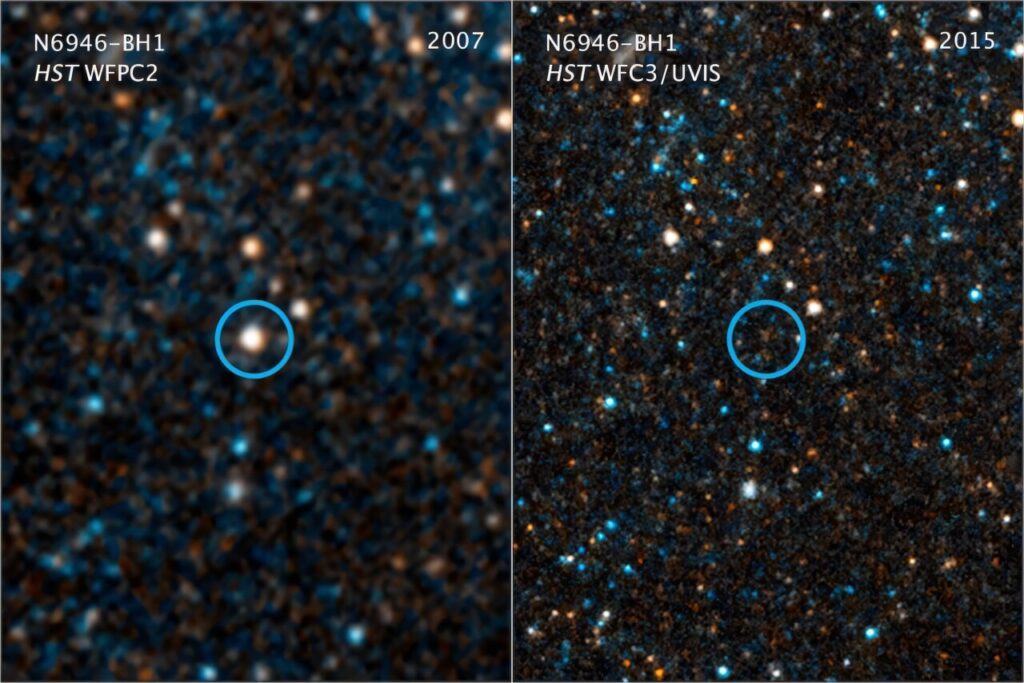
For white dwarfs, they considered whether annihilation could produce more luminosity than is observed from massive white dwarfs in the M4 globular cluster.
These comparisons allowed the researchers to determine which electromagnetic interactions could be constrained most strongly by each celestial body.
Earth is particularly sensitive to dark matter carrying a tiny electric charge
One of the clearest results concerns millicharged dark matter.
Although the hypothetical particles carry only a very small electric charge, the corresponding electromagnetic interaction has a long-range character. Its scattering strength increases at low momentum transfer, making the capture process particularly sensitive to interactions involving slowly moving particles.
Earth benefits from another important feature: its internal composition includes heavy elements, particularly iron.
The presence of many protons in heavy nuclei can enhance the scattering probability through coherent contributions from nuclear electric charge.
Together, these characteristics make Earth a particularly effective target for capturing millicharged dark matter.
The researchers find that Earth-based constraints provide leading sensitivity to millicharged dark matter for particle masses above approximately 10 GeV.
This is an important distinction from conventional underground searches. The very interactions that can make dark matter difficult to detect in an underground laboratory by attenuating its incoming flux can also make it easier for a much larger celestial body to capture.
Earth therefore provides a complementary way to investigate dark matter with relatively strong electromagnetic interactions.
The comparison between Earth and the Sun also depends on the specific electromagnetic property being considered.
For the magnetic dipole moment, the Sun produces stronger constraints than Earth. For the electric dipole moment, Earth performs better.
The researchers attribute the latter difference to the long-range behavior of the electric dipole interaction, which enhances capture at Earth.
This illustrates why no single celestial body is equally effective at testing every possible electromagnetic property.
Massive white dwarfs provide a different kind of dark matter constraint
The strongest results for several other electromagnetic interactions come from massive white dwarfs.
White dwarfs are extremely compact stellar remnants. The researchers use a particularly massive example with a mass of 1.384 times the Sun’s mass and a radius of approximately 1,250 kilometers.
For their calculations, they assume a composition of 100% carbon.
The compact structure of this object is important for dark matter capture. Its strong gravitational field increases the speed of incoming dark matter particles as they approach the interior, while its dense nuclear environment provides opportunities for scattering.
The researchers investigate a white dwarf in the M4 globular cluster, adopting an estimated local dark matter density of 798 GeV/cm³ at the star’s position.
They also use a dark matter velocity distribution characterized by an escape velocity of 1,000 km/s and a root-mean-square velocity of 8 km/s.
These assumptions determine how frequently dark matter particles encounter the white dwarf and how efficiently they can become gravitationally captured.
The researchers then calculate the luminosity that annihilating dark matter could produce inside the star.
They require that this additional luminosity does not exceed the observed luminosity of the massive white dwarfs in M4, which they take to be 2.95 × 10³¹ GeV/s.
For this comparison, they assume that all energy released through dark matter annihilation is deposited inside the white dwarf.
The resulting constraints are particularly strong for interactions described by the charge radius and anapole operators.
For the dimension-six interactions, which include the charge-radius and anapole contributions in their framework, white dwarfs provide the most sensitive probes over a dark matter mass range of approximately 10 MeV to 10 GeV.
The white dwarf constraints also become leading for the anapole moment at masses above approximately 1 TeV.
For the magnetic dipole moment, white dwarfs provide stronger constraints than the existing direct-detection bounds at dark matter masses above approximately 1 TeV.
The results are not equally strong for every electromagnetic interaction. The researchers find that none of their celestial-body constraints on the electric dipole moment surpasses the existing bounds.
Likewise, for the dimension-five operators, the celestial bodies generally do not improve on direct-detection experiments, apart from the high-mass magnetic dipole region.
The white dwarf results are therefore most important for particular electromagnetic properties and specific dark matter mass ranges, rather than representing a universal improvement across all possible interactions.
Why different electromagnetic interactions produce different results
The contrasting sensitivities of Earth, the Sun, Jupiter, and white dwarfs arise partly from the way each electromagnetic interaction depends on momentum transfer.
Some interactions have long-range behavior, meaning their scattering probability becomes increasingly important at small momentum transfer.
Millicharge is one example. Its interaction strength has an inverse-square dependence on momentum transfer.
The electric dipole interaction also favors smaller momentum transfers, although its dependence differs from that of millicharge.
These characteristics can enhance capture in Earth, where the relevant nuclear targets and dark matter velocities favor such interactions.
Other electromagnetic operators describe contact interactions. Their scattering behavior is less strongly dominated by very small momentum transfer.
For these interactions, the relative masses of dark matter particles and target nuclei can become especially important.
The researchers identify resonance features in their calculations when the dark matter mass approaches the mass of important elements in Earth or Jupiter.
These features are associated with more favorable energy transfer during collisions.
By contrast, the momentum-transfer dependence of millicharge and dipole interactions makes these target-specific resonance features less apparent.
The results demonstrate that the effectiveness of a celestial body depends not simply on its size or mass, but also on its composition, internal conditions, and the particular electromagnetic interaction being investigated.
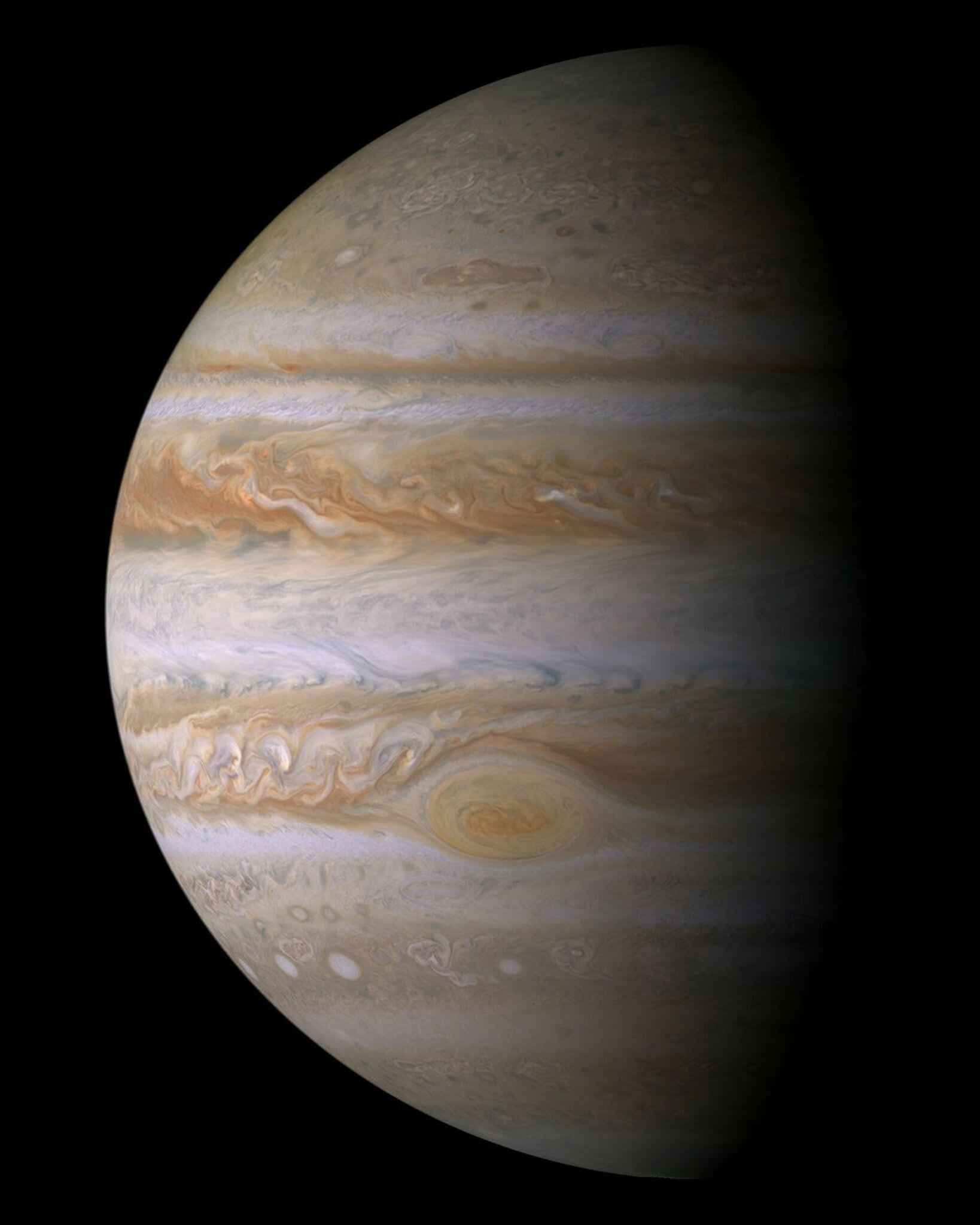
Jupiter provides another test through its internal heat
Jupiter offers a different observational approach from Earth and the Sun.
Rather than searching for neutrinos from dark matter annihilation, the researchers examine whether captured dark matter could contribute too much energy to the planet.
They adopt the Jovian J11-4a density model and assume a composition of 75% hydrogen and 25% helium.
For the dark matter parameter ranges considered, the capture rate is approximately saturated at its geometric value. In other words, the capture rate approaches the maximum set by the number of dark matter particles passing through the planet’s effective capture area.
The researchers compare the calculated annihilation luminosity with Jupiter’s measured internal heat emission.
Using measurements derived from Cassini data, they adopt an internal heat flux of approximately 7.485 ± 0.163 W/m².
Their analysis assumes that all the energy released by dark matter annihilation is deposited in the planet.
This provides an upper constraint on how much additional heating could be generated without exceeding the observed internal heat emission.
Jupiter also produces identifiable resonance features in the calculations when dark matter masses approach those of hydrogen or helium.
However, its overall sensitivity does not surpass existing direct-detection constraints across the main electromagnetic interactions considered.
Its role is therefore complementary rather than dominant in the parameter regions examined.
Some dark matter interactions are more difficult to capture at lower masses
The calculations also account for a process that can change the effectiveness of celestial-body searches: evaporation.
After a dark matter particle becomes gravitationally captured, subsequent collisions can sometimes give it enough energy to escape.
This effect becomes particularly important for sufficiently light dark matter particles.
The researchers therefore restrict their analysis to masses above the approximate evaporation thresholds adopted for each object.
These thresholds are around 4 GeV for the Sun, 10 GeV for Earth, 1 GeV for Jupiter, and 65 keV for massive white dwarfs.
The white dwarf analysis also requires additional qualifications.
At sufficiently low dark matter masses, collective effects in the dense stellar medium are expected to alter the standard capture calculation.
To avoid relying on the standard treatment in that regime, the researchers impose different lower mass limits for different interactions.
For the anapole and charge-radius interactions, they consider masses above approximately 100 MeV. For millicharge and the two dipole moments, they use a lower limit of approximately 50 GeV.
These restrictions are important when interpreting the resulting exclusion regions. They mean that the calculated sensitivity does not establish how white dwarfs would capture dark matter below those thresholds.
The authors also compare their results with constraints from supernova cooling, laboratory experiments, cosmological observations, and direct-detection searches.
For interactions with sufficiently large scattering rates, the incoming dark matter flux can be attenuated by the Earth’s crust. They therefore account for different assumed underground overburdens when comparing with direct-detection constraints.
The resulting comparisons help identify parameter regions where celestial-body capture provides information that conventional experiments may miss.
Dirac dark matter can produce several electromagnetic moments at once
Beyond examining each electromagnetic property separately, the researchers investigate simplified particle-physics models that could generate these interactions.
Their first example involves Dirac dark matter interacting with tau leptons through a charged scalar mediator.
In this model, dark matter does not need to possess a fundamental electric or magnetic charge. Instead, its electromagnetic properties arise through quantum corrections involving the mediator and the charged tau particle.
The calculations generate magnetic and electric dipole moments, a charge radius, and an anapole moment at the one-loop level.
The strengths of these interactions depend on the dark matter mass, mediator mass, coupling strength, and the relative contributions of left- and right-handed tau interactions.
Two additional parameters are particularly important.
One describes parity violation in the interaction, while another describes CP violation. CP violation distinguishes certain interactions from their charge-conjugated and parity-transformed counterparts.
The presence or absence of CP violation can substantially change the predicted electric dipole moment and, consequently, the dominant mechanism responsible for capturing dark matter.
The researchers examine this model using a coupling strength of 1 and maximal parity violation, while varying the CP-violating parameter.
Their calculations show that the dominant electromagnetic interaction can change considerably across different celestial bodies.
For Earth, when the CP-violating parameter is relatively small, with sin ϕCP = 10⁻³, the charge-radius interaction dominates large regions of the parameter space between approximately 20 and 100 GeV.
This remains true even when the scalar mediator is much heavier than the dark matter particle, with a mass approximately 100 times greater.
Increasing the CP-violating parameter to 10⁻² changes the picture. The electric dipole moment becomes dominant across the displayed parameter region.
When the parameter is reduced to 10⁻⁴, the charge radius dominates almost everywhere, apart from dark matter masses above approximately 1 TeV, where the magnetic dipole moment becomes the leading contribution.
Jupiter behaves differently.
For a CP-violating parameter of 10⁻³, the dipole moments dominate much of the capture process, with visible resonance features when the dark matter mass approaches the masses of hydrogen and helium.
Above approximately 20–50 GeV, the magnetic dipole moment becomes the dominant contribution.
Increasing CP violation makes the electric dipole moment dominant over a much larger mass range, while reducing it allows the magnetic dipole moment to dominate the entire parameter region considered.
In the Sun, capture is also dominated by the dipole moments, with particularly strong sensitivity to the magnetic dipole moment.
White dwarfs display another dependence on CP violation. Between approximately 50 GeV and 500–2,000 GeV, the electric dipole moment dominates when the CP-violating parameter is 1, whereas the magnetic dipole moment dominates the considered parameter space above 50 GeV when the parameter is reduced to 0.1.
These results demonstrate that the electromagnetic property responsible for capturing dark matter is not necessarily fixed by the particle’s mass alone. It can change substantially with the underlying interaction parameters.
White dwarfs become especially useful when direct searches lose sensitivity
The researchers next examine how the Dirac model’s parameter space is constrained by celestial-body observations and conventional searches.
They compare the relative mass difference between the scalar mediator and dark matter with limits from the LZ direct-detection experiment, collider searches for supersymmetric tau partners, and measurements of the invisible width of the Z boson.
They consider two different combinations of model parameters.
In the first scenario, the coupling strength is 1, parity violation is maximal, and the CP-violating parameter is also maximal.
These choices enhance several electromagnetic moments. Under these conditions, direct-detection experiments provide substantially stronger constraints than capture in celestial bodies.
However, the conclusion changes when the model parameters are adjusted.
In the second scenario, the parity-violating angle is changed and CP violation is set to zero. This suppresses the scattering rate in experiments including PICO-60, LZ, XENON1T, and DarkSide-50 for dark matter masses above approximately 7 GeV.
In this part of the parameter space, the researchers identify a region involving relatively heavy dark matter and small mass differences between the dark matter particle and its scalar mediator.
Here, the heating constraints from massive white dwarfs provide the strongest sensitivity.
This result is particularly relevant because small mass differences can substantially affect the electromagnetic moments generated by the mediator interactions.
The study therefore does not claim that white dwarfs generally outperform direct-detection experiments for Dirac dark matter. Instead, their advantage emerges under particular combinations of particle masses and interaction parameters.
Majorana dark matter has only one allowed diagonal electromagnetic moment
The second simplified model considers Majorana dark matter.
Unlike Dirac particles, Majorana fermions are their own antiparticles. This imposes additional restrictions on their electromagnetic interactions.
For the diagonal electromagnetic form factors considered in the study, a Majorana particle can interact with photons only through its anapole moment.
The researchers note that this anapole moment is twice as large as the corresponding contribution in the Dirac case for the interactions under consideration.
This restriction makes white dwarfs particularly interesting targets because the researchers have already found that they provide strong constraints on the anapole interaction.
They investigate two versions of the model, one involving interactions with muons and another involving tau leptons. In both cases, the anapole moment is generated through a charged scalar mediator.
The analysis incorporates constraints from LEP and ATLAS searches for supersymmetric particles, including searches involving smuons and staus. These restrictions limit the allowed mediator masses and exclude some light dark matter configurations while permitting regions with small mass differences between the dark matter particle and mediator.
The calculations identify two particularly interesting mass regimes.
For relatively light Majorana dark matter, larger mediator-to-dark-matter mass ratios can produce sizeable anapole moments.
For heavier dark matter, particularly above approximately 1 TeV, very small mass differences can enhance the predicted anapole moment. This effect is especially relevant when dark matter interacts with a lighter charged lepton.
In these regions, current observations of massive white dwarfs in M4 can constrain parameter space that is difficult to explore using direct-detection and collider searches.
The authors’ conclusions identify sensitivity to new regions for Majorana dark matter below approximately 10 GeV and above the TeV scale.
This is one of the most interesting applications of their analysis because the Majorana restriction reduces the number of possible electromagnetic interactions, allowing the white dwarf constraints to be interpreted more directly in terms of the anapole moment.
Denser dark matter environments could improve white dwarf sensitivity
The researchers also investigate how the constraints might change if massive white dwarfs could be observed in regions with substantially higher dark matter densities.
Their estimates consider dark matter densities of 10⁴, 10⁵, and 10⁶ GeV/cm³.
For this comparison, they retain the same white dwarf luminosity, mass, and dark matter velocity distribution used in their M4 analysis.
The predicted constraints on electromagnetic moments improve as the surrounding dark matter density increases. In their calculation, the limits scale inversely with the square root of the dark matter density.
However, a substantial increase in density is needed to produce a significant improvement.
The analysis suggests that future luminosity measurements of sufficiently massive and cold white dwarfs in dark matter overdensities could extend the sensitivity to anapole interactions.
This remains a projected possibility rather than an observational result. The authors do not report a newly identified white dwarf with the required environmental conditions.
They also examine a different possible origin of the Majorana anapole moment involving a charged vector mediator and a charged fermion.
For this model, they use a W-boson-like mediator and a chargino-like fermion as a representative example.
Their calculations consider both a small mass difference of 166 MeV, corresponding to a conventional electroweak mass-splitting scenario, and larger mass ratios between the charged fermion and dark matter.
The analysis incorporates existing collider restrictions, including a lower mass limit of 103.5 GeV for the chargino-like particle from LEP.
The researchers find that the current M4 white dwarf constraints could probe additional parameter space if the anapole moment receives further enhancements.
One example involves multiple charged fermion species contributing to the quantum loop that generates the interaction.
For a particular illustrative combination involving 10 such species, a coupling near its perturbative upper range, and a dark matter mass of 1 TeV, the predicted anapole moment could be testable using the existing M4 white dwarf data.
This possibility depends on the assumed model structure and enhancement factors. It is not a measurement of the anapole moment or evidence that these additional particles exist.
The study is a theoretical investigation of how existing astronomical observations constrain possible dark matter interactions, not a direct detection of dark matter or its electromagnetic properties.
The study was posted to the arXiv preprint server.