Few people stop to admire a mosquito buzzing nearby or a beetle crawling across a sidewalk. Insects are often ignored, swatted away, or viewed as pests. Yet these tiny creatures quietly keep the natural world running. They pollinate crops, recycle dead plants and animals, enrich the soil, control pests, and provide food for countless birds, fish, reptiles, amphibians, and mammals.
Imagine waking up to a world where butterflies no longer flutter through gardens, bees rarely visit flowers, fireflies stop glowing on warm summer nights, and the familiar chorus of crickets fades into silence. It might sound like the setting of a science fiction story, but scientists have been asking a serious question for years: Are insects disappearing?
The answer is both worrying and complicated.
Science shows that many insect populations are indeed declining, and some species have become endangered or extinct. However, this does not mean that all insects are vanishing or that insects as a whole are on the verge of extinction. The reality is more complex, varying from one species, habitat, and region to another.
Understanding what is happening to insects is important because their future is closely connected to our own.
Why Insects Matter More Than Most People Realize
Insects are the most diverse group of animals on Earth. Scientists have formally described more than one million insect species, but they estimate that millions more remain undiscovered, especially in tropical forests.
Insects have lived on Earth for over 400 million years. They existed long before dinosaurs appeared and survived the mass extinction that wiped out the giant reptiles about 66 million years ago.
Their success comes from their incredible adaptability. Insects can be found in deserts, rainforests, grasslands, mountains, caves, rivers, and even Antarctica, where a few specialized species survive.
Although they are small, insects perform enormous ecological jobs.
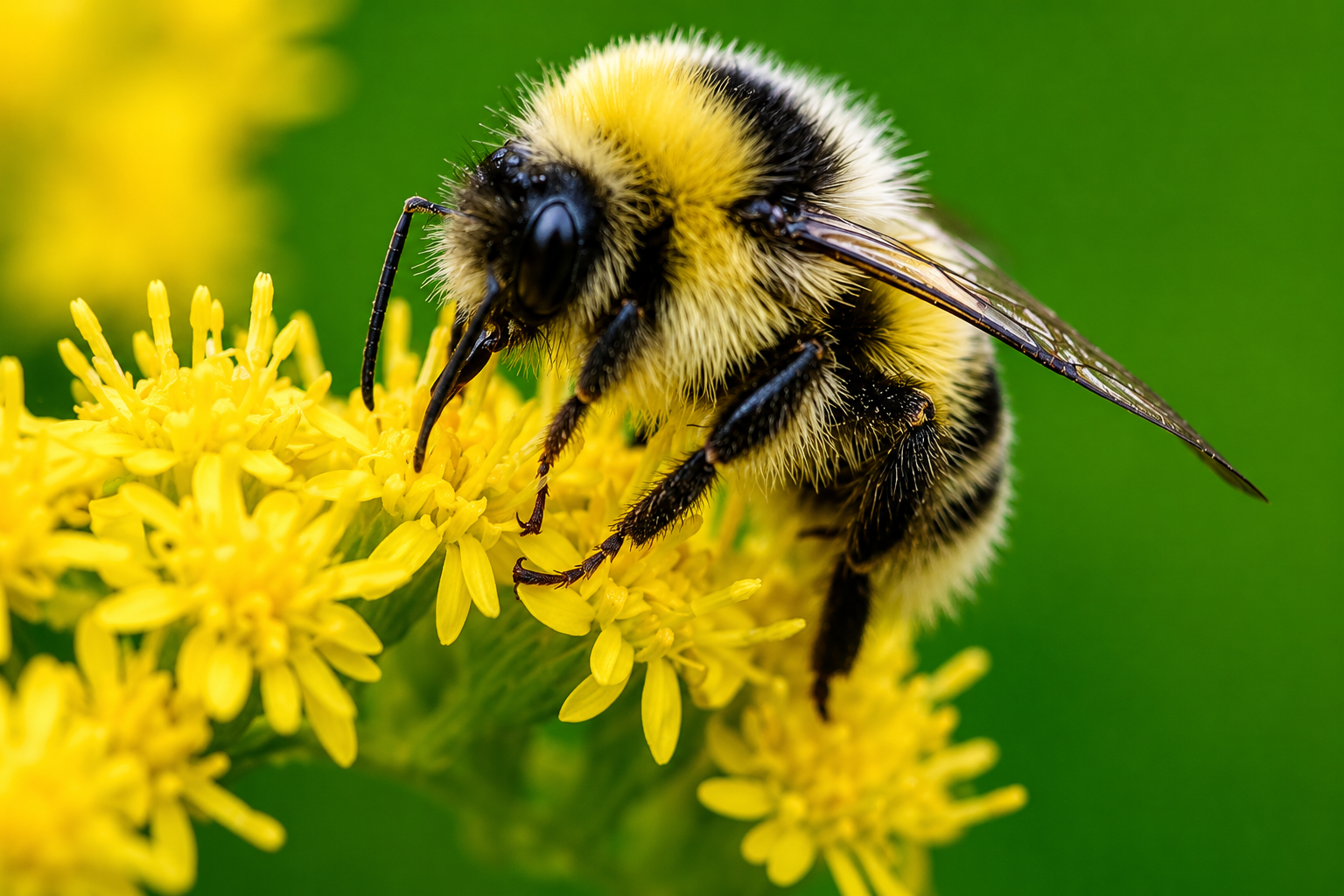
Many flowering plants depend on insects for pollination. Bees, butterflies, moths, beetles, flies, and other pollinators help plants produce fruits, vegetables, seeds, and nuts. Without them, many ecosystems and agricultural systems would struggle.
Other insects break down fallen leaves, dead wood, animal waste, and carcasses. By recycling nutrients, they help maintain healthy soils that support forests, farms, and grasslands.
Predatory insects such as dragonflies, ladybugs, and praying mantises naturally control populations of other insects, reducing outbreaks of pests.
Insects also form the foundation of many food webs. Birds feed insects to their chicks. Frogs, bats, spiders, fish, reptiles, and many mammals rely heavily on insects as a food source.
When insects decline, the effects ripple through entire ecosystems.
What Scientists Mean by “Insect Decline”
When people hear that insects are disappearing, they often imagine every insect species shrinking at the same rate. That is not what scientists mean.
An insect decline can refer to several different things.
The number of individual insects may decrease even if the species still exists.
A species may disappear from certain regions while surviving elsewhere.
Some insect species may become endangered because their populations have become too small.
In rare cases, an insect species may become completely extinct.
Scientists also study insect biomass, which is the total weight of insects living in an area. Even if the number of species remains similar, a sharp reduction in biomass can indicate that insect populations have become much smaller.
Different measurements tell different parts of the story.
Is There Really an “Insect Apocalypse”?
The phrase “insect apocalypse” has appeared frequently in news headlines over the past decade. It captures public attention, but scientists generally avoid using the term because it suggests that every insect everywhere is disappearing at the same time.
Research from many countries has found evidence that numerous insect populations are declining, especially in areas heavily affected by human activity. Some studies have reported large decreases in flying insect biomass, while others have documented declines in butterflies, bees, moths, dragonflies, and freshwater insects.
However, scientists have also found that not every insect group is declining. Some species remain stable, while others are expanding into new regions, sometimes because climate change creates suitable habitats where they previously could not survive.
Certain pest species, including some mosquitoes and agricultural pests, have even increased in some places.
The scientific consensus is clear: widespread insect declines are real, but the situation is more complex than a single global collapse affecting every species equally.
Evidence from Around the World
Scientists monitor insects using long-term surveys, museum collections, field observations, and modern technologies such as DNA analysis and automated monitoring systems.
Research from Europe has documented significant declines in many butterfly and bee populations. Long-term monitoring has also revealed decreases in numerous moth species.
In North America, several butterfly species have experienced population declines over recent decades. The eastern migratory population of the monarch butterfly has shown large fluctuations, influenced by habitat loss, weather, and other environmental pressures.
Some bumblebee species have disappeared from parts of their historical ranges.
Freshwater insects, including mayflies, stoneflies, and caddisflies, often respond strongly to changes in water quality, dams, and pollution. In some rivers, restoration efforts have helped these insects recover, while in other areas they continue to struggle.
Tropical regions contain the greatest insect diversity on Earth, but many of these species remain poorly studied. Scientists suspect that declines may be occurring there as well, although much more research is needed.
Because insects are so incredibly diverse, obtaining a complete global picture remains a major scientific challenge.
Why Are Insects Declining?
There is no single cause behind insect declines. Instead, multiple environmental pressures often act together, making survival more difficult.
Habitat loss is one of the biggest threats.
As forests are cleared, wetlands drained, grasslands converted into farmland, and cities continue expanding, insects lose the places where they feed, reproduce, and shelter.
Even small habitat fragments may become isolated from one another, making it harder for insect populations to remain healthy.
Agricultural intensification also plays an important role.
Large fields planted with a single crop provide fewer flowering plants and less habitat than diverse natural landscapes. Removing hedgerows, wildflower meadows, and native vegetation further reduces food sources.
Pesticides can affect insects in different ways.
Some insecticides are designed specifically to kill insects that damage crops. While these products can protect harvests, they may also affect beneficial insects if not carefully managed. Exposure can sometimes reduce survival, reproduction, navigation, or immune function, depending on the chemical, species, and level of exposure.
Scientists continue studying how different pesticides influence wild insect populations under real-world conditions.
Climate change is another major factor.
Many insects are highly sensitive to temperature and rainfall. Rising temperatures can shift breeding seasons, alter migration patterns, increase heat stress, or change the timing of flowering plants that pollinators depend on.
Extreme weather events such as droughts, floods, heat waves, and wildfires can destroy habitats or reduce food availability.
Light pollution also affects many insects.
Artificial lights can confuse moths, fireflies, and other nocturnal insects, interfering with navigation, mating, and feeding.
Water pollution harms aquatic insects by reducing oxygen levels and introducing harmful chemicals into rivers, lakes, and streams.
Invasive species and diseases create additional challenges by introducing new predators, competitors, or pathogens into ecosystems.
Rather than acting separately, these pressures often combine, making recovery increasingly difficult.
Are All Insects in Danger?
Fortunately, no.
Some insect species remain widespread and abundant.
Generalist species that can survive in many environments often adapt more successfully to human-altered landscapes than highly specialized insects.
Mosquitoes, houseflies, cockroaches, and certain agricultural pests often thrive near human settlements.
Some butterflies and dragonflies have even expanded into new regions as temperatures rise.
Meanwhile, rare insects that depend on very specific habitats, such as ancient forests, peatlands, alpine meadows, or wetlands, often face greater risks.
Species with limited geographic ranges are generally more vulnerable because losing even a small amount of habitat can threaten their survival.
Each insect species responds differently to environmental change.
Pollinators Receive Special Attention
Among all insect groups, pollinators have attracted particular scientific concern.
Bees are responsible for pollinating many crops that humans depend on, including fruits, nuts, vegetables, and oilseed plants.
Wild bees often provide pollination services that complement or even exceed those of managed honey bees in certain ecosystems.
Butterflies and moths also pollinate numerous wild plants.
Declines in pollinator populations could reduce crop yields for some agricultural systems and alter natural plant communities.
Fortunately, conservation programs have shown that pollinator populations can benefit when habitats are restored, native flowering plants are protected, and pesticide exposure is reduced.
What Happens If Insects Continue to Decline?
The consequences extend far beyond insects themselves.
Plants that depend on insect pollination may produce fewer seeds and fruits.
Bird populations could decline if they struggle to find enough insects to feed their young during the breeding season.
Fish that rely on aquatic insects may face food shortages.
Soils could become less efficient at recycling nutrients if decomposer insects become scarce.
Natural pest control could weaken, potentially increasing the need for chemical pesticides.
Agriculture may become more expensive and less productive if pollination services decrease.
Because ecosystems are interconnected, changes affecting insects often spread through many other forms of life.
Can Insect Populations Recover?
There is reason for hope.
Unlike many large animals that reproduce slowly, many insects have short life cycles and can recover surprisingly quickly when conditions improve.
Scientists have documented successful recoveries following habitat restoration, wetland conservation, reductions in pollution, and improved land management.
Restoring native wildflowers, protecting forests, reconnecting fragmented habitats, reducing unnecessary pesticide use, improving river quality, and creating insect-friendly urban spaces can all support insect populations.
Even small actions, when multiplied across communities and countries, can make meaningful differences.
Recovery requires time, but it is possible.
How Scientists Study Insects
Studying insects is more difficult than it might seem.
Many species are tiny, active only at certain times of day or year, or live in remote habitats.
Researchers use a wide range of techniques to monitor insect populations.
They conduct field surveys, set specialized traps, observe pollinators visiting flowers, analyze historical museum collections, study DNA from environmental samples, and increasingly rely on automated cameras, acoustic sensors, artificial intelligence, and satellite data to understand changing habitats.
Long-term monitoring programs are especially valuable because insect populations naturally fluctuate from year to year.
Only by observing trends over decades can scientists distinguish normal variation from long-term decline.
What Science Still Doesn’t Know
Although researchers have learned a great deal, many questions remain unanswered.
Millions of insect species have never been scientifically described.
Large parts of Africa, South America, Southeast Asia, and other biodiversity-rich regions remain understudied.
Scientists still need better data to understand how different insect groups respond to climate change, pollution, habitat restoration, and conservation efforts.
Researchers are also working to identify which species are most vulnerable and which conservation strategies provide the greatest benefits.
Continued research is essential because effective conservation depends on accurate scientific knowledge.
A Future Shared with Tiny Creatures
It is easy to overlook insects because they are small, numerous, and often hidden from view. Yet they are among the most important animals on Earth.
Every flowering meadow buzzing with bees, every butterfly drifting through a summer garden, every dragonfly hunting above a pond, and every firefly glowing on a warm evening reflects millions of years of evolution and countless ecological relationships.
Their survival supports the health of forests, farms, rivers, wildlife, and ultimately human societies.
Science does not suggest that insects as a whole are on the brink of global extinction. Instead, it reveals a more nuanced reality: many insect populations are declining, some species face serious threats, while others remain stable or even increase.
That complexity should not lead to complacency. It should inspire thoughtful action based on evidence.
Protecting insects is not simply about saving small creatures. It is about preserving the living systems that make Earth habitable. By understanding what science says about insect decline and responding with informed conservation efforts, we help ensure that future generations inherit a world still alive with the hum of bees, the colors of butterflies, and the extraordinary diversity of the smallest animals that keep our planet functioning every single day.