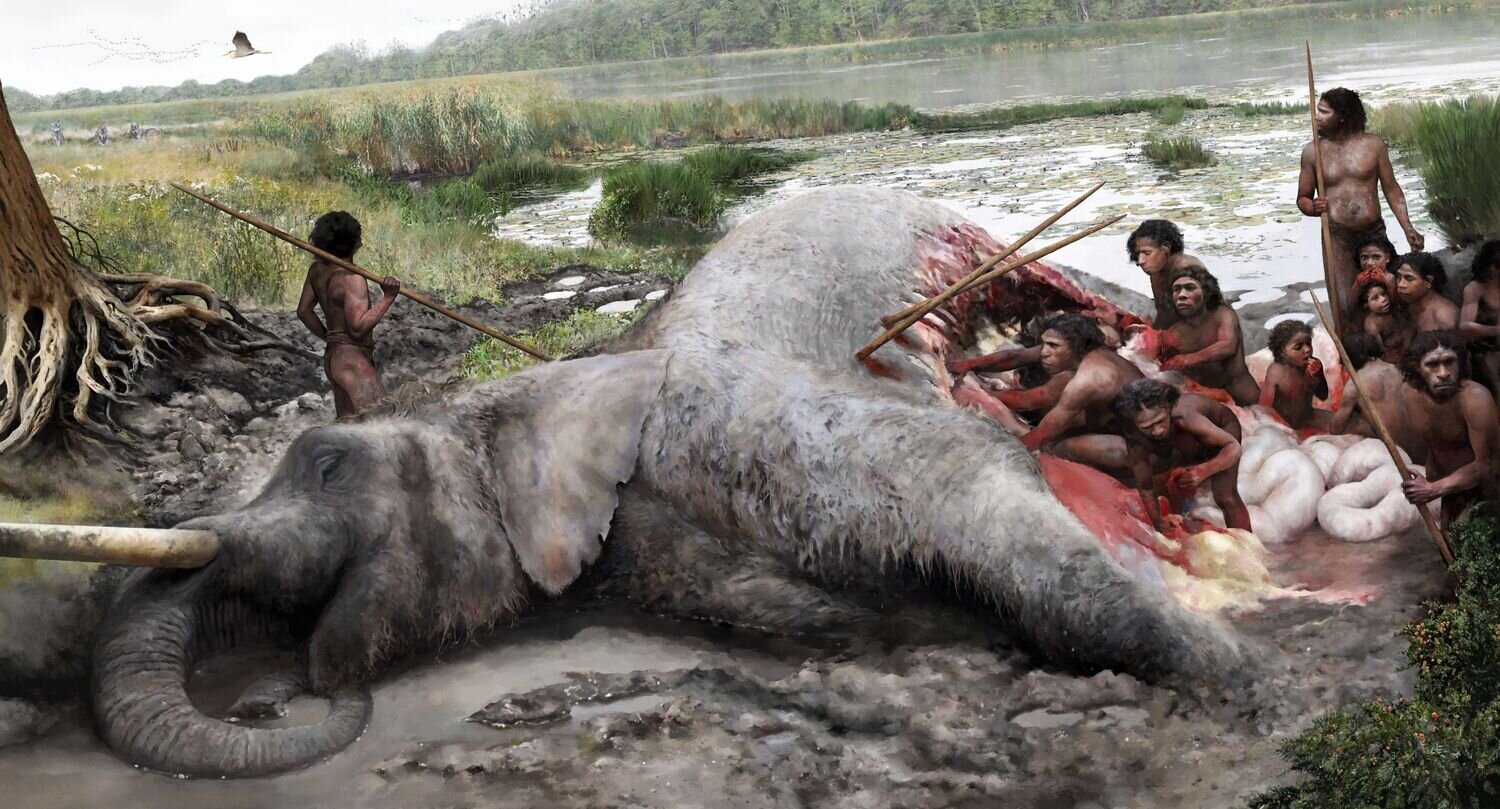
A wooden spear found among the ribs of a 125,000-year-old elephant skeleton in Germany has long left open a basic question: did Neanderthals actually kill the animal, or did the spear simply end up there by chance? New analysis of the site provides the strongest evidence yet that the elephant was hunted and then butchered by Neanderthals at the same location.
The discovery was made in 1948 at Lehringen, Germany, by a group of amateurs led by a local headmaster. They uncovered the remains of a straight-tusked elephant in sediments dating to the last interglacial period. The animal was the largest land mammal known to have lived in Europe.
A complete wooden spear was found between the elephant’s ribs. That positioning immediately raised the possibility that Neanderthals had hunted the animal. But it was also possible that the spear and bones had simply come to rest together.
Researchers from the University of Göttingen and the Lower Saxony State Office for Heritage, or NLD, have now carried out the first detailed analysis of the site to examine what happened there.
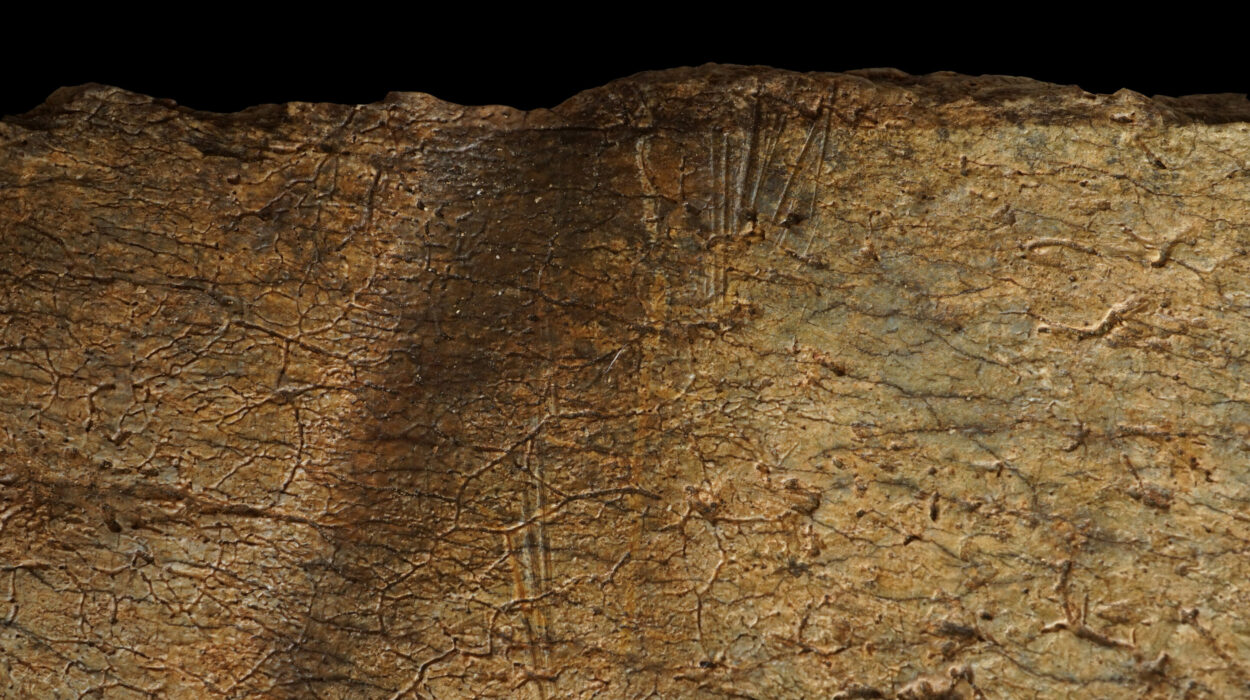
The team found numerous cut marks on the elephant’s ribs and vertebrae. Those marks provide evidence that Neanderthals butchered the animal at the site.
Together with the spear, the butchering evidence makes the Lehringen find the most convincing evidence to date of a successful elephant hunt by Neanderthals.
Butchering produced a large amount of food
The position of the cuts on the ribs indicates that Neanderthals opened the elephant’s chest cavity and removed its organs. The animal was a male about 30 years old and had around 3,500 kilograms of meat, organs and fat.
That amount of food could have fed a large group for a long period of time.
The researchers also found evidence that Neanderthals were using more than the meat of animals they hunted.
At Lehringen, they identified butchering evidence on an aurochs, an extinct ancestor of wild cattle. The animal could reach a shoulder height of 1.8 meters and had large, elongated horns.
Brown bear bones carried cut and impact marks indicating that bone marrow had been extracted. Marks on beaver bones indicate that both meat and fur were used.
Evidence of repeated activity at the lake
The elephant lived during a warm period with slightly higher average annual temperatures than today and dense deciduous forests. Lehringen was located on the shore of a former lake, where researchers also found plant remains and about 2,000 bones from 16 animal species, including fish, birds and turtles.
Taken together, the evidence led the researchers to reassess what Neanderthals were doing at the site.
“It appears that Neanderthals in Lehringen repeatedly spent a long period of time at the lake and pursued diverse hunting strategies,” said Ivo Verheijen of the NLD, the study’s lead author. “Large quantities of meat were important to them of course, but they needed bone marrow and fur as well.”
The researchers say Neanderthals hunted the range of warm-climate animals found there using wooden weapons, their hunting skills and cooperative behavior. They also suspect that fish, mussels and plants from the lake were part of their food.
The new evidence therefore changes how the 1948 elephant discovery can be understood. The spear was not the only indication of hunting. The cut marks left during butchering provide additional evidence that the elephant was deliberately processed by Neanderthals after it was killed.
Professor Thomas Terberger of the NLD and the University of Göttingen’s Department of Prehistory and Early History said the finds recovered under difficult conditions in 1948 provide important evidence for understanding Neanderthal hunting abilities. He said they indicate that Neanderthals at Lehringen were hunting strategically with a level of skill comparable to that of anatomically modern humans 125,000 years ago.
The study was published in Scientific Reports.