More than 3,000 years ago, Haughey’s Fort in Northern Ireland appears to have stood at the center of a densely settled and carefully organized landscape where people lived, made valuable goods, held large feasts and carried out rituals. New research places the site among the clearest examples of a proto-urban center in Bronze Age Western Europe.
The research focuses on Haughey’s Fort near Armagh, in the Navan prehistoric complex. The area is better known for its later importance as the Iron Age capital of Ulster and for its connections to early medieval literature. But the new work points to a much earlier period of activity, beginning around 1200 BC.
Researchers identified more than 200 possible wooden domestic structures at Haughey’s Fort. Their distribution suggests a dense, organized settlement rather than the kind of occupation normally associated with a hillfort.
The site also contained large circular buildings. Some measured up to 30 meters, or 98 feet, across. The researchers consider these buildings highly likely to have served as institutional or communal spaces.
Together, the evidence points to a substantial settlement with different kinds of activity taking place within a planned setting.
Production, feasting and long-distance connections
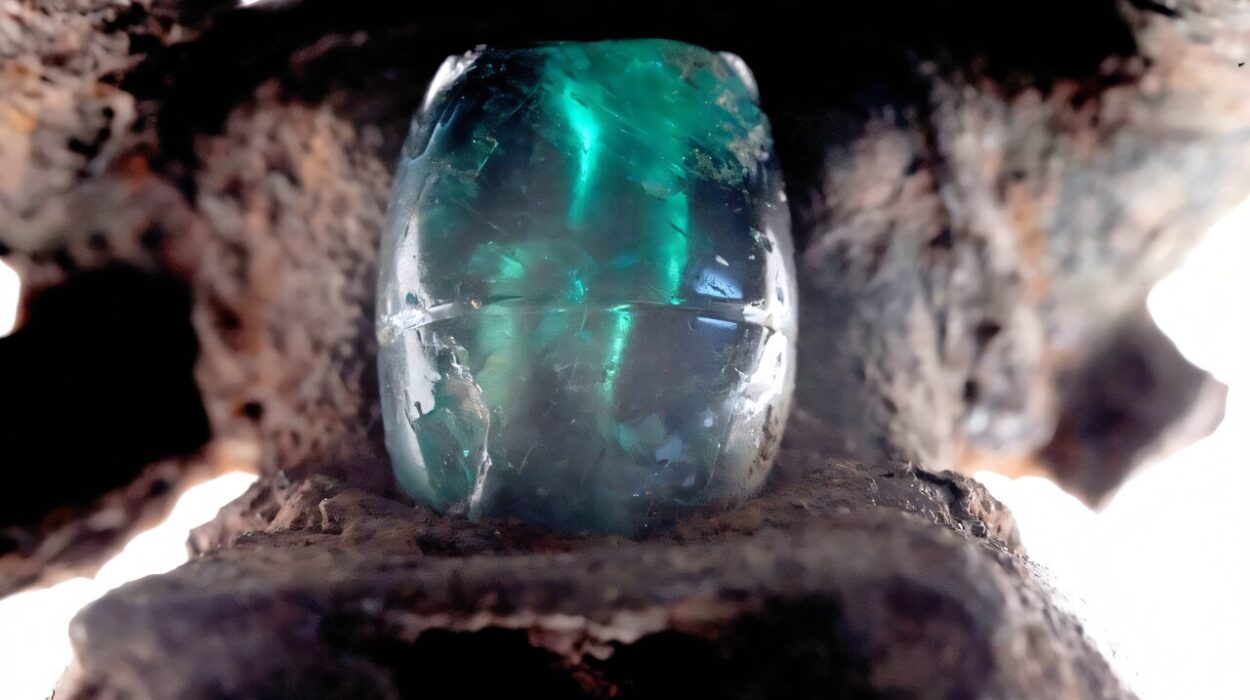
The evidence from Haughey’s Fort also includes specialist work with bronze and gold, large-scale feasting and high-status artifacts. These finds point to economic activity and social organization within the community.
Imported objects provide evidence of connections beyond Ireland. The research identifies links reaching as far as the Iberian Peninsula and Central Europe.
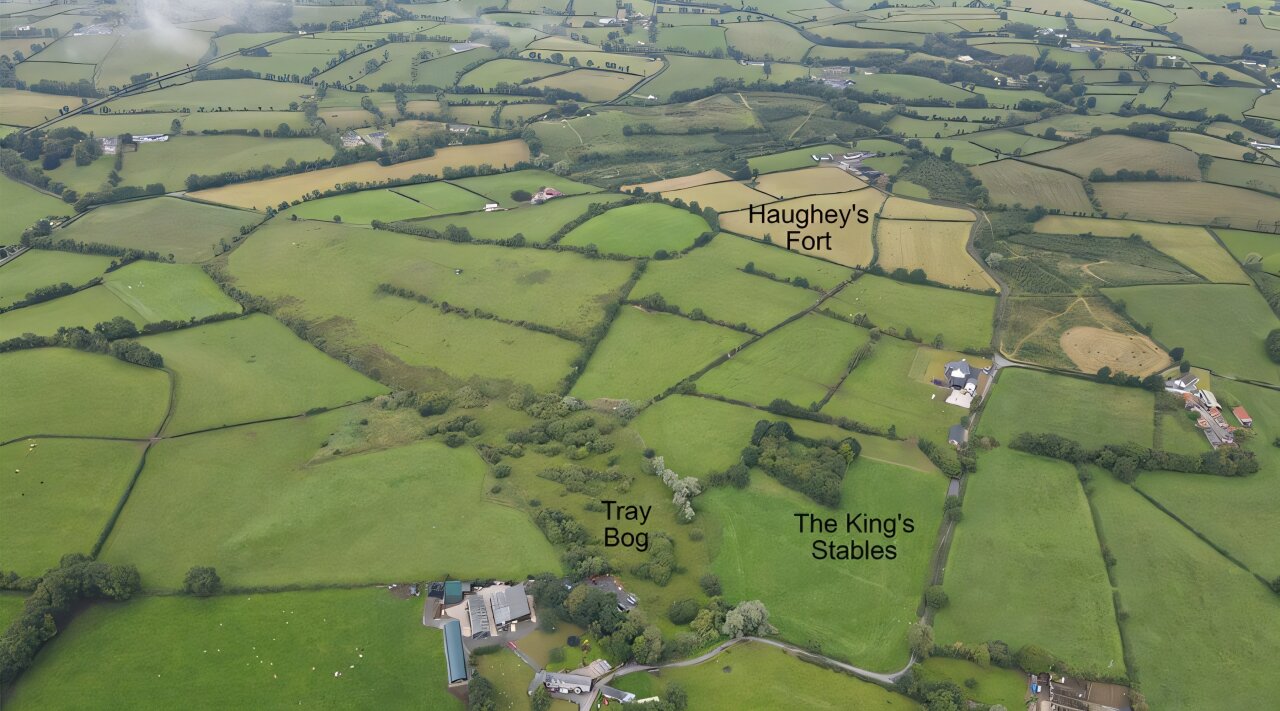
Haughey’s Fort was not an isolated site. It formed part of a much larger complex that included the King’s Stables and the Creeveroe Earthworks.
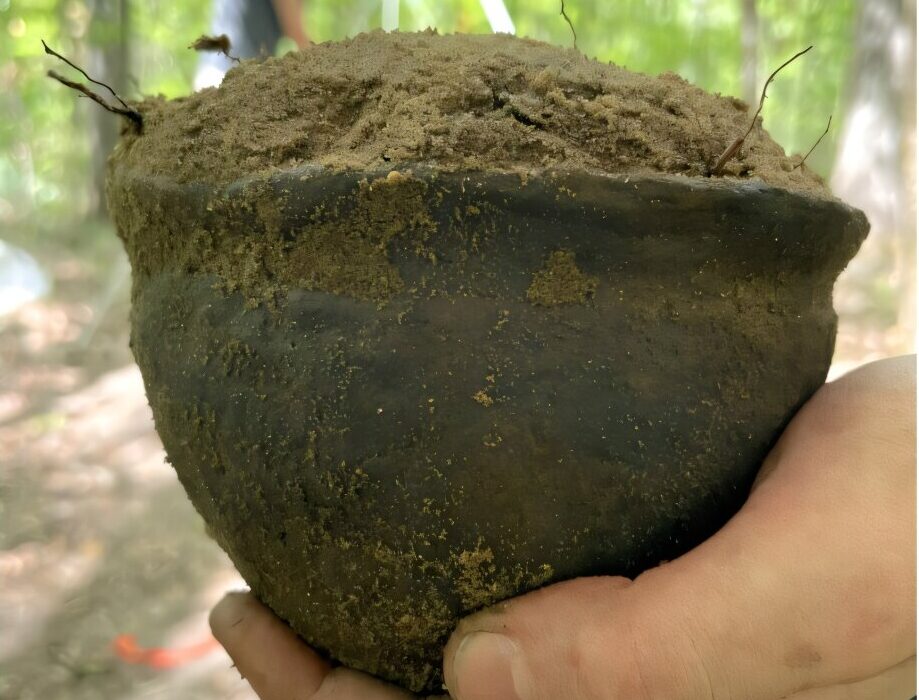
The King’s Stables contained an artificially constructed pool where people deposited objects and remains, including weapon molds, animal remains and fragments of human bone. A ceremonial avenue lined with a palisade, or very large wooden fence, connected the fort with the pool. The researchers suggest that the avenue likely supported formal processions.
Farther around the complex, the Creeveroe Earthworks have been reinterpreted as a huge outer enclosure covering 109 hectares, equivalent to 155 football pitches. The researchers describe it as one of the largest known archaeological monuments in Ireland or Britain.
The landscape had different functions
The research combines remote sensing, geophysical survey, targeted excavation and a reassessment of archival material to reconstruct how the wider landscape was organized.
The evidence points to distinct areas of activity. Settlement, production and feasting were concentrated around Haughey’s Fort, while ritual deposition and related ideological practices were focused at the King’s Stables.
The researchers therefore interpret the fort, pool and outer enclosure as parts of one connected system rather than separate monuments that happened to stand near one another.
James O’Driscoll of the University of Glasgow said the evidence points to a large, densely occupied settlement in which craft production, exchange and communal activity were closely integrated. He and Patrick Gleeson of Queen’s University Belfast describe the wider complex as a highly organized landscape that brought settlement, production and ritual together.
They place Haughey’s Fort among the clearest examples of a proto-urban center in Western Europe, arguing that the evidence indicates large, organized settlements were taking shape in the region around 3,000 years ago.
The researchers conclude that Haughey’s Fort, the King’s Stables and the Creeveroe Earthworks collectively formed an interconnected monumental landscape that functioned as a regional center of power, production and ritual during the Late Bronze Age.
The study was published in Antiquity.