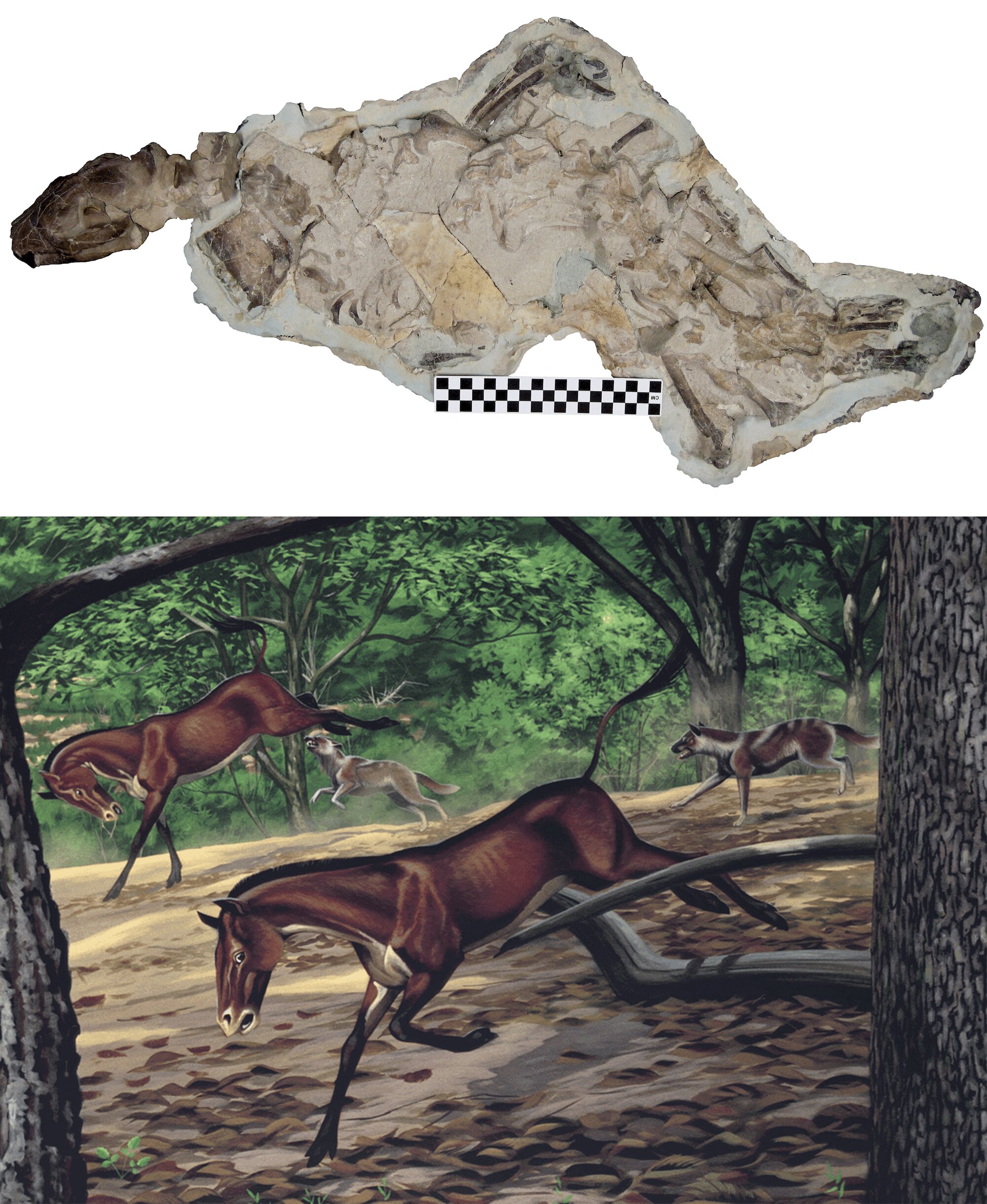
Buried in Oregon for roughly 30 million years, the nearly complete skeleton of an early member of the dog family spent decades hidden inside rock after its discovery before painstaking preparation finally exposed a surprise. Instead of revealing the lean, long-legged build associated with modern dogs, the fossil uncovered a sturdy predator with short limbs, flexible joints, and a body seemingly designed for stalking prey from cover rather than chasing it across open landscapes. The find fills one of the biggest anatomical gaps in the early evolution of dogs and suggests that the family’s trademark running abilities appeared later than many of their ancestors’ increasing body size.
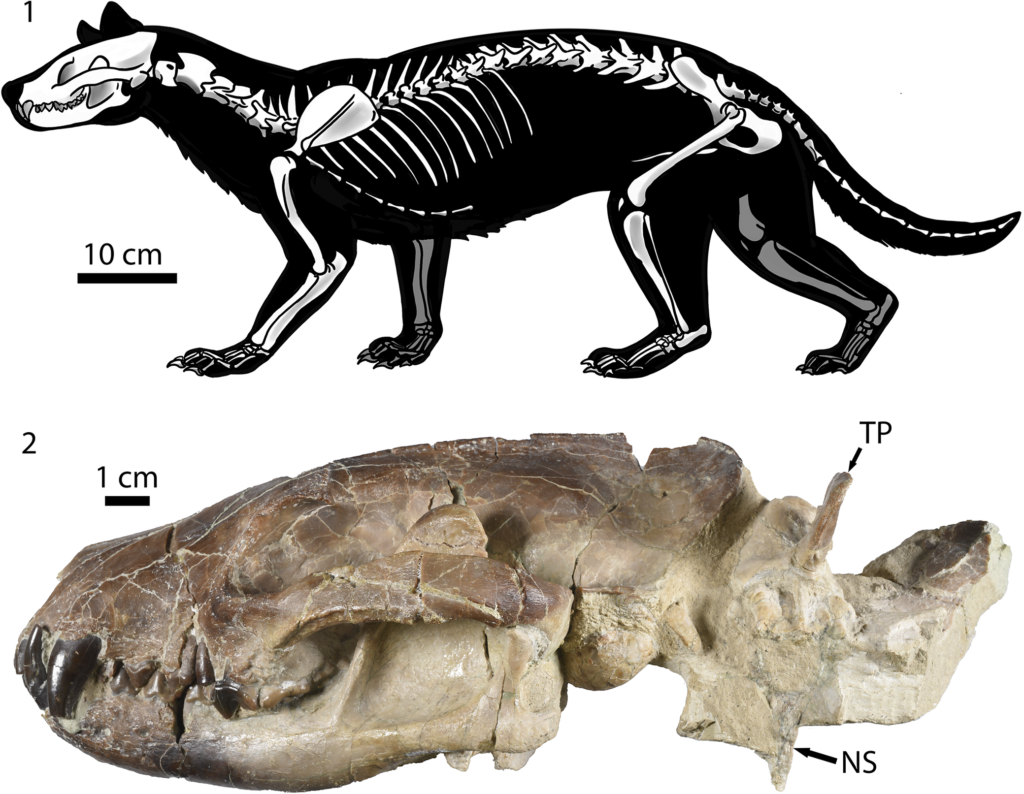
For well over a century, paleontologists have known Mesocyon coryphaeus, an extinct member of the early dog family that lived during the Oligocene in what is now Oregon. Fossils of its skull and teeth have been relatively common in the John Day Formation since the late nineteenth century, allowing scientists to recognize it as a medium-sized, meat-eating canid roughly comparable in size to a modern coyote.
Yet one major piece of the puzzle remained missing.
Although early researchers believed they had collected associated skeletons, no postcranial anatomy—the bones behind the head—had ever been formally described. Without those bones, scientists could estimate what the animal ate from its teeth, but they could only speculate about how it moved, hunted, or interacted with its environment.
That changed with an exceptionally preserved fossil cataloged as JODA 3366.
The specimen includes a complete skull and lower jaws, nearly the entire vertebral column in front of the pelvis, all major limb bones, parts of both hands and feet, portions of the ribs, a pelvis, and even a baculum, indicating the individual was male. According to the researchers, more than 500 hours of preparation work spread across several decades were required before every bone could be removed from the surrounding rock and studied in detail.
The result is the first comprehensive look at the skeleton of Mesocyon coryphaeus, filling a critical gap in understanding the earliest major radiation of dogs.
The skeleton told a very different story than modern dogs do
Living dogs—from foxes to wolves—share a suite of skeletal features that make them efficient distance runners.
They typically stand on their toes, possess relatively long lower limbs and elongated foot bones, have elbows that remain stable during running, and carry spinal features that help support sustained movement across long distances.
The newly described fossil lacks many of those traits.
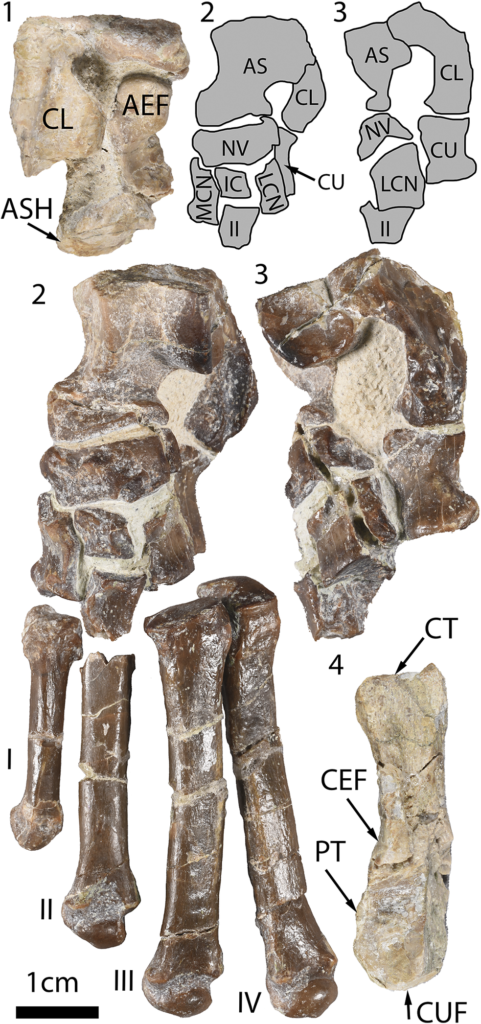
Instead, the researchers found short, robust limbs, a relatively mobile elbow joint, and ankle bones whose structure indicates a plantigrade to semidigitigrade posture. Rather than moving exclusively on their toes like modern dogs, Mesocyon likely placed much more of its foot on the ground.
Its forelimbs show several characteristics associated with greater flexibility. The humerus has a broad joint surface, while the elbow lacks the locking features typical of highly cursorial animals. The ulna includes a comparatively long olecranon process, giving powerful leverage to muscles involved in extending the forelimb.
The wrists and hands tell a similar story.
The metacarpals are short and sturdy rather than elongated, and the preserved finger bones indicate claws that were not retractable but also were not specialized for rapid pursuit. The ankle anatomy likewise resembles earlier canids rather than the more specialized forms seen later in dog evolution.
Taken together, these traits point toward an animal built for strength, maneuverability, and controlled movement instead of speed.
Bigger body, but not a faster hunter
One of the study’s most important conclusions is that increasing body size did not automatically coincide with the evolution of efficient running.
Mesocyon occupied an important position within the earliest diversification of dogs. Earlier relatives such as Hesperocyon were smaller, while later hesperocyonines evolved into larger, highly meat-specialized predators.
Mesocyon represents an intermediate stage in that transition.
Although it had already reached approximately coyote size and possessed adaptations associated with a hypercarnivorous diet, its skeleton retained many primitive locomotor features.
The authors argue that this demonstrates that the evolutionary path toward larger predators occurred before the full suite of cursorial adaptations developed.
In other words, early dogs apparently became larger meat eaters while still relying on relatively unspecialized forms of locomotion.
Evidence from nearly every part of the body pointed in the same direction
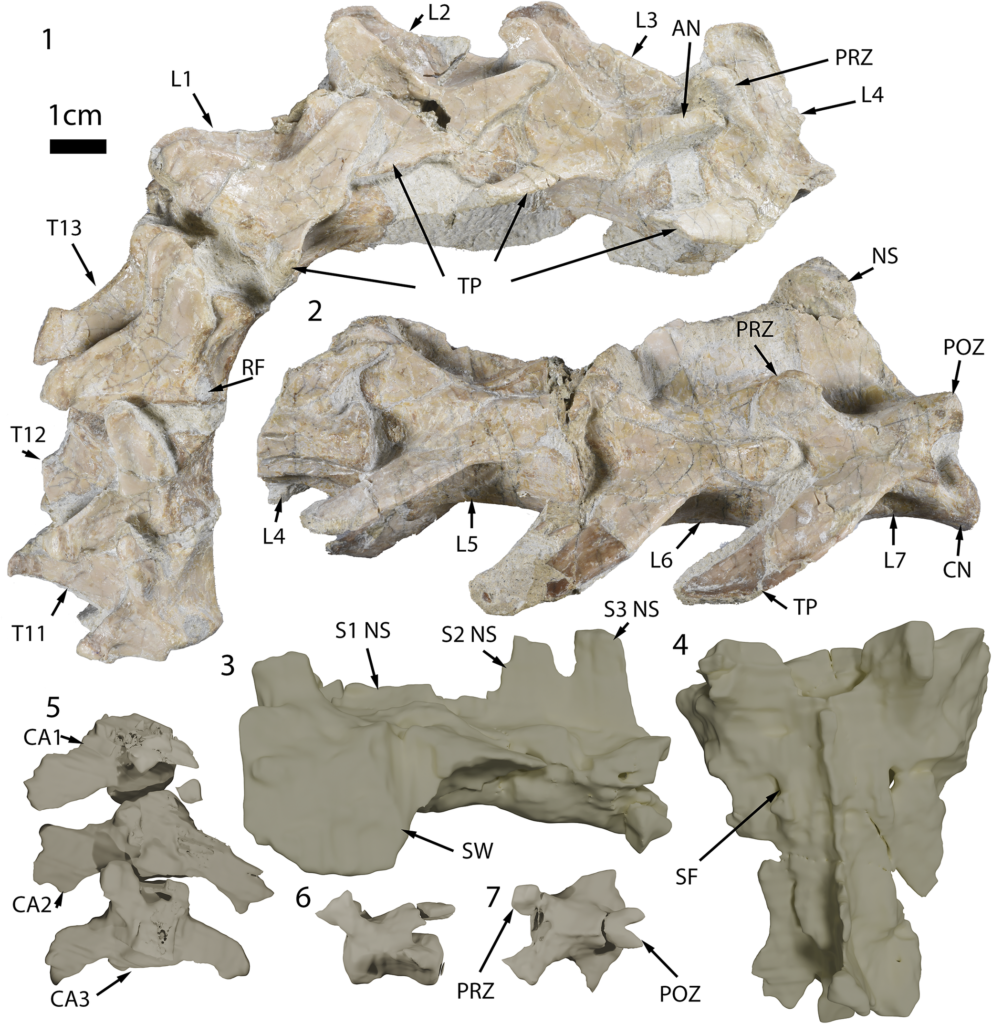
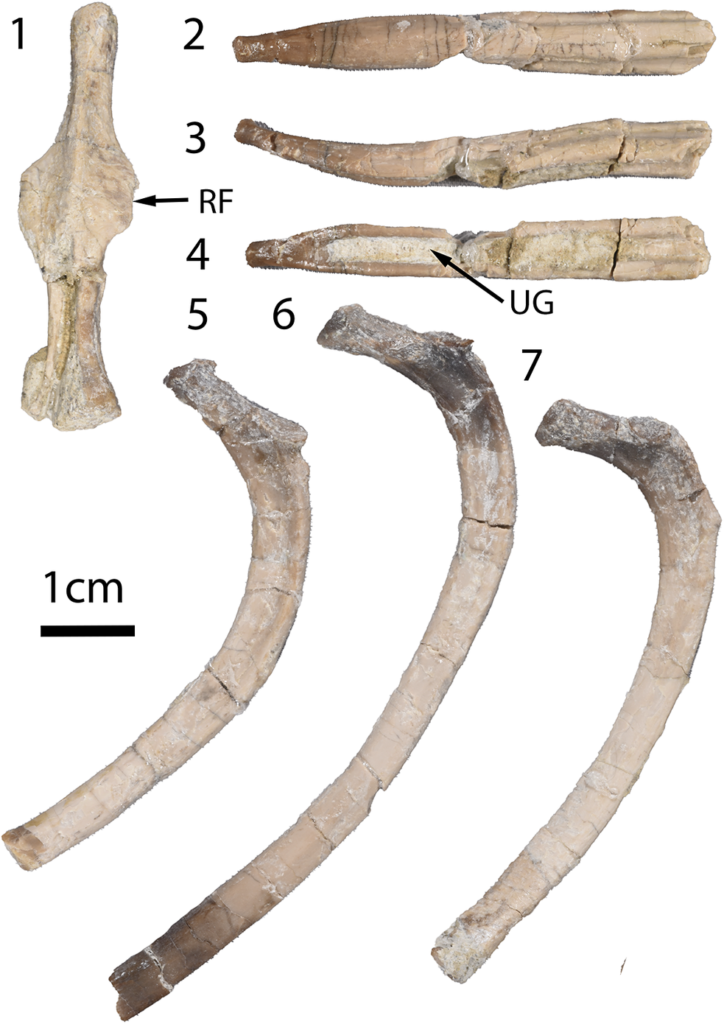
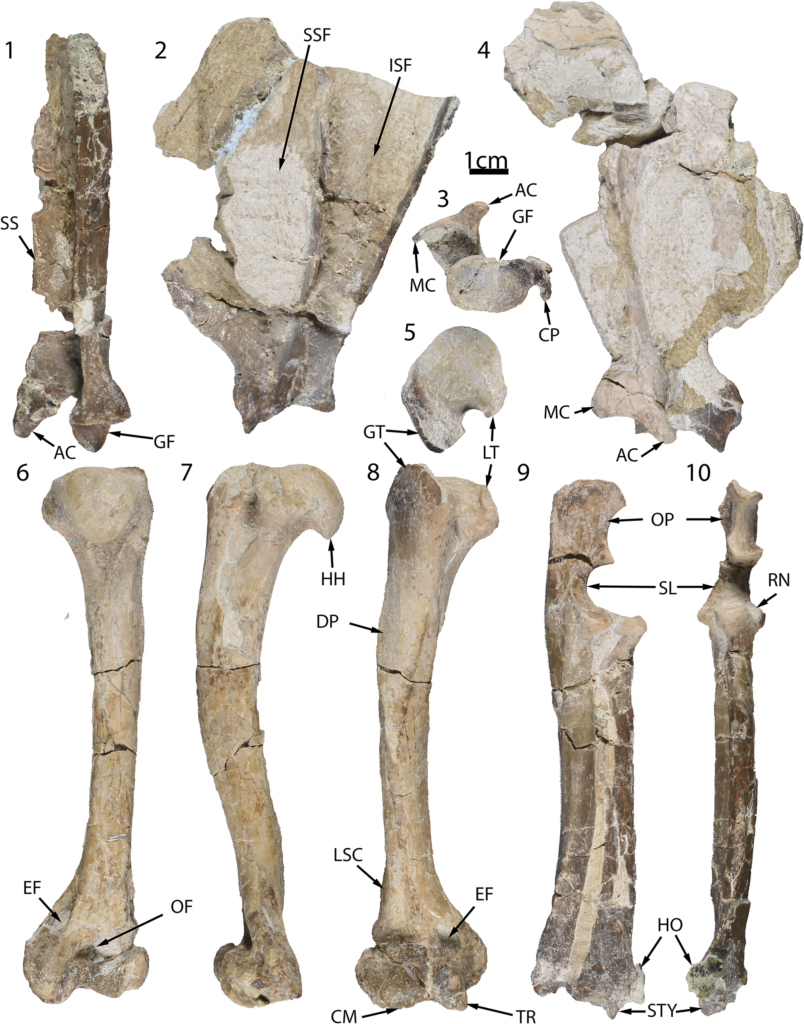
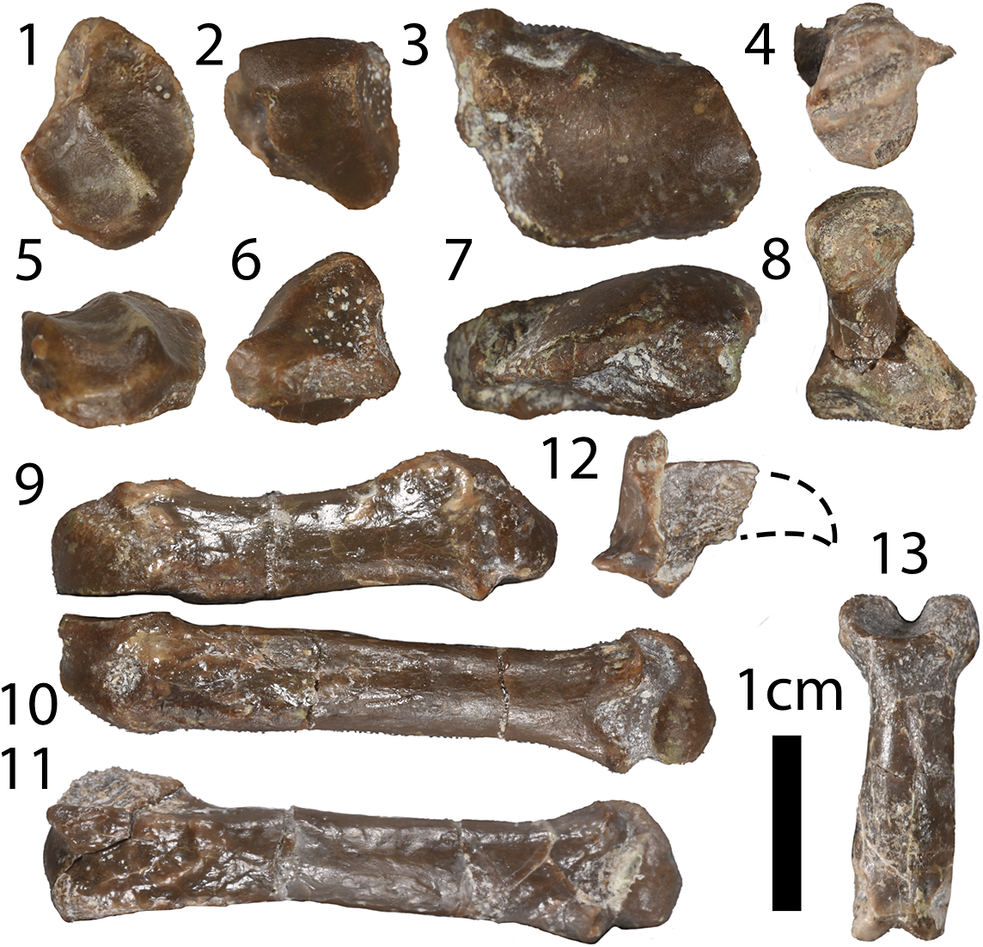
The researchers did not base their interpretation on a single bone.
Instead, the conclusion emerged from multiple anatomical systems that independently supported the same behavioral picture.
The shoulder blades are broad and include large muscle attachment areas that would have powered strong forelimb movements.
The humerus differs from that of living canids in having a joint shape more comparable to those seen in mustelids or cats than in modern running dogs.
The radius and ulna remain robust, and several primitive skeletal features persist that disappeared in later canids.
The hindlimbs reinforce this pattern.
The femur is relatively short and sturdy, while the tibia is actually shorter than the femur, unlike the condition in most living canids, whose longer lower legs contribute to efficient running.
The pelvis also differs from modern dogs in several important ways, including proportions and the orientation of the hip socket.
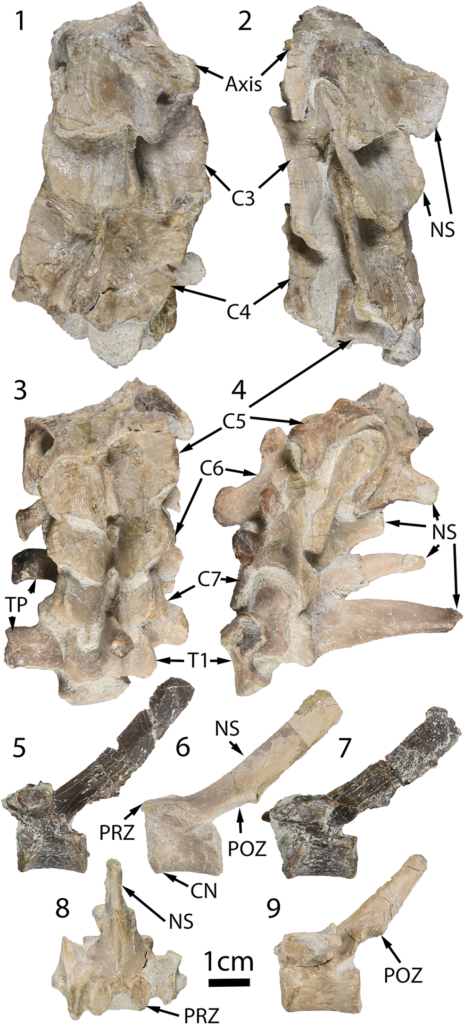
The vertebral column provides additional clues.
Rather than exhibiting the highly specialized spinal features associated with advanced cursorial locomotion, the backbone retains characteristics consistent with a more generalized terrestrial predator.
Even the feet suggest an animal that emphasized stable support over maximum stride length.
Because these anatomical signals consistently point in the same direction, the authors argue that the locomotor interpretation is supported by the entire skeleton rather than by isolated traits.
An ambush hunter hiding among Oligocene vegetation
If Mesocyon was not built for long-distance pursuit, how did it catch prey?
Based on its anatomy, the researchers interpret it as a terrestrial ambush predator.
Rather than chasing prey across open ground, it likely relied on stealth, approaching close before launching a rapid attack.
The study suggests that, in terms of hunting style, Mesocyon may have resembled large mustelids more than living members of the dog family.
Its likely prey included small mammals inhabiting the John Day ecosystem, particularly animals such as hypertragulids, small deer-like herbivores that lived alongside rodents, horses, and numerous other mammals.
This interpretation also fits the environment reconstructed from the John Day Formation.
During the early Oligocene, the region was becoming cooler and drier than the dense forests of the Eocene. However, it had not yet transformed into the open grasslands that would later dominate much of North America.
Evidence from ancient soils indicates alternating woodland and semiarid shrubland environments. According to the researchers, enough vegetation remained to provide cover for predators relying on concealment rather than endurance running.
That environmental setting makes an ambush strategy plausible despite the broader long-term trend toward more open habitats.
A fossil with an unusually long journey from discovery to science
The scientific story behind the specimen is almost as unusual as the animal itself.
The fossil was discovered during the late 1980s at what is now John Day Fossil Beds National Monument in Oregon. It entered the monument’s collection in 1992.
Preparation began during the 1990s, resumed years later, and eventually culminated in a major effort during 2022, when researchers decided to completely remove the bones from the surrounding rock so they could be studied individually.
Throughout the process, the team carefully documented the original positions of the bones before separating them from the matrix. They also used CT scanning to examine portions of the pelvis, sacrum, and nearby vertebrae that remained embedded.
Without this lengthy preparation, many of the anatomical details central to interpreting the animal’s locomotion would have remained inaccessible.
Filling an important gap in dog evolution
Modern dogs are famous for endurance, speed, and efficient long-distance travel. The new fossil demonstrates that those defining characteristics did not appear all at once.
Mesocyon shows that an early member of the dog family could already be relatively large and highly specialized for eating meat while still retaining a body plan built for flexibility, strength, and ambush rather than sustained pursuit.
The researchers argue that this helps clarify an important stage in canid evolution. During the middle Oligocene, dogs were diversifying ecologically as North American environments gradually shifted away from dense forests. Yet the anatomical evidence from Mesocyon indicates that some predators continued to exploit habitats where vegetation still allowed concealment.
The study also highlights how much information can remain hidden even within a well-known species. Although Mesocyon coryphaeus has been recognized since the nineteenth century, only the discovery and painstaking preparation of a nearly complete skeleton made it possible to understand how the animal actually moved through its world.
Rather than revealing the early beginnings of the modern running dog, the fossil instead uncovers an ancient predator whose success likely depended on patience, stealth, and the ability to strike from cover before its prey realized it was there.
Publication details
Anne E. Kort et al, Postcrania and locomotor function of Mesocyon coryphaeus (Canidae, Carnivora) from the Arikareean of North America, Journal of Paleontology (2026). DOI: 10.1017/jpa.2026.10232