When you look up at the night sky on a clear evening, the countless stars scattered across the darkness may seem like the entire universe. Yet those sparkling points of light are only a tiny part of something far greater. Most of the stars you can see belong to our own galaxy, a vast cosmic city that contains hundreds of billions of stars, enormous clouds of gas and dust, mysterious dark matter, and countless planets. Beyond it lie billions, and perhaps even trillions, of other galaxies spread across the observable universe.
Galaxies are among the largest and most magnificent structures in existence. They are the homes of stars, the birthplaces of planets, and the environments where black holes, nebulae, and stellar explosions shape the evolution of the cosmos. Every galaxy tells a story that spans billions of years, revealing how the universe has grown and changed since its beginning.
Understanding galaxies helps us answer some of humanity’s biggest questions: Where did the stars come from? How did our Solar System form? Is our galaxy unique? And what is the true scale of the universe?
Understanding the Meaning of a Galaxy
A galaxy is a massive system of stars, stellar remnants, planets, gas, dust, and dark matter that are held together by gravity. Everything inside a galaxy is connected by this invisible force, which keeps stars orbiting around the galaxy’s center over incredibly long periods.
Galaxies are not simply collections of stars floating randomly through space. They are organized systems with their own structures, histories, and patterns of motion. Some galaxies have graceful spiral arms, while others appear smooth and rounded. Some are actively producing new stars, while others have largely stopped making them.
The word “galaxy” comes from the Greek word galaxias, meaning “milky,” because ancient observers saw the Milky Way stretching across the night sky like a glowing river of spilled milk.
What Is Inside a Galaxy?
A galaxy is much more than a collection of stars. It is an incredibly complex cosmic ecosystem where many different components work together.
Stars are the most visible part of a galaxy. They vary enormously in size, temperature, brightness, and age. Some are young, hot, and blue, while others are older, cooler, and red.
Many stars are surrounded by planets. Modern astronomy has shown that planets are common throughout the Milky Way and likely throughout other galaxies as well. Some planets may even have conditions suitable for life.
Between the stars lie enormous clouds of gas and microscopic dust particles. These clouds, known as the interstellar medium, provide the raw material from which new stars and planetary systems are born.
Galaxies also contain fascinating objects such as nebulae, white dwarfs, neutron stars, pulsars, black holes, and star clusters. Together, these objects make each galaxy a dynamic and ever-changing environment.
Perhaps the most mysterious ingredient is dark matter. Although it cannot be seen directly because it does not emit, absorb, or reflect light, astronomers know it exists because of its gravitational effects. Dark matter appears to make up most of the mass in a galaxy and helps hold galaxies together.
How Big Is a Galaxy?
Galaxies are unimaginably large.
Even relatively small galaxies can contain millions of stars. Larger galaxies may contain hundreds of billions or even trillions of stars spread across enormous distances.
Our home galaxy, the Milky Way, is about 100,000 light-years in diameter. A light-year is the distance light travels in one year, which is approximately 9.46 trillion kilometers (5.88 trillion miles). Since light travels at nearly 300,000 kilometers per second (186,000 miles per second), a galaxy’s true size is almost beyond human imagination.
Traveling across the Milky Way at the speed of light would still take about 100,000 years.
How Many Galaxies Are There?
For much of human history, people believed the Milky Way was the entire universe. As telescopes became more powerful, astronomers discovered that countless other galaxies exist far beyond our own.
Today, observations suggest that the observable universe contains hundreds of billions of galaxies. Some studies indicate the true number could even reach into the trillions when very faint and distant galaxies are included.
Each galaxy contains its own collection of stars, planets, gas, dust, and often supermassive black holes. Together they form an enormous cosmic web stretching across the universe.
The Milky Way: Our Home Galaxy
Earth is located inside the Milky Way, the galaxy we call home.
The Milky Way is a barred spiral galaxy containing an estimated 100 to 400 billion stars. Our Solar System lies within one of its spiral arms, about 26,000 light-years from the galactic center.
Because we live inside the Milky Way, we cannot take a direct photograph of its overall shape. Instead, astronomers determine its structure by observing the positions and motions of stars, gas clouds, and other objects.
At the center of the Milky Way lies a supermassive black hole known as Sagittarius A*. Although invisible itself, its presence has been confirmed by observing the orbits of nearby stars.
Our Sun takes about 225 to 250 million years to complete one orbit around the center of the Milky Way. Since the Solar System formed about 4.6 billion years ago, it has traveled around the galaxy only about twenty times.
Different Types of Galaxies
Not all galaxies look alike. Over time, astronomers have identified several major types based on their appearance and structure.
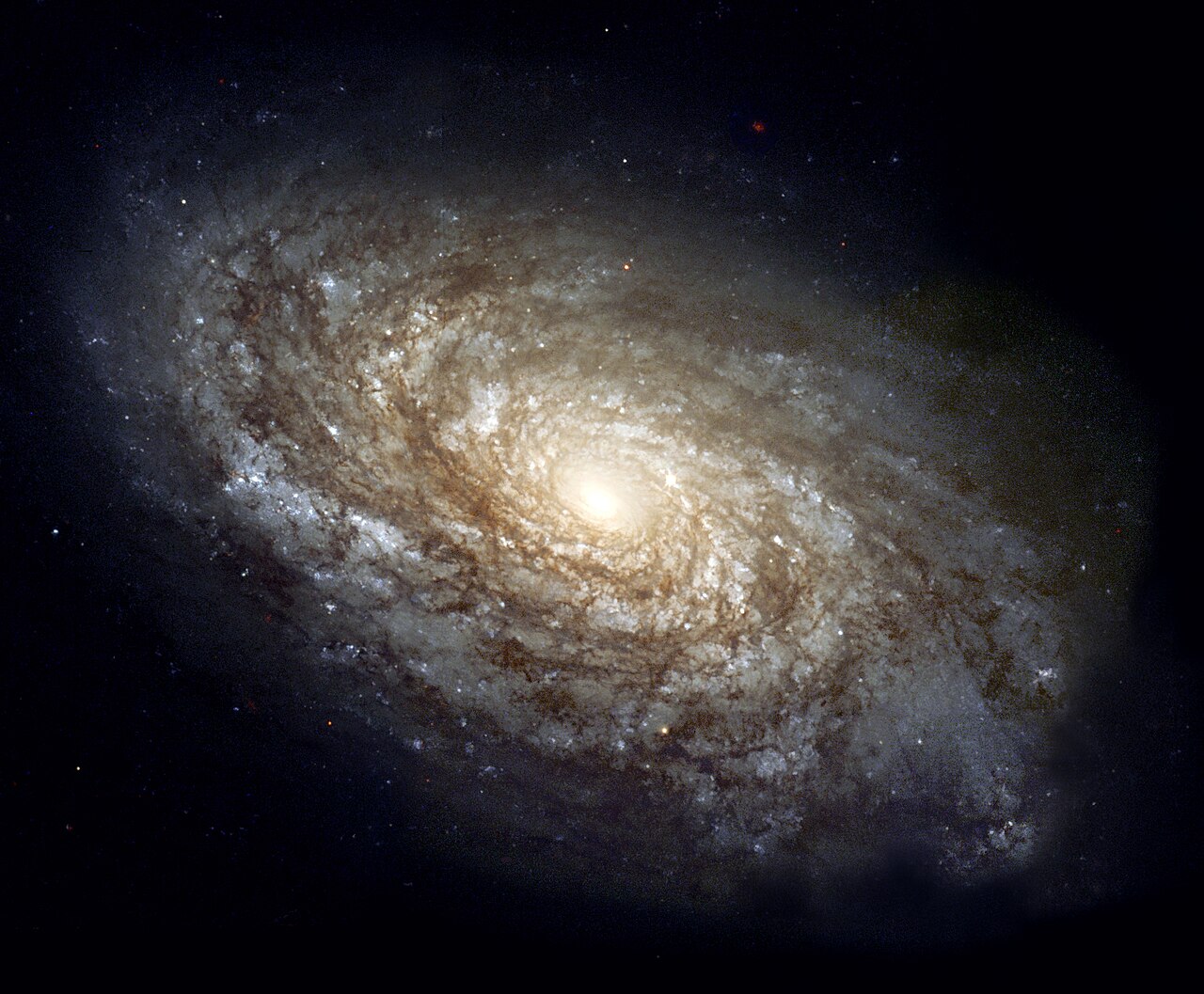
Spiral galaxies are among the most beautiful. They have bright central regions surrounded by graceful spiral arms filled with young stars, gas, and dust. The Milky Way belongs to this category.
Elliptical galaxies range from nearly spherical to elongated shapes. They usually contain older stars and relatively little gas or dust, meaning they produce fewer new stars than spiral galaxies.
Irregular galaxies have no obvious shape. Their unusual appearances often result from gravitational interactions or collisions with other galaxies. Despite their chaotic look, irregular galaxies can be active regions of star formation.
Some galaxies are tiny dwarf galaxies containing only a few million stars, while giant galaxies may contain trillions of stars and dominate large groups of neighboring galaxies.
How Do Galaxies Form?
Galaxies began forming not long after the Big Bang, approximately 13.8 billion years ago.
In the early universe, small fluctuations in the distribution of matter gradually grew stronger under the influence of gravity. Dark matter played a crucial role by attracting ordinary matter into dense regions.
As enormous clouds of gas collapsed, the first stars ignited. These stars gathered into larger systems that evolved into the earliest galaxies.
Over billions of years, galaxies continued growing by forming new stars, drawing in surrounding gas, and merging with neighboring galaxies. This process continues today throughout the universe.
Modern observations from powerful space telescopes allow astronomers to study galaxies that formed when the universe was still very young, helping reveal how galaxies evolved over cosmic history.
Galaxies Are Always Changing
Although galaxies appear permanent, they are constantly evolving.
Stars are continually born inside giant clouds of gas and dust. Massive young stars shine brightly for millions of years before ending their lives in spectacular supernova explosions.
These explosions scatter heavy elements throughout the galaxy, enriching the gas from which future generations of stars and planets will form.
Older stars gradually exhaust their nuclear fuel and become white dwarfs, neutron stars, or black holes.
Meanwhile, gravitational interactions slowly reshape galaxies over billions of years, making every galaxy a living system with its own ongoing story.
Can Galaxies Collide?
Yes, galaxies can and do collide.
Because galaxies are separated by enormous distances, collisions occur over hundreds of millions or even billions of years.
Surprisingly, individual stars rarely crash into one another because they are so widely spaced. Instead, gravity gradually distorts both galaxies, pulling stars into new orbits and triggering bursts of star formation.
Astronomers predict that the Milky Way and the neighboring Andromeda Galaxy will begin merging in about 4 to 5 billion years. The process will unfold slowly over billions of years, eventually producing a much larger galaxy.
Although this event sounds dramatic, the vast distances between stars mean our Solar System is unlikely to experience a direct stellar collision.
Supermassive Black Holes at Galactic Centers
One of the greatest discoveries of modern astronomy is that nearly every large galaxy appears to contain a supermassive black hole at its center.
These black holes can contain millions or even billions of times the Sun’s mass.
Despite their enormous mass, they occupy relatively small regions compared with the size of the galaxy itself.
As gas falls toward these black holes, it can become extremely hot and emit enormous amounts of energy. In some galaxies, this process creates incredibly bright objects called active galactic nuclei or quasars, which can outshine entire galaxies.
Understanding these central black holes remains one of the most active areas of astrophysical research.
The Role of Dark Matter
Dark matter is one of the greatest mysteries surrounding galaxies.
When astronomers measure how quickly stars orbit within galaxies, they find that visible matter alone cannot provide enough gravity to explain those motions.
The evidence strongly suggests that galaxies are embedded within enormous halos of invisible dark matter.
Although scientists have not yet identified the exact nature of dark matter, observations indicate that it plays a fundamental role in galaxy formation, stability, and evolution.
Without dark matter, galaxies as we know them might never have formed.
Galaxies and Star Formation
Stars are born inside cold, dense clouds of gas and dust found within galaxies.
Gravity slowly causes parts of these clouds to collapse. As the material becomes denser and hotter, a new star eventually forms when nuclear fusion begins in its core.
Some galaxies are rich in gas and produce many new stars each year. Others have used up much of their gas and now contain mostly older stars.
The rate at which galaxies form stars helps astronomers understand their age, history, and future evolution.
Galaxy Clusters and the Cosmic Web
Galaxies are rarely isolated.
Most belong to larger collections known as galaxy groups or galaxy clusters. Our Milky Way is part of the Local Group, which contains more than 80 known galaxies, including the Andromeda Galaxy and many dwarf galaxies.
Even galaxy clusters are connected through an enormous network called the cosmic web.
This web consists of gigantic filaments of galaxies and dark matter separated by vast regions containing relatively few galaxies. It represents one of the largest known structures in the observable universe.
How Scientists Study Galaxies
Astronomers investigate galaxies using telescopes that observe many different forms of light.
Visible-light telescopes reveal stars.
Radio telescopes detect clouds of hydrogen gas.
Infrared telescopes see through dust and observe cool objects.
Ultraviolet telescopes reveal hot young stars.
X-ray observatories detect extremely energetic events such as black holes and exploding stars.
Space telescopes avoid Earth’s atmosphere, providing exceptionally clear views of distant galaxies.
By combining observations from different wavelengths, scientists can build a far more complete picture of how galaxies work.
Why Galaxies Matter
Galaxies are much more than beautiful objects scattered across space. They are the environments where stars, planets, and ultimately life can emerge.
Every atom of carbon, oxygen, iron, calcium, and many other elements inside your body was created within stars that lived and died inside galaxies long before the Sun existed.
Without galaxies, there would be no long-lived stars like our Sun, no planets like Earth, and no known environments capable of supporting life.
Studying galaxies also helps scientists understand the history of the universe, the nature of dark matter, the behavior of black holes, and the processes that shape cosmic evolution.
Are We Alone Among the Galaxies?
One of the most fascinating questions in science is whether life exists elsewhere.
Because galaxies contain enormous numbers of stars and planets, many astronomers believe that conditions suitable for life may exist in countless locations throughout the universe.
Thousands of planets have already been discovered around other stars within our own galaxy, and many more are expected to be found.
Although no confirmed evidence of extraterrestrial life has yet been discovered, the immense number of galaxies and planetary systems suggests that the search remains one of humanity’s most exciting scientific endeavors.
Conclusion
A galaxy is a vast gravitationally bound system containing stars, planets, gas, dust, dark matter, and often a supermassive black hole at its center. These extraordinary cosmic structures are the building blocks of the observable universe, each carrying a history that stretches back billions of years. From elegant spiral galaxies to giant elliptical systems and irregular galaxies shaped by cosmic encounters, they reveal the incredible diversity of the universe.
Our own Milky Way is just one galaxy among hundreds of billions, yet it is the home of the Sun, Earth, and every human who has ever lived. As telescopes continue to peer deeper into space and further back in time, they reveal galaxies from the earliest epochs of cosmic history, helping scientists uncover how the universe formed and evolved. Every new discovery reminds us that galaxies are not simply distant islands of stars—they are the grand stages upon which the story of the cosmos unfolds.