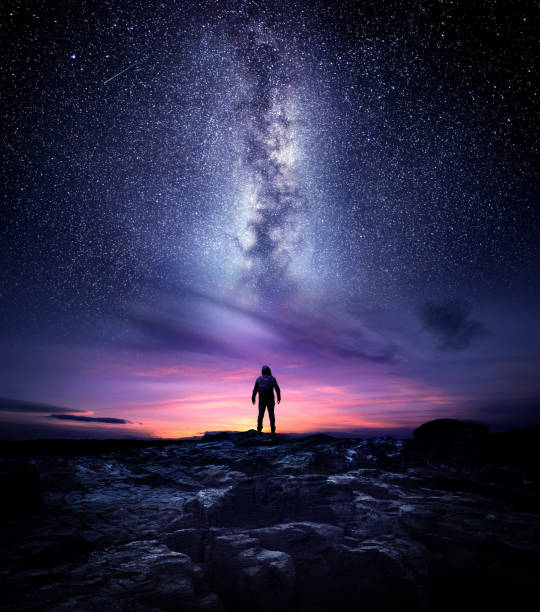
On a clear night, when you look up at the stars, the sky may appear calm and unchanging. Yet hidden among those countless points of light are enormous clouds of gas and dust where stars are born, where dying stars leave behind their final masterpieces, and where the raw materials of future planets are scattered across space. These breathtaking cosmic clouds are known as nebulae (singular: nebula).
For centuries, nebulae appeared to astronomers as mysterious, faint patches of light through telescopes. Today, thanks to powerful observatories such as the Hubble Space Telescope and the James Webb Space Telescope, we know that nebulae are among the most spectacular and important objects in the universe. They are not merely beautiful clouds floating through space—they are places where the life cycle of stars begins and ends.
Understanding nebulae helps us understand how stars, planets, and even the elements that make up our own bodies came into existence.
What Is a Nebula?
A nebula is a vast cloud of gas and dust in space. Most nebulae are made primarily of hydrogen, the most abundant element in the universe, along with helium and small amounts of heavier elements such as oxygen, carbon, nitrogen, silicon, and iron. Tiny dust grains made of carbon compounds, silicates, and other materials are also mixed throughout these clouds.
Nebulae can be incredibly large. Some stretch for only a few light-years, while others span hundreds of light-years. To put this into perspective, one light-year is about 9.46 trillion kilometers (5.88 trillion miles). Even the smallest nebula is unimaginably larger than our entire solar system.
Although nebulae contain enormous amounts of material, they are usually extremely thin. A nebula that stretches across dozens of light-years may contain less matter than the air inside a small room on Earth if compressed to Earth’s atmospheric pressure. The particles are spread so far apart that space inside a nebula is almost a vacuum.
The Meaning of the Word “Nebula”
The word nebula comes from the Latin word meaning “cloud” or “mist.” Early astronomers used the term to describe any fuzzy object they observed in the night sky.
Before powerful telescopes existed, astronomers could not distinguish between galaxies, star clusters, and true nebulae. Many objects once called nebulae were later discovered to be entirely different kinds of astronomical objects. For example, the Andromeda Galaxy was once known as the “Andromeda Nebula” before scientists realized it is actually another galaxy containing hundreds of billions of stars.
Today, the term nebula refers specifically to enormous clouds of gas and dust located within galaxies.
What Are Nebulae Made Of?
The main ingredient of most nebulae is hydrogen gas. Hydrogen is the simplest and most abundant element in the universe, making up most of the visible matter in stars and galaxies.
Helium is the second most common element. Small amounts of heavier elements, produced inside previous generations of stars, are also present. These elements include oxygen, carbon, sulfur, neon, magnesium, and iron.
Tiny dust particles make up only a small fraction of a nebula’s mass, but they play a crucial role. These microscopic grains absorb, scatter, and reflect light. They also help cool collapsing clouds, making it easier for new stars to form.
Many of the atoms found in nebulae eventually become part of new stars, planets, moons, comets, and even living organisms.
How Nebulae Form
Nebulae can form in several different ways depending on their type.
Some nebulae are leftovers from the giant clouds of gas that filled galaxies long ago. These clouds gradually gathered under gravity, eventually giving birth to generations of stars.
Other nebulae form when aging stars shed their outer layers near the ends of their lives. As the star loses material, colorful clouds expand outward into space.
The most dramatic nebulae are created when massive stars explode as supernovae. These powerful explosions scatter enormous amounts of gas, dust, and newly created elements into surrounding space, forming expanding clouds that may later become the birthplaces of future stars.
In this way, nebulae connect different stages of the cosmic life cycle.
Nebulae Are Stellar Nurseries
Some nebulae are often called stellar nurseries because they are places where new stars are born.
Inside these giant molecular clouds, gravity slowly pulls gas and dust together. As the cloud becomes denser, small regions begin collapsing under their own gravity.
Over hundreds of thousands or even millions of years, the collapsing material forms a protostar, an early stage of a star’s life.
As more gas falls inward, pressure and temperature inside the growing star increase dramatically. Eventually, the core becomes hot enough for hydrogen nuclei to begin nuclear fusion.
At that moment, a new star is born.
Many stars, including our Sun about 4.6 billion years ago, likely formed inside giant nebulae similar to those astronomers observe today.
The Birthplace of Planets
The formation of a star is only part of the story.
As a young star forms, leftover gas and dust often create a rotating disk around it. This structure, known as a protoplanetary disk, contains the raw materials for planets.
Over millions of years, tiny dust particles collide and stick together. They gradually grow into rocks, planetesimals, and eventually full-sized planets.
This means that every rocky planet, gas giant, moon, asteroid, and comet began as tiny particles inside a nebula.
Even Earth traces its origins back to one of these enormous clouds of cosmic material.
Different Types of Nebulae
Astronomers classify nebulae according to how they form and how they interact with light.
Emission nebulae glow because energetic ultraviolet radiation from nearby hot stars excites hydrogen and other gases. As the atoms return to lower energy states, they emit light of specific colors, giving these nebulae their beautiful red, pink, and orange appearance.
Reflection nebulae do not produce their own light. Instead, tiny dust particles scatter and reflect the light of nearby stars. Because shorter blue wavelengths scatter more efficiently, many reflection nebulae appear blue.
Dark nebulae are dense clouds of gas and dust that block the light from stars behind them. Rather than glowing, they appear as dark silhouettes against brighter regions of space.
Planetary nebulae form when Sun-like stars reach the ends of their lives and gently expel their outer layers. Despite their name, they have nothing to do with planets. Early astronomers gave them this name because they looked somewhat like small planets through primitive telescopes.
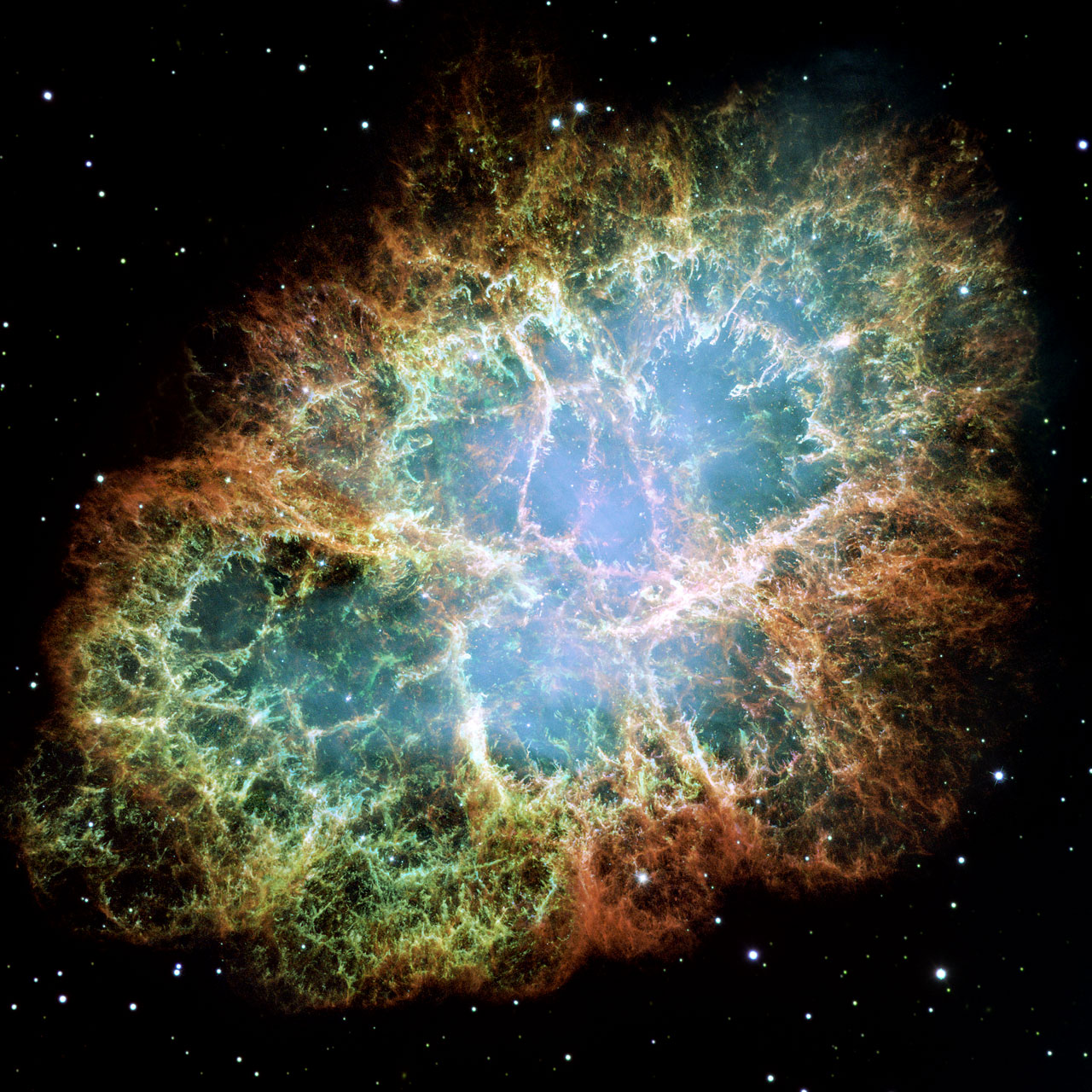
Supernova remnants are expanding clouds produced after massive stars explode. These nebulae contain shock waves, energetic particles, and newly formed chemical elements that enrich surrounding space.
Each type tells a different chapter of the universe’s ongoing story.
Why Nebulae Have So Many Beautiful Colors
The stunning colors seen in photographs of nebulae come from both natural processes and scientific imaging.
Different elements emit different colors when energized.
Hydrogen often glows red.
Oxygen frequently produces green or blue-green light.
Sulfur commonly appears reddish or orange.
Reflection nebulae often look blue because dust scatters blue light more effectively than red light.
Many famous images combine observations taken through filters that isolate specific wavelengths. Scientists sometimes assign visible colors to wavelengths beyond human vision, allowing important structures to become easier to study while still representing real physical information.
These images are both scientifically valuable and visually spectacular.
Famous Nebulae in the Universe
Some nebulae have become iconic symbols of astronomy because of their beauty and scientific importance.
The Orion Nebula, located about 1,350 light-years from Earth, is one of the closest and most active stellar nurseries. Thousands of young stars are forming there.
The Eagle Nebula contains the famous “Pillars of Creation,” towering columns of gas and dust where new stars continue to emerge.
The Crab Nebula is the remnant of a supernova observed by astronomers on Earth in the year 1054. At its center lies a rapidly spinning neutron star called a pulsar.
The Ring Nebula is a beautiful example of a planetary nebula created by a dying Sun-like star.
The Carina Nebula is one of the largest star-forming regions in our galaxy and contains some of the most massive stars known.
Each of these nebulae reveals different stages in the evolution of stars.
Nebulae and the Life Cycle of Stars
Nebulae are closely connected to every phase of stellar evolution.
Stars begin inside giant molecular clouds.
As they grow older, they produce heavier chemical elements through nuclear fusion.
When stars die, many return those elements to space through stellar winds or supernova explosions.
Those materials become part of new nebulae.
New stars eventually form from those enriched clouds.
This continuous recycling process has been occurring for billions of years throughout the universe.
Without nebulae, the cycle of stellar birth and death could not continue.
Nebulae Created the Ingredients for Life
One of the most fascinating facts about nebulae is their connection to life itself.
The early universe contained mostly hydrogen and helium. Nearly all heavier elements—including carbon, oxygen, nitrogen, phosphorus, calcium, and iron—were created inside stars.
When stars died, these elements were expelled into surrounding nebulae.
Later generations of stars and planets formed from this enriched material.
The carbon in your cells, the oxygen you breathe, the calcium in your bones, and the iron in your blood were all forged inside ancient stars and dispersed through nebulae billions of years ago.
In a very real sense, every person is made from recycled stardust.
How Astronomers Study Nebulae
Modern astronomy uses many different kinds of telescopes to investigate nebulae.
Optical telescopes reveal glowing gas and visible structures.
Infrared telescopes can peer through dust clouds, allowing astronomers to observe newborn stars hidden inside.
Radio telescopes detect cold hydrogen gas and complex molecules.
Ultraviolet telescopes study energetic young stars.
X-ray observatories reveal shock waves from supernova remnants and extremely hot gas.
Space telescopes have revolutionized nebula research because they avoid the blurring effects of Earth’s atmosphere.
By combining observations across many wavelengths, scientists build detailed pictures of how nebulae evolve over time.
Do Nebulae Last Forever?
Nebulae are not permanent structures.
Star-forming nebulae gradually disappear as their gas becomes incorporated into new stars or is blown away by powerful stellar winds and radiation.
Planetary nebulae continue expanding until they eventually fade into surrounding interstellar space.
Supernova remnants also spread outward, becoming larger and fainter over tens of thousands of years.
Although individual nebulae eventually disperse, new ones constantly form elsewhere in galaxies as stars are born and die.
The universe is continually renewing itself.
Can We See Nebulae From Earth?
Yes, some nebulae can be seen with the naked eye under dark skies.
The Orion Nebula is perhaps the best-known example. It appears as a faint fuzzy patch in the constellation Orion and can often be observed without binoculars or a telescope from locations with little light pollution.
Many other nebulae require binoculars, amateur telescopes, or large professional observatories because they are much farther away or fainter.
Long-exposure photography reveals colors and details that are too dim for human eyes to detect directly.
Nebulae Beyond the Milky Way
Although many famous nebulae lie within our own Milky Way Galaxy, nebulae exist throughout the universe.
Every large galaxy contains enormous clouds of gas and dust where stars are continuously forming.
Astronomers have observed spectacular nebulae in neighboring galaxies such as the Large Magellanic Cloud, the Small Magellanic Cloud, the Andromeda Galaxy, and countless galaxies far beyond.
This demonstrates that the processes of stellar birth and death are universal.
Why Nebulae Matter
Nebulae are much more than beautiful objects decorating the night sky. They are fundamental to the evolution of galaxies and the universe itself. They regulate the birth of stars, distribute newly created elements, influence the formation of planetary systems, and shape the structure of galaxies over billions of years.
Studying nebulae allows scientists to investigate the earliest stages of star formation, understand how chemical elements spread through space, and learn how our own solar system may have formed.
Every new observation brings us closer to understanding the long history of the cosmos.
Conclusion
A nebula is a vast cloud of gas and dust that plays a central role in the universe’s grand story. Some nebulae are the cradles where new stars and planets are born, while others are the magnificent remains of stars that have reached the ends of their lives. Though delicate in appearance, these enormous cosmic clouds are responsible for recycling matter across galaxies and creating the ingredients needed for future generations of stars, planets, and ultimately life itself.
When we gaze at the glowing colors of a distant nebula, we are looking at one of nature’s greatest masterpieces—a place where gravity, light, chemistry, and time work together over millions of years to shape the cosmos. These extraordinary clouds remind us that the universe is not static but constantly evolving, and that the atoms making up our world were once part of ancient nebulae long before Earth, the Sun, or humanity ever existed.