Imagine stepping outside on a quiet night and looking up at the sky—only to discover that the familiar planets are gone. The Sun, once the brilliant center of our days, has faded into just another bright star among countless others. There is no sunrise waiting tomorrow. No warm afternoon. No changing seasons. Earth is silently drifting through the endless darkness between the stars.
It sounds like the beginning of a science fiction novel, but it raises one of the most fascinating scientific questions imaginable: What would happen if Earth somehow left the Solar System?
The answer is both breathtaking and heartbreaking. It is a story of freezing oceans, disappearing sunlight, surviving life, and the incredible importance of our place in the cosmos. While such an event is extraordinarily unlikely, exploring this hypothetical scenario reveals just how deeply every aspect of life on Earth depends on the Sun.
What Does It Mean to Leave the Solar System?
Before imagining the consequences, it helps to understand what “leaving the Solar System” actually means.
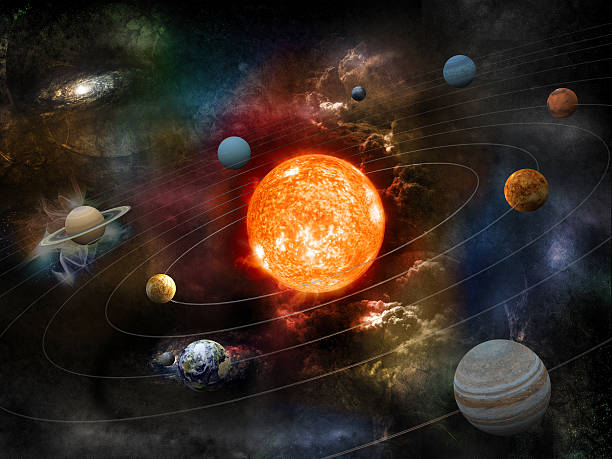
The Solar System is the Sun and everything held by its gravity. This includes the eight planets, dwarf planets, asteroids, comets, and countless smaller objects extending far beyond Pluto into the distant Oort Cloud.
For Earth to leave the Solar System, it would have to escape the Sun’s gravitational pull completely. That means reaching escape velocity relative to the Sun at Earth’s distance—about 42 kilometers per second (26 miles per second). Once Earth exceeded that speed, it would no longer orbit the Sun. Instead, it would travel through interstellar space, becoming what astronomers sometimes call a rogue planet.
Although this is physically possible according to the laws of physics, no known natural process could realistically accelerate Earth in this way today. It remains an extremely speculative thought experiment.
The First Thing We’d Notice: The Sun Would Begin to Shrink
If Earth escaped the Sun’s gravity, the Sun would not suddenly disappear.
Instead, it would slowly grow smaller and dimmer as Earth traveled farther away.
At first, the changes might seem surprisingly subtle. The Sun would still shine brightly, although each day it would appear slightly smaller than before. Over weeks, months, and years, its warmth would steadily decrease.
Eventually, the Sun would no longer dominate the daytime sky.
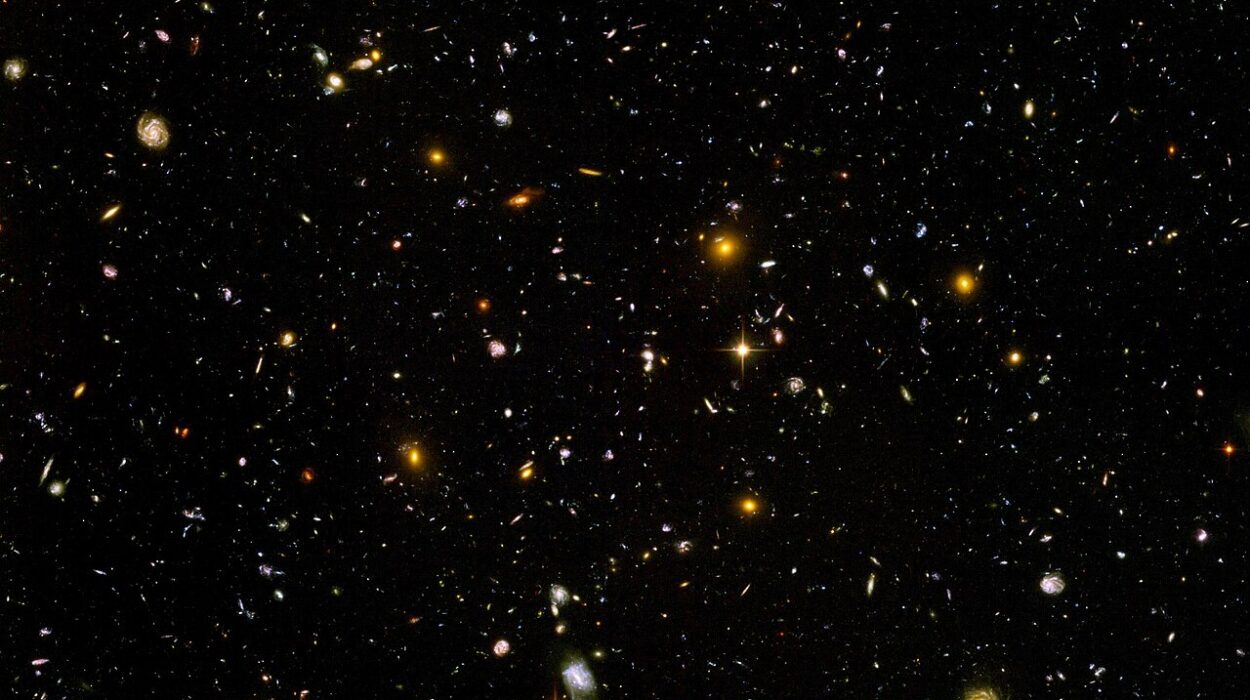
As Earth continued its lonely journey, the Sun would become one bright star among billions.
The beautiful blue sky that humans have known for millions of years would vanish forever.
Day and Night Would Change Forever
Whether Earth continued to rotate would depend on how it left the Solar System. If the escape happened without dramatically altering Earth’s spin, our planet would keep rotating approximately once every 24 hours.
That means there would still be a rhythm similar to day and night.
But there would be a profound difference.
The “daytime” side of Earth would no longer receive meaningful sunlight. Instead of bright mornings and golden afternoons, every hour would resemble an exceptionally dark twilight that gradually faded into complete darkness as the Sun receded.
Eventually, the distinction between day and night would become almost meaningless.
The sky would remain permanently black, even at noon.
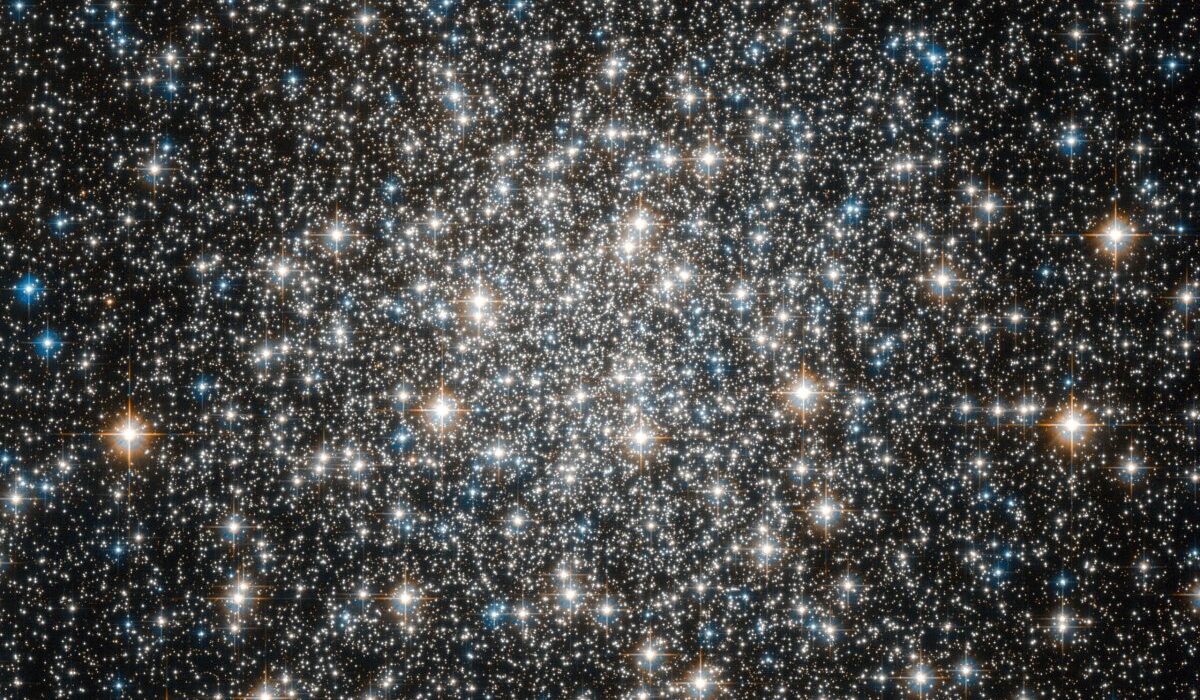
Without sunlight scattering through Earth’s atmosphere, stars would be visible all the time.
Temperatures Would Begin Falling Immediately
The Sun supplies nearly all the energy that warms Earth’s surface.
Once that energy source disappeared, temperatures would begin dropping almost immediately.
During the first week, average global temperatures would fall below freezing in many regions.
Within months, Earth’s average surface temperature would plunge to around –73°C (–100°F).
After about a year, average temperatures could approach –100°C (–148°F) or even lower.
Over longer periods, the surface would continue cooling until it stabilized primarily through heat flowing outward from Earth’s interior.
Eventually, the average surface temperature might reach around –240°C (–400°F), depending on atmospheric conditions and geothermal heat.
That is cold enough to freeze almost everything exposed at the surface.
The Oceans Would Freeze—but Not All the Way Through
One common misconception is that Earth’s oceans would instantly become solid blocks of ice.
In reality, freezing such enormous volumes of water takes time.
The ocean’s upper layers would gradually freeze, forming an increasingly thick shell of ice.
As years passed, this frozen crust could grow hundreds of meters thick.
However, something remarkable would happen beneath it.
Earth still produces heat deep inside through radioactive decay and residual heat left over from the planet’s formation.
This geothermal energy would continue warming the ocean floor.
Because thick ice is an excellent insulator, liquid water could remain trapped beneath the frozen surface for millions—or perhaps even billions—of years.
Ironically, Earth might begin to resemble icy moons like Europa or Enceladus, which are believed to hide global oceans beneath frozen shells.
Plants Would Face an Immediate Crisis
Nearly all plants depend on sunlight for photosynthesis, the process that converts light into chemical energy.
Without sunlight, photosynthesis would stop.
Most plants would die within days or weeks.
Forests would become silent.
Grasslands would wither.
Crops would fail across the globe.
As plants disappeared, the entire food web would begin collapsing.
The oxygen already in Earth’s atmosphere would remain abundant for a very long time, but no significant new oxygen would be produced through photosynthesis.
Animals Would Soon Struggle to Survive
Animals depend directly or indirectly on plants.
Herbivores would lose their food source first.
Carnivores would survive somewhat longer by feeding on herbivores and scavenging dead animals.
Eventually, however, nearly all complex ecosystems would collapse.
The disappearance of sunlight would affect not only food availability but also behavior.
Bird migration would cease.
Seasonal breeding patterns would disappear.
Circadian rhythms shaped by millions of years of sunlight would lose their environmental cues.
Most familiar ecosystems would vanish within a relatively short geological timescale.
Could Humans Survive?
Human survival would become one of the greatest engineering challenges in history.
On the frozen surface, ordinary civilization would quickly become impossible.
Agriculture would fail.
Solar power would disappear completely.
Transportation systems would freeze.
Most infrastructure would become unusable without continuous heating.
Yet humans are remarkably adaptable.
If enough warning existed, underground cities powered by nuclear energy, geothermal energy, or perhaps future fusion reactors might sustain populations.
Artificial lighting could support hydroponic farming.
Recycled water and controlled environments could allow people to live beneath Earth’s frozen surface.
Such communities would resemble isolated space stations more than today’s cities.
Life would be extraordinarily difficult, but not necessarily impossible.
The Atmosphere Would Begin to Freeze
As temperatures continued falling, Earth’s atmosphere itself would change.
Water vapor would quickly freeze and settle as snow or frost.
Carbon dioxide would eventually condense into dry ice in many locations.
If temperatures became low enough over extremely long timescales, even nitrogen and oxygen—the primary components of Earth’s atmosphere—could begin condensing into liquids or solids on the surface.
The atmosphere would become progressively thinner.
Without its insulating blanket, the surface would cool even further.
Earth’s Interior Would Stay Hot
Although the surface would become unimaginably cold, Earth’s interior would remain incredibly hot.
Temperatures near the core exceed 5,000°C (9,000°F).
This internal heat powers volcanic activity, plate tectonics, and geothermal systems.
Deep underground, temperatures would remain warm enough to support liquid water.
These hidden environments might become the last refuges for life.
In many ways, Earth’s future would depend more on its internal heat than on the vanished sunlight.
Tiny Life Could Continue
The disappearance of sunlight would devastate most life, but not all of it.
Scientists have discovered organisms thriving in places where sunlight never reaches.
Deep beneath Earth’s surface, microbes survive using chemical energy rather than photosynthesis.
Around hydrothermal vents on the ocean floor, entire ecosystems depend on chemosynthesis, where microorganisms derive energy from chemical reactions involving compounds such as hydrogen sulfide.
These ecosystems already exist independently of sunlight.
If Earth became a rogue planet, they might continue surviving for immense spans of time.
Life on Earth would not necessarily end.
It would simply retreat underground and beneath the oceans.
The Moon Would Probably Stay With Earth
Would the Moon drift away?
Probably not.
Earth’s gravity is far stronger than the Sun’s gravity at the Moon’s orbital distance.
If Earth escaped the Solar System without a violent disruption, the Moon would most likely remain in orbit around Earth.
Together, Earth and the Moon would travel through interstellar space like cosmic companions.
The familiar phases of the Moon would disappear because there would no longer be sunlight reflecting from its surface.
Instead, the Moon would appear as an extremely dark world, visible mainly through faint reflected starlight or artificial illumination.
The Rest of the Solar System Would Continue Without Us
Earth’s departure would have little effect on the remaining planets.
The Sun would continue shining.
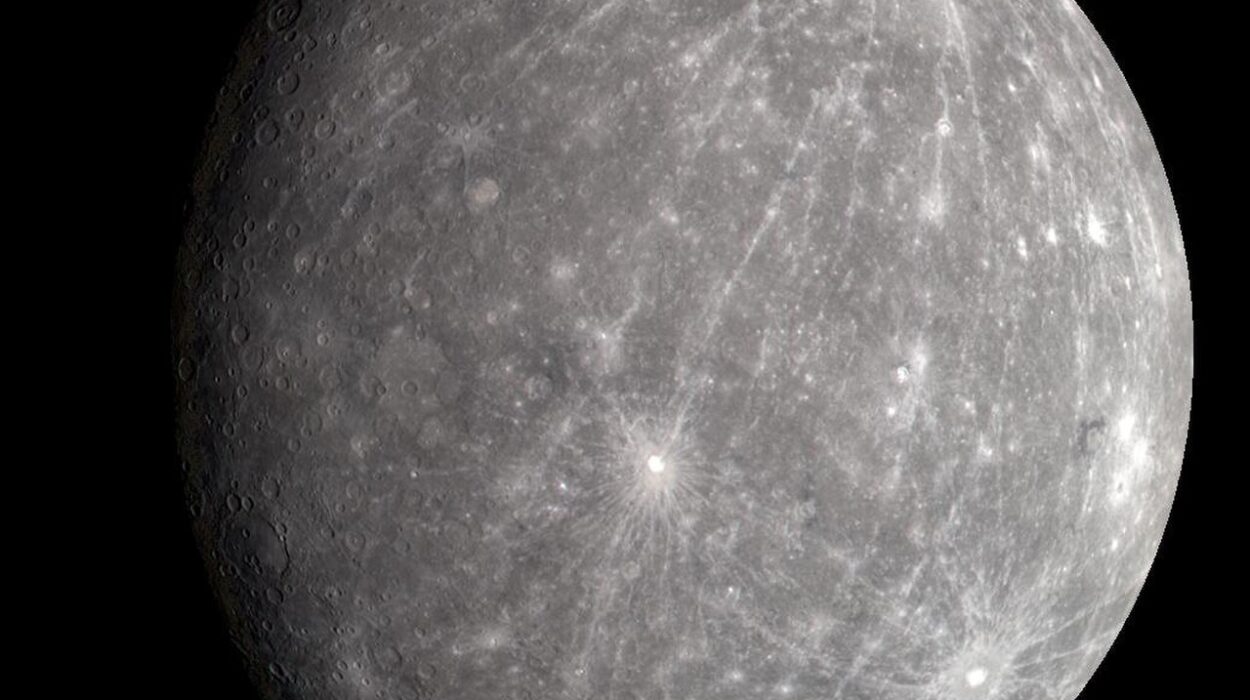
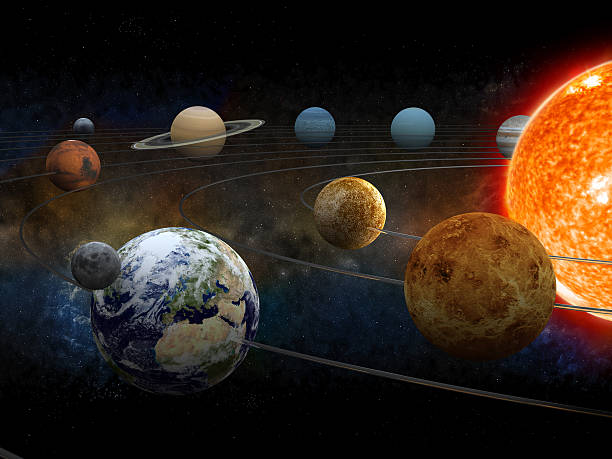
Mercury, Venus, Mars, Jupiter, Saturn, Uranus, and Neptune would keep orbiting much as before.
Earth represents only a tiny fraction of the Solar System’s total mass.
Its absence would barely influence the gravitational balance of the remaining planets.
From their perspective, Earth would simply vanish into the darkness.
Traveling Between the Stars
Interstellar space is almost unimaginably empty.
The nearest star system, Alpha Centauri, lies about 4.37 light-years away.
Even if Earth traveled tens of kilometers per second, reaching another star would take tens of thousands of years.
During that journey, Earth would wander through an almost perfect vacuum.
The night sky would slowly change as nearby stars shifted position over thousands of years.
Occasionally, Earth might pass through sparse clouds of interstellar gas and dust, but collisions with other objects would be extraordinarily unlikely.
Most of the journey would consist of endless darkness.
Could Earth Ever Be Captured by Another Star?
In principle, yes.
If Earth passed close enough to another star under just the right conditions, gravity could potentially capture it into a new orbit.
However, this would require an extraordinarily precise set of circumstances.
Space is so vast that the odds are incredibly small.
Earth would almost certainly spend millions or billions of years wandering alone before encountering another stellar system in a way that allowed permanent capture.
Could Such an Event Really Happen?
According to current scientific understanding, the answer is essentially no—not under ordinary circumstances.
Earth’s orbit around the Sun is extremely stable.
While gravitational interactions between stars can eject planets during the chaotic early stages of planetary system formation, our Solar System has remained stable for about 4.6 billion years.
There is no evidence suggesting Earth is at risk of being thrown out of the Solar System.
Astronomers have discovered rogue planets drifting through the Milky Way, but these worlds were likely ejected during the formation or evolution of their planetary systems, not from mature, stable systems like ours.
Why This Thought Experiment Matters
Imagining Earth leaving the Solar System highlights something extraordinary.
Every sunrise, every green leaf, every flowing river, every ocean current, every bird in flight, and every human civilization exists because our planet occupies a remarkably favorable location around a stable star.
Earth is not merely a rock floating in space.
It is part of a finely balanced system where sunlight, gravity, atmosphere, liquid water, and internal geological activity work together to create one of the few known environments capable of sustaining abundant life.
The farther we imagine Earth drifting away from the Sun, the more clearly we recognize how precious that relationship truly is.
Earth’s Greatest Companion Is the Sun
If Earth somehow left the Solar System, our world would not explode or instantly become uninhabitable. Instead, it would undergo a slow, relentless transformation. Sunlight would fade. Temperatures would plunge. Oceans would freeze from the top down. Plants and animals would disappear, while only the hardiest microorganisms might endure beneath ice and deep underground.
Yet even in this bleak scenario, Earth would remain a fascinating world—a frozen planet carrying the history of oceans, forests, mountains, and civilizations through the silent darkness between the stars.
This thought experiment reminds us of a profound scientific truth. Life on Earth depends not only on our planet itself but also on its place in the universe. The Sun is far more than the bright object in our daytime sky. It is the engine that powers our climate, fuels nearly every ecosystem, and makes our world a vibrant oasis in the vast, cold expanse of space.