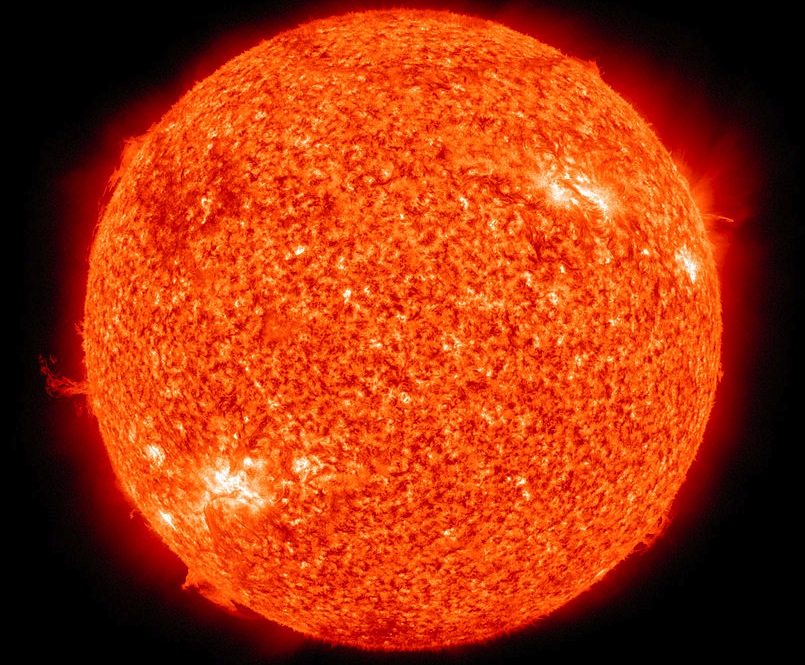
Every morning, the Sun rises with remarkable reliability. It lights our skies, warms our planet, and provides the energy that makes life on Earth possible. Yet if you stop and think about what the Sun really is, an incredible question naturally comes to mind.
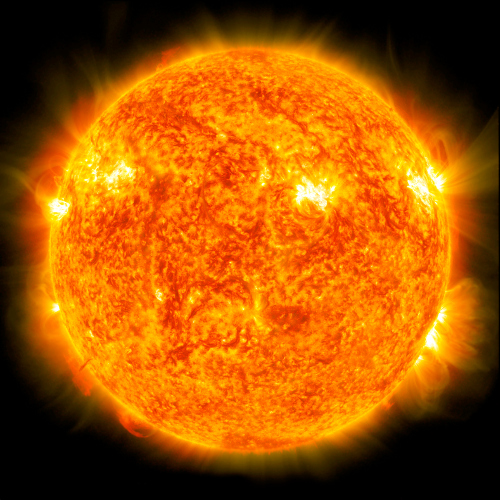
The Sun is a gigantic sphere of scorching hot gas with a core temperature of about 15 million degrees Celsius (27 million degrees Fahrenheit). Deep inside, billions upon billions of nuclear reactions occur every second, releasing an unimaginable amount of energy. In a single second, the Sun produces more energy than human civilization could use in millions of years.
With all that intense heat and constant nuclear fusion, why doesn’t the Sun explode like a gigantic hydrogen bomb?
The answer reveals one of nature’s most beautiful balancing acts. The Sun survives because two incredibly powerful forces continuously compete with each other. Neither side ever completely wins, and as long as that balance remains, the Sun remains stable.
Understanding this cosmic tug-of-war helps explain not only why the Sun shines steadily, but also why stars across the universe can live for billions of years.
The Sun Is Not Burning Like Fire
Many people imagine the Sun as a giant ball of fire.
In reality, that isn’t true.
Fire, as we experience it on Earth, is a chemical reaction involving oxygen. A campfire, a candle, or a burning piece of wood releases energy because atoms rearrange themselves into new molecules.
The Sun works in an entirely different way.
Instead of chemical reactions, the Sun is powered by nuclear fusion. Fusion occurs when the nuclei of light atoms combine to form heavier atoms. This process releases vastly more energy than ordinary chemical burning.
Deep within the Sun’s core, hydrogen atoms are continuously merging to create helium. During this process, a tiny amount of mass disappears and is transformed directly into energy according to Albert Einstein’s famous equation:
E = mc²
This nuclear energy is what powers the Sun.
The Sun Is an Enormous Sphere Held Together by Gravity
The Sun contains about 99.8% of all the mass in our Solar System.
Its gravity is so powerful that it keeps eight planets, dwarf planets, countless asteroids, and billions of comets in orbit.
But gravity doesn’t only affect the planets.
It also pulls every part of the Sun inward.
Imagine squeezing a giant balloon from every direction at once. Every layer pushes toward the center.
Gravity is constantly trying to crush the Sun into a much smaller object.
Without another force pushing back, the Sun would collapse under its own enormous weight.
Nuclear Fusion Pushes Outward
While gravity pushes inward, nuclear fusion creates an equally powerful outward pressure.
Every second, the Sun converts roughly 600 million tons of hydrogen into helium.
During this process, about 4 million tons of mass are transformed into pure energy every second.
That energy does not immediately escape into space.
Instead, it creates tremendous pressure inside the Sun.
Hot gases expand.
Radiation pushes outward.
Extremely energetic particles move in every direction.
Together, these effects generate an outward force that resists gravity’s inward pull.
This outward pressure is so strong that it prevents the Sun from collapsing.
The Perfect Balance Called Hydrostatic Equilibrium
The reason the Sun doesn’t explode—or collapse—is because of a remarkable state known as hydrostatic equilibrium.
This simply means that the inward pull of gravity is balanced by the outward pressure created by the hot gas and nuclear fusion.
Imagine two equally strong teams pulling on opposite ends of a rope.
Neither side moves.
The rope remains perfectly still.
The Sun behaves in much the same way.
Gravity constantly pulls inward.
Pressure constantly pushes outward.
Because these forces are nearly equal, the Sun remains stable.
This balance has lasted for about 4.6 billion years.
It is one of the most important principles governing stars throughout the universe.
The Sun Constantly Adjusts Itself
One of the most fascinating things about the Sun is that it can naturally correct small changes.
Suppose fusion temporarily slows down.
With less outward pressure, gravity gains a slight advantage.
The Sun’s core begins to contract.
As the core shrinks, its temperature rises.
The hotter core speeds up nuclear fusion again.
More energy is produced.
Pressure increases.
Balance is restored.
Now imagine the opposite.
Suppose fusion suddenly becomes slightly stronger.
Extra energy increases outward pressure.
The Sun expands just a little.
As it expands, the core cools slightly.
Fusion slows down.
Pressure decreases.
Once again, equilibrium returns.
This remarkable self-regulating mechanism keeps the Sun extraordinarily stable.
Why the Sun Doesn’t Explode Like a Hydrogen Bomb
At first glance, hydrogen fusion inside the Sun sounds similar to a hydrogen bomb.
Both involve nuclear fusion.
Yet they behave very differently.
A hydrogen bomb produces an uncontrolled fusion reaction.
The reaction occurs almost instantly.
Enormous amounts of energy are released in a tiny fraction of a second.
There is nothing to slow or regulate the process.
The result is an explosion.
The Sun is completely different.
Its fusion reactions occur only under very specific conditions of temperature and pressure found in the core.
If conditions become even slightly less favorable, fusion naturally slows.
The Sun cannot suddenly fuse all of its hydrogen at once.
Gravity and pressure carefully regulate the reaction.
Instead of exploding in an instant, the Sun releases its energy gradually over billions of years.
The Journey of Sunlight Is Surprisingly Slow
One surprising fact is that the energy created inside the Sun does not immediately escape.
Fusion occurs in the central core.
The light produced there begins an incredibly long journey toward the surface.
Inside the Sun, particles of light called photons constantly collide with atoms.
Each collision changes their direction.
Rather than traveling straight outward, photons bounce around randomly.
Scientists estimate that it may take anywhere from tens of thousands to hundreds of thousands of years for energy produced in the core to finally reach the Sun’s visible surface.
Only after reaching the surface does sunlight travel to Earth.
That final part of the journey takes only about 8 minutes and 20 seconds.
The Sun Is Surprisingly Calm
Although the Sun sometimes produces solar flares and eruptions, these are tiny compared to the size of the entire star.
Solar flares occur because magnetic fields become twisted and suddenly release energy.
Coronal mass ejections throw enormous clouds of charged particles into space.
These events can affect satellites, astronauts, radio communication, and Earth’s magnetic field.
Yet even the largest solar eruptions involve only a tiny fraction of the Sun’s total energy.
They do not threaten the Sun’s overall stability.
The Sun remains firmly held together by gravity while continuing its balanced fusion process.
Why Gravity Doesn’t Win
If gravity is so powerful, why doesn’t it simply crush the Sun?
The answer lies in temperature.
The Sun’s core is unimaginably hot.
At these temperatures, particles move at tremendous speeds.
Their rapid motion creates pressure.
This pressure pushes outward against gravity.
As long as nuclear fusion continues supplying energy, the pressure remains strong enough to support the Sun.
Gravity and pressure exist in constant competition.
Neither side gains complete control.
Why Pressure Doesn’t Win Either
One might also wonder why the Sun doesn’t simply expand forever.
If fusion creates enormous pressure, shouldn’t the Sun keep growing?
Again, gravity prevents this.
Whenever the Sun expands slightly, gravity weakens the pressure in the core by allowing it to cool.
Lower temperatures slow fusion.
Less fusion means less pressure.
Expansion stops.
Gravity pulls everything back toward balance.
This natural feedback system keeps the Sun remarkably steady.
Every Star Lives by the Same Rules
The Sun is not unique.
Nearly every ordinary star in the universe exists because of the same balance between gravity and pressure.
Small red dwarf stars maintain this equilibrium for trillions of years.
Massive blue stars also rely on hydrostatic equilibrium, although they burn their fuel much faster.
Whether a star is small or enormous, gravity always pulls inward while fusion pushes outward.
This simple principle governs stars throughout the cosmos.
The Sun Will Not Stay This Way Forever
Although the Sun is stable today, it will not remain exactly the same forever.
Stars are not eternal.
Every second, the Sun uses some of its hydrogen fuel.
Fortunately, the Sun contains an enormous amount of hydrogen.
Astronomers estimate it has enough fuel to continue shining for about another 5 billion years.
As hydrogen gradually becomes less abundant in the core, the Sun’s structure will slowly change.
Eventually, the core will no longer produce enough hydrogen fusion to maintain its current balance.
Gravity will begin compressing the core again.
The outer layers will expand dramatically.
The Sun will become a red giant, growing so large that it may engulf Mercury and Venus. Current models also indicate that Earth will likely become uninhabitable long before this stage because of the Sun’s increasing brightness.
Later, the Sun will shed its outer layers into space.
The remaining core will become a white dwarf, an extremely hot, dense stellar remnant about the size of Earth.
Importantly, the Sun is not massive enough to explode as a supernova. Only stars that begin life with much greater mass can end in those spectacular explosions.
Massive Stars Really Can Explode
While the Sun cannot explode as a supernova, some stars certainly do.
Stars much more massive than the Sun burn through their nuclear fuel rapidly.
Eventually, they develop cores made of heavier elements that can no longer generate enough pressure through fusion to support the star.
Gravity suddenly overwhelms the core.
The core collapses in a fraction of a second.
The outer layers crash inward and then rebound outward in a tremendous explosion called a supernova.
These explosions briefly outshine entire galaxies and create many of the heavy elements found throughout the universe—including elements that later become part of planets and living organisms.
The Sun simply lacks the mass needed for this dramatic fate.
The Balance That Makes Life Possible
The Sun’s stability is one of the greatest gifts to life on Earth.
If the Sun exploded unpredictably, our planet could never have developed stable oceans, climates, or ecosystems.
Life requires billions of years of relatively consistent energy.
The Sun has provided exactly that.
Its brightness changes only slightly over time, allowing Earth to remain within a range where liquid water can exist.
Plants capture sunlight through photosynthesis.
Animals depend directly or indirectly on that energy.
Weather patterns are driven by solar heating.
Nearly every ecosystem ultimately traces its energy back to the Sun.
None of this would be possible if the Sun were unstable.
Scientists Can Predict the Sun’s Future
One of the remarkable achievements of modern astrophysics is the ability to understand the Sun’s entire life cycle.
By combining observations, nuclear physics, gravity, thermodynamics, and computer simulations, scientists can explain how stars form, evolve, and die.
These predictions have been confirmed by observing millions of stars at different stages of their evolution across our galaxy.
In many ways, looking into the night sky is like looking through a cosmic history book.
Some stars are just being born.
Others resemble our present-day Sun.
Some have already become red giants.
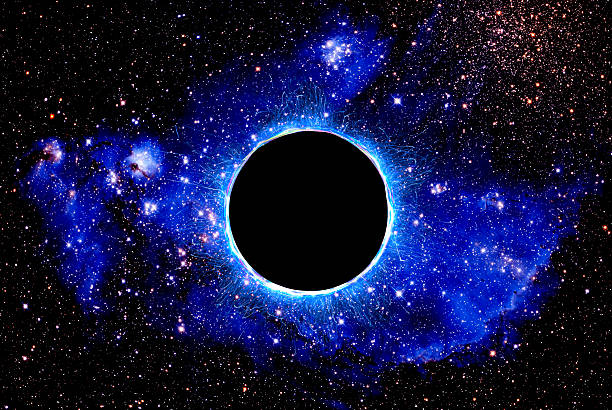
Others have ended as white dwarfs, neutron stars, or black holes.
Together, they confirm the physical principles that govern our own star.
A Delicate Balance at the Heart of the Sun
The Sun doesn’t avoid exploding because it lacks immense power. On the contrary, it is one of the most energetic objects in our corner of the galaxy. Every second, its core unleashes an astonishing amount of energy through nuclear fusion.
What prevents catastrophe is balance.
Gravity continually pulls the Sun inward, trying to compress it into a smaller object. At the same time, the intense heat and pressure produced by nuclear fusion push outward with equal determination. These opposing forces create a stable equilibrium that has allowed the Sun to shine steadily for billions of years.
This quiet struggle, hidden deep beneath the Sun’s glowing surface, is one of nature’s greatest masterpieces. It powers every sunrise, nourishes every living thing on Earth, and reminds us that even the most powerful objects in the universe can remain stable through the elegant balance of the laws of physics.