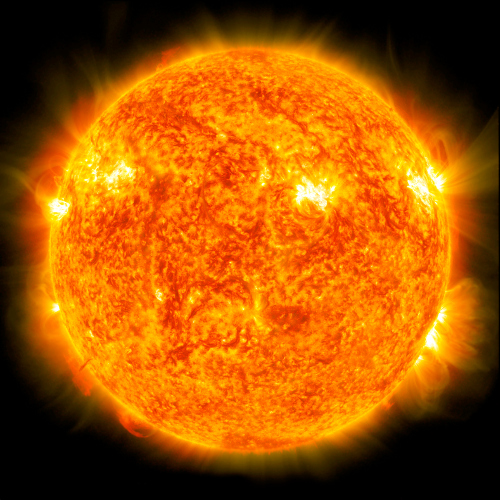
Every morning, the Sun rises without fail, bathing Earth in light and warmth. It has done so for more than 4.5 billion years, and it is expected to continue shining for another 5 billion years. Without the Sun, our planet would be a frozen, lifeless world drifting through space. Every tree, every ocean, every breath of oxygen, and nearly every form of life depends on the energy that comes from this brilliant star.
But have you ever wondered how the Sun keeps producing such an enormous amount of energy day after day? Why doesn’t it burn out like a campfire? Where does all that light and heat come from?
For centuries, these questions puzzled humanity. Ancient civilizations believed the Sun was a divine fire or an eternal flame. Today, thanks to modern physics and astronomy, we know the answer is even more extraordinary than those ancient stories. The Sun is powered by one of the most powerful processes in the universe: nuclear fusion.
The Sun Is a Star
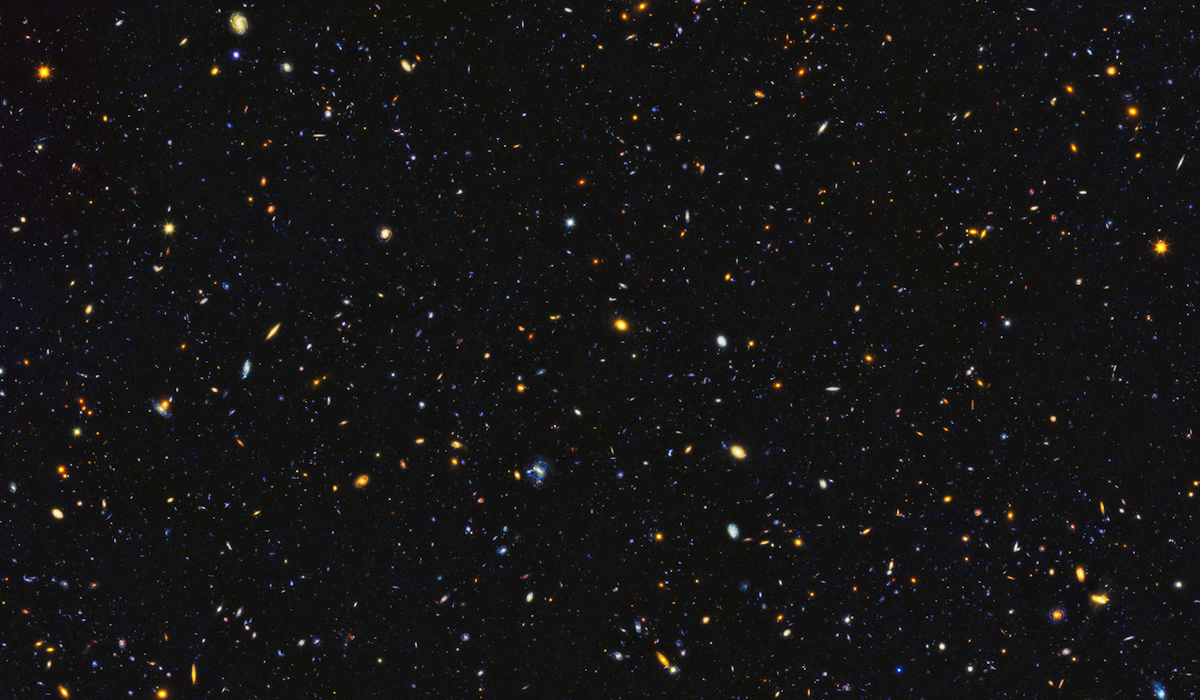
The Sun is not unique in the universe. It is one of hundreds of billions of stars in the Milky Way galaxy, and the Milky Way itself is only one of billions of galaxies spread across the observable universe.
Although it appears much larger than the other stars in our night sky, that is simply because it is much closer to Earth. On average, the Sun is about 150 million kilometers (93 million miles) away. Light from the Sun takes about eight minutes and twenty seconds to reach our planet.
The Sun is a medium-sized star, classified as a G-type main-sequence star, often called a yellow dwarf. It is enormous compared to Earth, containing about 99.8% of all the mass in our Solar System. More than one million Earths could fit inside the Sun.
Its immense gravity holds the planets, asteroids, comets, and other objects in orbit, making it the heart of the Solar System.
What the Sun Is Made Of
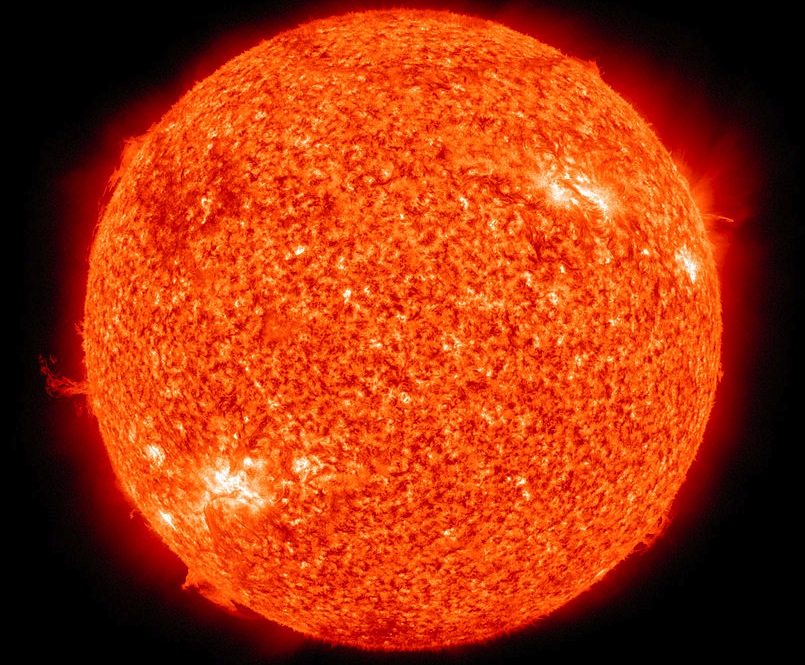
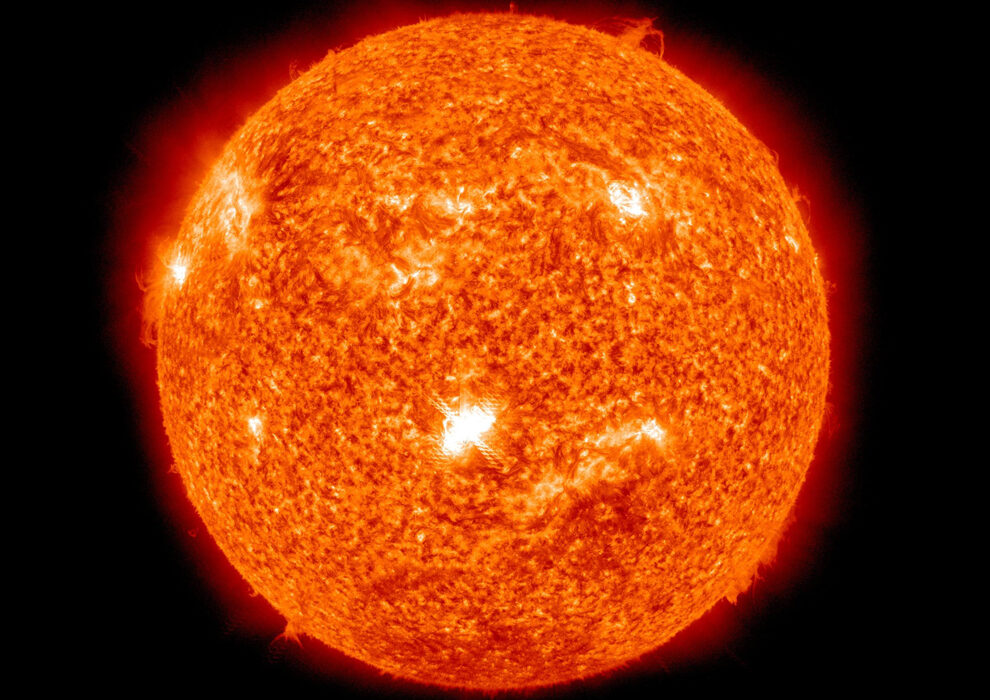
The Sun may look like a giant ball of fire, but it is actually a massive sphere of extremely hot plasma.
Plasma is often called the fourth state of matter. It forms when gases become so hot that electrons are stripped away from atoms, creating a mixture of positively charged ions and free electrons.
Most of the Sun is made of hydrogen, the lightest and most abundant element in the universe. Roughly three-quarters of the Sun’s mass is hydrogen, while about one-quarter is helium. Tiny amounts of heavier elements such as oxygen, carbon, neon, and iron make up the remaining fraction.
Hydrogen is the Sun’s primary fuel. Deep within its core, hydrogen atoms are transformed into helium, releasing astonishing amounts of energy in the process.
The Incredible Conditions Inside the Sun
The surface of the Sun is already unimaginably hot, reaching about 5,500 degrees Celsius (9,900 degrees Fahrenheit). Yet this is relatively cool compared to its interior.
As you move toward the center, temperatures and pressures increase dramatically.
At the Sun’s core, temperatures reach approximately 15 million degrees Celsius (27 million degrees Fahrenheit). The pressure is equally astonishing. The weight of the Sun’s outer layers presses inward with tremendous force, squeezing hydrogen atoms together.
These extreme conditions are essential. Under ordinary circumstances, hydrogen atoms repel one another because each has a positively charged nucleus. Like the same poles of two magnets, positive charges naturally push apart.
Inside the Sun’s core, however, the immense pressure forces hydrogen nuclei so close together that another force of nature takes over.
The Power of Nuclear Fusion
The process that powers the Sun is called nuclear fusion.
Fusion occurs when light atomic nuclei combine to form a heavier nucleus.
In the Sun, hydrogen nuclei merge to create helium.
This may sound simple, but it requires extraordinary temperatures and pressures.
When hydrogen nuclei collide under these conditions, the strong nuclear force binds them together. This force is one of the four fundamental forces of nature and is incredibly powerful over very short distances.
The result is a new helium nucleus.
During this transformation, a small portion of the original mass disappears.
That missing mass is not actually lost.
Instead, it is converted directly into energy according to Albert Einstein’s famous equation:
E = mc²
This equation shows that even a tiny amount of mass can produce an enormous amount of energy because the speed of light squared is an extremely large number.
The Sun performs this conversion continuously, turning matter into energy every second.
The Proton-Proton Chain
The primary fusion process inside the Sun is known as the proton-proton chain.
The word “proton” refers to the nucleus of a hydrogen atom, which contains just a single proton.
Fusion begins when two protons collide.
One of them transforms into a neutron through the weak nuclear force, producing a positively charged particle called a positron and a nearly massless particle known as a neutrino.
The resulting combination forms deuterium, a heavier form of hydrogen containing one proton and one neutron.
The deuterium nucleus then collides with another proton, creating helium-3 while releasing a gamma-ray photon.
Finally, two helium-3 nuclei combine to form helium-4, releasing two protons that can participate in new fusion reactions.
Although each individual reaction produces only a tiny amount of energy, the Sun performs this process an unimaginable number of times every second.
How Much Energy Does the Sun Produce?
The Sun is an incredibly powerful energy generator.
Every second, it releases about 3.8 × 10²⁶ watts of power.
This number is so enormous that it is difficult to imagine.
In a single second, the Sun emits more energy than human civilization has used throughout all of recorded history.
Every second, roughly 600 million tons of hydrogen are converted into helium.
During this process, about 4 million tons of mass are transformed directly into energy.
Despite this enormous conversion, the Sun contains such a vast amount of hydrogen that it has enough fuel to continue shining for billions of years.
How Energy Escapes the Sun’s Core
The energy produced by fusion does not immediately leave the Sun.
In fact, the journey from the core to the surface is surprisingly slow.
Fusion reactions produce high-energy gamma rays deep inside the core.
These photons cannot travel directly outward because the Sun’s interior is incredibly dense.
Instead, they are constantly absorbed and re-emitted by particles in the surrounding plasma.
Each time a photon changes direction.
This random process resembles someone trying to cross a crowded stadium while constantly bumping into people.
Because of these countless interactions, a photon may take tens of thousands to hundreds of thousands of years—and possibly even longer according to some models—to gradually reach the Sun’s surface.
By the time it finally escapes, much of its original energy has been converted into visible light and other forms of electromagnetic radiation.
The Radiative Zone
Surrounding the Sun’s core is the radiative zone.
In this region, energy moves primarily through radiation.
Photons repeatedly interact with charged particles, slowly transferring energy outward.
Although light normally travels at about 300,000 kilometers per second in a vacuum, inside the Sun it makes only slow overall progress because of the countless collisions.
This is why energy generated today in the Sun’s core will not reach the surface for a very long time.
The Convective Zone
Beyond the radiative zone lies the convective zone.
Here, temperatures are lower, allowing plasma to transport energy through convection.
Hot plasma rises toward the surface, carrying energy upward.
As it cools, it becomes denser and sinks back down, where it is heated again.
This continuous circulation resembles the movement of boiling water in a pot.
Convection helps transport the Sun’s energy efficiently toward its visible surface.
The Photosphere
The layer we normally see is called the photosphere.
This is the Sun’s visible surface.
Although it is called the surface, the Sun has no solid boundary like Earth. Instead, the photosphere is simply the layer from which most visible light escapes into space.
Its temperature is about 5,500 degrees Celsius.
From here, sunlight begins its journey across the Solar System.
After traveling for about eight minutes and twenty seconds, it reaches Earth.
Every sunrise represents energy that began as nuclear fusion deep inside the Sun long before humans even existed.
Sunlight Travels Across Space
Light does not require air or any other material to travel.
It moves through the vacuum of space as electromagnetic radiation.
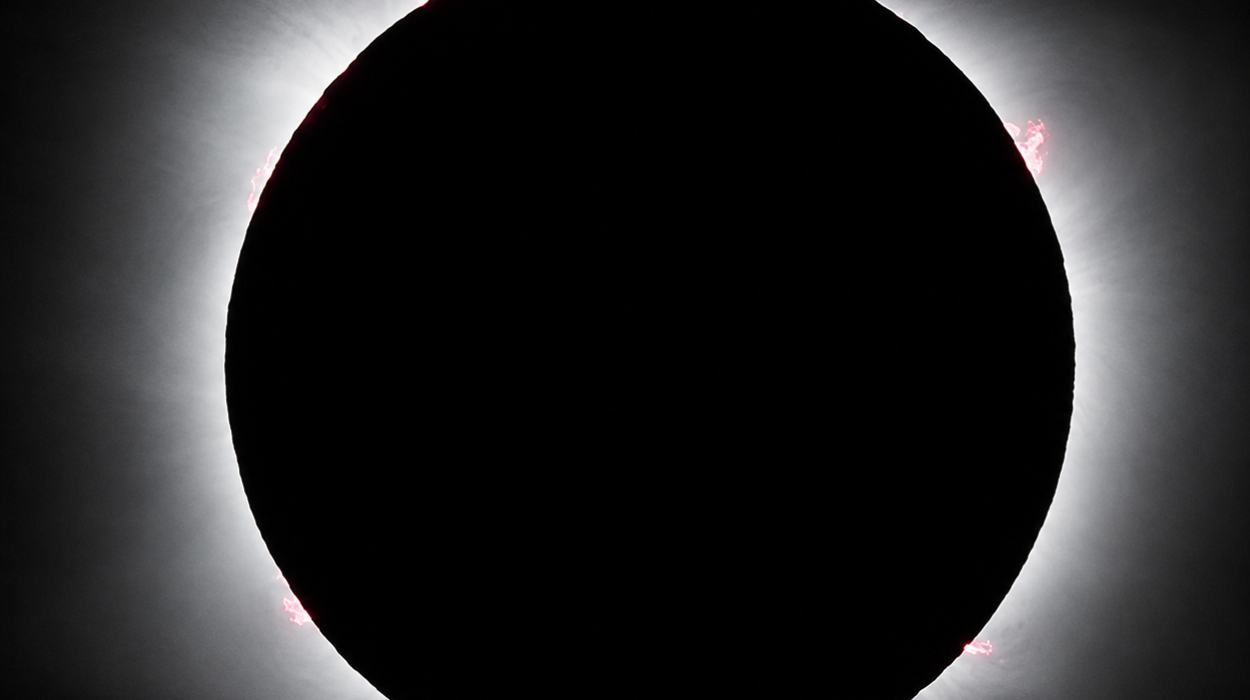
The Sun emits radiation across the entire electromagnetic spectrum.
This includes visible light, infrared radiation, ultraviolet radiation, radio waves, X-rays, and gamma rays.
Earth’s atmosphere blocks much of the harmful ultraviolet radiation and nearly all X-rays and gamma rays, protecting life from dangerous levels of radiation.
The visible portion of sunlight provides the illumination that allows us to see the world around us.
Why the Sun Does Not Explode Like a Giant Bomb
Nuclear fusion releases enormous amounts of energy, so why doesn’t the Sun explode?
The answer lies in a delicate balance.
Gravity constantly pulls the Sun inward.
Fusion generates heat and pressure that push outward.
These two opposing forces remain nearly equal.
This balance is known as hydrostatic equilibrium.
If fusion slowed down slightly, gravity would compress the core, raising its temperature and increasing the fusion rate.
If fusion became too strong, the Sun would expand slightly, lowering the core temperature and slowing fusion.
This natural feedback mechanism keeps the Sun remarkably stable.
How the Sun Supports Life on Earth
Nearly all life on Earth ultimately depends on solar energy.
Plants capture sunlight through photosynthesis.
Using carbon dioxide and water, they produce sugars while releasing oxygen.
Animals obtain this stored energy by eating plants or other animals.
Even fossil fuels such as coal, oil, and natural gas represent ancient solar energy stored by plants millions of years ago.
The Sun also drives Earth’s weather.
Its energy heats land, oceans, and the atmosphere, creating winds, clouds, rainfall, storms, and ocean currents.
Without sunlight, Earth’s climate system would shut down almost completely.
Our planet would rapidly cool, oceans would freeze from the top downward, and most ecosystems would collapse.
Solar Neutrinos
One fascinating product of nuclear fusion is the neutrino.
Neutrinos interact so weakly with matter that they pass almost effortlessly through entire planets.
Trillions of solar neutrinos pass through your body every second without causing any noticeable effect.
Because neutrinos escape directly from the Sun’s core, they provide scientists with a unique way to study the fusion reactions happening deep inside the Sun.
Large underground detectors around the world have confirmed that the Sun’s energy truly comes from nuclear fusion.
The Sun Will Not Shine Forever
Although the Sun seems eternal from a human perspective, it has a finite lifetime.
It formed approximately 4.6 billion years ago from a giant cloud of gas and dust.
Today, it is about halfway through its main hydrogen-burning stage.
Over the next five billion years, hydrogen in the core will gradually become depleted.
As fusion slows, the core will contract while the outer layers expand enormously.
The Sun will become a red giant, eventually growing large enough to engulf or severely affect the innermost planets.
Later, it will shed its outer layers into space, creating a beautiful planetary nebula.
The remaining core will become a white dwarf, an Earth-sized stellar remnant that slowly cools over billions of years.
How Scientists Learned the Sun’s Secret
For much of history, people had no idea what powered the Sun.
In the nineteenth century, some scientists suggested it might be burning like wood or coal.
Others proposed that gravity was slowly compressing the Sun, releasing heat.
These ideas could explain the Sun’s brightness for only millions of years, far less than Earth’s true age.
The mystery was solved during the twentieth century.
Advances in nuclear physics revealed that fusion could release enormous amounts of energy from tiny amounts of mass.
Scientists such as Arthur Eddington recognized that nuclear fusion was the only process capable of powering the Sun for billions of years.
Later observations of solar neutrinos and detailed computer models confirmed this explanation with remarkable accuracy.
Why Studying the Sun Matters
Understanding how the Sun produces energy helps scientists understand every other star in the universe.
The same basic process powers billions upon billions of stars across countless galaxies.
Studying stellar fusion also helps researchers develop fusion energy on Earth.
Unlike current nuclear power plants, which rely on nuclear fission, fusion promises a future source of abundant energy with no carbon dioxide emissions during operation and significantly less long-lived radioactive waste than conventional fission reactors. Although practical fusion power remains a major scientific and engineering challenge, experiments around the world continue to make important progress.
The Sun serves as our closest natural laboratory for learning how fusion works.
Conclusion
The Sun’s light may feel ordinary because it greets us every day, but its origin is one of the greatest wonders in nature. Deep within its blazing core, immense pressure and staggering temperatures allow hydrogen atoms to fuse into helium. In this process, a tiny amount of mass is transformed into an extraordinary amount of energy, which slowly travels through the Sun before racing across space to Earth as sunlight.
Every beam of sunshine that warms your face, powers a solar panel, grows a forest, or lights a morning sky began its journey in a nuclear reaction unlike anything humans can naturally create on Earth. That continuous chain of fusion has sustained our planet for billions of years and made life itself possible.
By understanding how the Sun produces energy, we gain far more than knowledge about a single star. We uncover the fundamental processes that illuminate the universe, shape the lives of stars, and remind us that even the warmth of an ordinary day is the result of extraordinary physics unfolding 150 million kilometers away.