Every morning, the Sun rises with such dependable certainty that it feels eternal. It has illuminated Earth for billions of years, warmed our oceans, driven our climate, and made life possible. For countless generations, people have looked at the Sun as an unchanging symbol of stability.
Yet the Sun is not eternal.
Like every star in the universe, the Sun has a life story. It was born, it is living through its longest and most stable stage, and one day it will grow old. At the heart of that story lies a remarkable process called nuclear fusion, where hydrogen atoms combine to form helium and release enormous amounts of energy.
This fusion powers everything the Sun does. Every ray of sunlight that reaches your face began as energy produced by hydrogen fusion deep inside the Sun’s core.
But can that process ever end?
The answer is yes. The Sun will eventually stop fusing hydrogen in its core. Fortunately for us, that moment is unimaginably far in the future—about 5 billion years from now. Understanding why this happens reveals not only the future of our Sun but also the life cycle of nearly every star in the universe.
The Sun Is a Giant Nuclear Power Plant
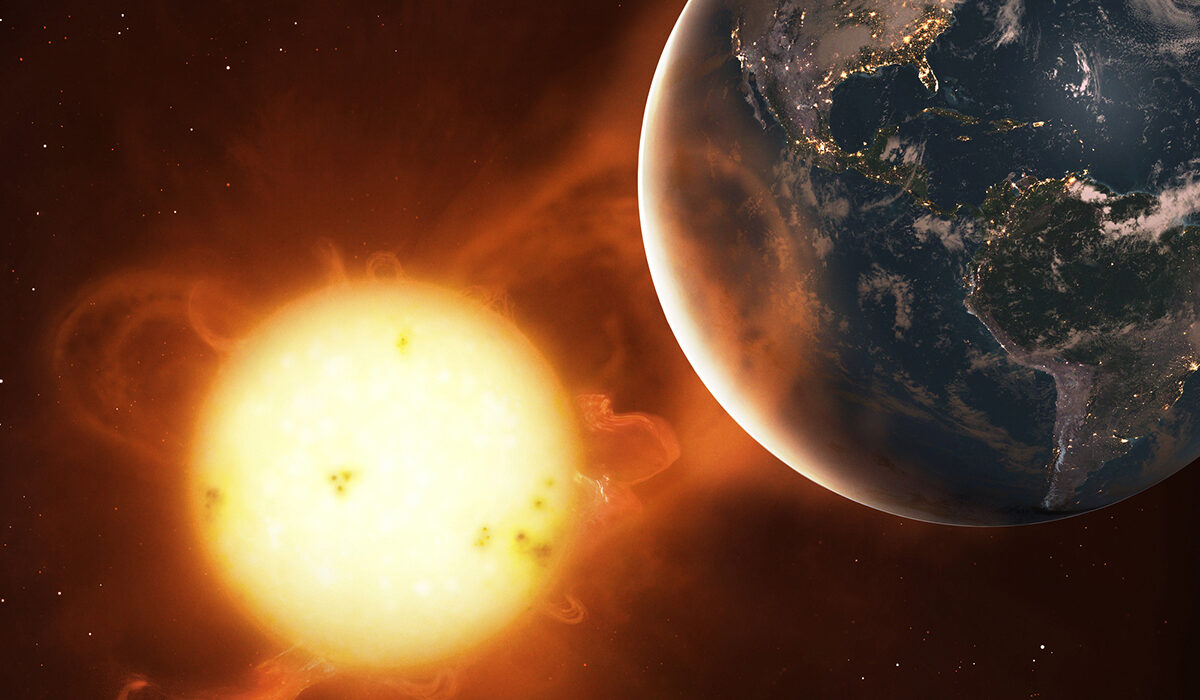
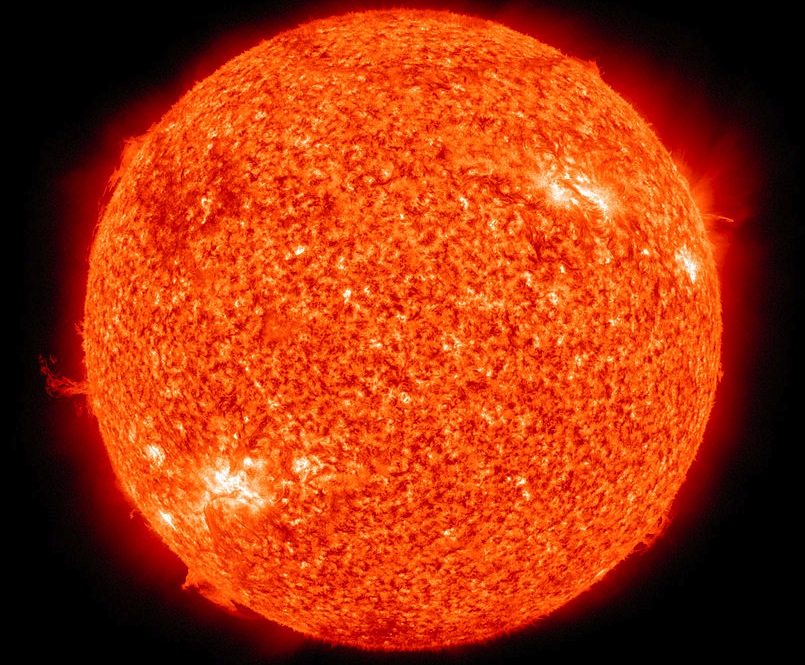
The Sun is an enormous sphere of hot plasma measuring about 1.39 million kilometers (864,000 miles) across. It contains about 99.8% of all the mass in the Solar System, making it the dominant object around which every planet, asteroid, and comet orbits.
At first glance, the Sun appears to be a giant ball of fire. In reality, it is something far more extraordinary.
The Sun shines because its core functions as a natural nuclear fusion reactor. Unlike fire, which depends on chemical reactions involving oxygen, nuclear fusion changes the nuclei of atoms themselves. This process releases millions of times more energy than ordinary chemical burning.
Every second, the Sun converts roughly 600 million metric tons of hydrogen into helium. During this process, about 4 million metric tons of mass are transformed directly into energy according to Einstein’s famous equation:
E = mc²
That energy slowly works its way outward before escaping into space as sunlight and other forms of electromagnetic radiation.
What Happens Inside the Sun’s Core?
The Sun’s core is an environment unlike anything on Earth.
Temperatures reach approximately 15 million degrees Celsius (27 million degrees Fahrenheit), while pressures are so immense that hydrogen nuclei are forced close enough together for nuclear fusion to occur.
Normally, positively charged hydrogen nuclei repel one another because of their electric charge. Under the Sun’s incredible pressure and temperature, however, some nuclei collide with enough energy to overcome this repulsion.
When they do, they fuse together.
The Sun primarily generates energy through a sequence of nuclear reactions known as the proton-proton chain. In this process, hydrogen nuclei gradually combine to form helium while releasing energy in the form of gamma rays, neutrinos, and the kinetic energy of particles.
This continuous fusion creates an outward pressure that balances the inward pull of gravity.
As long as these two forces remain in balance, the Sun remains stable.
Why Doesn’t the Sun Use Up All Its Hydrogen Quickly?
Considering how much energy the Sun produces, it might seem surprising that it can continue shining for billions of years.
The reason lies in two important facts.
First, although the Sun is mostly hydrogen, only the central region is hot and dense enough for fusion to occur. The outer layers contain enormous amounts of hydrogen that never participate directly in core fusion during the Sun’s main-sequence lifetime.
Second, nuclear fusion proceeds at a remarkably controlled pace.
The Sun is not exploding with uncontrolled reactions. Instead, it carefully regulates itself through a natural balancing process.
If fusion briefly speeds up, the core heats slightly and expands. Expansion lowers the core’s density and temperature, slowing fusion back down.
If fusion slows too much, gravity compresses the core, increasing temperature and pressure until fusion accelerates again.
This remarkable self-regulating mechanism has kept the Sun stable for about 4.6 billion years.
Is the Sun Running Out of Hydrogen?
Yes—but very slowly.
Every second, the Sun consumes an enormous amount of hydrogen. Yet compared with the Sun’s total mass, this consumption is surprisingly modest.
Scientists estimate that the Sun has completed roughly half of its stable hydrogen-fusing lifetime.
It is often described as being “middle-aged.”
Although billions of years have already passed since the Sun formed from a collapsing cloud of gas and dust, it still possesses enough hydrogen fuel in its core to continue producing energy for approximately another 5 billion years.
There is no danger of the Sun suddenly running out of fuel anytime soon.
What Happens When the Hydrogen Runs Out?
Eventually, the amount of hydrogen in the Sun’s core will become too small to sustain nuclear fusion there.
This does not mean all hydrogen everywhere inside the Sun disappears.
Instead, the hydrogen specifically within the central fusion region becomes largely converted into helium.
As fusion slows, the balance between gravity and outward pressure begins to change.
Gravity starts winning.
The core contracts under its own weight.
As it contracts, the core becomes even hotter.
Meanwhile, hydrogen surrounding the helium core reaches temperatures high enough for fusion to begin in a shell surrounding the center rather than in the center itself.
This marks the beginning of one of the most dramatic transformations in the Sun’s history.
The Sun Will Become a Red Giant
Once hydrogen fusion shifts into a surrounding shell, the Sun will begin expanding enormously.
Its outer layers will swell outward until the Sun becomes a red giant.
During this stage, the Sun’s diameter may grow to more than 100 times its current size.
Its surface will actually become cooler than it is today, giving it a reddish appearance. However, because it becomes vastly larger, the total amount of energy it emits will increase significantly.
The expanding Sun will dramatically reshape the Solar System.
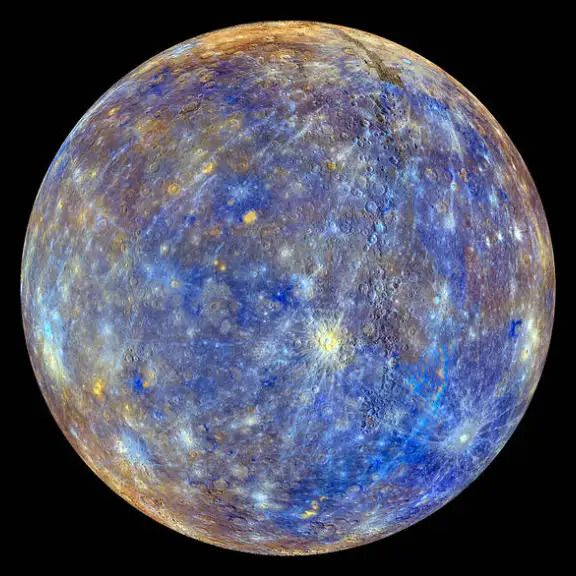
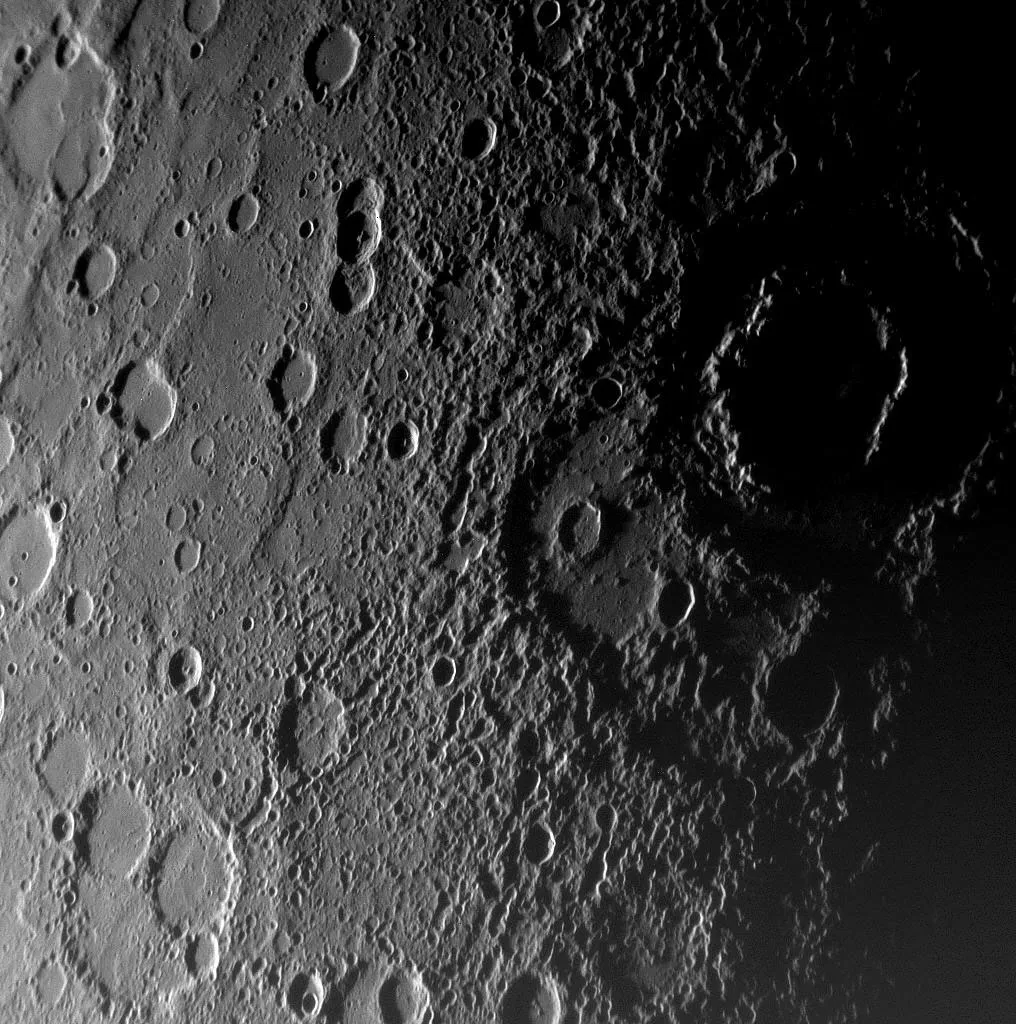
Mercury will almost certainly be engulfed.
Venus is expected to suffer the same fate.
Whether Earth survives physically remains an active area of scientific research. Even if our planet escapes complete engulfment, its surface will become far too hot for liquid water or life long before then.
The oceans will evaporate.
The atmosphere will change profoundly.
Life as we know it will no longer be possible.
Fortunately, this future lies billions of years away.
Fusion Does Not End Immediately
Although hydrogen fusion in the Sun’s core eventually stops, the Sun’s story is far from over.
The contracting helium core continues heating until temperatures approach about 100 million degrees Celsius.
At that point, something remarkable happens.
Helium itself begins to fuse.
Through a process called the triple-alpha reaction, helium nuclei combine to produce carbon, with some oxygen also forming through subsequent fusion reactions.
This stage represents a completely new chapter in the Sun’s evolution.
For a time, helium fusion becomes the Sun’s primary energy source.
Why the Sun Cannot Keep Fusing Forever
Stars shine because they continuously fuse lighter elements into heavier ones.
However, there is a limit.
The Sun is simply not massive enough to continue this process indefinitely.
After most of the helium in the core has been converted into carbon and oxygen, the Sun lacks sufficient mass to generate the temperatures required for fusing these heavier elements.
Massive stars can continue producing neon, oxygen, silicon, and eventually iron.
The Sun cannot.
Its nuclear furnace gradually comes to an end.
Without enough pressure to ignite heavier fusion reactions, the remaining outer layers become unstable.
The Sun Will Shed Its Outer Layers
Near the end of its life, the Sun will begin losing its outer atmosphere.
Powerful stellar winds will carry vast amounts of gas into space.
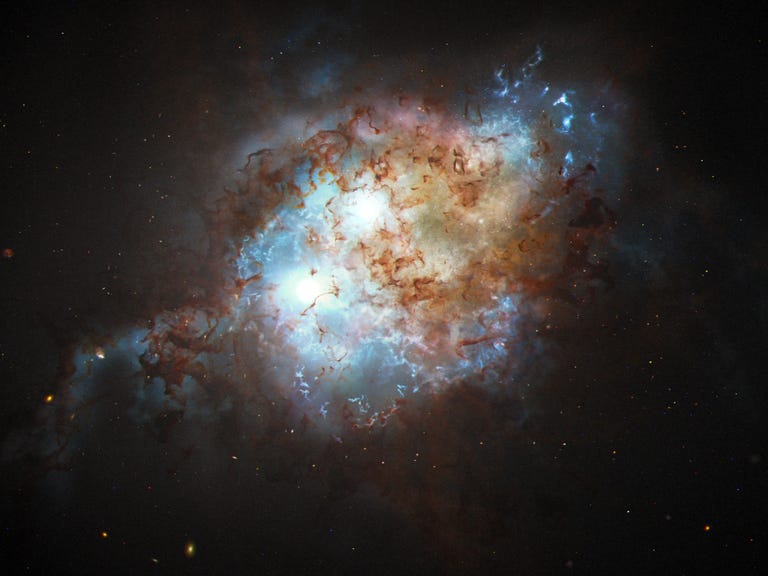
These expanding shells of glowing gas form one of the universe’s most beautiful objects—a planetary nebula.
Despite the name, planetary nebulae have nothing to do with planets.
Early astronomers simply thought these glowing clouds resembled planetary disks when viewed through small telescopes.
The colorful gas drifting into space contains elements such as carbon, nitrogen, and oxygen that were created inside the Sun and enriched by earlier generations of stars.
These elements eventually become part of new stars, planets, and potentially even future life.
In this way, stars recycle matter throughout the galaxy.
The Sun’s Final Stage
After shedding its outer layers, the Sun’s remaining core becomes a white dwarf.
This incredibly dense object will be about the size of Earth while containing roughly half the Sun’s current mass.
A white dwarf no longer produces energy through nuclear fusion.
Instead, it simply glows because it is extremely hot.
Over trillions of years, it will slowly cool by radiating away its remaining heat.
Eventually, after a timespan far longer than the current age of the universe, it would become a cold, dark remnant sometimes referred to as a black dwarf. However, the universe is not yet old enough for any black dwarfs to exist.
Will the Sun Ever Explode as a Supernova?
No.
One of the most common misconceptions is that every star eventually explodes as a supernova.
Only stars much more massive than the Sun experience those spectacular endings.
The Sun simply does not have enough mass.
Instead of exploding, it will gently release its outer layers before settling into the long-lived white dwarf stage.
Although less dramatic than a supernova, this peaceful ending is the expected fate of stars similar in size to our own.
Could Anything Make Hydrogen Fusion Stop Early?
Based on everything scientists currently understand about stellar physics, there is no known natural process capable of causing the Sun to suddenly stop fusing hydrogen.
The Sun exists in an extremely stable state known as hydrostatic equilibrium, where gravity pulling inward is balanced by pressure generated from nuclear fusion pushing outward.
This equilibrium has remained remarkably steady for billions of years.
The rate of fusion changes only gradually over millions to billions of years.
There is no scientific evidence suggesting the Sun could abruptly “switch off.”
Is the Sun Becoming Brighter?
Interestingly, the Sun is not exactly the same today as it was billions of years ago.
As helium gradually accumulates in the core, the core slowly contracts and becomes hotter.
Higher temperatures slightly increase the fusion rate.
As a result, the Sun’s brightness has increased by roughly 30% since it first formed.
This slow brightening will continue throughout the remainder of the Sun’s main-sequence lifetime.
Long before hydrogen fusion ends, the increasing solar luminosity is expected to make Earth increasingly difficult to inhabit.
How Scientists Know the Sun’s Future
No human has watched a star evolve from birth to death.
So how can scientists predict the Sun’s future with confidence?
The answer comes from combining several powerful sources of evidence.
Astronomers observe millions of stars at different stages of evolution throughout our galaxy. Some resemble young Suns, others are mature main-sequence stars, while still others have already become red giants or white dwarfs.
These observations closely match theoretical models based on the well-tested laws of gravity, nuclear physics, thermodynamics, and quantum mechanics.
Computer simulations using these physical laws successfully reproduce the observed properties of stars across the universe.
Because the Sun behaves exactly as stellar physics predicts, scientists can estimate its future evolution with considerable confidence.
The Sun’s Future Is Also Our Cosmic Future
The Sun is not unique.
Most stars in the Milky Way are expected to follow similar evolutionary paths, although their lifetimes vary depending on their mass.
Smaller stars burn fuel much more slowly and can survive for hundreds of billions or even trillions of years.
Massive stars consume their hydrogen rapidly, living only millions of years before ending in spectacular explosions.
The Sun occupies a comfortable middle ground.
Its long lifespan has provided Earth with billions of years of stable conditions—long enough for life to arise, evolve, and eventually produce intelligent beings capable of understanding the star that sustains them.
A Temporary Star With an Extraordinary Legacy
The Sun may appear permanent, but it is a living star with a beginning, a present, and an eventual end. One day, its core will indeed stop fusing hydrogen. Gravity will reshape its interior, helium fusion will briefly take over, and the Sun will expand into a magnificent red giant before peacefully ending its life as a white dwarf.
This future is not a cause for concern. It is simply part of the natural life cycle of stars, governed by the same physical laws that have shaped the universe for billions of years.
For now, the Sun continues its quiet work, converting hydrogen into helium every second, filling space with light and warmth. Every sunrise is powered by that extraordinary process deep within its core—a process that has sustained our planet for nearly the entire history of life and will continue to do so for billions of years to come.