Have you ever looked up on a clear afternoon and wondered why the sky is blue? It is one of the most familiar sights on Earth, yet it is also one of nature’s most fascinating scientific mysteries. Every day, billions of people walk beneath a vast blue sky without giving it much thought. But once you ask the question, “Why is the sky blue?” you begin a journey into the remarkable world of light, air, and the laws of physics.
The answer is surprisingly elegant. The sky is blue because sunlight interacts with Earth’s atmosphere in a special way. Tiny molecules in the air scatter blue light much more effectively than other colors, filling the sky with the beautiful blue glow we see from almost every direction.
Although this explanation sounds simple, the science behind it reveals just how extraordinary our planet truly is.
Sunlight Is Not Actually White
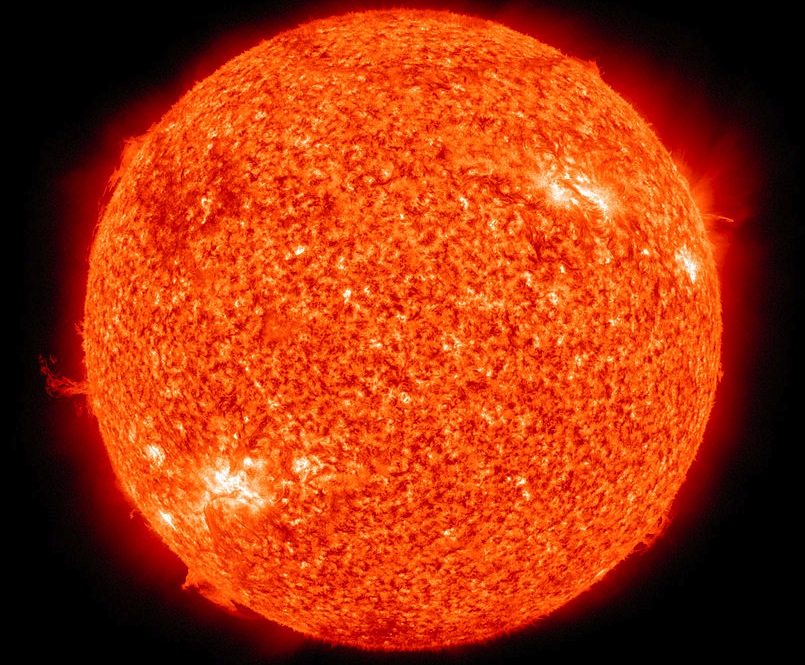
When most people look at the Sun, it appears bright white or slightly yellow. However, sunlight is much more colorful than it seems.
Sunlight is made up of many different colors combined together. These colors form what scientists call the visible spectrum, which includes red, orange, yellow, green, blue, indigo, and violet. Each color is a different wavelength of light.
You can see these colors when sunlight passes through a prism or after a rainstorm, when countless tiny water droplets separate sunlight into a beautiful rainbow.
This tells us something important: sunlight already contains every visible color. The atmosphere does not create blue light—it simply changes how the different colors travel through the air.
Light Travels as Electromagnetic Waves
Light is a form of electromagnetic radiation. It travels through space in waves at an incredible speed of about 299,792 kilometers (186,282 miles) per second in a vacuum.
Each color of visible light has its own wavelength.
Red light has the longest wavelength in the visible spectrum.
Blue and violet light have much shorter wavelengths.
Although all these colors travel together from the Sun to Earth, they do not all behave the same way when they enter our atmosphere.
That difference is the key to understanding why the sky is blue.
Earth’s Atmosphere Is More Than Empty Space
It may seem like the air around us is invisible and empty, but it is actually filled with billions upon billions of tiny molecules.
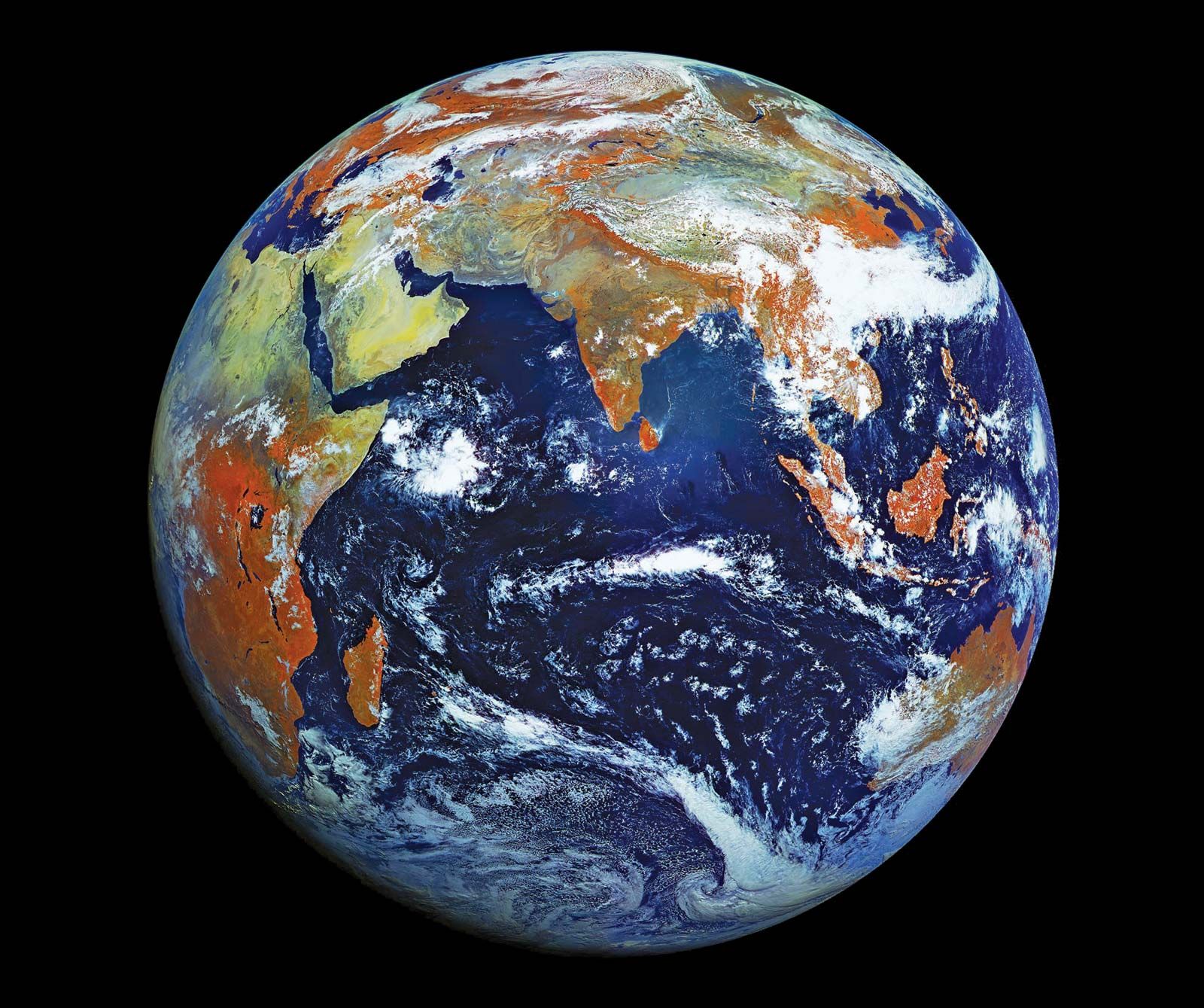
Earth’s atmosphere is made mostly of nitrogen and oxygen, along with smaller amounts of argon, carbon dioxide, water vapor, and other gases.
These molecules are incredibly small—far too tiny to see with our eyes—but they interact with sunlight constantly.
Every beam of sunlight entering the atmosphere encounters countless molecules that change the direction of some of the light.
This process is called scattering.
What Is Scattering?
Scattering happens when light strikes tiny particles or molecules and changes direction.
Imagine throwing thousands of tiny balls through a forest filled with tree branches. Some balls continue straight ahead, while others bounce off branches in many different directions.
Something similar happens to sunlight.
As sunlight enters Earth’s atmosphere, countless air molecules scatter part of the incoming light across the sky.
Instead of traveling in a single straight line, some of the light spreads in every direction.
This scattered light is what allows us to see the sky.
Rayleigh Scattering Explains the Blue Sky
The specific type of scattering responsible for our blue sky is called Rayleigh scattering, named after the British physicist Lord Rayleigh, who explained the phenomenon in the nineteenth century.
Rayleigh scattering occurs when light interacts with particles much smaller than its wavelength, such as the molecules that make up Earth’s atmosphere.
One remarkable feature of Rayleigh scattering is that it affects different colors differently.
Shorter wavelengths are scattered much more strongly than longer wavelengths.
Blue and violet light have relatively short wavelengths, while red and orange light have much longer wavelengths.
Because of this, blue and violet light spread throughout the atmosphere far more effectively than red light.
Wherever you look across the daytime sky, scattered blue light reaches your eyes from every direction.
That is why the sky appears blue.
Why Isn’t the Sky Violet?
This is one of the most interesting questions in atmospheric science.
If violet light has an even shorter wavelength than blue light, shouldn’t the sky look violet instead?
The answer involves both sunlight and human vision.
First, the Sun emits slightly less violet light than blue light.
Second, the upper atmosphere absorbs some violet wavelengths.
Most importantly, the human eye is much more sensitive to blue light than violet light.
Our eyes contain specialized cells called cones that detect different colors. These cells respond far more strongly to blue than to violet.
As a result, the scattered light that reaches our brains is perceived primarily as blue rather than violet.
So although violet light is scattered even more efficiently, our vision makes the sky appear blue.
Why the Sky Looks Different Near the Horizon
If you pay close attention on a clear day, you may notice that the sky overhead often looks a deeper blue than the sky near the horizon.
This happens because sunlight travels through different amounts of atmosphere depending on its direction.
When you look straight upward, the scattered light has passed through a relatively short path of air.
Near the horizon, light travels through much more atmosphere before reaching your eyes.
During this longer journey, more scattering occurs, and additional dust, tiny water droplets, and pollution can scatter all colors of light.
This extra scattering causes the horizon to appear lighter, paler, or even slightly whitish compared with the rich blue overhead.
Why Clouds Are White
Clouds might seem like part of the sky, but they behave very differently.
Unlike tiny air molecules, clouds consist of much larger water droplets and ice crystals.
These larger particles scatter all visible colors of light almost equally.
When every color is scattered together, they combine to appear white.
Thicker clouds can appear gray because less sunlight passes completely through them.
This explains why white clouds float across a blue sky instead of becoming blue themselves.
Why Sunsets Are Red and Orange
One of nature’s most breathtaking displays occurs during sunrise and sunset.
As the Sun approaches the horizon, its light must travel through much more of Earth’s atmosphere than it does at midday.
Along this longer path, nearly all the shorter blue and violet wavelengths are scattered away before reaching your eyes.
The remaining light contains proportionally more red, orange, and yellow wavelengths.
This is why the Sun itself often appears orange or deep red near the horizon.
The surrounding sky also glows with warm colors because these longer wavelengths dominate the sunlight that continues toward observers.
Dust, smoke, volcanic ash, and pollution can make sunsets even more vivid by scattering additional light.
Why the Sky Turns Black at Night
At night, the atmosphere is still present, but the Sun is below Earth’s horizon.
Without direct sunlight entering the atmosphere above you, there is no scattered blue light to illuminate the sky.
Instead, space beyond the atmosphere appears black.
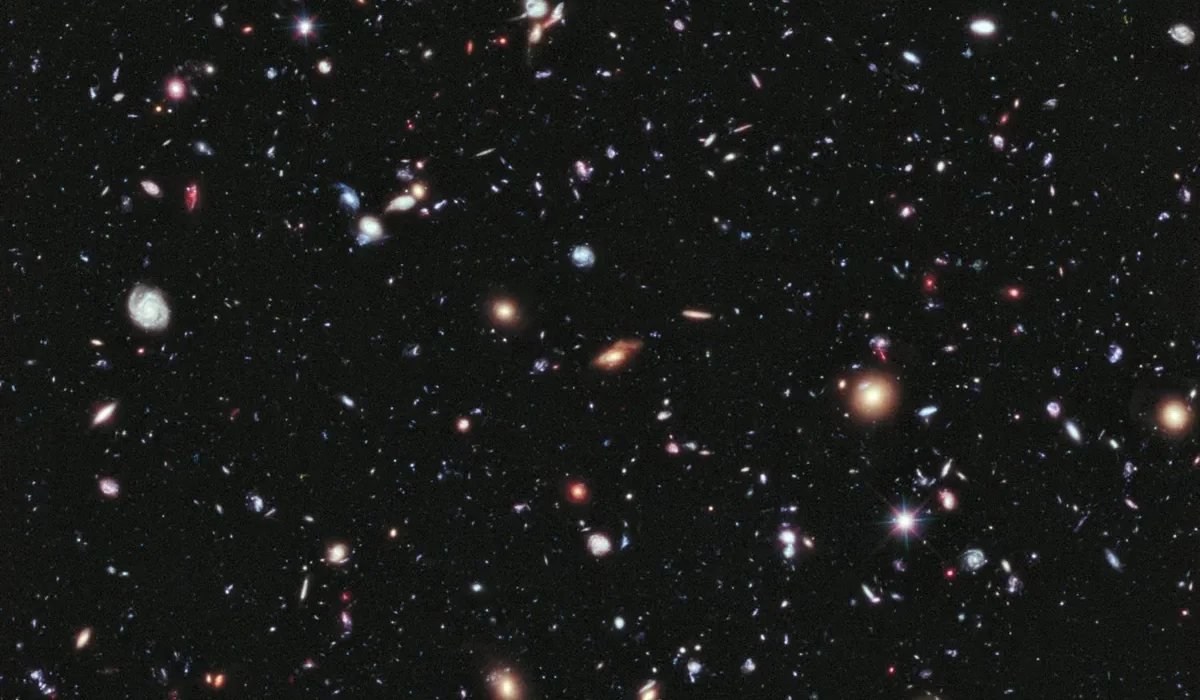
Against this dark background, stars, planets, and distant galaxies become visible.
Interestingly, astronauts in orbit see a black sky even while the Sun shines brightly because there is almost no atmosphere around them to scatter sunlight.
This demonstrates that Earth’s atmosphere is responsible for the blue daytime sky.
Why the Sky Can Look Different Around the World
The color of the sky is not always exactly the same.
On exceptionally clear days in remote mountain regions or over oceans, the sky can appear intensely deep blue because the air contains fewer pollutants and less dust.
In cities, pollution can scatter additional wavelengths, making the sky look paler or hazier.
Humidity also affects the sky’s appearance.
Tiny water droplets suspended in moist air scatter light differently, often reducing the richness of the blue color.
Wildfire smoke, desert dust, volcanic eruptions, and industrial pollution can all dramatically change the color of the sky.
These effects remind us that the atmosphere is constantly changing.
The Atmosphere Protects More Than Our View
The atmosphere does far more than create beautiful blue skies.
It shields Earth from harmful ultraviolet radiation, burns up many incoming meteoroids before they reach the surface, regulates global temperatures, distributes heat around the planet, and provides the oxygen needed for most life.
Without Earth’s atmosphere, our world would resemble the Moon.
The sky would remain black even during the day.
The Sun would shine as a dazzling white disk against the darkness of space.
There would be no blue sky, no colorful sunsets, and no clouds drifting overhead.
The atmosphere gives Earth much of its visual beauty while also making life possible.
Could the Sky Be Another Color?
On other worlds, the sky can indeed have different colors.
Mars, for example, has a thin atmosphere filled with extremely fine reddish dust.
During the Martian day, the sky often appears butterscotch or pinkish rather than bright blue.
Titan, Saturn’s largest moon, has a thick atmosphere rich in nitrogen and organic particles, creating a hazy orange sky.
The appearance of a planet’s sky depends on its atmosphere, the size and composition of particles within it, and the color of its parent star.
If Earth’s atmosphere had a completely different composition, our sky might not be blue at all.
The Discovery Behind the Blue Sky
For centuries, people admired the blue sky without understanding its true cause.
Ancient civilizations developed myths and stories to explain the heavens.
Scientific understanding gradually improved as researchers studied light and optics.
In the seventeenth century, Isaac Newton demonstrated that white light contains many colors.
Much later, Lord Rayleigh explained why shorter wavelengths scatter more efficiently in Earth’s atmosphere.
His work laid the foundation for our modern understanding of the blue sky.
Today, scientists continue studying how light interacts with particles in Earth’s atmosphere to improve weather forecasting, climate research, satellite observations, and environmental monitoring.
Why This Simple Question Matters
At first glance, asking why the sky is blue may seem like a child’s question.
Yet it touches on some of the most fundamental principles of physics.
The answer involves light, electromagnetic waves, atomic molecules, human vision, atmospheric science, and the nature of our planet.
It also demonstrates one of the greatest strengths of science: ordinary observations can lead to extraordinary discoveries.
Every scientific breakthrough begins with curiosity.
Someone notices something.
Someone asks why.
Someone searches for evidence.
Over time, simple questions reveal profound truths about the universe.
Seeing the Sky with New Eyes
The next time you step outside on a clear afternoon, take a moment to look upward.
That endless blue above you is not simply a backdrop for clouds and birds. It is the visible result of sunlight traveling nearly 150 million kilometers from the Sun, entering Earth’s atmosphere, and interacting with countless invisible molecules before reaching your eyes.
The blue sky is a reminder that nature follows elegant physical laws, even in the most familiar moments of everyday life.
What seems ordinary is actually extraordinary. Every clear day is a silent demonstration of the remarkable relationship between light, air, and the universe itself—a beautiful scientific masterpiece painted above us from sunrise to sunset.