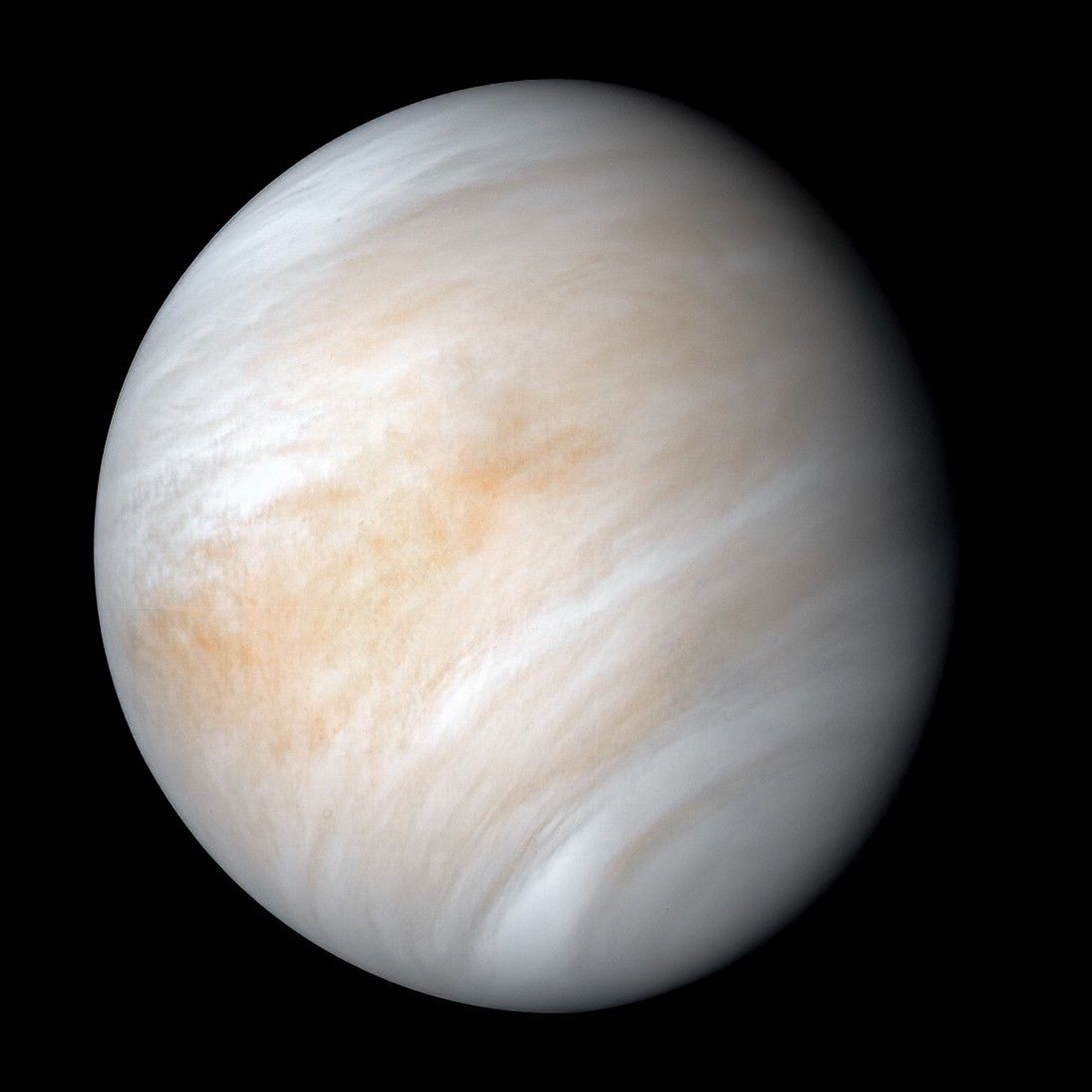
Among all the planets in our Solar System, Venus is one of the greatest mysteries. At first glance, it looks like Earth’s twin. It is nearly the same size, has a similar mass, and formed from many of the same materials. Yet beneath these similarities lies a world so strange that it challenges everything we might expect from a planet.
Venus is covered by thick clouds of sulfuric acid, has surface temperatures hot enough to melt lead, and experiences crushing atmospheric pressure. But perhaps its most surprising feature is something that cannot be seen by simply looking at it.
Unlike almost every other planet in the Solar System, Venus spins in the opposite direction.
If you could stand safely on the surface of Venus—which is impossible with today’s technology—you would witness an extraordinary sight. The Sun would appear to rise in the west and set in the east, the exact opposite of what we experience on Earth.
Why does Venus rotate backward? What happened to this fascinating planet during its long history? Scientists have spent decades trying to answer these questions, and while many clues have emerged, the complete story remains one of planetary science’s greatest mysteries.
Understanding Planetary Rotation
Before exploring Venus, it helps to understand how planets normally rotate.
When the Solar System formed about 4.6 billion years ago, it began as a massive cloud of gas and dust called the solar nebula. Gravity caused this cloud to collapse into a spinning disk, with the young Sun forming at its center.
As planets gradually formed within this rotating disk, they inherited much of its motion. Because the original disk rotated in one general direction, most planets ended up spinning in that same direction.
Viewed from above the Sun’s north pole, nearly every planet rotates counterclockwise. This direction is known as prograde rotation.
Earth rotates this way.
Mars rotates this way.
Jupiter, Saturn, Uranus, and Neptune also rotate generally in this direction, although Uranus is tipped dramatically on its side.
Venus, however, is different.
It spins clockwise when viewed from above the Sun’s north pole. This unusual motion is called retrograde rotation.
What Does “Rotating Backward” Really Mean?
Saying that Venus rotates backward can sound confusing.
Nothing in space has a universal “forward” or “backward.” Instead, astronomers define a planet’s rotation by comparing it with the overall direction of the Solar System.
Since most planets rotate counterclockwise, Venus’s clockwise spin appears reversed.
Imagine several spinning tops on a table. If nearly all spin in one direction but one spins the opposite way, that lone top would stand out immediately.
Venus is that unusual spinning top of our Solar System.
Venus Rotates Extremely Slowly
Not only does Venus rotate backward, but it also rotates incredibly slowly.
Earth completes one rotation in about 24 hours.
Mars rotates in just over 24 hours.
Jupiter spins once in less than 10 hours.
Venus, however, takes about 243 Earth days to complete a single rotation on its axis.
This makes Venus the slowest-spinning planet in the Solar System.
Its rotation is so slow that a day on Venus—defined by one complete spin relative to distant stars—is actually longer than its year.
Venus completes one orbit around the Sun in about 225 Earth days, meaning it travels all the way around the Sun before it finishes a single rotation.
Few planets anywhere are known to behave this way.
Why Scientists Think Venus Once Rotated Normally
Most planetary scientists do not believe Venus was born rotating backward.
Instead, many think it originally rotated in the same direction as Earth.
Early in the Solar System, countless rocky bodies were colliding as planets grew larger. During this chaotic period, every collision had the potential to change a planet’s spin.
Computer simulations suggest that Venus may have experienced one or more enormous impacts capable of dramatically altering its rotation.
Although no direct evidence remains from these ancient collisions, giant impacts are known to have shaped many worlds.
Earth’s Moon likely formed after a Mars-sized object collided with the young Earth.
Mercury lost much of its outer rock during massive impacts.
Mars bears enormous impact basins from its violent past.
Venus may simply have experienced a collision that changed its spin in a unique way.
The Giant Impact Hypothesis
One leading explanation involves a giant collision early in Venus’s history.
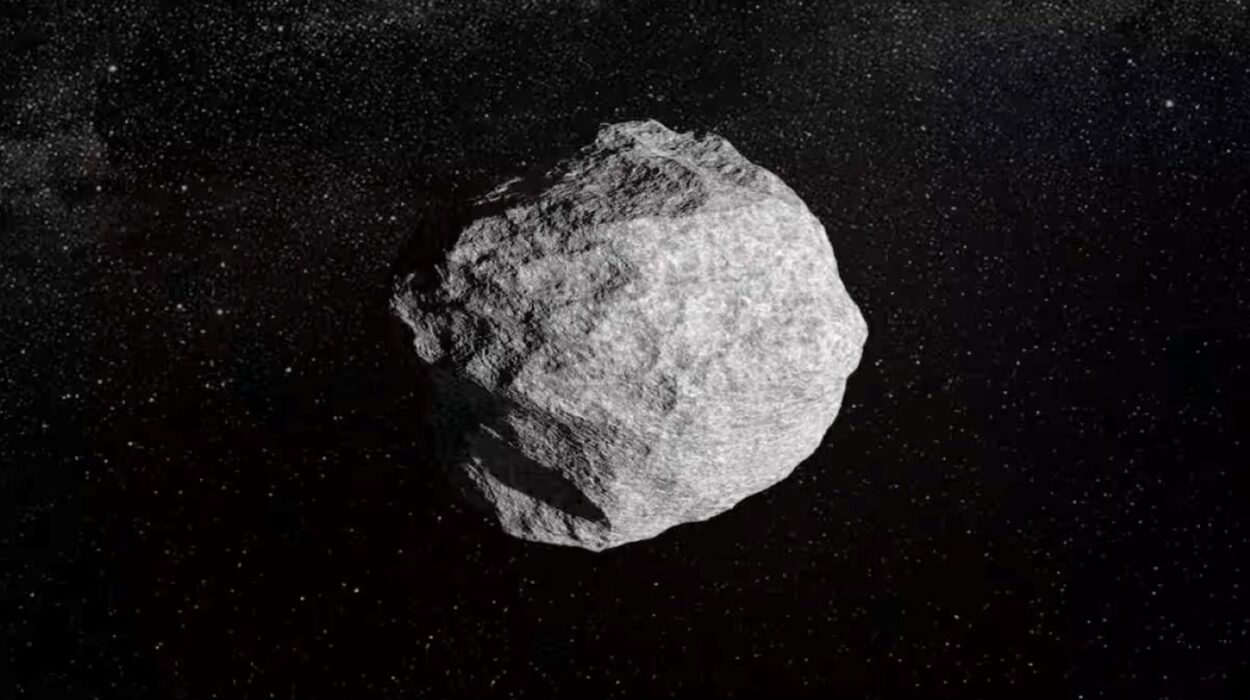
Imagine a large protoplanet striking Venus billions of years ago.
If the collision occurred at just the right angle and speed, it could have slowed Venus’s original rotation, stopped it, or even reversed it completely.
The exact outcome would depend on many factors, including the impactor’s size, direction, and velocity.
This idea explains why Venus differs so dramatically from Earth despite their similar sizes.
However, scientists cannot yet prove that such an impact actually occurred.
Unlike the Moon or Mercury, Venus’s surface has been reshaped over time by volcanic activity, making it difficult to preserve evidence from its earliest history.
Could Many Smaller Collisions Be Responsible?
Instead of one enormous impact, Venus may have experienced countless smaller collisions over millions of years.
Each impact would have delivered a tiny amount of rotational energy.
Over time, these repeated collisions might have gradually altered the planet’s spin.
Some computer models suggest that a series of random impacts during planetary formation can naturally produce a wide variety of rotation rates and directions.
In this view, Venus simply represents one of the more unusual outcomes.
The Powerful Influence of the Sun
Another intriguing explanation focuses not on impacts, but on the Sun itself.
Venus orbits much closer to the Sun than Earth does.
Because of this, the Sun exerts stronger gravitational forces on Venus.
These gravitational forces can create tidal torques, similar in principle to the tides the Moon raises on Earth.
Although Venus has no oceans today, tidal effects can also influence a planet’s solid surface and atmosphere.
Over billions of years, these tiny forces may have gradually slowed Venus’s rotation.
Once its spin became extremely slow, even relatively weak forces could have nudged it into its present backward rotation.
Venus Has an Enormous Atmosphere
Venus possesses one of the thickest atmospheres in the Solar System.
Its atmosphere is about 90 times denser than Earth’s at the surface.
This atmosphere contains mostly carbon dioxide, along with clouds of sulfuric acid.
Remarkably, the atmosphere circles the planet much faster than the solid surface rotates. High-altitude winds can race around Venus in only about four Earth days, a phenomenon known as super-rotation.
Because the atmosphere is so massive, it interacts with sunlight and the planet’s surface in complex ways.
Some scientists believe these atmospheric forces have played a major role in shaping Venus’s slow retrograde spin.
Atmospheric Tides
One particularly interesting idea involves atmospheric tides.
Unlike ocean tides, atmospheric tides occur because sunlight heats different parts of the atmosphere unevenly.
As the Sun warms Venus’s dense atmosphere, pressure differences develop, creating enormous waves of moving air.
These atmospheric movements exert tiny torques on the planet itself.
Normally such effects would be negligible.
But because Venus rotates so slowly, atmospheric tides may have become powerful enough over billions of years to influence its rotation significantly.
Some computer models show that atmospheric tides can naturally maintain Venus’s present backward spin once it has already slowed sufficiently.
Did Venus Gradually Reverse Direction?
Another possibility combines several different processes.
Instead of a single dramatic event, Venus’s rotation may have evolved slowly.
Perhaps giant impacts first reduced its spin.
Solar tidal forces then slowed it further.
Finally, atmospheric tides stabilized the planet into its present retrograde rotation.
Many planetary scientists consider this combined explanation especially plausible because planetary evolution is rarely controlled by only one process.
Nature often works through many interacting effects over immense spans of time.
Why Doesn’t Earth Rotate Backward?
Since Earth and Venus are so similar in size, why do they rotate so differently?
The answer lies in their histories.
Although Earth and Venus formed from similar materials, every planet experiences a unique sequence of collisions, gravitational interactions, and internal changes.
Earth’s large Moon also plays an important role.
The Moon stabilizes Earth’s axial tilt and gradually slows Earth’s rotation through tidal interactions.
Venus has no natural moon.
Its evolution followed a very different path.
Small differences during planetary formation can eventually produce dramatically different worlds.
Uranus Is Also Unusual
Venus is not the only planet with an unusual rotation.
Uranus rotates on its side.
Its rotational axis is tilted by about 98 degrees relative to its orbit.
Most scientists think Uranus was knocked over by one or more giant impacts early in its history.
This demonstrates that planetary spins can change dramatically during formation.
Venus simply represents a different kind of rotational oddity.
How Scientists Measure Venus’s Rotation
Studying Venus is surprisingly difficult.
Its thick cloud cover completely hides the surface in visible light.
Scientists cannot simply watch mountains move as the planet rotates.
Instead, they rely on radar.
Powerful radar signals transmitted from Earth penetrate Venus’s clouds, bounce off the surface, and return to radio telescopes.
Spacecraft equipped with radar have also mapped Venus in remarkable detail.
By comparing radar observations taken years apart, scientists can measure Venus’s rotation with extraordinary precision.
Interestingly, these measurements reveal that Venus’s rotation is not perfectly constant.
Tiny changes occur because its massive atmosphere exchanges angular momentum with the solid planet.
A Planet Full of Mysteries
Venus continues to surprise scientists.
Its volcanic activity, atmospheric circulation, mysterious ultraviolet cloud markings, and possible ongoing geological processes remain active areas of research.
Several future space missions aim to explore Venus more closely.
These missions hope to study its atmosphere, map its surface with improved radar, analyze its geology, and better understand how its climate and rotation evolved.
Every new observation brings researchers closer to answering long-standing questions about our nearest planetary neighbor.
Could Other Planets Rotate Backward?
Yes.
Astronomers have discovered thousands of planets orbiting distant stars, known as exoplanets.
Some of these planets may also rotate backward.
Because most exoplanets are too far away for scientists to observe their rotation directly, determining their spin remains challenging.
However, computer simulations suggest that retrograde rotation may not be rare in planetary systems.
The diverse planetary systems discovered across the galaxy remind us that nature often produces outcomes far stranger than scientists once imagined.
Why Venus Matters
Understanding Venus is about much more than one unusual planet.
Venus and Earth began as remarkably similar worlds.
Yet today they are dramatically different.
Studying Venus helps scientists understand how planets evolve, how atmospheres change over billions of years, and why some worlds become habitable while others become hostile.
Its backward rotation is one piece of a much larger puzzle involving planetary formation, climate evolution, geology, and the history of our Solar System.
Every answer about Venus teaches us something new about Earth as well.
The Mystery Is Not Yet Solved
So, why does Venus rotate backward?
The honest scientific answer is that no one knows with complete certainty.
The strongest explanations involve a combination of ancient giant impacts, gravitational interactions with the Sun, and the powerful influence of Venus’s extraordinarily dense atmosphere. These mechanisms are supported by theoretical models and observations, but no single explanation has been conclusively proven.
That uncertainty is not a weakness of science—it is one of its greatest strengths. Scientists continue to test ideas, gather new evidence, and refine their understanding as better observations become available.
Venus reminds us that even our closest planetary neighbor still holds secrets waiting to be uncovered. Every spacecraft that visits this mysterious world brings us one step closer to understanding not only why Venus spins backward, but also how planets throughout the universe come to be the extraordinary worlds they are today.