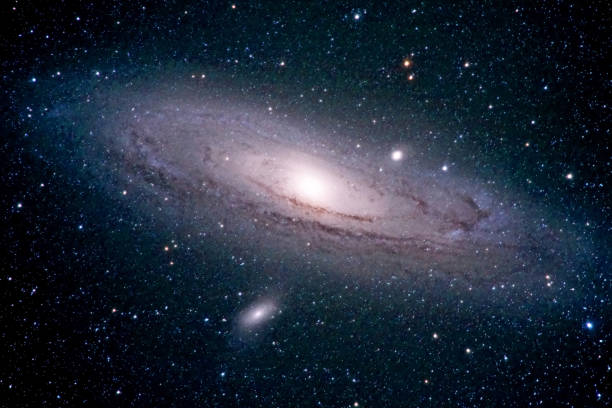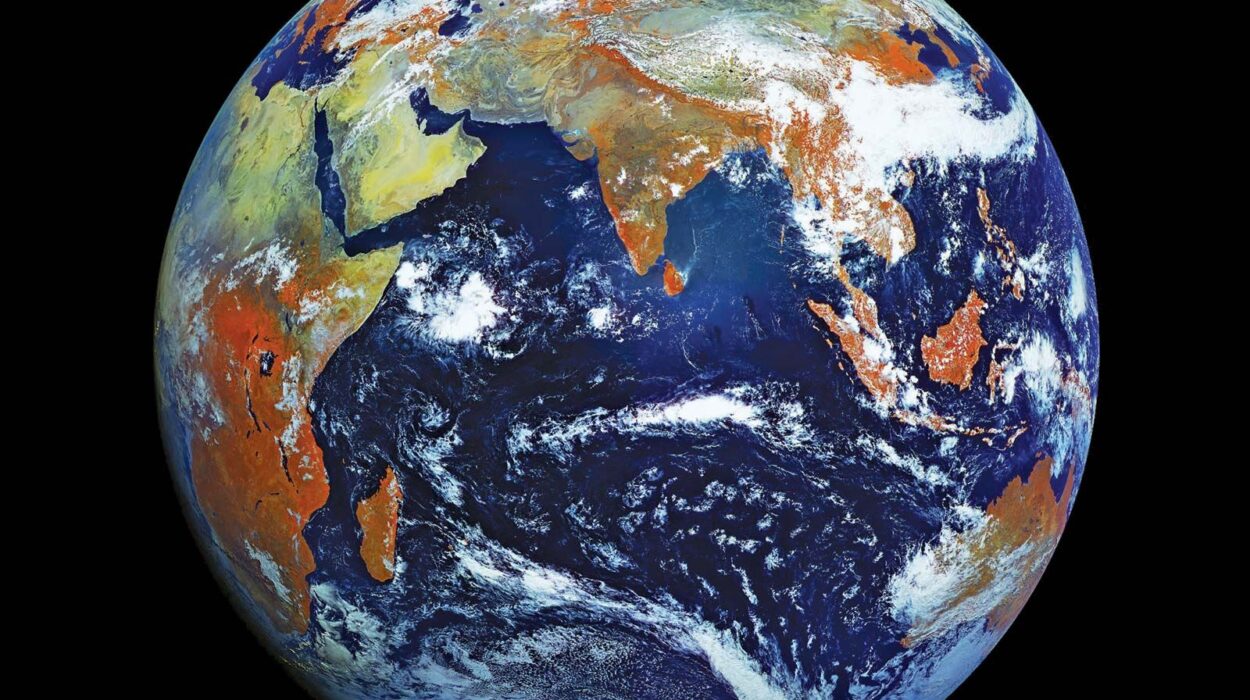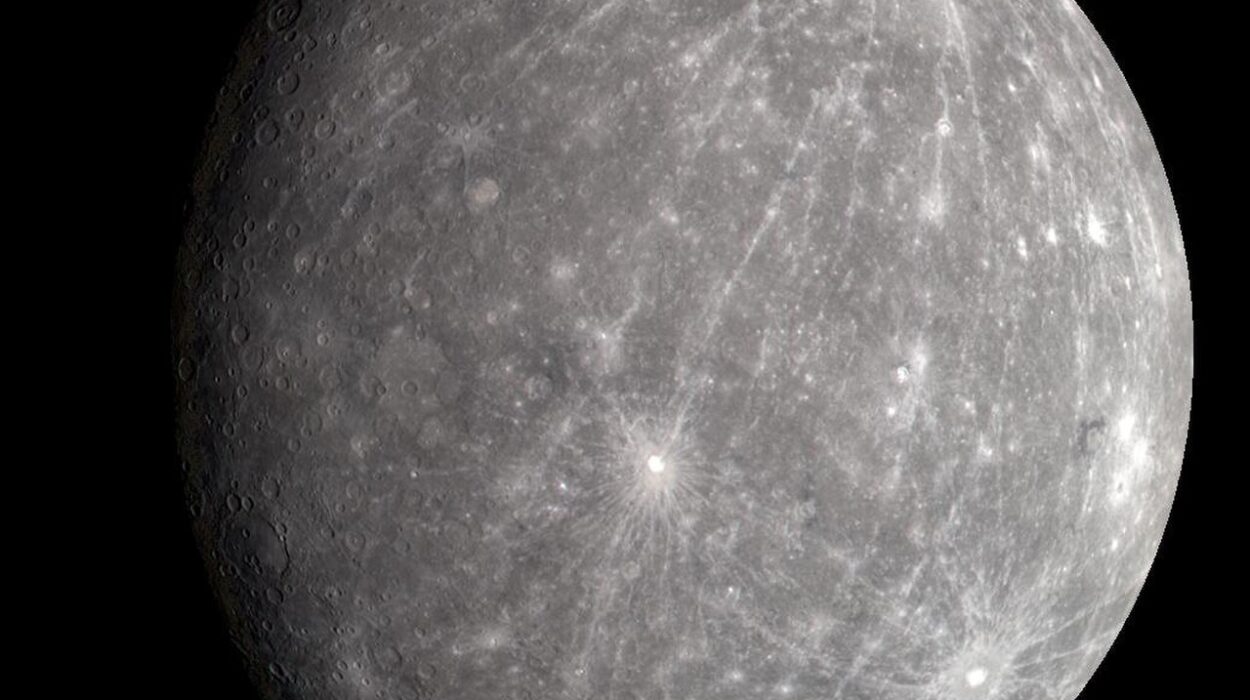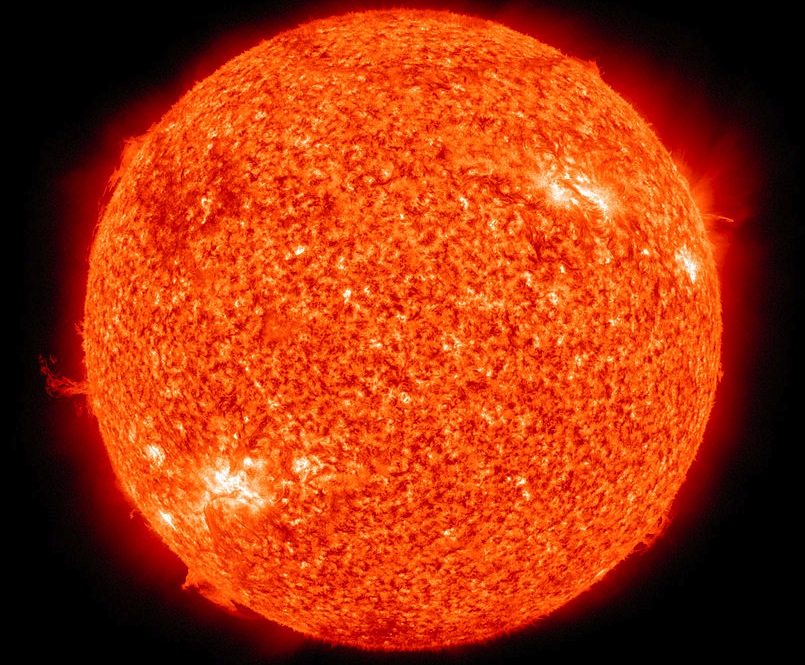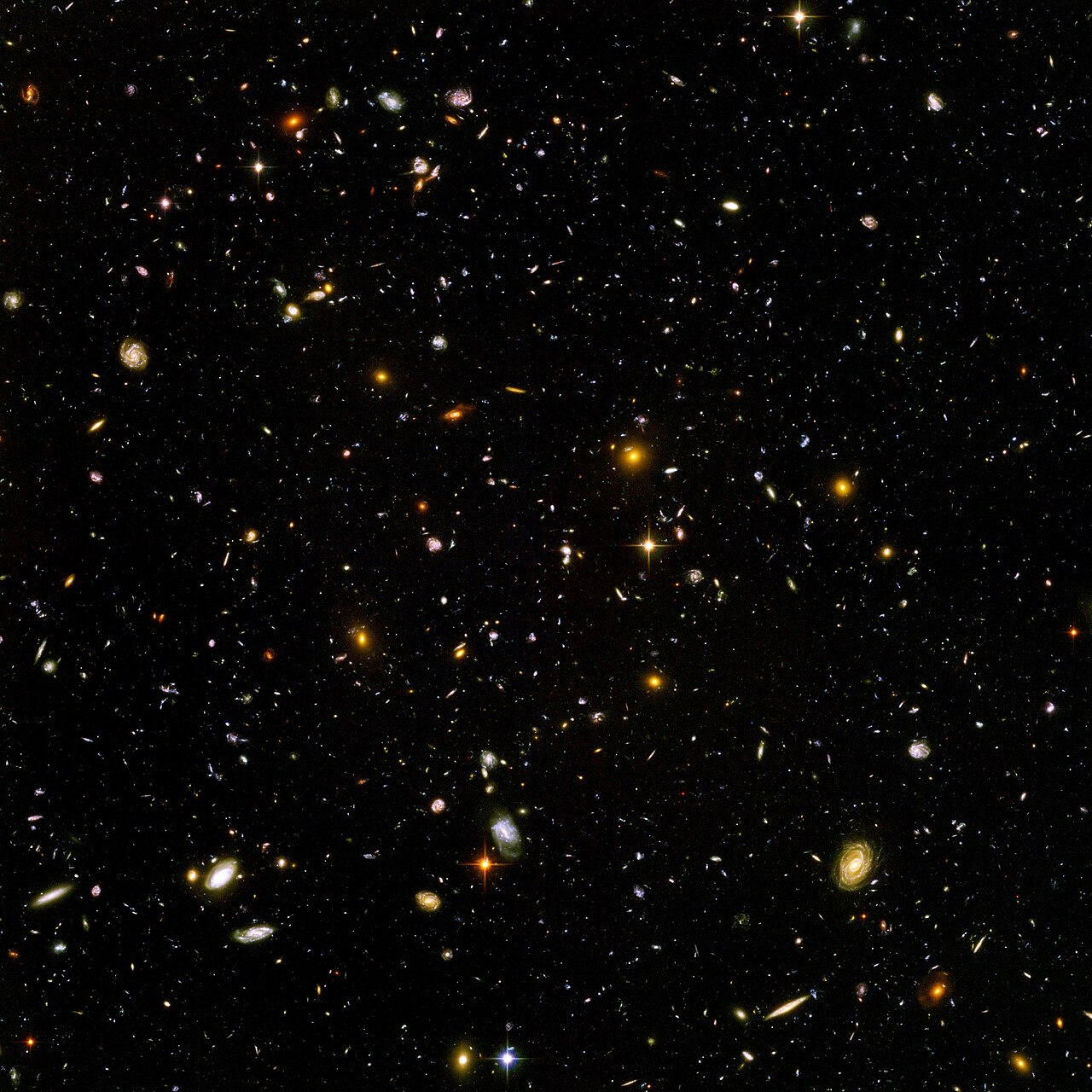
Every night, when we look up at the stars, we are also looking back in time. The light from the Moon takes about 1.3 seconds to reach Earth. Sunlight takes a little over eight minutes. The light from the nearest star beyond the Sun travels for more than four years before reaching our eyes. Some of the galaxies captured by powerful telescopes have been sending their light across space for more than 13 billion years.
This remarkable fact raises one of the biggest questions humanity has ever asked: How old is the universe?
For thousands of years, people could only speculate. Ancient civilizations developed myths and philosophical ideas about the origin of the cosmos, but they had no way to measure its age. Today, thanks to modern astronomy, physics, and space exploration, scientists have a remarkably precise answer.
The universe is approximately 13.8 billion years old.
This number is not a rough guess. It is based on decades of observations, sophisticated mathematical models, and multiple independent lines of scientific evidence. Understanding how scientists arrived at this age reveals one of the greatest achievements in the history of science.
What Does It Mean to Say the Universe Is 13.8 Billion Years Old?
When scientists say the universe is about 13.8 billion years old, they mean that approximately 13.8 billion years have passed since the universe began expanding from an extremely hot, dense state in an event known as the Big Bang.
Contrary to a common misconception, the Big Bang was not an explosion that occurred inside empty space. Instead, it marked the beginning of the expansion of space itself. Every region of the universe has been moving apart ever since, carrying galaxies away from one another as space expands.
Time, as we understand it today, also began with this early stage of the universe. Asking what happened “before” the Big Bang may not have a meaningful answer within current physics because time itself is believed to have emerged alongside the expanding universe.
How Scientists Measured the Age of the Universe
Determining the age of the universe was one of the greatest scientific challenges ever undertaken. No scientist was present when the universe began, so researchers must reconstruct its history using clues preserved throughout the cosmos.
Rather than relying on a single measurement, astronomers combine several independent methods. These different approaches all converge on nearly the same answer, giving scientists high confidence in the result.
The Expansion of the Universe
One of the most important discoveries in modern astronomy came in the 1920s, when astronomer Edwin Hubble found that distant galaxies are moving away from us.
More importantly, the farther away a galaxy is, the faster it appears to be receding.
This relationship revealed that the universe is expanding.
Imagine drawing dots on the surface of a balloon. As the balloon inflates, every dot moves farther from every other dot. The dots themselves are not moving across the rubber; instead, the surface between them is stretching.
The universe behaves in a similar way. Galaxies are carried apart because space itself is expanding.
If scientists mathematically reverse this expansion, they find that all galaxies were once much closer together in an incredibly dense, hot early universe. Measuring the current expansion rate allows astronomers to estimate how long this expansion has been taking place.
Although the calculation is more complex than simply dividing distance by speed because the expansion rate has changed over time, this approach provides one of the strongest estimates of the universe’s age.
The Cosmic Microwave Background
One of the most compelling pieces of evidence comes from a faint glow that fills the entire universe.
This radiation is called the cosmic microwave background, often abbreviated as the CMB.
About 380,000 years after the Big Bang, the universe had cooled enough for electrons and atomic nuclei to combine into neutral atoms. Before that time, light constantly scattered off free electrons, making the universe opaque.
Once neutral atoms formed, light could finally travel freely through space.
That ancient light has continued traveling ever since.
Because the universe has expanded enormously over billions of years, the light has stretched into microwave wavelengths. Today it appears as a nearly uniform background radiation detectable in every direction.
Space missions such as the Cosmic Background Explorer (COBE), the Wilkinson Microwave Anisotropy Probe (WMAP), and the Planck spacecraft measured this radiation with extraordinary precision.
Tiny temperature variations within the cosmic microwave background reveal information about the universe’s composition, expansion, and age. These measurements consistently indicate an age of approximately 13.8 billion years.
The Oldest Stars
Another way to estimate the universe’s age is by studying its oldest stars.
Stars are not eternal. Like living organisms, they are born, evolve, and eventually die.
Astronomers understand stellar evolution extremely well. By measuring a star’s brightness, temperature, mass, and chemical composition, scientists can estimate how old it is.
Some stars in ancient globular clusters are more than 13 billion years old.
Since the universe must be older than the stars it contains, these ancient stellar populations establish a lower limit on the universe’s age.
Remarkably, their ages agree closely with estimates obtained from the expanding universe and the cosmic microwave background.
Why Scientists Trust the 13.8 Billion-Year Estimate
Scientific confidence grows when multiple independent methods produce the same answer.
The expansion of galaxies.
The cosmic microwave background.
The evolution of stars.
The distribution of galaxies.
The abundance of light elements such as hydrogen and helium.
All point toward a universe that is approximately 13.8 billion years old.
Although future observations may refine this number slightly, scientists are highly confident that it is extremely close to the true age.
What Happened Immediately After the Big Bang?
The earliest moments of the universe remain one of the most fascinating areas of physics.
During the first tiny fraction of a second, temperatures exceeded anything we can reproduce on Earth.
The universe was filled with an incredibly dense mixture of energy and elementary particles.
Within the first few minutes, protons and neutrons combined to form the nuclei of hydrogen, helium, and small amounts of lithium.
Hundreds of thousands of years later, atoms formed.
Millions of years after that, gravity gathered gas into the first stars.
Those stars produced heavier elements such as carbon, oxygen, silicon, and iron through nuclear fusion.
When massive stars exploded as supernovae, these newly formed elements spread throughout space, eventually becoming part of new stars, planets, and living organisms.
The iron in your blood, the oxygen you breathe, and the calcium in your bones were forged inside ancient stars that lived and died billions of years before Earth existed.
How Old Is Earth Compared to the Universe?
Earth is far younger than the universe.
Scientists estimate that Earth formed approximately 4.54 billion years ago.
This means the universe had already existed for more than nine billion years before our planet was born.
The Sun formed at roughly the same time as Earth from a giant cloud of gas and dust enriched by earlier generations of stars.
Life appeared on Earth hundreds of millions of years later.
Modern humans have existed for only about 300,000 years—a tiny fraction of cosmic history.
If the universe’s entire history were compressed into a single calendar year, humans would appear only during the final minutes of December 31.
Looking Back in Time
Because light travels at a finite speed, telescopes function as time machines.
When astronomers observe a galaxy one billion light-years away, they see it as it existed one billion years ago.
Looking farther into space means looking farther back in time.
The James Webb Space Telescope has observed galaxies whose light began its journey only a few hundred million years after the Big Bang.
These observations help scientists understand how the first galaxies formed and evolved.
Every improvement in telescope technology allows humanity to peer deeper into cosmic history.
Can We See the Big Bang?
Not directly.
The universe was opaque during its earliest 380,000 years because light could not travel freely.
The oldest light we can currently observe is the cosmic microwave background.
Scientists hope future observations may detect gravitational waves generated during the universe’s earliest moments, providing an even clearer picture of what happened immediately after the Big Bang.
Will Scientists Ever Know the Exact Age?
Science continually improves as new evidence becomes available.
The estimated age of the universe has become increasingly precise over the past century.
Early estimates varied enormously because astronomers lacked accurate measurements.
Modern satellites, advanced telescopes, and sophisticated computer models have dramatically improved our understanding.
Although future discoveries may adjust the estimate by a small amount, it is unlikely to change by billions of years.
Current evidence strongly supports an age of about 13.8 billion years.
Does the Universe Have an End?
While scientists have determined the universe’s age, its future remains an active area of research.
Observations show that the expansion of the universe is accelerating, apparently driven by a mysterious phenomenon called dark energy.
If this acceleration continues indefinitely, galaxies will gradually drift farther apart, stars will eventually exhaust their nuclear fuel, and the universe may become increasingly cold and dark over unimaginably long timescales.
Other theoretical possibilities have also been proposed, but current evidence favors an ever-expanding universe.
Why Knowing the Universe’s Age Matters
Understanding the age of the universe is about much more than assigning a number.
It provides the timeline needed to understand the formation of galaxies, stars, planets, and life itself.
Knowing when different cosmic events occurred allows scientists to reconstruct the history of everything we observe today.
It also helps test theories of gravity, particle physics, cosmology, and the evolution of the universe.
Every new observation strengthens—or challenges—our understanding, making the age of the universe one of the most important measurements in modern science.
The Ongoing Search for Answers
Although scientists have determined the universe’s age with remarkable precision, many mysteries remain.
Researchers still seek to understand what dark matter is, why dark energy exists, what happened during the universe’s earliest fraction of a second, and whether our universe is the only one.
Powerful observatories, next-generation telescopes, gravitational-wave detectors, and particle accelerators continue exploring these profound questions.
Each discovery brings us closer to understanding not only when the universe began but also why it evolved the way it did.
Conclusion
The universe is approximately 13.8 billion years old, making it unimaginably ancient compared with human history. This age has been determined through decades of careful observation, mathematical analysis, and multiple independent lines of scientific evidence, including the expansion of galaxies, the cosmic microwave background, and the study of the oldest stars.
Far from being an arbitrary number, 13.8 billion years represents the unfolding story of everything that exists—from the birth of space and time to the formation of galaxies, stars, planets, and ultimately life on Earth. Every atom in our bodies has traveled through this vast cosmic history, connecting us to the earliest chapters of the universe itself. As science continues to advance, our understanding of the cosmos will become even richer, but the realization remains as inspiring as ever: when we gaze into the night sky, we are looking into a universe that has been evolving for nearly fourteen billion years, and we are privileged to witness a small yet extraordinary moment in its remarkable journey.