The universe is unimaginably vast. On Earth, we measure the distance between places in meters, kilometers, or miles. These units work perfectly when traveling from one city to another or even when measuring the size of our planet. But when we look beyond Earth into the depths of space, these familiar units quickly become impractical.
Imagine trying to describe the distance to a nearby star in kilometers. The number would contain so many digits that it would be difficult to read, remember, or even comprehend. The cosmos is simply too large for ordinary distance measurements.
This is why astronomers use light-years. A light-year is one of the most useful units in astronomy because it allows scientists to describe the enormous distances between stars, galaxies, and other objects in a way that is easier to understand. Despite its name, a light-year is not a measure of time—it is a measure of distance.
Understanding why astronomers use light-years helps us appreciate not only the scale of the universe but also the incredible speed of light itself.
What Is a Light-Year?
A light-year is the distance that light travels in one year through the vacuum of space.
Light is the fastest thing known in the universe. According to modern physics, light travels at exactly 299,792,458 meters per second in a vacuum. That is nearly 300,000 kilometers (186,000 miles) every second.
To appreciate how fast this is, imagine light leaving Earth.
In just one second, it could circle Earth more than seven times.
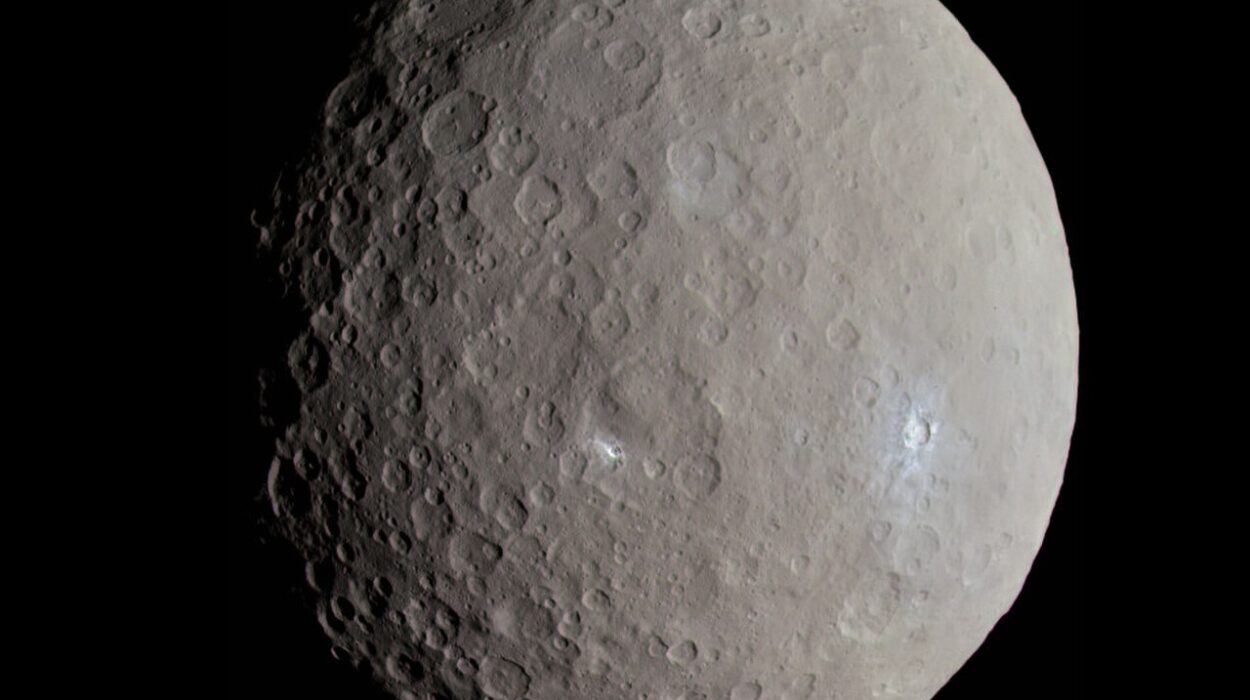
In about 1.3 seconds, it could travel from Earth to the Moon.
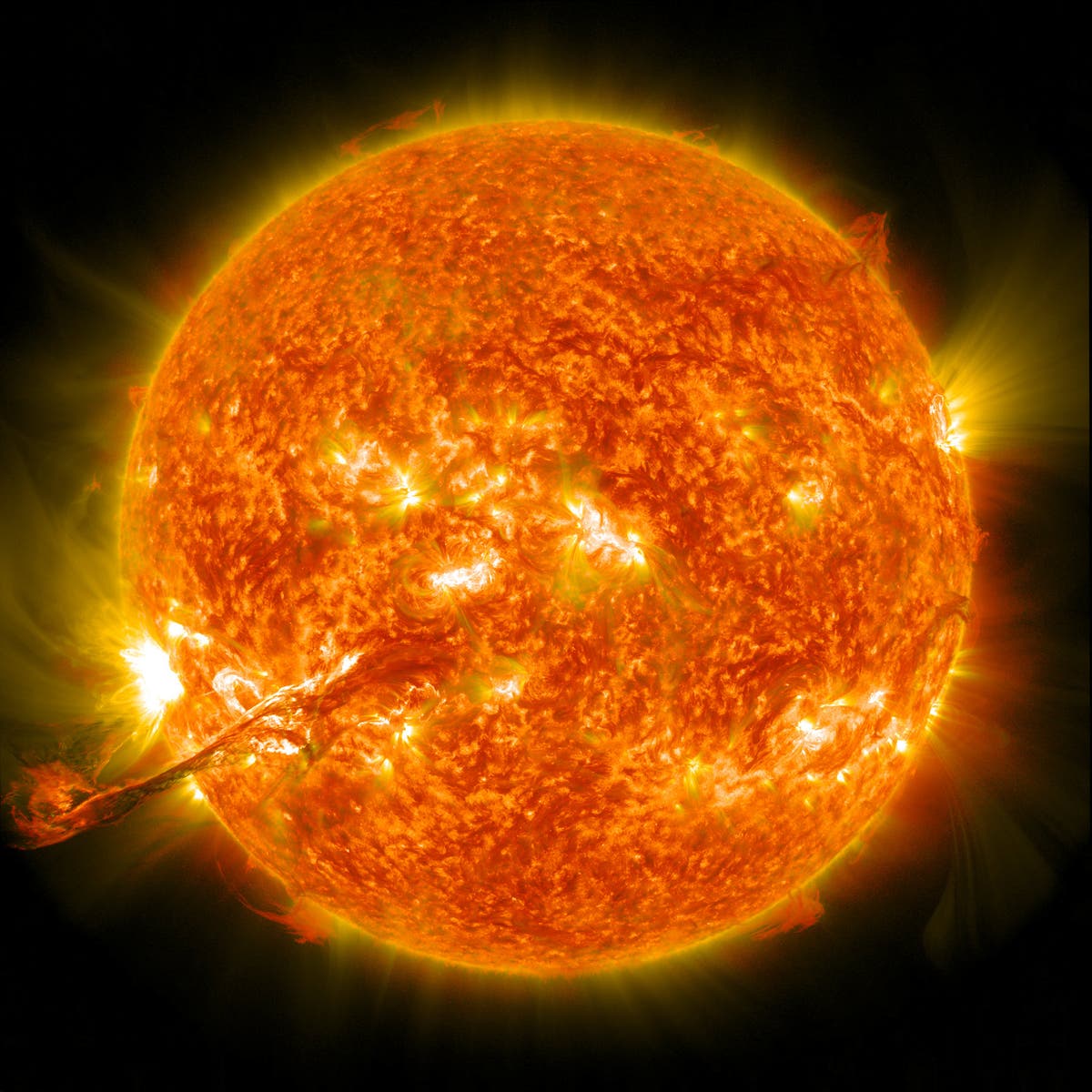
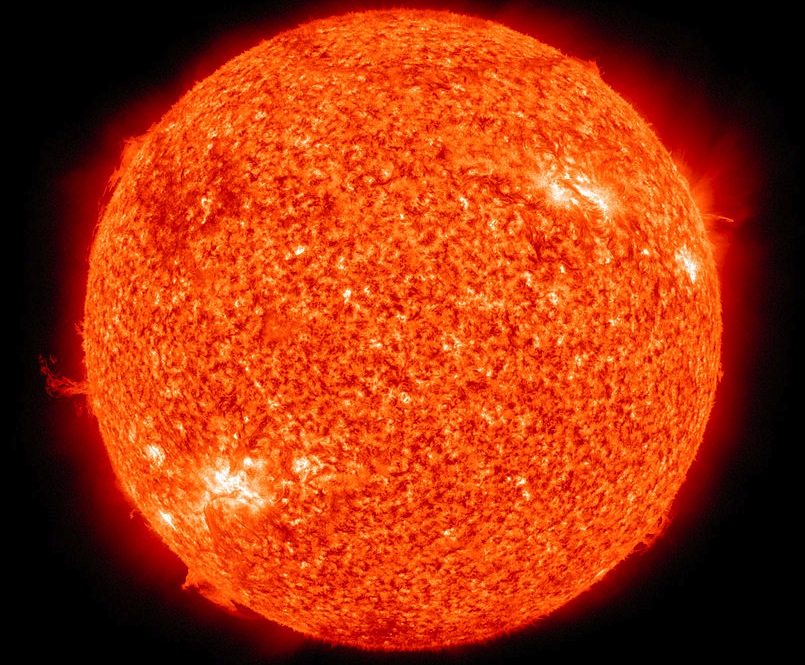
It reaches the Sun in about eight minutes and twenty seconds.
Because light moves so incredibly fast, it covers an enormous distance over an entire year. One light-year equals approximately 9.46 trillion kilometers, or about 5.88 trillion miles.
That enormous distance is why astronomers use the light-year as a convenient way to describe the universe.
Why Kilometers and Miles Are Not Practical
Suppose you wanted to describe the distance to the nearest star beyond our Sun using kilometers.
The nearest known star system, Alpha Centauri, is about 40 trillion kilometers away.
Writing that number repeatedly would be inconvenient. Reading it would not help most people imagine the distance either.
Instead, astronomers simply say that Alpha Centauri is about 4.37 light-years away.
The second number is much shorter, easier to understand, and far more useful for scientific communication.
As distances become even greater, the advantage becomes even clearer.
The center of our Milky Way Galaxy is about 26,000 light-years away.
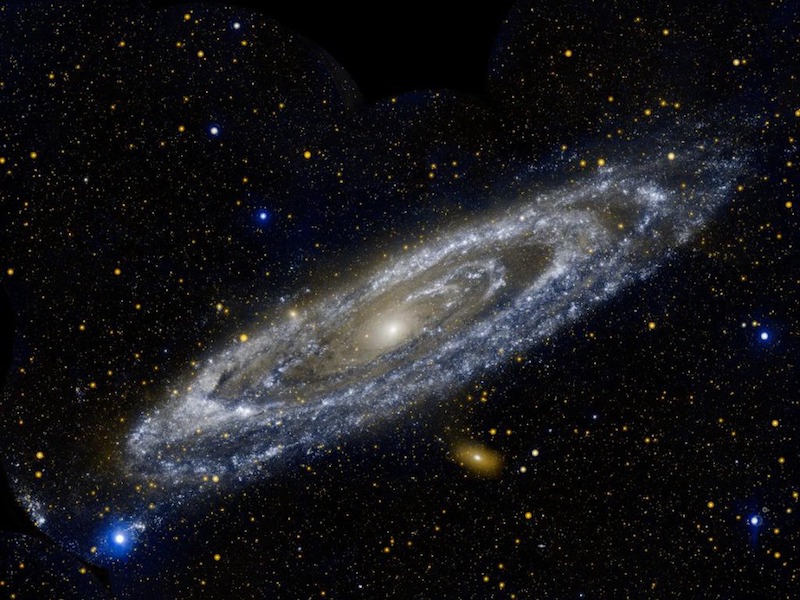
The Andromeda Galaxy lies about 2.5 million light-years from Earth.
Some galaxies observed by modern telescopes are billions of light-years away.
Expressing these distances in kilometers would produce numbers with so many zeros that they would become difficult to interpret.
A Light-Year Measures Distance, Not Time
One of the most common misunderstandings about the light-year comes from its name.
Because it includes the word “year,” many people assume it measures time.
In reality, a light-year is entirely a unit of distance.
The “year” simply tells us how long light has been traveling.
It is similar to saying that a car traveled the distance it could cover in one hour. The hour is used only to calculate distance, not to describe time itself.
In the same way, a light-year describes how far light travels during one year.
Why Light Is Used as the Standard
Light is a natural choice because its speed is constant in a vacuum.
Unlike cars, airplanes, or rockets, light always travels at the same speed through empty space regardless of who observes it. This remarkable property was established through countless experiments and forms one of the foundations of Albert Einstein’s theory of special relativity.
Because the speed of light is universal, astronomers everywhere can use it as a common ruler for measuring the cosmos.
It provides a standard that remains the same throughout the observable universe.
Looking Into Space Means Looking Back in Time
One of the most fascinating consequences of using light-years is that they remind us that light takes time to travel.
When you look at the Moon, you are not seeing it exactly as it is now. You are seeing it as it was about 1.3 seconds ago, because that is how long its reflected light takes to reach Earth.
The Sun appears as it was about eight minutes ago.
If the Sun were somehow to disappear instantly—a purely hypothetical scenario—we would continue seeing it for about eight more minutes because its last light would still be traveling toward us.
The farther away an object is, the older the light we receive.
When astronomers observe Alpha Centauri, they see it as it was over four years ago.
When they study the Andromeda Galaxy, they see it as it appeared approximately 2.5 million years ago.
Some of the most distant galaxies observed by powerful telescopes are seen as they existed billions of years in the past.
In this way, telescopes act like time machines—not by traveling through time, but by collecting ancient light that has spent millions or billions of years crossing the universe.
Measuring the Universe Becomes Easier
Astronomy deals with objects separated by astonishing distances.
Stars are spread across our galaxy.
Galaxies are separated by millions of light-years.
Galaxy clusters extend across hundreds of millions of light-years.
The observable universe spans about 93 billion light-years in diameter, according to current cosmological models.
Without light-years, describing these scales would become cumbersome.
Using light-years allows scientists to communicate these immense distances with much greater clarity.
Light-Years Help Us Understand Cosmic History
Every beam of light carries information about the object that emitted it.
As light travels through space, it preserves clues about temperature, chemical composition, motion, magnetic fields, and much more.
Because distant light takes so long to arrive, astronomers can study different stages of cosmic history.
Nearby stars show us the relatively recent universe.
Distant galaxies reveal what the universe looked like billions of years ago.
The most ancient light ever observed is the cosmic microwave background, which has been traveling for about 13.8 billion years. This faint radiation is the oldest light scientists can detect and provides a snapshot of the young universe shortly after the Big Bang.
Without understanding light-years, this remarkable journey through cosmic history would be difficult to appreciate.
How Astronomers Measure Light-Year Distances
Determining the distance to stars is one of astronomy’s greatest achievements.
For nearby stars, astronomers often use stellar parallax.
As Earth orbits the Sun, nearby stars appear to shift slightly against the background of more distant stars. By carefully measuring this tiny change, scientists can calculate their distances using geometry.
For more distant stars and galaxies, astronomers use several other methods.
Certain stars, called Cepheid variable stars, brighten and dim in predictable ways, allowing astronomers to estimate their distances.
Type Ia supernovae serve as “standard candles” because they reach nearly the same intrinsic brightness whenever they explode.
For the most distant galaxies, astronomers also study the expansion of the universe through cosmological redshift, where light is stretched to longer wavelengths as space itself expands.
These methods together form what astronomers call the cosmic distance ladder, enabling measurements across the observable universe.
Light-Years Compared with Other Astronomical Units
Although light-years are widely used, astronomers also use other distance units depending on the situation.
Within our Solar System, the astronomical unit (AU) is often more convenient. One astronomical unit equals the average distance between Earth and the Sun, about 150 million kilometers.
Professional astronomers frequently use the parsec, especially in scientific research. One parsec equals approximately 3.26 light-years.
Despite the widespread use of parsecs in research papers, light-years remain more familiar to the general public because they are easier to visualize.
Famous Distances Measured in Light-Years
Learning the distances to well-known objects helps put the scale of the universe into perspective.
The nearest star system beyond the Sun, Alpha Centauri, is about 4.37 light-years away.
Sirius, the brightest star in Earth’s night sky, is about 8.6 light-years away.
The Orion Nebula, where new stars are actively forming, lies roughly 1,350 light-years from Earth.
The center of the Milky Way is approximately 26,000 light-years away.
The Andromeda Galaxy, our nearest large galactic neighbor, is about 2.5 million light-years away.
The farthest galaxies detected by modern space telescopes emitted their light more than 13 billion years ago, offering glimpses of the early universe.
These examples demonstrate just how enormous the cosmos truly is.
Light-Years Reveal the True Scale of Space
Our everyday experiences cannot prepare us for the size of the universe.
Even traveling at the speed of today’s fastest spacecraft, reaching the nearest star would take tens of thousands of years.
Light itself—the fastest known traveler in nature—needs more than four years to reach Alpha Centauri.
This perspective changes how we think about space.
Stars that appear close together in the night sky may actually be separated by hundreds or thousands of light-years.
Galaxies that seem like tiny smudges through a telescope may each contain hundreds of billions of stars.
The light-year allows us to express these extraordinary distances in a meaningful and understandable way.
Light-Years and Space Exploration
Although light-years are useful for measuring distances, they also highlight one of the greatest challenges facing future space exploration.
Human-made spacecraft travel only a tiny fraction of the speed of light.
Even the fastest probes ever launched would require many thousands of years to reach the nearest stars.
This enormous gap explains why interstellar travel remains one of science’s greatest technological challenges.
Researchers continue exploring concepts such as advanced propulsion systems, nuclear fusion engines, solar sails, and even theoretical ideas inspired by general relativity. However, with current technology, journeys measured in light-years remain beyond human capability.
Why the Concept Inspires Wonder
Few scientific ideas capture the imagination as powerfully as the light-year.
It reminds us that the universe is not only vast but also ancient.
Every star shining overhead sends us light that has traveled across space for years, decades, centuries, or even millennia.
Every galaxy seen through a telescope is a message from the distant past.
When we gaze into the night sky, we are not simply looking across space—we are looking through time.
This realization transforms astronomy from the study of distant objects into the study of cosmic history itself.
Conclusion
Astronomers use light-years because the universe is far too vast to describe with everyday units such as kilometers or miles. A light-year measures the distance that light travels in one year, providing a practical and scientifically accurate way to express the immense separations between stars, galaxies, and other celestial objects.
More importantly, the light-year reminds us that light takes time to travel. Every observation of the night sky is a glimpse into the past, revealing the universe not as it is at this instant, but as it was when its light first began its extraordinary journey toward Earth. By measuring the cosmos in light-years, astronomers can not only map the universe but also uncover its history, making the light-year one of the most meaningful and fascinating units in all of science.