When you look up at the night sky, the stars seem close enough to fit inside a single beautiful dome above your head. The Moon appears just beyond the clouds, bright planets shine like nearby neighbors, and the Milky Way stretches across the darkness like a glowing river. Yet this breathtaking view hides an astonishing truth: the universe is unimaginably vast. The objects we see in the sky are separated by distances so enormous that ordinary units like kilometers or miles become almost meaningless.
Light from the Moon reaches Earth in just over a second. Sunlight takes about eight minutes to arrive. But the light from the nearest star beyond the Sun travels for more than four years before reaching us. The light from many galaxies has been crossing the universe for millions or even billions of years before finally entering our telescopes.
This incredible scale is what astronomers call cosmic distance. It is the measurement of the immense separations between objects in the universe, from nearby planets to the most distant galaxies ever observed. Understanding cosmic distance is essential because it helps us discover the size, structure, age, and history of the universe itself.
Understanding Cosmic Distance
Cosmic distance refers to the distance between astronomical objects such as planets, stars, nebulae, galaxies, and galaxy clusters. Unlike distances on Earth, which can be measured with rulers, lasers, or satellites, cosmic distances are far too large for direct measurement.
Astronomers cannot stretch a measuring tape across space. Instead, they rely on carefully tested scientific methods based on geometry, the behavior of light, gravity, and the known properties of celestial objects. Over centuries, scientists have developed increasingly accurate techniques that allow them to measure distances across the observable universe.
These measurements are not simply numbers. They tell us how long light has traveled, how objects have evolved over time, and how the universe itself has expanded since the Big Bang.
Why Measuring Cosmic Distance Is So Difficult
Distance is easy to estimate when an object is nearby. You can walk to a tree, drive to another city, or use GPS to determine your location. Space, however, presents entirely different challenges.
The universe is mostly empty, and celestial objects are separated by vast regions of space. Even the closest stars are trillions of kilometers away. Spacecraft travel far too slowly to reach most stars within a human lifetime, making direct measurements impossible.
Another challenge is that we see distant objects not as they are today, but as they were when their light began its journey. Looking deeper into space is also looking farther back in time.
Because of these challenges, astronomers must become cosmic detectives, piecing together clues from light itself.
The Immense Scale of the Universe
The enormous size of the universe is difficult for the human mind to imagine.
Earth circles the Sun at an average distance of about 150 million kilometers. This may sound enormous, but on a cosmic scale it is surprisingly small.
The nearest star beyond the Sun, Proxima Centauri, is about 40 trillion kilometers away.
The Milky Way Galaxy stretches roughly 100,000 light-years across.
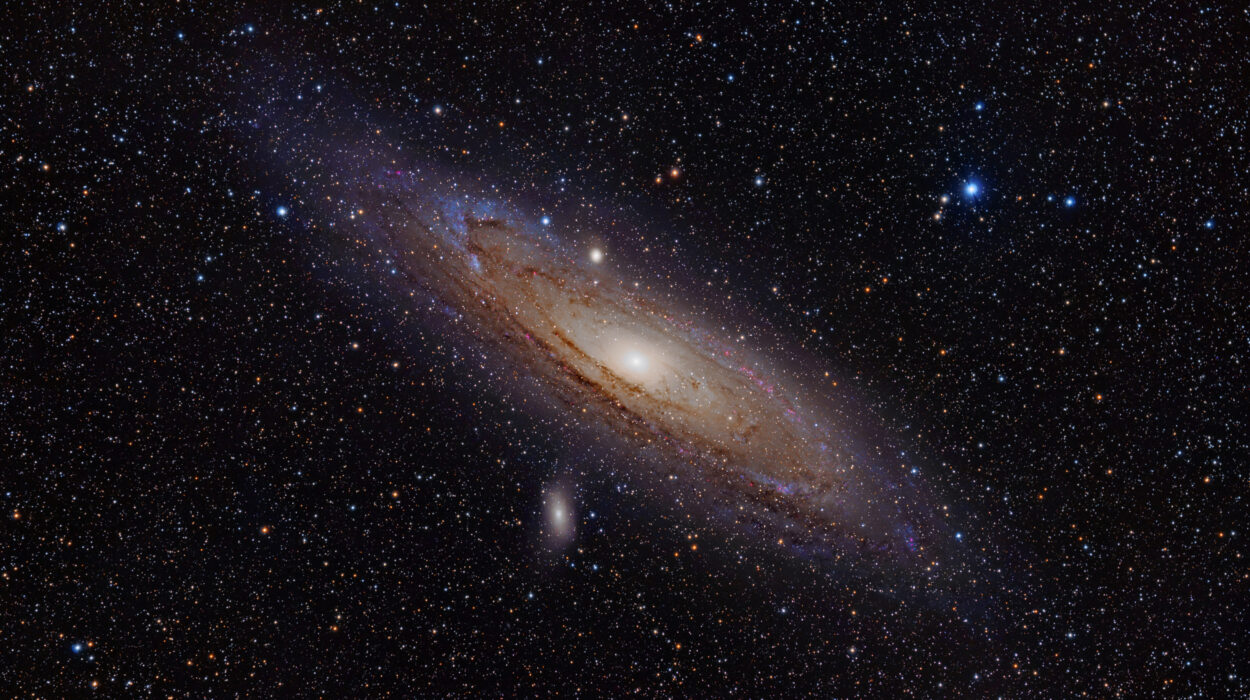
The neighboring Andromeda Galaxy lies about 2.5 million light-years away.
Some galaxies observed by modern space telescopes emitted their light more than 13 billion years ago.
These numbers reveal why astronomers need special units designed specifically for cosmic distances.
Why Kilometers and Miles Are Not Practical
Imagine trying to describe the distance to a nearby galaxy using kilometers.
The number would contain so many digits that it would become difficult to read, remember, or compare.
Instead of writing trillions upon trillions of kilometers, astronomers use larger units that make cosmic measurements much easier to understand.
These units allow scientists to describe the universe in a practical and meaningful way.
The Astronomical Unit
One of the first special units astronomers use is the astronomical unit, often abbreviated as AU.
An astronomical unit is defined as the average distance between Earth and the Sun, approximately 149.6 million kilometers.
This unit is especially useful for describing distances within our Solar System.
For example, Jupiter orbits about five astronomical units from the Sun, while Neptune is roughly thirty astronomical units away.
Although convenient for planetary distances, the astronomical unit becomes far too small when discussing stars and galaxies.
The Light-Year
Perhaps the most famous unit of cosmic distance is the light-year.
Despite its name, a light-year is not a measure of time. It is a measure of distance.
A light-year is the distance light travels in one year through the vacuum of space.
Since light travels at about 299,792 kilometers per second, it covers approximately 9.46 trillion kilometers in one year.
When astronomers say that a star is ten light-years away, they mean its light has traveled for ten years before reaching Earth.
This concept also means we never see distant objects exactly as they are today. Instead, we see them as they existed when the light first began its journey.
Looking Into the Past
One of the most fascinating consequences of cosmic distance is that telescopes are actually time machines.
Because light requires time to travel, every observation is also a glimpse into history.
Looking at the Moon shows it as it appeared about 1.3 seconds ago.
Looking at the Sun reveals it as it was about eight minutes earlier.
Observing the Andromeda Galaxy means seeing it as it existed roughly 2.5 million years ago.
Some of the most distant galaxies observed by powerful space telescopes appear as they existed only a few hundred million years after the Big Bang.
This remarkable fact allows astronomers to study how the universe has evolved over billions of years.
How Astronomers Measure Nearby Distances
For relatively nearby stars, astronomers use a technique called stellar parallax.
As Earth orbits the Sun, nearby stars appear to shift slightly against the background of much more distant stars. This tiny change in apparent position can be measured with extremely precise instruments.
The effect is similar to holding your thumb in front of your face and viewing it first with one eye and then the other. Your thumb seems to move relative to distant objects, even though it remains in the same place.
By measuring this tiny shift and applying geometry, astronomers can calculate the distance to nearby stars with remarkable accuracy.
Modern space missions such as the European Space Agency’s Gaia observatory have measured the positions and distances of more than a billion stars using this method.
Measuring Farther Distances
Parallax works well only for relatively nearby stars. As distances increase, the apparent shift becomes too small to detect accurately.
To measure greater distances, astronomers rely on objects whose true brightness is already known.
By comparing how bright these objects appear from Earth with how bright they actually are, scientists can calculate how far away they must be.
These special objects are called standard candles because they act like cosmic light bulbs with known luminosities.
Among the most important standard candles are Cepheid variable stars and certain types of exploding stars known as Type Ia supernovae.
These objects have allowed astronomers to measure distances across vast regions of the universe.
Redshift and the Expanding Universe
For extremely distant galaxies, astronomers often measure redshift.
As the universe expands, galaxies move away from one another. This motion stretches the light traveling through space, increasing its wavelength and shifting it toward the red end of the visible spectrum.
The greater the redshift, the farther away a galaxy generally is.
This discovery led to one of the greatest scientific revolutions of the twentieth century: the realization that the universe itself is expanding.
The relationship between distance and redshift has become one of the most important tools in modern cosmology.
The Cosmic Distance Ladder
No single method can measure every distance in the universe.
Instead, astronomers use what is known as the cosmic distance ladder.
Each measurement technique works over a particular range of distances. Nearby methods are used to calibrate more distant ones, creating a chain of increasingly larger measurements.
Parallax measures nearby stars.
Standard candles extend measurements across our galaxy and nearby galaxies.
Supernovae and redshift allow scientists to measure galaxies billions of light-years away.
Together, these methods form one of astronomy’s greatest scientific achievements.
Cosmic Distance and the Age of the Universe
Measuring cosmic distances has helped scientists estimate the age of the universe.
By observing distant galaxies and measuring how quickly the universe expands, astronomers have determined that the universe is approximately 13.8 billion years old.
This estimate is supported by several independent lines of evidence, including observations of the cosmic microwave background, the distribution of galaxies, and the oldest known stars.
Without accurate distance measurements, understanding the universe’s history would be impossible.
Cosmic Distance Reveals the Structure of the Universe
Distance measurements have shown that the universe is far from random.
Stars gather into galaxies.
Galaxies form groups.
Groups combine into clusters.
Clusters connect through enormous filaments, creating a vast cosmic web that stretches across the observable universe.
Between these structures lie immense regions containing very few galaxies, known as cosmic voids.
Mapping these distances has revealed one of the largest known patterns in nature.
How Space Telescopes Help Measure Cosmic Distance
Modern telescopes have transformed our understanding of cosmic distance.
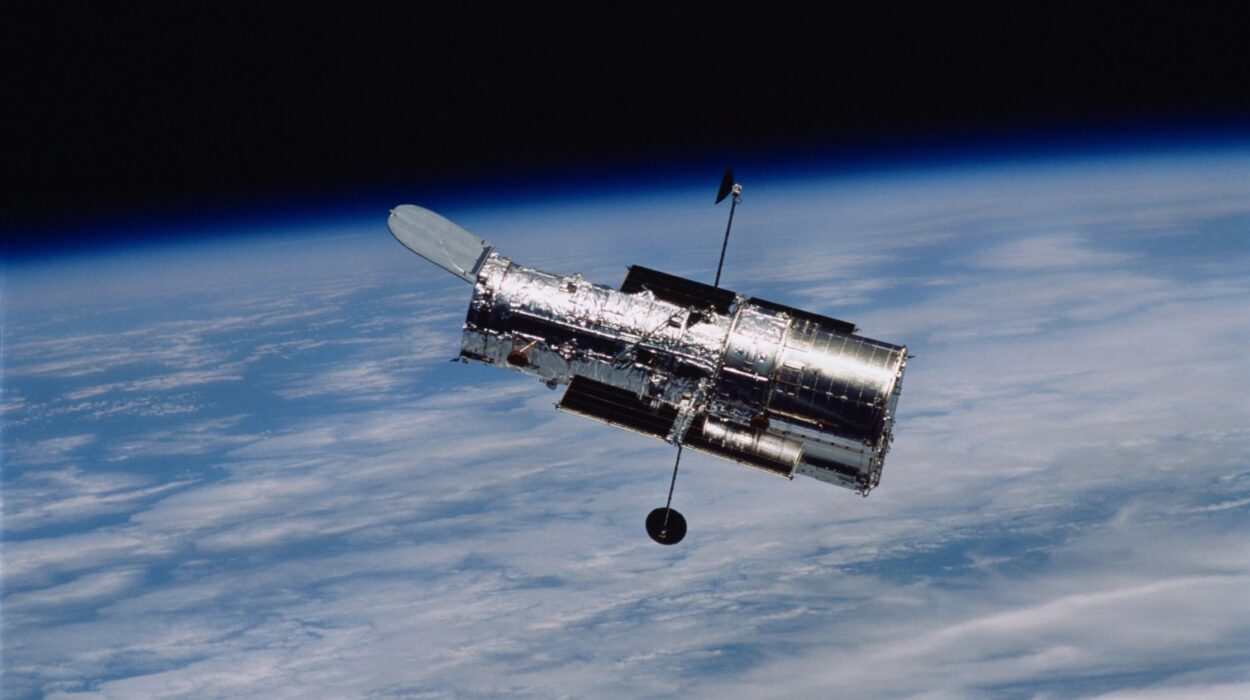
The Hubble Space Telescope observed Cepheid variable stars in distant galaxies, helping refine measurements of the universe’s expansion.
The James Webb Space Telescope can detect incredibly faint galaxies whose light has traveled for more than 13 billion years. Its powerful infrared instruments allow astronomers to study some of the earliest galaxies ever formed.
Ground-based observatories equipped with advanced optics also contribute by measuring stellar motions, galaxy redshifts, and distant supernovae with unprecedented precision.
Together, these observatories continue to improve the accuracy of the cosmic distance scale.
Why Cosmic Distance Matters
Cosmic distance is much more than a collection of enormous numbers.
Every measurement helps answer fundamental questions about the universe.
How large is the Milky Way?
How fast is the universe expanding?
How old are distant stars?
How did galaxies form?
What happened shortly after the Big Bang?
Accurate distance measurements allow astronomers to calculate the true size, brightness, mass, and motion of celestial objects. Without knowing distance, many other properties remain uncertain.
In many ways, measuring distance is the first step toward understanding almost everything else in astronomy.
The Limits of What We Can See
Although the universe may be vastly larger—or even infinite—we can observe only a portion of it.
This region is known as the observable universe. It represents the part of the universe from which light has had enough time to reach us since the Big Bang.
The observable universe has a diameter of about 93 billion light-years. This enormous size is greater than twice the universe’s age in years because space itself has expanded while the light was traveling toward us.
Beyond this cosmic horizon may lie countless more galaxies that are currently impossible for us to observe.
Cosmic Distance Inspires Wonder
Every time astronomers measure a new cosmic distance, they are doing more than calculating numbers. They are uncovering another chapter in the story of the universe.
The light reaching our eyes tonight may have left a distant star before humans built civilizations. The glow from a remote galaxy may have begun its journey before Earth even existed in its present form. Across unimaginable expanses of space and time, photons carry messages from the distant past, allowing us to explore places no spacecraft has yet reached.
Cosmic distance reminds us that the universe is far larger than everyday experience suggests. It reveals a cosmos filled with countless stars, galaxies, and mysteries waiting to be understood.
Conclusion
Cosmic distance is the measurement of the vast separations between objects in the universe. Because these distances are far too great for ordinary units, astronomers use specialized measurements such as astronomical units and light-years, along with sophisticated techniques including parallax, standard candles, redshift, and the cosmic distance ladder. These methods have allowed scientists to map the universe, determine its age, study its expansion, and uncover its large-scale structure.
More than a scientific measurement, cosmic distance is a window into the history of the cosmos. Every beam of light traveling across space carries information from another place and another time, connecting humanity to events that occurred millions or billions of years ago. By measuring these extraordinary distances with increasing precision, physics and astronomy continue to reveal the breathtaking scale, beauty, and history of the universe we call home.