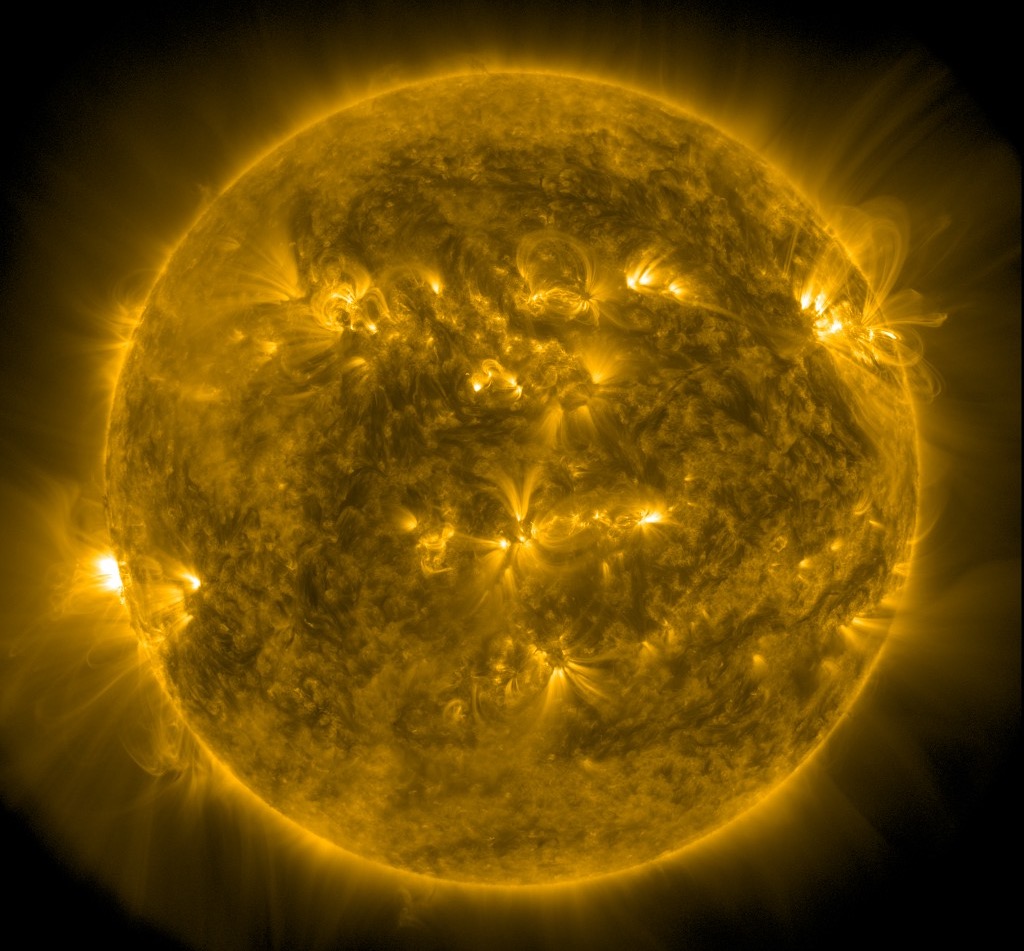
Every morning, the Sun rises as if it has always been there and always will be. It lights our skies, warms our planet, drives Earth’s climate, and provides the energy that makes life possible. To us, the Sun feels eternal. It has shone over the rise of civilizations, the evolution of life, and every moment of human history.
But even stars are not immortal.
The Sun, like every other star in the universe, was born, has lived for billions of years, and will one day reach the end of its life. While that future is unimaginably far away—far beyond the lifetime of humanity as we know it—it is one of the most fascinating stories in astronomy.
Understanding how the Sun will die is not only about predicting the future of our Solar System. It also helps scientists understand how stars evolve, how planets change over time, and how the elements needed for life are recycled throughout the universe.
The Sun Is a Star
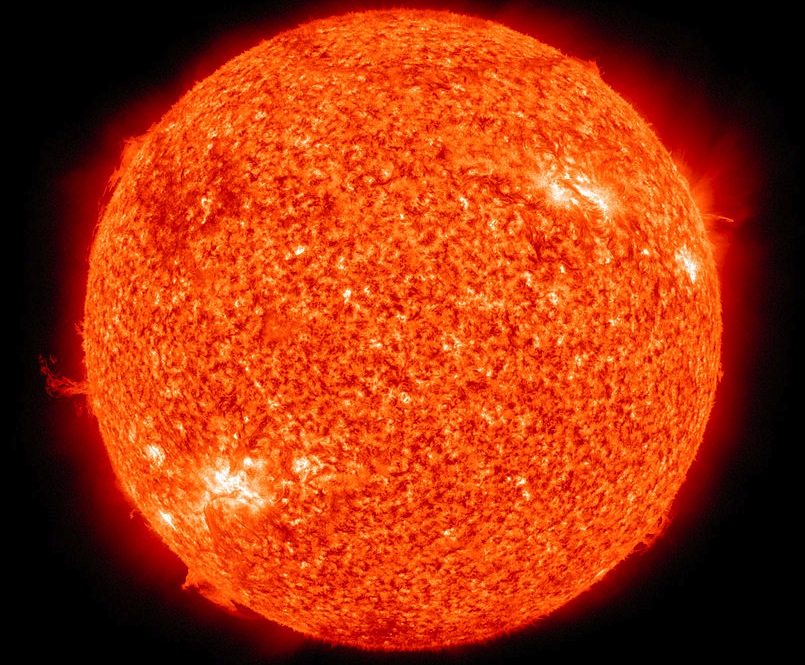
The Sun is an ordinary star located about 150 million kilometers (93 million miles) from Earth. It belongs to a class known as G-type main-sequence stars, often called yellow dwarfs, although its true color is nearly white when viewed from space.
At its core, the Sun generates enormous amounts of energy through nuclear fusion. Every second, about 600 million tons of hydrogen are converted into helium under extreme temperatures and pressures. A tiny fraction of the mass involved in this process is transformed into energy according to Einstein’s famous equation, E = mc².
That energy slowly travels outward through the Sun before escaping into space as sunlight and other forms of electromagnetic radiation.
For nearly 4.6 billion years, this process has kept the Sun remarkably stable.
The Sun Is Already Middle-Aged
Although the Sun seems timeless from a human perspective, astronomers know it is about halfway through its life.
Stars spend most of their existence in the “main sequence” stage, where hydrogen fusion in the core balances the inward pull of gravity.
The Sun has been in this stable phase since shortly after it formed.
Scientists estimate that it has enough hydrogen fuel to continue shining for approximately another 5 billion years.
That means the Sun is middle-aged—not young, but certainly not close to dying.
The Sun Is Slowly Becoming Brighter
One surprising fact is that the Sun is not exactly the same today as it was when Earth formed.
As helium gradually accumulates in the core, the core slowly contracts and becomes hotter. This increases the rate of nuclear fusion.
As a result, the Sun becomes slightly brighter over time.
Astronomers estimate that the Sun is roughly 30 percent brighter today than it was when it first formed.
This increase is gradual, but over millions and billions of years, it has significant consequences for Earth.
Earth Will Become Uninhabitable Long Before the Sun Dies
When people hear about the Sun’s death, they often imagine Earth surviving until the very end.
In reality, our planet is expected to become uninhabitable long before the Sun reaches its final stages.
As the Sun’s brightness continues increasing, Earth’s average temperature will gradually rise.
Hundreds of millions of years from now, warmer temperatures will affect ecosystems and climate in ways far beyond anything humans experience today.
Over roughly one to two billion years, increasing solar energy is expected to trigger a runaway greenhouse effect. Earth’s oceans will gradually evaporate, filling the atmosphere with water vapor, which itself is a powerful greenhouse gas.
Eventually, the oceans may disappear entirely.
Without liquid water, life as we know it would no longer be possible.
Even though the Sun would still be an ordinary main-sequence star, Earth would already have become a hostile world.
The Beginning of the End
Around 5 billion years from now, the Sun’s hydrogen fuel in its core will become exhausted.
This does not mean the Sun suddenly stops shining.
Instead, the core, now composed mostly of helium, can no longer generate enough energy through hydrogen fusion to support itself against gravity.
Gravity begins compressing the core.
As the core contracts, it becomes much hotter.
Meanwhile, hydrogen fusion continues in a shell surrounding the shrinking core.
This shell fusion produces even more energy than before.
Rather than shrinking, the Sun’s outer layers begin expanding dramatically.
The transformation has begun.
The Sun Will Become a Red Giant
The next chapter in the Sun’s life is its most dramatic.
The Sun will expand into a red giant.
During this stage, its diameter may become roughly 200 times larger than it is today.
Its outer layers will cool, giving it a reddish appearance, even though the total energy it emits will increase enormously because of its much larger size.
If someone could watch this transformation over millions of years, the familiar yellow Sun would slowly swell until it dominated the sky.
The Solar System would never look the same again.
What Happens to Mercury and Venus?
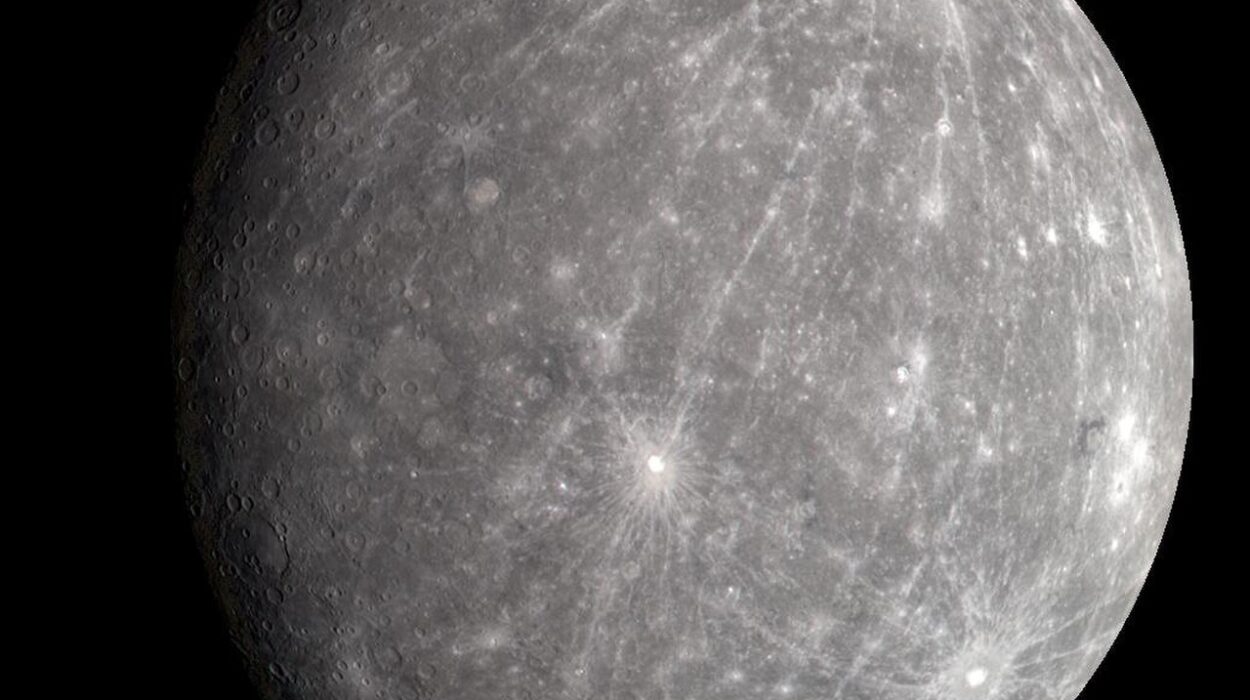
Mercury will almost certainly be swallowed by the expanding Sun.
Venus is also expected to be engulfed.
Both planets orbit well within the Sun’s future red giant size.
As the Sun expands, these worlds will disappear beneath its glowing outer atmosphere.
They will not survive.
Will Earth Be Swallowed?
Earth’s fate is one of astronomy’s most intriguing questions.
For many years, scientists debated whether Earth would narrowly escape the expanding Sun or be consumed.
The answer depends on several competing effects.
As the Sun loses mass through powerful stellar winds, Earth’s orbit will gradually move outward because the Sun’s gravitational pull becomes weaker.
This outward movement could help Earth avoid direct engulfment.
However, tidal interactions between the swollen Sun and Earth may pull the planet inward.
Current models suggest that Earth is likely to be engulfed by the Sun near the end of the red giant phase, although uncertainties remain.
Even if Earth somehow escaped being swallowed, it would already have become a scorched, lifeless world long before then.
Its surface would be hotter than molten lava.
Its atmosphere would largely disappear.
Nothing resembling today’s Earth would remain.
The Sky During the Red Giant Phase
If observers somehow existed on a surviving distant moon or planet, the sight would be extraordinary.
The Sun would appear vastly larger than it does today.
Its brilliant red-orange disk would dominate the sky.
The inner Solar System would be bathed in intense heat.
The familiar arrangement of planets would be dramatically altered.
The beautiful blue skies that once existed on Earth would be only a distant memory.
Helium Fusion Begins
As the Sun’s core continues heating, temperatures eventually reach about 100 million degrees Celsius.
At this point, helium nuclei begin fusing into carbon and oxygen.
For stars with masses similar to the Sun, this ignition occurs in a dramatic event known as the helium flash.
Despite its name, the helium flash is not visible from outside the star because the enormous energy is absorbed internally.
Afterward, the Sun temporarily becomes more stable again.
It spends around 100 million years fusing helium into heavier elements.
Compared with its long hydrogen-burning lifetime, this phase is relatively short.
The Sun Cannot Become a Supernova
Many people assume every star eventually explodes.
The Sun will not.
Supernova explosions occur only in much more massive stars or under special circumstances involving certain white dwarfs in binary systems.
The Sun simply does not have enough mass.
Instead of ending in a spectacular explosion, it will experience a much gentler, though still beautiful, farewell.
The Sun Sheds Its Outer Layers
When helium in the core becomes exhausted, the Sun again faces a shortage of fuel.
Its outer layers become unstable.
Powerful stellar winds begin carrying enormous amounts of gas into space.
Over thousands of years, the Sun ejects much of its outer atmosphere.
This expanding cloud glows as ultraviolet radiation from the hot remaining core illuminates it.
The result is one of the universe’s most beautiful objects.
A Planetary Nebula Is Born
Despite its name, a planetary nebula has nothing to do with planets.
The name originated centuries ago because early astronomers thought these glowing clouds resembled the disks of distant planets through small telescopes.
A planetary nebula is actually the expanding shell of gas expelled by a dying star.
These glowing clouds display remarkable shapes, colors, and intricate patterns.
Some appear nearly spherical.
Others form rings, butterfly-like wings, or delicate filaments sculpted by magnetic fields, stellar winds, and interactions with companion stars.
For tens of thousands of years, the Sun’s planetary nebula will shine across space.
Eventually, it will disperse into the interstellar medium.
Its gas will become part of future generations of stars and planets.
The Birth of a White Dwarf
After the outer layers drift away, only the Sun’s core remains.
This remnant becomes a white dwarf.
A white dwarf is roughly the size of Earth but contains about half the Sun’s original mass.
It is incredibly dense.
A teaspoon of white dwarf material would weigh many tons under Earth’s gravity.
No nuclear fusion occurs inside a white dwarf.
Instead, it shines because of the enormous heat left over from its earlier life.
Initially, it glows white-hot.
Over billions of years, it slowly cools.
A Cooling Stellar Ember
Unlike active stars, white dwarfs generate no new energy.
They simply radiate away their remaining heat.
Their temperatures gradually decrease over trillions of years.
Eventually, if the universe survives long enough, a white dwarf would cool into a dark, cold object known as a black dwarf.
However, the universe is only about 13.8 billion years old.
That is far too young for any black dwarfs to exist.
Every white dwarf ever formed is still slowly cooling.
What Will Happen to the Outer Planets?
The giant planets—Jupiter, Saturn, Uranus, and Neptune—will survive the Sun’s transformation into a white dwarf.
However, their environments will change dramatically.
As the Sun loses mass, their orbits will slowly expand.
The reduced sunlight will leave these distant worlds even colder than they are today.
Many of their moons, however, may briefly become warmer during the Sun’s red giant phase.
Some icy moons could temporarily develop liquid water on or beneath their surfaces before eventually freezing again as the Sun fades.
The Solar System After the Sun
Billions of years after the Sun becomes a white dwarf, the Solar System will be a very different place.
The brilliant star that once illuminated Earth will be a tiny, faint object.
No warm sunlight will bathe the planets.
The inner Solar System may contain little more than scattered debris.
The outer planets will continue orbiting in darkness around the slowly cooling stellar remnant.
Occasionally, passing stars may alter planetary orbits over immense stretches of time.
The Solar System itself will gradually evolve as part of the changing Milky Way.
The Sun’s Death Gives Birth to New Worlds
Although the Sun’s story ends, its material does not disappear.
The gas released into space contains elements such as carbon, nitrogen, and oxygen that were produced during the Sun’s lifetime.
These elements become part of giant clouds of interstellar gas.
Over millions of years, gravity may gather this material into new stars and new planetary systems.
Future planets—and perhaps future life—could contain atoms that once belonged to our Sun.
In this way, stars never truly vanish.
They recycle their matter into the next generation of the universe.
What Does This Mean for Humanity?
The Sun’s death lies so far in the future that it poses no concern for humanity today.
Five billion years is an almost unimaginable span of time.
Modern humans have existed for only a tiny fraction of that period.
Even the age of civilization is insignificant compared with the Sun’s remaining lifetime.
Long before the Sun enters its red giant phase, humanity—or whatever intelligent descendants may exist—could potentially spread beyond Earth and perhaps beyond the Solar System.
The distant future of the Sun is therefore less a prediction of humanity’s end than a reminder of the immense timescales on which the universe operates.
The Legacy of Our Star
The Sun has been the silent architect of Earth’s history. Every tree that has grown, every ocean that has shimmered, every animal that has lived, and every human who has ever looked up at the sky owes its existence to the steady light of this remarkable star.
One day, billions of years from now, that light will change forever. The Sun will swell into a magnificent red giant, shed its glowing outer layers to create a beautiful planetary nebula, and settle into its final form as a small white dwarf that slowly cools through the ages.
Its death will not be a violent catastrophe but a graceful transformation—one that reflects the natural life cycle of stars throughout the cosmos.
In the end, the Sun’s greatest legacy will not be its final fading glow, but the countless worlds, elements, and possibilities it leaves behind. The atoms that once shone at the heart of our star may someday become part of entirely new stars, new planets, and perhaps even new forms of life, continuing the never-ending story of the universe.