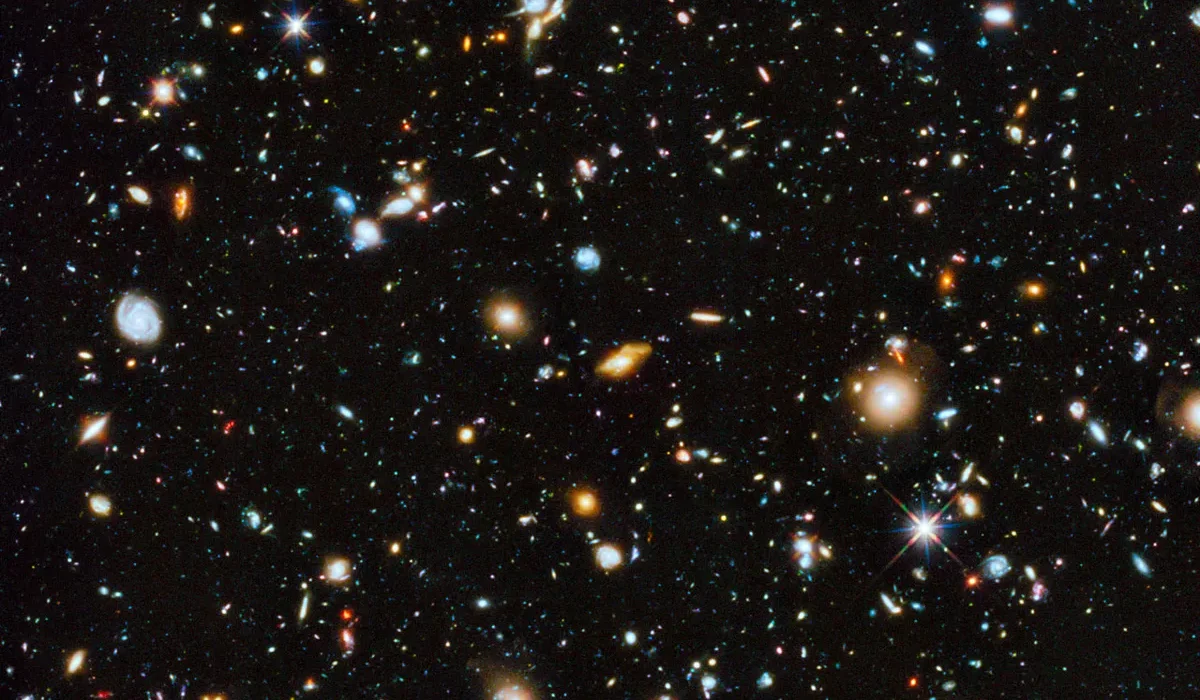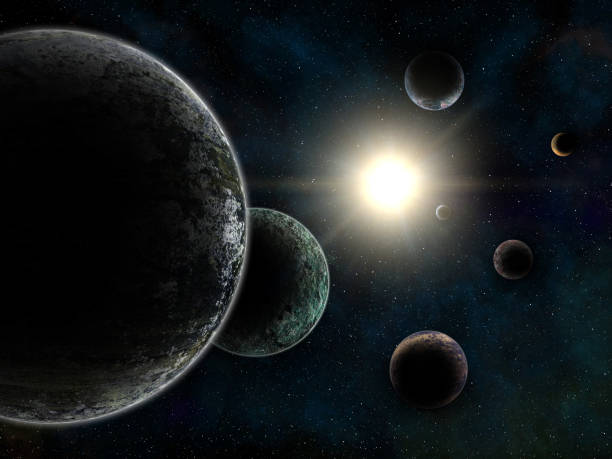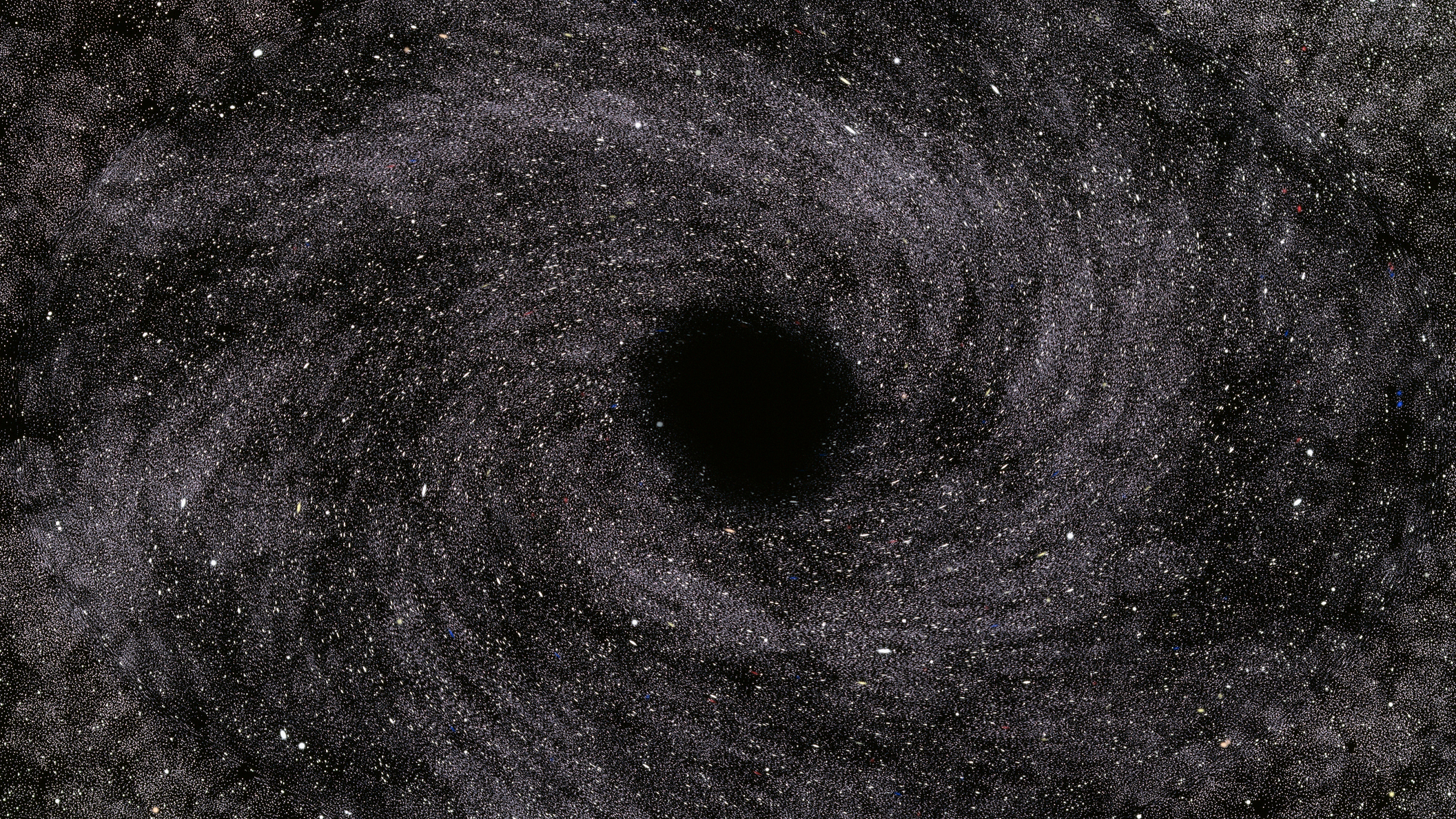
When we look up at the night sky, it is easy to imagine space as an endless ocean filled with stars, planets, and glowing clouds. But between those beautiful celestial objects lies something far more surprising—almost nothing at all. The vast majority of the universe is astonishingly empty. Unlike Earth, where we are surrounded by air, space contains so little matter that scientists describe it as a vacuum.
This emptiness is one of the defining characteristics of the universe. It shapes how planets move, how stars shine, how galaxies evolve, and how astronauts survive beyond Earth’s atmosphere. Yet space is not completely empty. Tiny numbers of particles, faint radiation, and invisible fields still exist, making space an extraordinary environment unlike anything we experience on Earth.
Understanding why space is a vacuum reveals not only how our universe formed but also why life is possible on our own planet.
What Does a Vacuum Mean?
A vacuum is a region where there is very little matter. On Earth, the air around us is made of billions of billions of molecules packed into every cubic centimeter. These molecules constantly collide with each other, creating air pressure that allows us to breathe and hear sounds.
In space, things are dramatically different.
Most regions of outer space contain so few atoms and molecules that they are separated by enormous distances. Instead of billions of air molecules in a tiny volume, there may be only a handful of particles—or even fewer.
Scientists often describe space as a “near-perfect vacuum” because no place in nature is completely empty. Even the emptiest regions of the universe contain traces of matter and energy.
Why Isn’t Space Filled With Air?
The simplest answer is that space has almost nothing to hold air in place.
Air is made mostly of nitrogen and oxygen molecules. These molecules are pulled toward Earth by gravity, forming our atmosphere.
Gravity is the force that keeps Earth’s atmosphere wrapped around the planet like a protective blanket. Without gravity, the molecules would gradually drift away into space.
Beyond Earth’s atmosphere, there is no large surface continuously releasing and holding enough gas to fill the enormous volume of the universe. The available gas spreads out over unimaginable distances until it becomes incredibly sparse.
As a result, most of space contains almost no air at all.
How the Universe Became So Empty
To understand why space is mostly empty, we need to travel back nearly 13.8 billion years to the beginning of the universe.
Shortly after the Big Bang, the universe was incredibly hot and dense. Matter and radiation filled nearly every region of space. There were no stars or galaxies yet—just an expanding sea of particles and energy.
As the universe expanded, everything spread farther apart.
Imagine dropping a small amount of ink into a glass of water. At first, the ink is concentrated in one place. Over time, it spreads throughout the entire glass.
Something similar happened to matter in the expanding universe. As space itself expanded, particles became increasingly separated. Gravity eventually gathered some of this matter into stars, planets, galaxies, and galaxy clusters.
But most of the universe remained nearly empty.
The space between galaxies grew larger and larger, creating the immense cosmic vacuum we observe today.
Gravity Creates Islands of Matter
Gravity is responsible for gathering matter together.
It pulls gas into clouds, clouds into stars, stars into galaxies, and galaxies into enormous clusters.
Without gravity, matter would remain evenly scattered throughout the universe.
Instead, gravity creates “islands” of matter surrounded by vast oceans of emptiness.
Our Solar System is one such island.
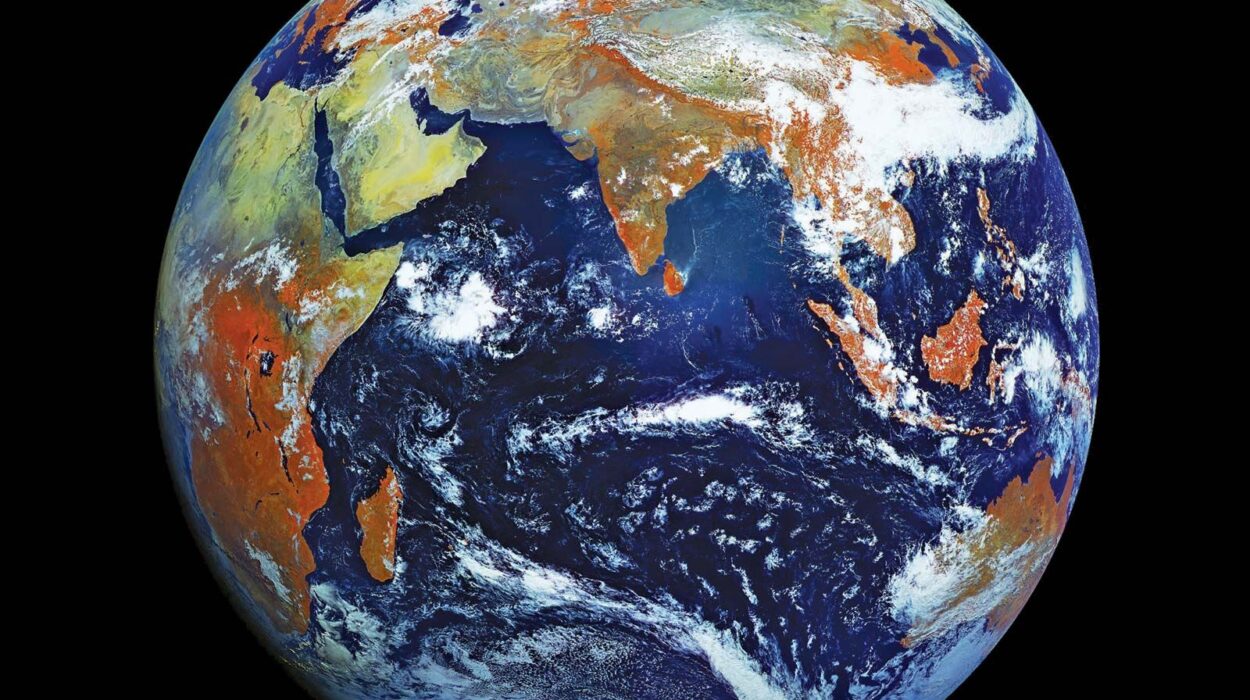
Earth, the Moon, the Sun, and the other planets occupy only a tiny fraction of the enormous space surrounding them.
Even within our Solar System, most of the volume is almost entirely empty.
Why Earth’s Atmosphere Doesn’t Escape
Earth has enough gravity to keep most of its atmosphere from drifting away.
The atmosphere gradually becomes thinner with increasing altitude.
Near sea level, air pressure is high because countless molecules are packed closely together.
As you climb a mountain, fewer air molecules remain above you, so air pressure decreases.
Eventually, the atmosphere becomes so thin that it blends into outer space.
There is no sharp boundary where Earth’s atmosphere suddenly ends. Instead, it gradually fades away over hundreds of kilometers.
Some lightweight particles, especially hydrogen and helium, can escape Earth’s gravity over very long periods.
Heavier gases, such as nitrogen and oxygen, remain largely trapped by Earth’s gravitational pull.
Space Is Not Completely Empty
Although people often say that space is empty, this is not entirely true.
Even the emptiest regions contain small numbers of atoms, mostly hydrogen.
There are also dust grains drifting between stars.
High-energy particles called cosmic rays constantly travel through space.
Electromagnetic radiation—including visible light, radio waves, X-rays, and gamma rays—moves freely through the vacuum.
Invisible magnetic fields stretch across galaxies.
Gravitational waves ripple through space itself.
In addition, every part of space is filled with the faint glow of the Cosmic Microwave Background, the leftover radiation from the early universe.
So while space is extraordinarily empty compared with Earth’s atmosphere, it is never perfectly empty.
Why Sound Cannot Travel Through Space
One of the most famous consequences of the vacuum of space is silence.
Sound is a mechanical wave.
It travels by making particles vibrate.
On Earth, sound moves through air because air molecules bump into one another, carrying the vibrations to our ears.
In space, there are far too few particles to transmit these vibrations.
If two astronauts floated outside their spacecraft without radios, they would not hear each other shouting, even if they were only a short distance apart.
Their voices would simply have no medium through which to travel.
This is why astronauts rely on radio communication.
Radio waves are electromagnetic waves, which do not require air or any other material to travel.
Why Light Can Travel Through a Vacuum
Unlike sound, light does not need matter.
Light is an electromagnetic wave.
It can travel through empty space at about 299,792,458 meters per second—the fastest speed known in the universe.
This is why sunlight reaches Earth despite crossing approximately 150 million kilometers of nearly empty space.
The same principle allows astronomers to observe galaxies billions of light-years away.
Their light has traveled across immense cosmic distances through the vacuum of space before finally reaching our telescopes.
How Empty Is Space?
The emptiness of space is difficult to imagine because our daily lives are filled with matter.
Near Earth’s surface, every cubic centimeter of air contains around tens of quintillions of molecules.
In contrast, the space between stars in our galaxy may contain only about one atom per cubic centimeter on average.
The space between galaxies is even emptier.
Some enormous regions known as cosmic voids contain only a tiny fraction of the matter found elsewhere in the universe.
These voids can stretch for hundreds of millions of light-years.
They represent some of the emptiest places known in nature.
Vacuum Inside the Solar System
Many people assume that the space between planets is completely empty.
In reality, the Solar System contains a very thin gas called the interplanetary medium.
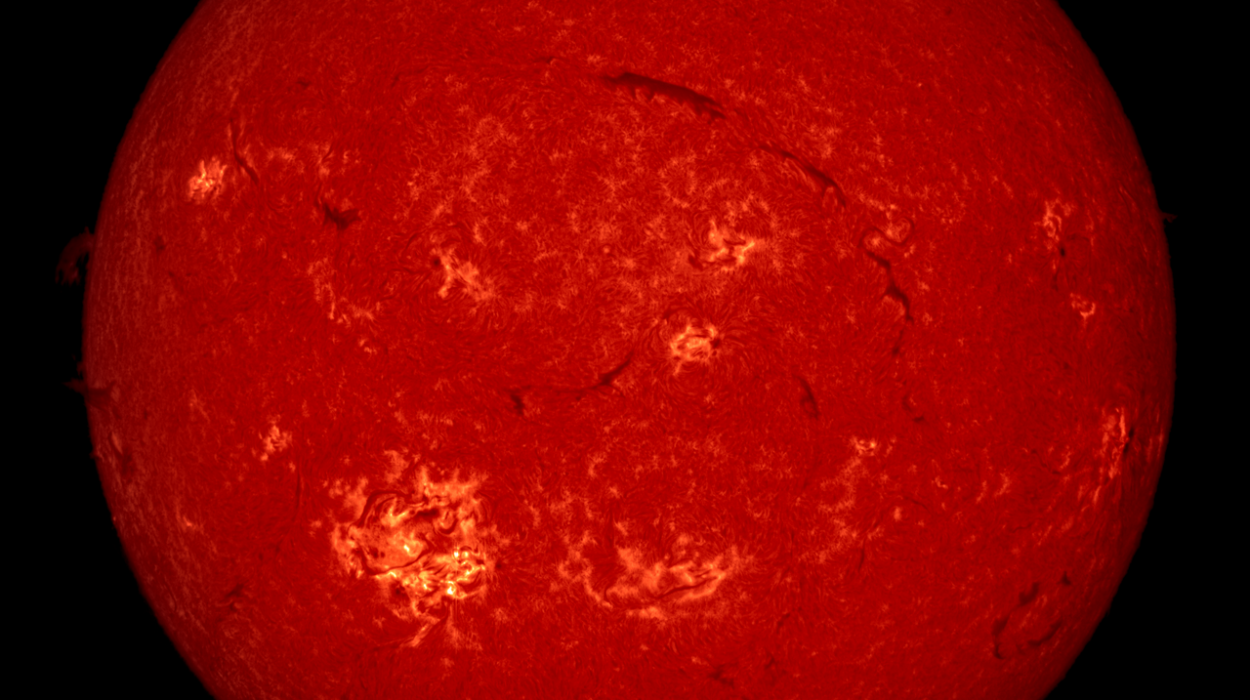
This gas comes largely from the Sun, which continuously releases charged particles known as the solar wind.
The solar wind flows throughout the Solar System, carrying magnetic fields and influencing planetary environments.
Even so, the density of particles remains extraordinarily low compared with Earth’s atmosphere.
For practical purposes, space within our Solar System behaves as a vacuum.
Vacuum Between the Stars
The regions between stars contain what astronomers call the interstellar medium.
Although incredibly thin, this medium contains hydrogen gas, helium, dust particles, magnetic fields, and cosmic rays.
Over millions of years, gravity can pull parts of this gas together, forming enormous molecular clouds.
Eventually, these clouds collapse to create new stars and planets.
In this way, even the sparse material drifting through space becomes the raw ingredients for future solar systems.
Vacuum Between Galaxies
The emptiest known environments lie between galaxies.
The intergalactic medium contains only tiny amounts of gas spread across enormous distances.
In many places, only a few atoms exist within an entire cubic meter.
Despite this incredible emptiness, gravity still connects galaxies across cosmic distances.
Invisible dark matter also appears to influence how galaxies move and cluster together, although scientists are still investigating its true nature.
Can Humans Survive in the Vacuum of Space?
Humans cannot survive unprotected in the vacuum of space.
Our bodies are adapted to Earth’s atmospheric pressure.
Without pressure, oxygen cannot enter the bloodstream through the lungs.
The lack of breathable air quickly causes unconsciousness.
The vacuum itself also allows body fluids to begin vaporizing at normal body temperature in exposed tissues, although skin and the circulatory system prevent the body from literally exploding—a common misconception.
This is why astronauts wear specially designed spacesuits.
A spacesuit provides oxygen, maintains proper pressure, regulates temperature, shields against harmful radiation to a limited extent, and removes carbon dioxide.
Essentially, it creates a small, portable Earth-like environment around the astronaut.
How Scientists Create Vacuums on Earth
Researchers often recreate vacuum conditions inside laboratories.
Special vacuum chambers use powerful pumps to remove most of the air.
These chambers allow scientists to study how materials behave in space, test satellites and spacecraft, manufacture advanced electronics, and conduct experiments in particle physics.
However, producing a perfect vacuum is nearly impossible.
Even the best laboratory vacuums contain a few remaining particles.
Nature itself offers some of the most complete vacuums known.
Does Empty Space Really Contain Nothing?
Modern physics suggests that even the emptiest vacuum is more complex than it appears.
According to quantum field theory, what seems to be empty space still contains underlying quantum fields.
Tiny fluctuations constantly occur at incredibly small scales.
These quantum effects do not mean that particles are permanently filling empty space, but they do show that a vacuum is not simply “nothing.”
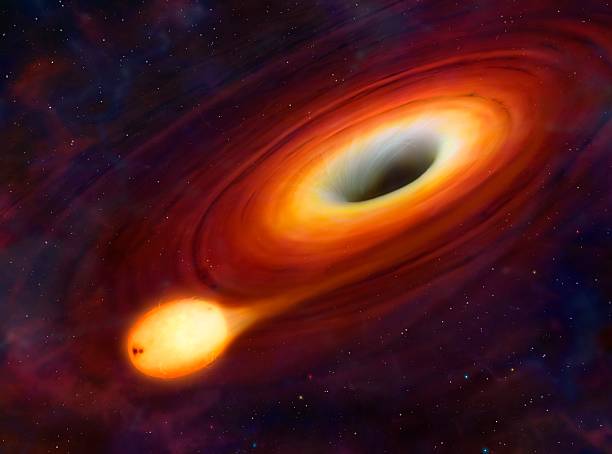
This is an active area of research in modern physics and plays an important role in understanding particle interactions, black holes, and the earliest moments of the universe.
Why the Vacuum of Space Matters
The vacuum of space is essential to the way the universe functions.
Without vast empty regions, planets could not orbit stars as they do today.
Galaxies would evolve differently.
Light from distant stars would be scattered by dense matter, making the universe far more difficult to observe.
The vacuum also allows spacecraft to travel efficiently without air resistance. Satellites remain in orbit because they encounter very little atmospheric drag. Telescopes placed in space can observe the universe with extraordinary clarity because there is no thick atmosphere to blur incoming light.
The apparent emptiness of space is therefore one of the reasons modern astronomy has revealed so much about the cosmos.
The Remarkable Beauty of Cosmic Emptiness
At first glance, a vacuum may seem like the absence of everything. Yet the vacuum of space is one of the most important features of the universe. It provides the stage on which stars ignite, galaxies evolve, planets orbit, and light travels across billions of years.
Rather than being a lifeless void, space is a dynamic environment shaped by gravity, radiation, magnetic fields, and the subtle laws of quantum physics. Its immense emptiness makes the bright islands of matter—stars, planets, and galaxies—all the more extraordinary.
The next time you gaze into the night sky, remember that the darkness between the stars is not merely empty space. It is the vast cosmic vacuum that has allowed the universe to grow, evolve, and become the breathtaking place we call home.