Imagine trying to find a single grain of sand hidden somewhere on a beach. A traditional computer would search through the grains one by one, checking each possibility until it found the right one. Now imagine a completely different kind of machine that approaches the problem in a fundamentally new way, exploring many possibilities at once according to the strange rules of quantum physics. That idea captures why quantum computers have become one of the most exciting frontiers in science and technology.
Quantum computers are often described as machines that will change the world, but they are also widely misunderstood. Some people believe they will instantly replace today’s laptops and smartphones. Others think they will solve every problem imaginable. Neither is true.
Quantum computers are incredibly powerful for certain types of problems, but they are not designed to do everything. In fact, for many everyday tasks—such as browsing the internet, writing documents, watching videos, or sending emails—a conventional computer remains the better choice.
The real promise of quantum computing lies in solving problems that are extraordinarily difficult, or even practically impossible, for the world’s fastest classical supercomputers. These are problems involving enormous numbers of possibilities, highly complex interactions, or calculations that grow exponentially more difficult as systems become larger.
Understanding what quantum computers can solve begins with understanding why they are different.
Why Quantum Computers Work Differently
Traditional computers process information using bits. Every bit can exist in one of two states: either 0 or 1. Every calculation performed by a classical computer is ultimately built upon these binary values.
Quantum computers use qubits, which obey the laws of quantum mechanics. Unlike ordinary bits, qubits can exist in combinations of states through a quantum property called superposition.
Qubits can also become linked through another quantum phenomenon called entanglement, allowing them to share relationships that have no equivalent in classical computing.
These unusual properties do not mean quantum computers simply “try every answer at once,” a common misconception. Instead, carefully designed quantum algorithms manipulate probability amplitudes so that correct answers become more likely to appear when the quantum system is measured.
This approach gives quantum computers remarkable advantages for certain mathematical and scientific problems.
Simulating Nature
One of the greatest strengths of quantum computers is simulating quantum systems themselves.
Nature, at its most fundamental level, follows quantum mechanics. Atoms, molecules, electrons, and chemical reactions all behave according to quantum rules.
Ironically, classical computers struggle to simulate these systems accurately.
As molecules become larger, the number of possible quantum interactions grows explosively. Even the most powerful supercomputers quickly run into limits.
Quantum computers, however, naturally operate using the same principles that govern these microscopic systems.
This makes them promising tools for studying chemistry, materials, and physics.
Scientists believe this could transform our understanding of many natural processes.
Discovering Better Medicines
Developing a new medicine is one of the most difficult scientific challenges.
Researchers must understand how drug molecules interact with proteins, cells, viruses, and countless other biological structures.
Many of these interactions depend on quantum effects within molecules.
Today’s pharmaceutical companies use powerful computers to estimate these behaviors, but the calculations often require approximations because the systems are simply too complex.
Quantum computers could eventually simulate molecular interactions much more accurately.
This would help scientists predict whether a potential drug is likely to work before expensive laboratory testing begins.
Better simulations could shorten development times, reduce costs, and improve treatments for diseases.
Although laboratory experiments will always remain essential, quantum computing could become an important partner in medical research.
Designing New Materials
Every material around us has unique properties.
Some conduct electricity.
Some resist heat.
Some are lightweight but incredibly strong.
Some become magnetic.
Some absorb sunlight efficiently.
Finding better materials often requires years of experimentation.
Scientists hope quantum computers will allow them to explore new materials virtually before creating them in laboratories.
This could lead to stronger aircraft, lighter vehicles, more efficient batteries, improved solar panels, better computer chips, and advanced construction materials.
Instead of testing thousands of possibilities experimentally, researchers could narrow the search using highly accurate quantum simulations.
Improving Batteries
Modern life depends on batteries.
Smartphones, laptops, electric vehicles, satellites, medical devices, and renewable energy systems all rely on energy storage.
Despite decades of progress, scientists continue searching for batteries that charge faster, last longer, hold more energy, and use safer materials.
Battery chemistry depends on interactions between atoms and electrons.
Because these interactions are fundamentally quantum mechanical, quantum computers may eventually help scientists understand battery materials with much greater precision.
Better simulations could accelerate the discovery of next-generation energy storage technologies.
Creating Better Fertilizers
One surprising application involves agriculture.
Plants require nitrogen to grow, yet atmospheric nitrogen is difficult to convert into forms plants can use.
Today, most fertilizer production depends on the Haber–Bosch process, an industrial method that consumes enormous amounts of energy worldwide.
Certain bacteria perform nitrogen fixation naturally under ordinary environmental conditions using specialized enzymes.
Scientists still do not fully understand every detail of this remarkable process because the chemistry is extraordinarily complex.
Quantum computers could help researchers model these enzymes more accurately, potentially inspiring cleaner and more energy-efficient methods for producing fertilizers.
Such advances could benefit global food production while reducing environmental impacts.
Fighting Climate Change
Climate change involves many interconnected systems.
Atmospheric chemistry.
Ocean circulation.
Cloud formation.
Energy technologies.
Carbon capture.
Renewable power generation.
Many of these areas involve highly complex physical and chemical interactions.
Quantum computers could assist researchers by modeling new catalysts that remove carbon dioxide from the atmosphere, improving battery technology for renewable energy, designing better solar materials, and discovering more efficient industrial processes.
Although quantum computing alone cannot solve climate change, it could become a valuable scientific tool in developing cleaner technologies.
Optimizing Complex Systems
Optimization means finding the best possible solution among countless alternatives.
Many real-world decisions involve optimization.
Airlines schedule thousands of flights.
Shipping companies plan delivery routes.
Factories coordinate production.
Power companies distribute electricity.
Financial institutions manage investment portfolios.
Telecommunication networks route data across the internet.
As these systems become larger, the number of possible solutions grows enormously.
Some optimization problems become so complicated that classical computers require impractical amounts of time to find the best answers.
Quantum algorithms may eventually provide faster solutions for certain optimization challenges.
Even small improvements could save industries billions of dollars while reducing energy consumption and waste.
Improving Traffic Flow
Modern cities face constant traffic congestion.
Thousands of vehicles interact across complex road networks.
Traffic lights, accidents, weather, construction, and changing travel patterns all influence transportation.
Finding the most efficient traffic management strategies requires analyzing enormous numbers of possibilities.
Quantum computers may someday help transportation planners optimize traffic flow, reduce delays, lower fuel consumption, and improve public transportation systems.
Although classical computers already perform many of these tasks effectively, quantum methods could offer advantages for especially large and complex networks.
Strengthening Artificial Intelligence
Artificial intelligence has transformed many aspects of modern life.
Machine learning systems recognize speech, translate languages, recommend movies, detect diseases, and generate images.
Training advanced AI models often requires enormous computational resources.
Researchers are exploring whether quantum computing can accelerate certain machine learning tasks.
This field, known as quantum machine learning, remains an active area of research.
Scientists are investigating algorithms that may improve pattern recognition, optimization, and data analysis.
However, it is important to understand that quantum computers are not expected to replace today’s AI systems. Instead, they may eventually become specialized tools that improve specific parts of machine learning.
Solving Financial Problems
Financial markets involve enormous amounts of uncertainty.
Banks, investment firms, and insurance companies analyze risk using mathematical models that may require billions of calculations.
Quantum computers could potentially improve portfolio optimization, option pricing, fraud detection, and risk analysis.
Some financial institutions are already exploring quantum algorithms through research programs.
Practical applications remain under development, but finance is considered one of the industries that could benefit significantly from future quantum computing advances.
Searching Huge Databases
Searching through vast amounts of information becomes increasingly difficult as databases grow larger.
A quantum algorithm known as Grover’s algorithm demonstrates that certain types of searches can be performed more efficiently than with classical methods.
The improvement is significant, although it does not make searching instantaneous.
This capability could become valuable in scientific research, data analysis, cybersecurity, and many other applications involving extremely large datasets.
Breaking Some Encryption Systems
One of the most widely discussed applications of quantum computing involves cryptography.
Much of today’s internet security relies on mathematical problems that are extremely difficult for classical computers.
Many encryption systems protect online banking, secure websites, confidential communications, and digital transactions.
A powerful enough quantum computer running Shor’s algorithm could solve certain mathematical problems much faster than classical computers, potentially breaking widely used public-key encryption methods such as RSA.
However, this does not mean all encryption will become useless.
Researchers have developed post-quantum cryptography, new encryption methods designed to remain secure even against future quantum computers.
Governments, technology companies, and international organizations are actively transitioning toward these new security standards.
Understanding the Universe
Some of the deepest questions in physics involve systems too complicated for today’s computers.
Scientists want to understand superconductivity, exotic quantum materials, particle interactions, neutron stars, and the earliest moments after the Big Bang.
Quantum computers could allow researchers to simulate physical systems that are currently beyond reach.
These simulations may reveal entirely new scientific discoveries and deepen our understanding of nature itself.
Just as telescopes expanded our view of the cosmos, quantum computers may expand our ability to understand the invisible quantum world.
Helping Space Exploration
Space missions involve countless complex calculations.
Engineers design spacecraft, analyze materials, optimize fuel consumption, and simulate extreme environments.
Quantum computers could assist in designing stronger spacecraft materials, improving navigation algorithms, optimizing communication networks, and analyzing scientific data collected from distant planets.
Although spacecraft themselves are unlikely to contain quantum computers anytime soon because current quantum hardware is extremely sensitive, researchers expect Earth-based quantum computers to support future space exploration.
Discovering Better Catalysts
Catalysts are substances that speed up chemical reactions without being permanently consumed.
They play vital roles in producing fuels, plastics, medicines, fertilizers, and countless industrial products.
Finding better catalysts often requires understanding quantum interactions among many atoms simultaneously.
Quantum computers could simulate these reactions with unprecedented accuracy.
Improved catalysts could make industrial processes cleaner, faster, cheaper, and more energy-efficient.
Accelerating Scientific Discovery
Many branches of science generate enormous datasets and highly complex mathematical problems.
Astronomy observes billions of stars and galaxies.
Particle physics analyzes collisions involving countless particles.
Climate science models Earth’s atmosphere and oceans.
Genetics studies billions of DNA base pairs.
Quantum computers may become valuable tools that help scientists analyze these challenges more efficiently.
Rather than replacing scientists, they could provide new computational capabilities that expand human discovery.
What Quantum Computers Cannot Solve
Despite the excitement, quantum computers have important limitations.
They are not magical machines capable of solving every problem instantly.
They are not expected to replace laptops, smartphones, or gaming computers.
Writing documents, editing photographs, streaming videos, browsing websites, and running most business software will continue to rely primarily on classical computers.
Many problems simply do not gain meaningful speed improvements from quantum algorithms.
In these situations, conventional computers remain more practical, less expensive, and easier to operate.
Quantum computers are specialized scientific tools, not universal replacements.
The Challenges Facing Quantum Computing
Building useful quantum computers remains extraordinarily difficult.
Qubits are extremely delicate.
Small disturbances from heat, vibration, electromagnetic radiation, or surrounding environments can introduce errors.
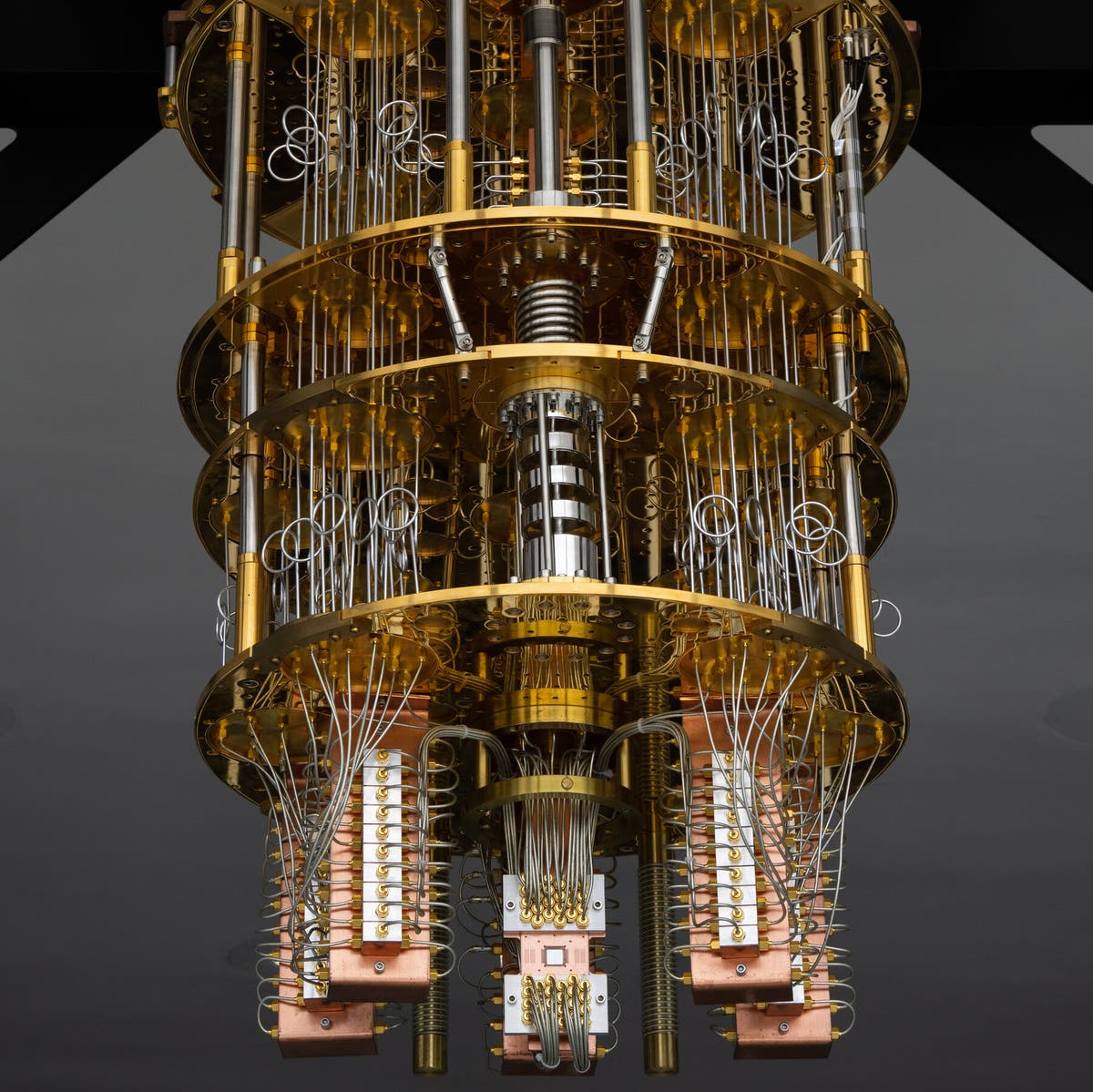
Maintaining quantum states requires sophisticated engineering, and many current quantum systems operate at temperatures close to absolute zero.
Researchers continue improving error correction, qubit stability, and hardware design.
Although impressive progress has been made, large-scale fault-tolerant quantum computers capable of solving many practical problems are still under active development.
The Future of Quantum Computing
The coming decades will likely see quantum computers working alongside classical computers rather than replacing them.
A scientist studying molecular chemistry might use a conventional computer to prepare data, send the hardest calculations to a quantum processor, and then analyze the results using traditional software.
This hybrid approach combines the strengths of both technologies.
As quantum hardware becomes more reliable, new algorithms are developed, and error correction improves, entirely new applications may emerge—some that scientists have not yet imagined.
History shows that transformative technologies often reveal their greatest value only after they mature.
Why Quantum Computing Matters
Quantum computers represent one of humanity’s boldest attempts to harness the strange laws of quantum mechanics for practical problem-solving. Their greatest strength lies not in making everyday computers obsolete, but in tackling challenges that overwhelm even the most powerful classical machines. From discovering life-saving medicines and designing advanced materials to improving energy technologies, optimizing complex systems, and exploring the deepest mysteries of the universe, quantum computing has the potential to become a powerful scientific and technological tool.
Much work remains before these machines reach their full potential. Researchers continue to overcome engineering challenges, improve quantum hardware, and develop new algorithms. While many of the most ambitious applications are still in the future, the progress already achieved demonstrates that quantum computing is more than a theoretical idea—it is an emerging field grounded in well-established physics.
As the technology advances, quantum computers may not change every aspect of our lives overnight. Instead, they are likely to transform the fields where the hardest problems exist, opening doors to discoveries that are currently beyond our reach. In doing so, they could help scientists, engineers, physicians, and researchers better understand the natural world and develop solutions to some of humanity’s most complex challenges.