Imagine a surgeon preparing for a delicate operation. Every movement of their hands must be steady, every decision precise, and every second carefully planned. A tiny mistake could affect a patient’s health or even their life. For centuries, surgeons have relied on their skill, experience, and specialized instruments to perform operations. Today, however, a remarkable technological partner is helping doctors achieve even greater precision: the surgical robot.
Although the word “robot” may bring to mind machines that work independently, surgical robots do not replace surgeons. Instead, they are advanced medical systems that assist doctors during operations. They provide greater precision, improved visualization, and enhanced control, allowing surgeons to perform many procedures that would otherwise be far more difficult.
Modern surgical robots represent one of the most significant advances in medicine. They combine robotics, computer science, engineering, and medical knowledge to help doctors treat patients more safely and effectively. From heart surgery to cancer treatment, these remarkable systems are changing the way many operations are performed around the world.
What Is a Surgical Robot?
A surgical robot is a computer-assisted medical system designed to help surgeons perform operations with exceptional precision. Rather than making decisions on its own, the robot follows the exact movements of a trained surgeon.
During a robotic-assisted procedure, the surgeon usually sits at a nearby control console while viewing a highly magnified, three-dimensional image of the surgical area. Using hand controls and foot pedals, the surgeon directs robotic arms equipped with tiny surgical instruments.
Every movement made by the surgeon is translated into highly precise movements by the robotic arms. The robot cannot think independently or perform surgery without the surgeon’s direct control. Instead, it acts as an advanced extension of the surgeon’s hands.
This partnership between human expertise and robotic technology allows many procedures to be performed with remarkable accuracy.
The History of Surgical Robots
The idea of using robots in medicine began several decades ago. Engineers and doctors wanted to develop tools that could improve surgical precision while reducing the physical limitations of traditional instruments.
Early robotic systems appeared in the late twentieth century and were mainly used to assist with highly specialized procedures. As computer technology, imaging systems, and robotics improved, surgical robots became more sophisticated and reliable.
Today, robotic-assisted surgery is used in many hospitals around the world. Ongoing research continues to improve these systems, making them more versatile and easier for surgeons to use.
How Surgical Robots Work
A surgical robot is made up of several connected components that work together during an operation.
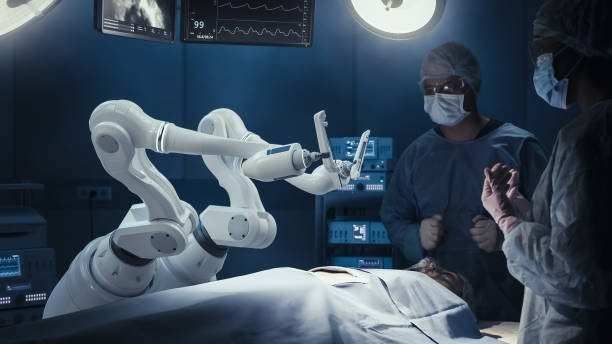
The surgeon operates from a computerized console equipped with hand controls and high-resolution displays. Nearby, robotic arms hold miniature surgical instruments capable of making extremely precise movements.
A tiny camera, called an endoscope, is inserted into the patient’s body through a small incision. This camera provides a bright, magnified, three-dimensional view of the surgical site.
The robotic arms respond instantly to the surgeon’s commands. Advanced software translates the surgeon’s hand movements into smooth, controlled instrument movements while filtering out natural hand tremors.
Because the robotic instruments can rotate and bend more freely than the human wrist, surgeons can perform delicate procedures in confined spaces that would otherwise be difficult to reach.
Throughout the operation, the surgeon remains in complete control.
Surgical Robots Do Not Replace Surgeons
One of the biggest misconceptions about surgical robots is that they perform operations independently.
In reality, today’s surgical robots do not make medical decisions.
They cannot diagnose diseases, choose surgical techniques, or react intelligently to unexpected situations without human guidance.
Every movement of the robotic arms is directed by the surgeon. If the surgeon stops controlling the system, the robot immediately stops moving.
The robot is a sophisticated surgical tool—not an autonomous doctor.
The experience, judgment, and expertise of the surgeon remain the most important factors in a successful operation.
Better Precision During Surgery
One of the greatest advantages of robotic-assisted surgery is increased precision.
Human hands naturally experience tiny involuntary movements known as tremors. During extremely delicate procedures involving nerves, blood vessels, or other sensitive tissues, even small movements can matter.
Surgical robots greatly reduce these tiny vibrations.
The robotic instruments move smoothly and accurately according to the surgeon’s commands, allowing more controlled surgical actions.
This enhanced precision can help surgeons avoid unnecessary damage to surrounding healthy tissues during certain procedures.
Smaller Incisions
Many robotic-assisted procedures are performed using minimally invasive surgery.
Instead of making one large incision, surgeons create several very small openings through which cameras and surgical instruments are inserted.
Smaller incisions often result in less damage to muscles and surrounding tissues.
For many patients, this approach may reduce pain after surgery and improve comfort during recovery.
However, the choice of surgical method depends on the patient’s condition, and not every operation can be performed using minimally invasive techniques.
Enhanced Vision for Surgeons
During robotic-assisted surgery, doctors often view the surgical area through a highly magnified three-dimensional camera system.
This enhanced visualization allows surgeons to see tiny blood vessels, nerves, and other important structures in remarkable detail.
Compared with traditional two-dimensional imaging, three-dimensional views improve depth perception, helping surgeons judge distances more accurately.
Better visualization supports careful surgical planning and more precise instrument control throughout the procedure.
Greater Freedom of Movement
Traditional surgical instruments have limited flexibility.
Robotic surgical instruments, however, are specially designed to move in multiple directions with exceptional dexterity.
Their joints can rotate and bend in ways that exceed the movement range of the human wrist.
This flexibility allows surgeons to reach difficult areas inside the body while maintaining precise control.
As a result, certain complex procedures become technically easier to perform.
Less Blood Loss in Some Procedures
Because robotic-assisted surgery often involves smaller incisions and more precise instrument control, some procedures may result in less bleeding compared with certain traditional open surgeries.
Reduced blood loss can decrease the likelihood of blood transfusions for some patients.
However, outcomes vary depending on the type of surgery, the patient’s health, and many other medical factors.
Faster Recovery for Many Patients
One reason minimally invasive robotic surgery has become increasingly popular is the possibility of faster recovery.
Because the incisions are usually smaller, many patients experience less pain after surgery.
Some patients are able to leave the hospital sooner than after comparable open procedures.
Smaller wounds may also heal more quickly, allowing patients to return to normal daily activities earlier.
Recovery times vary from person to person, and not every patient experiences the same benefits.
Reduced Risk of Infection
Smaller surgical incisions expose less tissue to the external environment.
This may lower the risk of certain surgical wound infections compared with larger open incisions in appropriate procedures.
Hospitals also follow strict sterilization and infection-control practices regardless of whether robotic systems are used.
Patient safety always depends on careful surgical planning, proper technique, and excellent postoperative care.
Common Types of Robotic Surgery
Surgical robots are used in many areas of medicine.
They assist surgeons during operations involving the prostate, kidneys, bladder, uterus, ovaries, colon, rectum, heart, lungs, and other organs.
Some robotic systems are used in orthopedic surgery to help position implants with high accuracy.
Others assist in brain surgery, spinal procedures, and certain ear, nose, and throat operations.
Doctors decide whether robotic assistance is appropriate based on each patient’s medical condition and the specific procedure required.
Robotic Surgery for Cancer Treatment
Cancer surgery often requires removing tumors while preserving as much healthy tissue as possible.
Robotic systems can help surgeons perform precise movements around delicate structures such as nerves and blood vessels.
For some types of cancer, robotic-assisted surgery has become an important treatment option.
The suitability of robotic surgery depends on factors such as tumor size, location, and the patient’s overall health.
Each treatment plan is carefully evaluated by medical specialists.
Cardiac Surgery
Heart surgery demands extraordinary precision.
Some robotic systems allow surgeons to perform selected heart procedures through small incisions rather than opening the entire chest.
This approach may reduce recovery time for certain patients while maintaining excellent surgical accuracy.
Not every heart operation can be performed robotically, but ongoing advances continue to expand the possibilities.
Orthopedic Surgery
Robotic technology also plays an important role in orthopedic procedures.
During knee or hip replacement surgery, robotic systems can assist surgeons in planning bone preparation and positioning artificial joints.
Accurate implant placement may improve joint function and longevity.
The surgeon remains responsible for every step of the procedure.
Neurosurgery
The brain contains billions of interconnected nerve cells packed into a very small space.
Operating on the brain requires exceptional precision.
Some robotic systems help neurosurgeons navigate complex brain structures with remarkable accuracy while minimizing unnecessary damage to surrounding tissue.
Advanced imaging technologies further improve surgical planning and guidance.
Artificial Intelligence and Surgical Robots
Modern surgical robots increasingly incorporate forms of artificial intelligence (AI) to assist surgeons.
AI can help analyze medical images, identify anatomical structures, and provide useful information during surgical planning.
Some systems monitor instrument positions and alert surgeons if movements approach sensitive areas.
Despite these intelligent features, AI does not replace the surgeon’s judgment.
Medical decisions remain entirely under human control.
Training Surgeons to Use Robotic Systems
Operating a surgical robot requires specialized education and extensive practice.
Surgeons undergo dedicated training programs before performing robotic-assisted procedures on patients.
They often begin by practicing with computer simulations, surgical models, and supervised operations.
Only after demonstrating proficiency are they allowed to independently use robotic systems.
Continuous learning remains an important part of robotic surgery as technology continues to evolve.
Are Surgical Robots Safe?
Patient safety is always the highest priority.
Before being approved for clinical use, surgical robotic systems undergo extensive engineering tests, laboratory evaluations, and regulatory reviews.
Hospitals perform regular maintenance and safety checks to ensure the equipment functions properly.
During surgery, trained medical teams carefully monitor both the patient and the robotic system.
Like all medical procedures, robotic surgery carries risks, but these risks are evaluated alongside its potential benefits for each individual patient.
Limitations of Surgical Robots
Although surgical robots offer many advantages, they are not suitable for every operation.
Some complex emergencies require traditional open surgery.
Certain patients may have medical conditions that make robotic-assisted procedures less appropriate.
Robotic systems are also expensive to purchase, maintain, and operate.
Hospitals must invest in specialized equipment, surgeon training, and ongoing technical support.
These costs can limit access in some parts of the world.
The Future of Surgical Robotics
The future of surgical robotics is rapidly developing.
Researchers are designing smaller, more flexible robotic instruments capable of reaching areas that are currently difficult to access.
Improved imaging technologies may allow surgeons to see tissues with even greater clarity.
Artificial intelligence could provide more advanced decision-support tools during surgery while keeping surgeons firmly in control.
Engineers are also exploring miniature robots that may one day travel inside the human body to deliver medications or assist with highly targeted medical procedures.
Remote robotic surgery, where a surgeon operates on a patient from another location using secure communication networks, has already been demonstrated in carefully controlled settings. Continued improvements in communication technology may expand such possibilities in the future, although safety, reliability, and regulatory considerations remain essential.
How Surgical Robots Are Transforming Medicine
Surgical robots represent a powerful example of how technology can enhance human skill rather than replace it. By combining the experience of highly trained surgeons with the precision of advanced robotic systems, modern medicine has gained new ways to perform many complex operations.
For many patients, robotic-assisted surgery can offer smaller incisions, improved precision, enhanced visualization, and, in appropriate cases, faster recovery. At the same time, the success of every procedure continues to depend on the knowledge, judgment, and expertise of the medical team.
As robotics, artificial intelligence, imaging, and computer engineering continue to advance, surgical robots will likely become even more capable and widely available. Yet one principle will remain unchanged: these remarkable machines are tools designed to support doctors, not replace them. The human surgeon remains at the center of every operation, using technology to provide safer, more precise, and more effective care for patients around the world.