Imagine standing on Earth during a warm summer afternoon. Trees are full of green leaves, flowers bloom, and the Sun shines high in the sky. Now picture the same place a few months later, covered in snow with shorter days and freezing temperatures. These dramatic changes are called seasons, and they are one of the most familiar rhythms of life on Earth.
But Earth is not the only world with seasons.
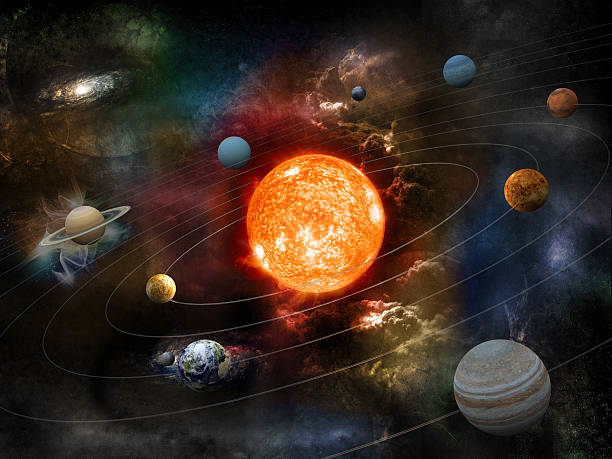
Across our solar system, nearly every planet experiences seasonal changes in one way or another. Some planets have seasons that are mild and barely noticeable. Others experience extreme changes that would seem unimaginable on Earth. On one planet, a single season can last more than 20 Earth years. On another, the Sun may disappear for decades from parts of the planet. Some worlds have no meaningful seasons at all.
Why are these differences so dramatic? Why does one planet enjoy gentle seasonal shifts while another swings between extreme heat and deep cold?
The answer lies in a fascinating combination of astronomy, physics, and planetary motion. To understand why planets have different seasons, we must first understand what causes seasons in the first place.
What Are Seasons?
A season is a recurring period during a planet’s year when weather, temperature, daylight, and climate change in predictable ways.
On Earth, we recognize four main seasons: spring, summer, autumn (fall), and winter. These seasons affect everything from plant growth and animal behavior to agriculture and human activities.
However, seasons are not simply changes in weather. Weather can vary from day to day, while seasons are long-term patterns caused by the way a planet moves through space.
The most important factor behind seasons is not how close a planet is to the Sun, but the angle at which sunlight reaches different parts of the planet.
The Biggest Reason: A Planet’s Tilt
The primary reason planets have seasons is something called axial tilt, also known as obliquity.
Every planet rotates around an imaginary line called its axis. This axis runs through the planet from one pole to the other.
If a planet’s axis were perfectly upright, it would always receive sunlight in nearly the same way throughout its year. In that case, seasonal changes would be very small or might not exist at all.
But most planets are tilted.
Earth’s axis is tilted by about 23.5 degrees relative to its orbit around the Sun.
Because of this tilt, different parts of Earth receive different amounts of sunlight during the year.
When the Northern Hemisphere tilts toward the Sun, sunlight strikes it more directly, days become longer, and temperatures rise. This is summer in the north.
At exactly the same time, the Southern Hemisphere tilts away from the Sun, receiving less direct sunlight and shorter days. It experiences winter.
Six months later, the situation reverses.
This simple tilt creates the familiar cycle of seasons that repeats every year.
The Distance from the Sun Is Not the Main Cause
Many people believe that summer happens because Earth is closer to the Sun.
It sounds reasonable, but it is incorrect.
In fact, Earth is actually closest to the Sun in early January, when much of the Northern Hemisphere is experiencing winter.
Earth is farthest from the Sun in early July, during Northern Hemisphere summer.
The difference in Earth’s distance from the Sun changes the amount of solar energy reaching the planet by only a few percent. This effect is much smaller than the influence of Earth’s axial tilt.
The changing angle of sunlight—and the length of daylight—is what truly drives the seasons.
Why Direct Sunlight Matters
The angle at which sunlight strikes a planet’s surface makes a tremendous difference.
When sunlight arrives almost directly overhead, the same amount of solar energy is concentrated into a smaller area. This produces more heating.
When sunlight arrives at a low angle, the energy spreads over a much larger area. The light also travels through more of the atmosphere before reaching the surface, reducing the amount of energy that arrives.
This is why the Sun feels much warmer high in the summer sky than low on the winter horizon.
Longer daylight hours during summer also give the ground more time to absorb heat each day.
Together, these effects create warmer seasons.
Day Length Changes with the Seasons
Seasonal changes involve more than temperature.
The length of the day also changes because of a planet’s tilt.
During summer, the hemisphere tilted toward the Sun experiences longer days and shorter nights.
In winter, daylight becomes much shorter.
Near Earth’s poles, these differences become dramatic.
During summer, the Sun may remain above the horizon for weeks or even months, creating the famous midnight Sun.
During winter, the opposite occurs. The Sun may not rise for extended periods, leading to the long polar night.
These variations strongly influence local climates and ecosystems.
Earth Has Moderate Seasons
Earth’s 23.5-degree tilt produces seasons that are noticeable but generally not extreme.
Most regions experience gradual transitions between spring, summer, autumn, and winter.
These moderate seasonal changes have helped support diverse ecosystems and agriculture across the planet.
The presence of large oceans also helps moderate Earth’s climate. Water absorbs and releases heat more slowly than land, reducing temperature extremes.
Earth’s atmosphere further softens seasonal changes by transporting heat around the globe through winds and weather systems.
Mars Has Earth-Like Seasons
Among all the planets, Mars has seasons most similar to Earth’s.
Its axis is tilted by about 25 degrees, very close to Earth’s tilt.
As a result, Mars experiences spring, summer, autumn, and winter.
However, Martian seasons are much longer because Mars takes 687 Earth days to orbit the Sun.
Each Martian season lasts roughly twice as long as one on Earth.
Mars also has a much thinner atmosphere, so temperatures can change dramatically between day and night.
During winter, carbon dioxide in the atmosphere freezes onto the polar caps, making them grow larger. In spring, this frozen carbon dioxide turns back into gas, creating fascinating seasonal changes on the planet.
Mercury Has Almost No Seasons
Mercury experiences almost no true seasons.
Its axis is tilted by only about 0.03 degrees, making it nearly upright.
Because of this tiny tilt, the angle of sunlight changes very little throughout Mercury’s year.
Although Mercury experiences enormous temperature differences between its day and night sides, these changes are not caused by seasons.
Instead, they result from Mercury’s slow rotation, lack of a substantial atmosphere, and its close proximity to the Sun.
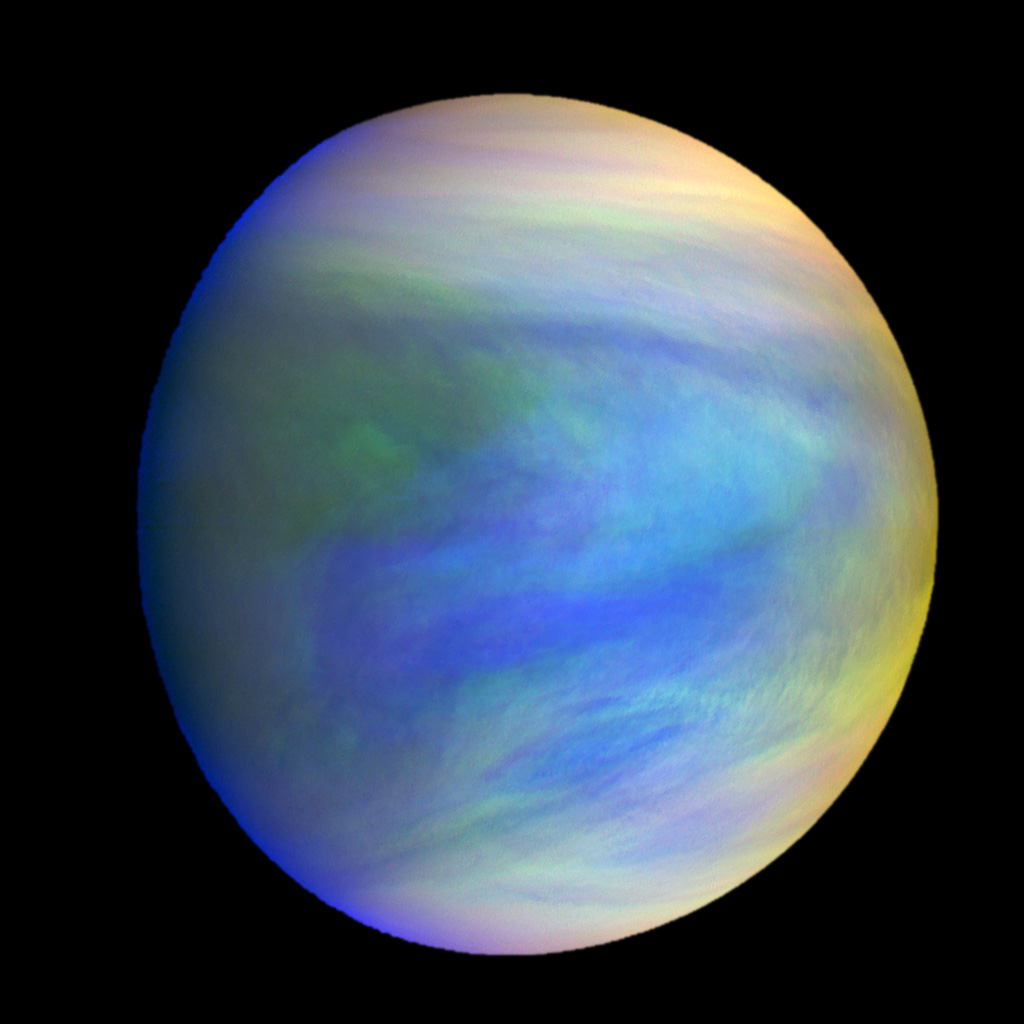
Venus Barely Has Seasons
Venus also has almost no seasonal variation.
Its axis is tilted by only about 3 degrees, so sunlight changes very little over the course of its year.
Venus does have one unusual feature: it rotates backward compared with most planets. This is called retrograde rotation.
Despite this unusual rotation, the planet’s small tilt means that seasonal changes remain minimal.
Its extremely thick atmosphere, composed mainly of carbon dioxide, traps heat so efficiently that temperatures remain remarkably consistent across the planet.
Venus is hotter than Mercury even though it is farther from the Sun.
Jupiter Has Very Weak Seasons
Jupiter’s enormous size might suggest dramatic seasons, but the opposite is true.
Its axis is tilted by only about 3 degrees.
As a result, the amount of sunlight reaching different parts of the planet changes very little during its orbit.
Jupiter’s atmosphere is constantly active, producing giant storms and colorful cloud bands, but these weather systems are not driven by seasonal changes.
Instead, they arise from the planet’s rapid rotation, internal heat, and complex atmospheric circulation.
Saturn Has Beautiful Long Seasons
Saturn’s seasons are much more noticeable.
Its axis is tilted by about 26.7 degrees, similar to Earth’s.
However, Saturn takes nearly 29.5 Earth years to complete one orbit around the Sun.
That means each season lasts more than seven Earth years.
These long seasons affect Saturn’s atmosphere, cloud patterns, temperatures, and even the appearance of its famous rings.
As the Sun’s angle changes, the rings appear to brighten, darken, or even seem to disappear temporarily when viewed edge-on from Earth.
Uranus Has the Most Extreme Seasons
If one planet demonstrates how important axial tilt is, it is Uranus.
Its axis is tilted by an astonishing 98 degrees.
Instead of spinning like a typical planet, Uranus essentially rotates on its side.
For part of its orbit, one pole points almost directly at the Sun while the other remains in darkness.
Each pole experiences about 42 Earth years of continuous daylight followed by about 42 years of continuous darkness.
These are among the most extreme seasons known in our solar system.
Despite this unusual orientation, Uranus still receives very little sunlight because it is so far from the Sun.
Neptune Has Very Long Seasons
Neptune has a tilt of about 28 degrees, similar to Earth.
Its seasons resemble Earth’s in principle, but they last much longer.
Because Neptune takes about 165 Earth years to orbit the Sun, each season lasts more than 40 Earth years.
Even with its great distance from the Sun, Neptune’s atmosphere remains surprisingly active, producing powerful winds and enormous storms.
Scientists continue studying how these long seasons influence the planet’s weather over decades.
Pluto Has Extraordinary Seasons
Although classified as a dwarf planet, Pluto experiences remarkable seasonal changes.
Its axis is tilted by about 120 degrees, giving it an unusual orientation similar to Uranus.
Pluto also follows a highly elliptical orbit, meaning its distance from the Sun changes significantly throughout its year.
A single orbit around the Sun takes 248 Earth years.
As Pluto moves closer to the Sun, some of its frozen nitrogen, methane, and carbon monoxide sublimate directly into gas, forming a temporary atmosphere.
As it moves farther away, these gases freeze back onto the surface.
Its changing distance from the Sun and its large axial tilt combine to create some of the most unusual seasons in the solar system.
The Shape of a Planet’s Orbit Also Matters
Although axial tilt is usually the dominant factor, a planet’s orbital shape can also influence its seasons.
Most planets travel around the Sun in nearly circular orbits.
Some, however, follow more elongated elliptical paths.
When a planet moves closer to the Sun, it receives more solar energy.
When it moves farther away, it receives less.
On Earth, this effect is relatively small because our orbit is nearly circular.
On planets with more elliptical orbits, changes in distance can make seasonal differences stronger.
In Pluto’s case, both orbital shape and axial tilt contribute significantly to its seasonal behavior.
Atmospheres Change the Way Seasons Feel
Not all planets respond to sunlight in the same way.
A thick atmosphere can store heat, circulate air, and reduce temperature extremes.
Earth’s atmosphere helps spread warmth around the globe.
Venus’s dense atmosphere traps enormous amounts of heat, keeping temperatures extremely high throughout the year.
Mars has a thin atmosphere, so it cannot retain heat effectively. As a result, seasonal temperature swings are much greater than they would be with a thicker atmosphere.
The atmosphere acts like a giant climate regulator, shaping how seasons are experienced on a planet.
Oceans Can Moderate Seasons
Large oceans also influence seasonal changes.
Water heats and cools much more slowly than land.
On Earth, oceans absorb solar energy during summer and gradually release it during winter.
This helps coastal regions experience milder seasonal temperature changes than inland areas.
Planets without large bodies of liquid water cannot benefit from this natural climate regulation.
Do All Planets Have Four Seasons?
No.
The familiar pattern of spring, summer, autumn, and winter is specific to Earth.
Other planets may experience only warm and cold periods, changes in atmospheric circulation, shifts in cloud formation, or alterations in polar ice.
The exact nature of a planet’s seasons depends on its tilt, orbit, atmosphere, rotation, and surface conditions.
Every world tells its own seasonal story.
Can Seasons Change Over Time?
Yes.
A planet’s axial tilt is not always constant.
On Earth, the tilt slowly changes over tens of thousands of years.
These gradual variations, combined with changes in Earth’s orbit and the wobble of its axis, are known as Milankovitch cycles.
They influence long-term climate patterns and have contributed to the timing of past ice ages.
Other planets can experience even larger changes in tilt over millions of years, leading to different seasonal conditions throughout their histories.
Why Understanding Seasons Matters
Studying planetary seasons does much more than satisfy curiosity.
It helps scientists understand planetary climates, weather systems, atmospheric circulation, and the potential habitability of distant worlds.
When astronomers discover planets orbiting other stars, one of the first questions they ask is whether those planets might experience seasons similar to Earth’s.
The answer can provide important clues about surface temperatures, the presence of liquid water, and the possibility of environments where life could exist.
Seasonal studies also improve our understanding of Earth’s own climate by revealing how planetary systems respond to sunlight, rotation, and atmospheric processes.
Every Planet Experiences Time Differently
The changing seasons remind us that every planet lives by its own cosmic rhythm.
Earth’s gentle seasonal cycle has shaped forests, oceans, wildlife, and human civilization for thousands of years. Mars experiences familiar but longer seasons. Saturn’s unfold over decades. Neptune’s stretch across generations. Uranus turns the very idea of seasons upside down, while Mercury and Venus hardly experience them at all.
These remarkable differences all arise from a few fundamental properties: the tilt of a planet’s axis, the shape of its orbit, the nature of its atmosphere, and the way it spins through space.
By understanding why planets have different seasons, we gain more than knowledge about distant worlds. We also gain a deeper appreciation for Earth—a planet whose carefully balanced seasons have helped create one of the most diverse and life-supporting environments known in the universe.