Everything you can touch, hold, see, smell, or even breathe is made of matter. The chair you are sitting on, the water you drink, the air filling your lungs, the stars shining in the night sky, and even your own body are all forms of matter. Although matter is everywhere, it is something most people rarely stop to think about. Yet understanding matter is one of the first steps toward understanding the universe itself.
Matter is the building material of the physical world. It forms planets, mountains, oceans, plants, animals, and galaxies. Every object around us, from the smallest grain of sand to the largest known galaxy, exists because matter exists.
Scientists have spent centuries studying matter, gradually uncovering its hidden structure and revealing that everything we see is built from incredibly tiny particles. Today, matter remains one of the most fascinating subjects in physics, chemistry, and many other branches of science.
What Is Matter?
Matter is anything that has mass and occupies space. This simple scientific definition explains why so many different things—from a feather to a mountain—are considered matter.
Mass refers to the amount of matter an object contains. Space refers to the volume that object occupies. If something has both mass and volume, it is matter.
A rock is matter because it has weight and takes up space.
Water is matter because it fills a glass and has mass.
Air is also matter, even though it is invisible. It occupies space inside a balloon, and it has mass, which can be measured with sensitive scientific instruments.
Even microscopic bacteria, giant whales, towering trees, and distant stars all qualify as matter because they meet the same basic definition.
Everything Around You Is Made of Matter
It may seem surprising that such different objects can all belong to the same category.
A diamond is hard and transparent.
Clouds are soft and constantly changing.
Steel is strong.
Wood is lightweight.
Water flows.
Ice is solid.
Steam rises into the atmosphere.
Despite these differences, they are all forms of matter.
The incredible diversity of the physical world comes not from different definitions of matter but from the countless ways its tiny particles can be arranged and interact with one another.
Matter Is Made of Atoms
For thousands of years, people wondered whether matter could be divided forever into smaller and smaller pieces.
Modern science has shown that matter is built from atoms, which are incredibly tiny building blocks. The word “atom” comes from the Greek word meaning “indivisible,” although scientists now know that atoms themselves contain even smaller particles.
Atoms are so small that millions could fit across the width of a human hair. If an atom were enlarged to the size of a football stadium, its nucleus would be only about the size of a marble at the center, while the electrons would occupy the surrounding space.
Although atoms are unimaginably small, they combine in countless ways to create everything we see around us.
The Structure of an Atom
Every atom consists of three main types of subatomic particles.
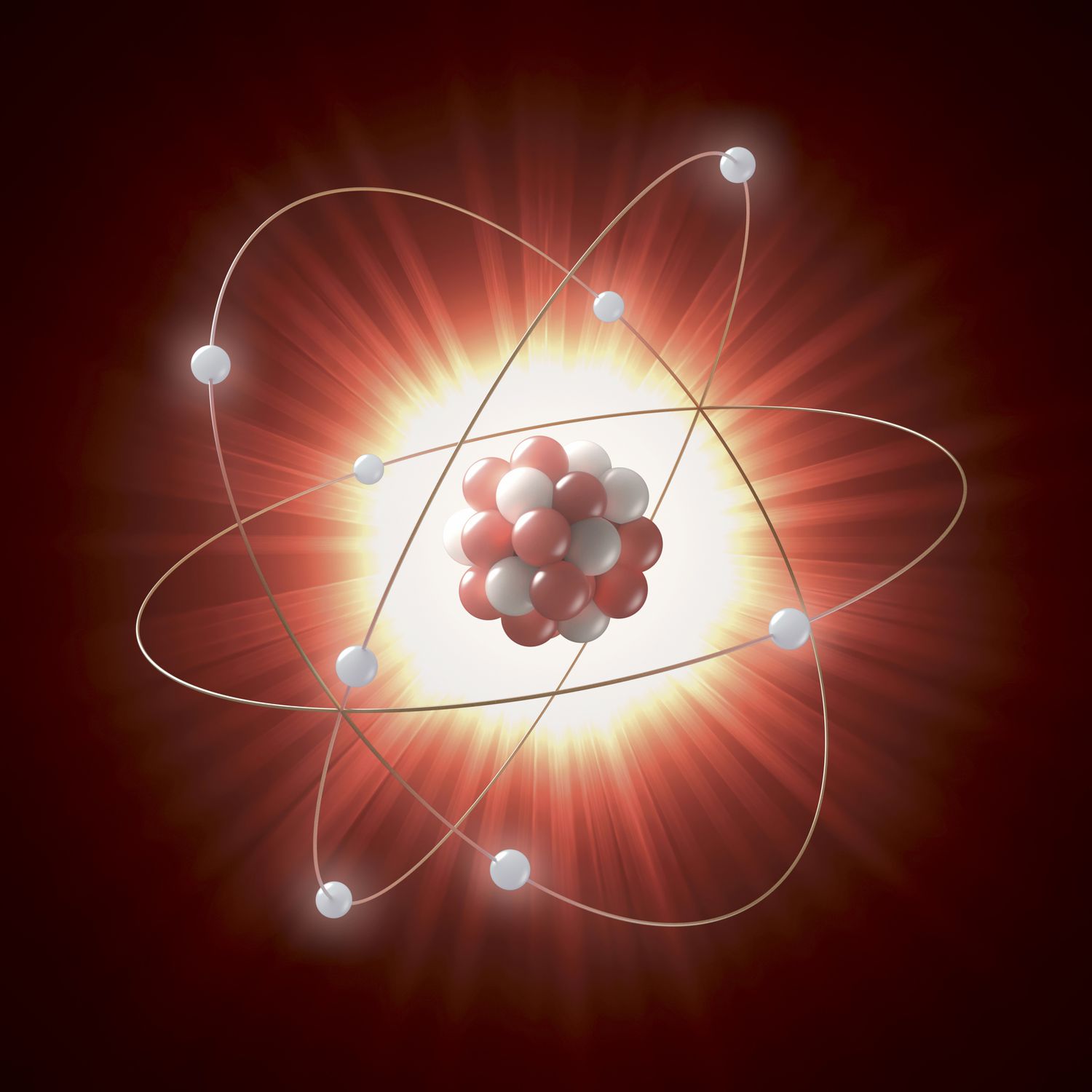
At the center lies the nucleus, which contains positively charged protons and electrically neutral neutrons. Surrounding the nucleus are negatively charged electrons that occupy regions called orbitals.
Protons determine the identity of an element. For example, every hydrogen atom has one proton, every carbon atom has six protons, and every oxygen atom has eight protons.
Neutrons contribute to an atom’s mass and influence the stability of its nucleus.
Electrons play the most important role in chemical reactions because they interact with electrons from other atoms to form chemical bonds.
Although atoms are mostly empty space, the forces between these particles give matter its strength and structure.
Elements: The Fundamental Types of Matter
An element is a pure substance made of only one kind of atom.
Scientists have discovered 118 known chemical elements, each with its own unique number of protons.
Some elements occur naturally, while others have been created in laboratories.
Hydrogen is the most abundant element in the universe. It fuels stars through nuclear fusion and was among the first elements formed after the Big Bang.
Oxygen is essential for most life on Earth.
Carbon forms the foundation of all known living organisms because it can create an enormous variety of chemical compounds.
Iron helps carry oxygen through human blood and also forms the cores of many planets.
Gold, silver, copper, silicon, nitrogen, calcium, and dozens of other elements each possess unique physical and chemical properties that make them important in nature and technology.
Molecules: When Atoms Join Together
Atoms rarely exist alone. Most combine with other atoms to form molecules.
A molecule is a group of atoms held together by chemical bonds.
Water is one of the simplest and most familiar molecules. Each water molecule contains two hydrogen atoms and one oxygen atom.
Carbon dioxide contains one carbon atom and two oxygen atoms.
Oxygen gas consists of two oxygen atoms bonded together.
The human body contains billions of different molecules, including proteins, DNA, fats, sugars, and countless others that perform vital biological functions.
The enormous variety of molecules explains the diversity of matter found throughout nature.
The States of Matter
Matter exists in different physical forms known as states of matter. These states depend on how closely particles are packed together and how much energy they possess.
In solids, particles are tightly packed and mainly vibrate in place. This gives solids their fixed shape and volume. Rocks, wood, glass, and ice are all solids.
In liquids, particles remain close together but can move around one another. Liquids have a definite volume but take the shape of their container. Water, milk, oil, and molten metal are examples.
In gases, particles move freely and spread throughout any available space. Gases have neither a fixed shape nor a fixed volume. Air, oxygen, helium, and water vapor are gases.
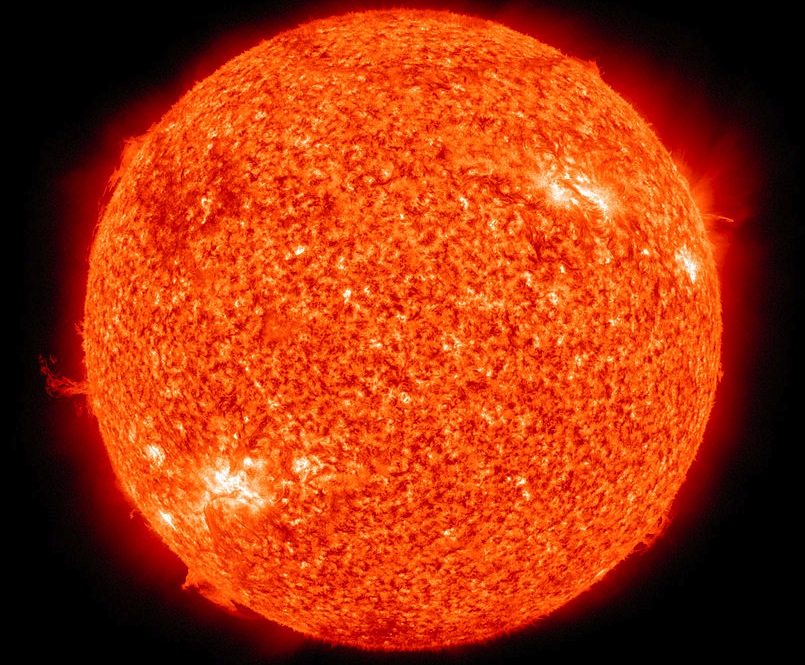
A fourth major state is plasma. In plasma, atoms become so energetic that electrons separate from their nuclei, creating a mixture of charged particles. Plasma makes up the Sun, other stars, lightning, and many laboratory devices.
Under extremely low temperatures and special laboratory conditions, scientists have also created unusual states of matter, including Bose–Einstein condensates, where atoms behave collectively according to the laws of quantum mechanics.
Matter Can Change State
One fascinating property of matter is its ability to change from one state to another without changing its chemical identity.
When ice absorbs heat, it melts into liquid water.
When water continues to absorb heat, it boils and becomes water vapor.
When water vapor cools, it condenses into liquid water.
If temperatures become low enough, the liquid freezes into ice again.
Throughout these changes, every water molecule remains composed of two hydrogen atoms and one oxygen atom.
Only the arrangement and movement of the molecules change.
Physical Properties of Matter
Matter possesses measurable characteristics called physical properties.
Mass measures the amount of matter present.
Volume measures the amount of space occupied.
Density compares mass with volume, explaining why some objects float while others sink.
Color, hardness, melting point, boiling point, electrical conductivity, thermal conductivity, magnetism, and transparency are all examples of physical properties.
These properties help scientists identify substances and understand how they behave under different conditions.
Chemical Properties of Matter
Matter also has chemical properties that determine how substances interact with one another.
Iron reacts with oxygen to produce rust.
Wood burns in the presence of oxygen.
Hydrogen combines with oxygen to form water.
Sodium reacts vigorously with water.
These chemical changes create entirely new substances with different properties from the original materials.
Understanding chemical behavior allows scientists to develop medicines, batteries, fuels, plastics, fertilizers, and countless other useful products.
Matter and Energy
Matter and energy are deeply connected.
Albert Einstein revealed this relationship through his famous equation:
E = mc²
This equation shows that mass and energy are different forms of the same physical reality.
Under ordinary conditions, matter remains stable and does not easily transform into energy.
However, inside stars and during nuclear reactions, tiny amounts of matter can be converted into enormous amounts of energy.
The Sun shines because hydrogen nuclei fuse together to form helium, releasing tremendous energy that eventually reaches Earth as sunlight.
Without this process, life on our planet would not exist.
The Law of Conservation of Matter
One of the fundamental ideas in science is that matter is conserved during ordinary chemical reactions.
This means matter cannot simply disappear or be created from nothing.
Instead, atoms rearrange themselves into new combinations.
When wood burns, it may appear to vanish, but its atoms remain present in the smoke, carbon dioxide, water vapor, ash, and other reaction products.
The total amount of matter remains essentially unchanged.
In modern physics, this principle is often discussed together with energy conservation because matter and energy can transform into one another under certain extreme conditions.
Matter in the Human Body
The human body is entirely made of matter.
Every organ, muscle, bone, nerve, and cell consists of atoms assembled into complex biological molecules.
Most of the body’s mass comes from oxygen, carbon, hydrogen, and nitrogen.
Calcium strengthens bones and teeth.
Iron helps transport oxygen through the bloodstream.
Potassium and sodium help nerve cells communicate.
Phosphorus forms part of DNA and supports energy transfer within cells.
Although humans appear solid and permanent, the atoms in our bodies are constantly exchanged with the environment through breathing, eating, drinking, and natural biological processes.
Matter in Space
Matter is not limited to Earth.
The entire universe is filled with matter.
Stars consist mainly of hydrogen and helium.
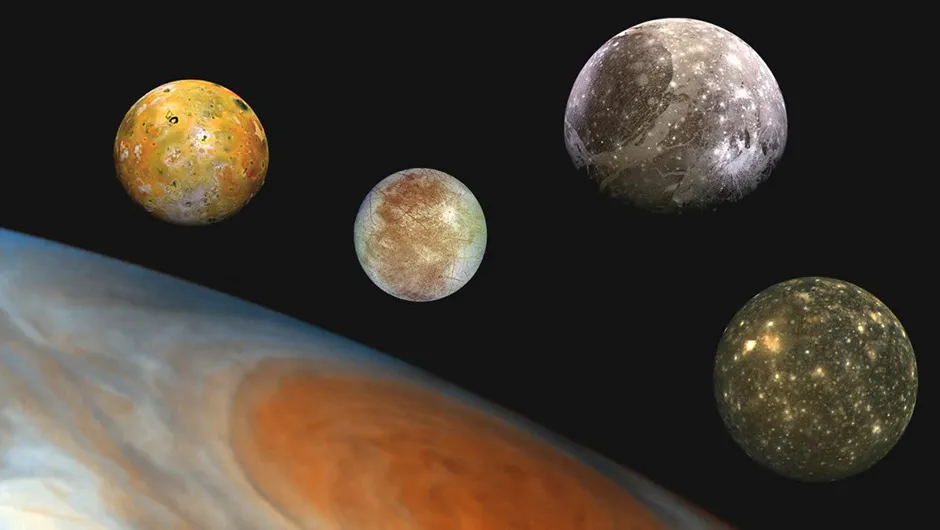
Planets contain rock, metals, gases, and ice.
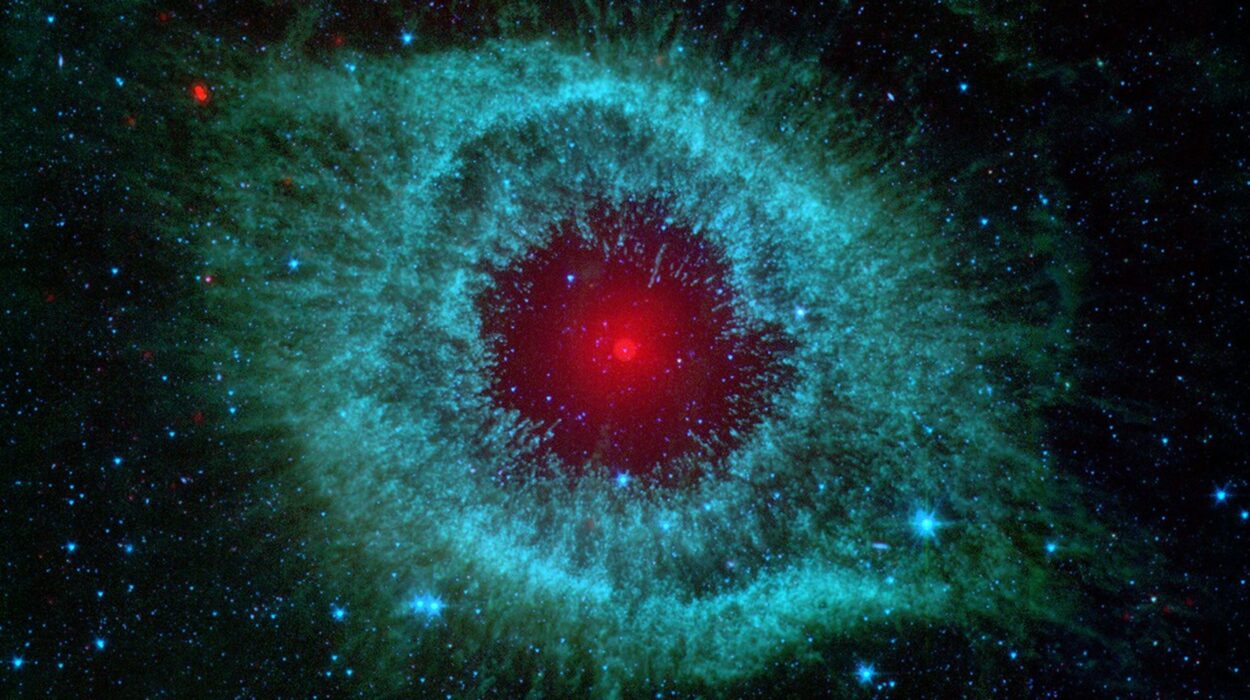
Nebulae are enormous clouds of gas and dust where new stars are born.
Asteroids and comets contain ancient material left over from the formation of the Solar System.
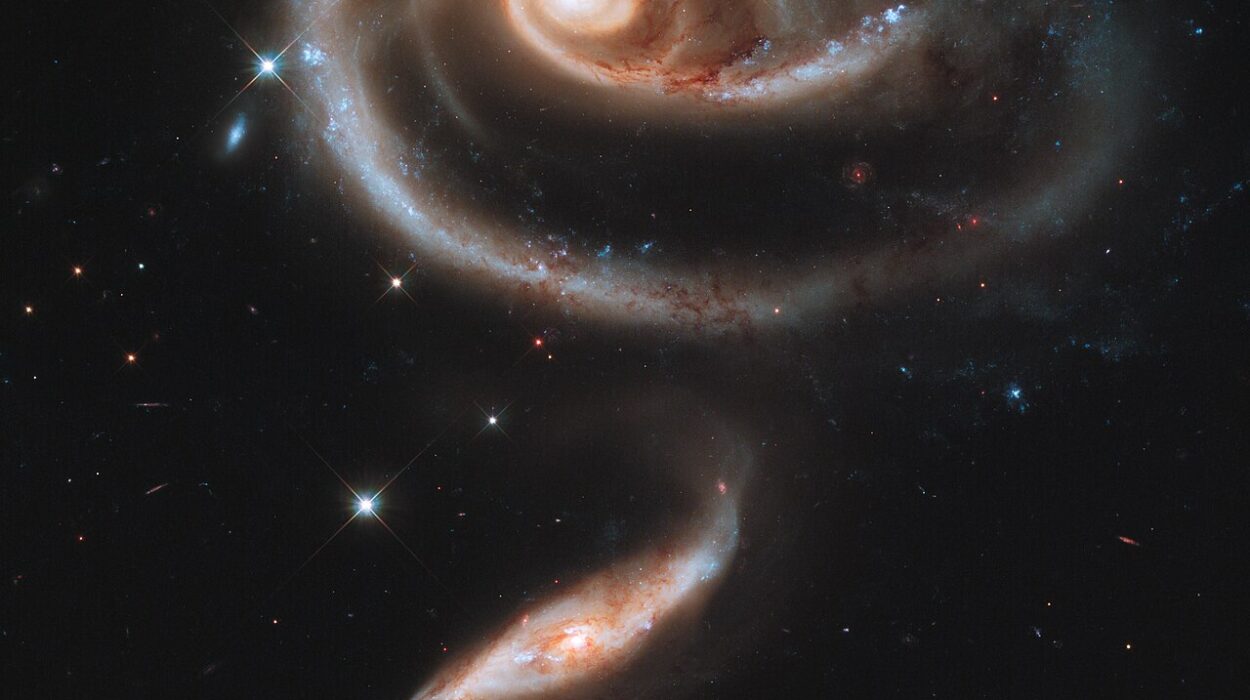
Galaxies contain billions of stars, enormous clouds of gas, planets, and mysterious forms of matter still being investigated by scientists.
Even the most distant objects observed by powerful telescopes are composed of matter.
Is Light Matter?
Many people assume light is matter because it can be seen.
In reality, light is not matter.
Light has no rest mass and does not occupy space in the same way matter does.
Instead, light consists of particles called photons, which carry energy and momentum but have no rest mass.
Although light is not matter, it interacts constantly with matter.
It allows us to see objects.
Plants capture light during photosynthesis.
Solar panels convert light into electricity.
Medical imaging, fiber-optic communication, and lasers all rely on interactions between light and matter.
Ordinary Matter and Dark Matter
Everything we can directly observe—stars, planets, trees, animals, people, and galaxies—is called ordinary matter.
Surprisingly, ordinary matter makes up only a small fraction of the universe.
Astronomical observations suggest that most of the universe’s matter exists as dark matter, an invisible substance that does not emit, absorb, or reflect light.
Scientists cannot observe dark matter directly, but they detect its gravitational influence on galaxies and galaxy clusters.
Although dark matter remains one of the greatest mysteries in modern physics, overwhelming evidence indicates that it exists.
Researchers around the world continue searching for its true nature.
Why Studying Matter Is Important
Understanding matter has transformed human civilization.
It has led to the development of modern medicine, electronics, construction materials, transportation systems, renewable energy technologies, and space exploration.
Chemists study matter to create new substances.
Engineers use matter to build safer bridges, stronger aircraft, and more efficient machines.
Doctors rely on knowledge of matter to develop treatments and medical imaging technologies.
Environmental scientists study matter to understand pollution and climate change.
Physicists investigate matter to uncover the deepest laws governing the universe.
Every technological advance ultimately depends on understanding the behavior of matter.
Matter Continues to Surprise Scientists
Although scientists have learned an enormous amount about matter, many questions remain unanswered.
Researchers continue exploring the properties of exotic materials, superconductors, quantum matter, and dark matter.
Powerful particle accelerators investigate the smallest known building blocks of matter, while advanced telescopes examine matter across the observable universe.
Each new discovery deepens our understanding of reality and often reveals entirely new mysteries waiting to be solved.
Conclusion
Matter is the substance that forms everything in the physical universe. Defined as anything that has mass and occupies space, it exists in countless forms, from the air we breathe to the stars that illuminate the night sky. Every object is built from atoms, which combine into molecules and larger structures to create the extraordinary diversity of the natural world.
By studying matter, scientists have uncovered the hidden architecture of nature, revealing how tiny particles come together to build planets, living organisms, and galaxies. This knowledge has transformed technology, medicine, engineering, and our understanding of the cosmos. Even after centuries of discovery, matter continues to inspire curiosity, reminding us that the ordinary objects surrounding us are made from extraordinary building blocks that connect us to the entire universe.