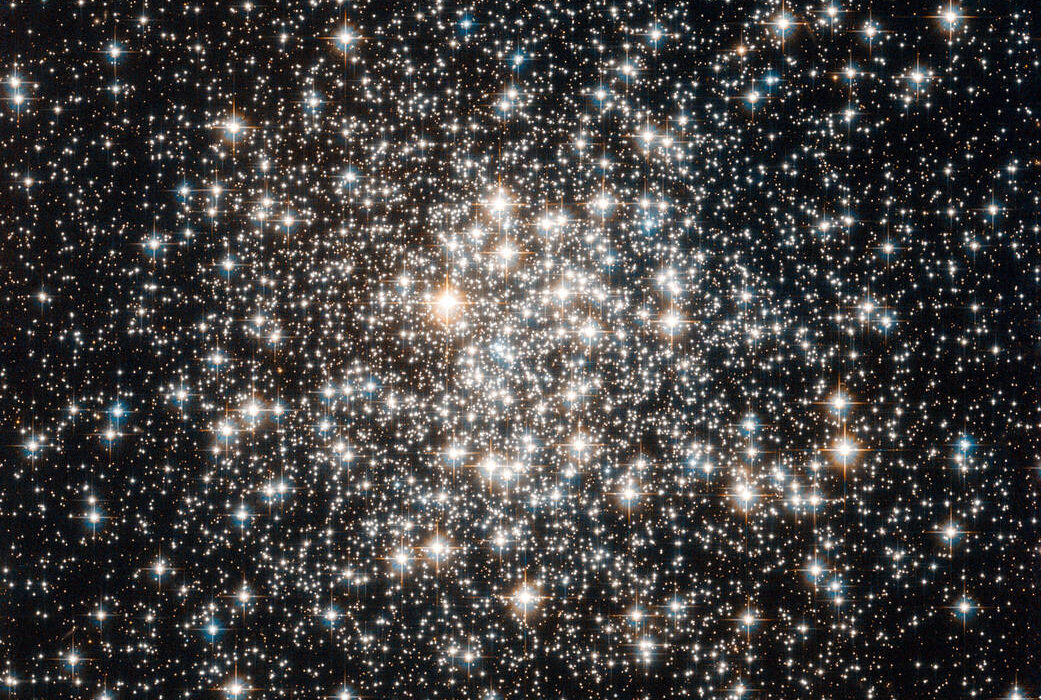
On a clear, moonless night, the sky becomes a breathtaking canvas filled with countless stars. At first glance, they may seem scattered randomly across the heavens. But if you look carefully, your mind begins to recognize familiar shapes. You might see a hunter holding a bow, a giant bear stretching across the sky, a graceful swan in flight, or a fierce lion watching over the horizon. These recognizable patterns of stars are known as constellations.
For thousands of years, people have looked up at the night sky and connected stars into meaningful patterns. Long before telescopes, satellites, or space probes existed, constellations helped people understand the heavens, navigate across oceans and deserts, measure the changing seasons, and tell stories that were passed from generation to generation. Even today, despite living in an age of advanced astronomy, constellations remain an essential part of how we explore and map the universe.
Although the stars that form a constellation may appear close together from Earth, most are actually separated by enormous distances in space. Their apparent grouping is simply a matter of perspective. Understanding constellations means understanding not only human history and culture but also the way we observe the vast universe.
What Is a Constellation?
A constellation is a recognized pattern of stars that appears to form a particular shape when viewed from Earth. These patterns often resemble people, animals, mythological creatures, or everyday objects.
In modern astronomy, however, a constellation means much more than just a pattern of stars. A constellation is officially defined as a specific region of the sky. Every point in the sky belongs to one of these regions, much like every location on Earth belongs to a particular country or state.
This means that when astronomers say a star, galaxy, nebula, or planet is located “in Orion” or “in Scorpius,” they are referring to the region of the sky where that object appears, not necessarily to the bright stars that create the familiar pattern.
This modern definition allows astronomers around the world to communicate clearly about the positions of celestial objects.
How Constellations Were Created
Long before written history, ancient people spent countless nights observing the stars. They noticed that while the stars rose and set each night, their patterns remained almost unchanged throughout their lifetimes.
Human brains naturally recognize patterns, a tendency known as pareidolia. Looking at the stars, people imagined figures that reflected their beliefs, environment, and imagination.
Different civilizations created different constellations.
Ancient Greek astronomers imagined heroic warriors, gods, and mythical creatures.
Ancient Egyptians connected stars with their religious traditions and the flooding of the Nile.
Chinese astronomers developed their own detailed star maps that differed greatly from those of Europe.
Indigenous peoples in Australia, North America, South America, and Africa created unique constellations inspired by local wildlife, landscapes, and cultural traditions.
Although many cultures looked at the same stars, they often saw completely different pictures.
The Difference Between Stars and Constellations
It is important to understand that a constellation is not a physical object in space.
A star is a massive, glowing sphere of hot gas powered by nuclear fusion. Each star exists independently in the universe.
A constellation, on the other hand, is simply an apparent pattern seen from Earth’s viewpoint.
Imagine standing on a highway and seeing distant mountains appear close together. In reality, one mountain may be much farther away than another. The same idea applies to constellations.
For example, the bright stars that form the constellation Orion lie at vastly different distances from Earth. They only appear close because they happen to lie along similar lines of sight.
If we could travel to another part of our galaxy, these familiar constellations would look completely different.
The Official 88 Constellations
Today, astronomers officially recognize 88 constellations that together cover the entire sky.
This system was standardized by the International Astronomical Union (IAU) in 1922 and later given precise boundaries.
These constellations include many famous star patterns such as Orion, Ursa Major, Cassiopeia, Scorpius, Leo, Taurus, Cygnus, Pegasus, Andromeda, and Sagittarius.
Some are visible primarily from the Northern Hemisphere, while others are best seen from the Southern Hemisphere.
Together, these constellations create a complete celestial map that astronomers use to identify the locations of stars, galaxies, planets, comets, and other astronomical objects.
Why Ancient People Used Constellations
Before compasses, GPS, or detailed maps existed, the stars served as reliable guides.
Travelers crossing deserts used constellations to maintain direction.
Sailors navigating vast oceans relied on familiar star patterns to determine their position.
Farmers watched seasonal constellations to know when to plant crops or harvest fields.
Religious ceremonies were often timed according to the appearance of particular constellations.
Many civilizations also believed the stars carried spiritual or symbolic meaning.
Constellations became an important part of myths, calendars, navigation, and storytelling, connecting human life with the rhythms of the sky.
Constellations Helped People Navigate
One of the most practical uses of constellations was navigation.
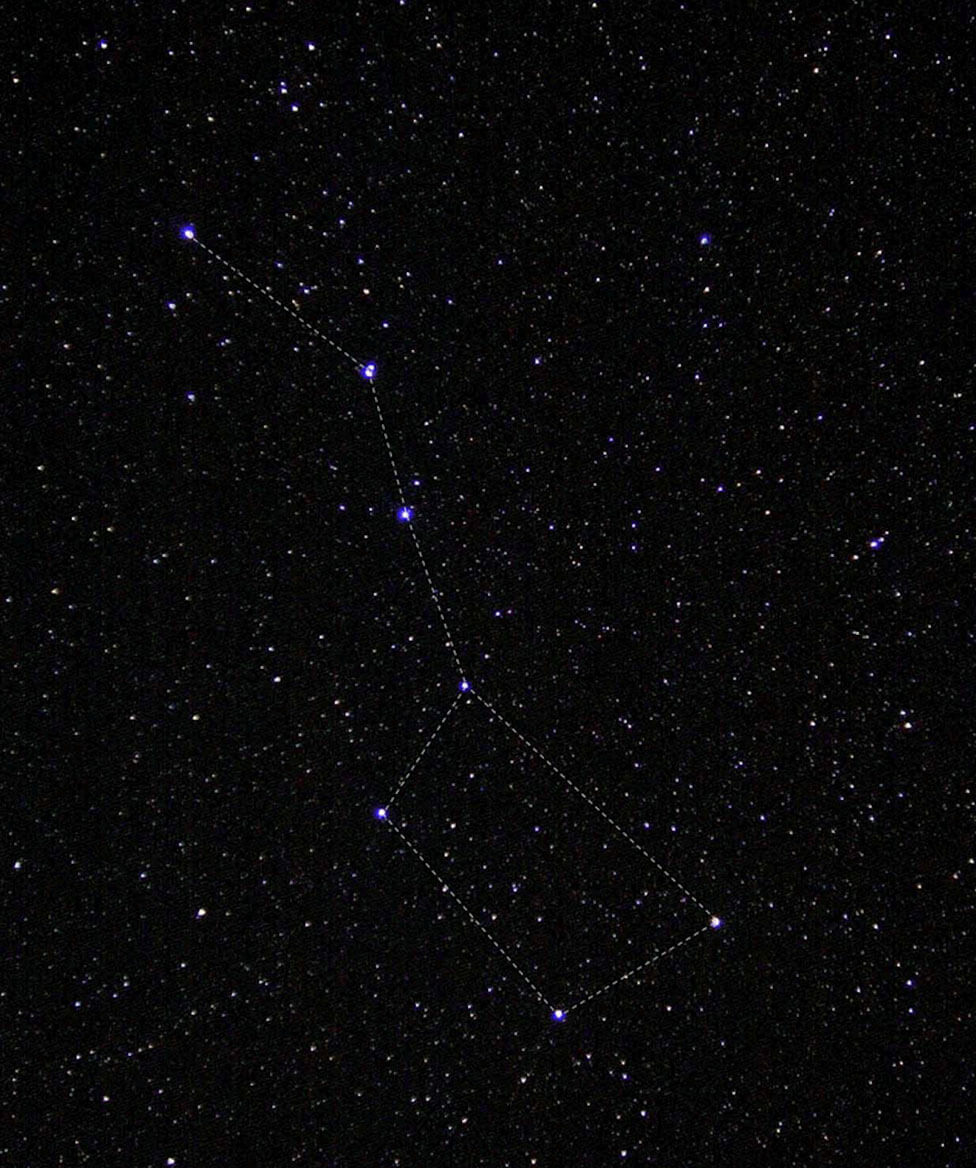
In the Northern Hemisphere, the constellation Ursa Major contains the famous Big Dipper, whose outer stars point toward Polaris, the North Star.
Because Polaris lies almost directly above Earth’s North Pole, it appears nearly fixed in the sky while other stars seem to circle around it.
This made Polaris an invaluable guide for travelers and sailors.
In the Southern Hemisphere, navigators often used the Southern Cross, also known as Crux, to estimate the direction of the south celestial pole.
Long before modern navigation technology, these celestial landmarks allowed people to travel remarkable distances with surprising accuracy.
Constellations Change with the Seasons
If you observe the night sky throughout the year, you will notice that different constellations become visible during different seasons.
This happens because Earth orbits the Sun.
As our planet moves around its orbit, the nighttime side of Earth faces different directions into space.
Winter skies in the Northern Hemisphere feature Orion, Taurus, and Gemini.
Spring brings Leo and Virgo.
Summer reveals Scorpius, Sagittarius, and Cygnus.
Autumn showcases Pegasus, Andromeda, and Aquarius.
These seasonal patterns helped ancient societies keep track of time long before modern calendars.
Are Constellations Permanent?
Constellations appear almost unchanged over a human lifetime, but they are not permanent.
Stars are constantly moving through space.
This motion, called proper motion, is usually too slow to notice over decades or even centuries.
However, over tens of thousands or hundreds of thousands of years, the shapes of constellations gradually change.
Millions of years from now, Orion will no longer resemble the familiar hunter we recognize today.
Constellations are therefore temporary patterns on a cosmic timescale.
Famous Constellations
Among all constellations, Orion is perhaps the most recognizable. Its three bright belt stars make it easy to identify even for beginners. Orion contains several remarkable astronomical objects, including the Orion Nebula, one of the closest stellar nurseries where new stars are being born.
Ursa Major is famous for containing the Big Dipper, one of the best-known star patterns in the Northern Hemisphere.
Cassiopeia forms a distinctive “W” shape that is visible during much of the year in northern skies.
Scorpius resembles a giant scorpion and dominates many summer evenings in the Southern Hemisphere and lower northern latitudes.
Cygnus, the Swan, stretches gracefully along the Milky Way and contains many fascinating stars and nebulae.
Each constellation offers a unique window into the night sky.
Zodiac Constellations
Some constellations have become especially famous because the Sun appears to pass through them during the year.
These are called the zodiac constellations.
As Earth orbits the Sun, the Sun appears to move against the background stars along a path called the ecliptic.
The zodiac constellations lie along this path.
In astronomy, these constellations simply mark regions of the sky through which the Sun, Moon, and planets appear to travel.
Although zodiac signs are widely used in astrology, astronomy and astrology are fundamentally different.
Astronomy is a scientific study based on observation, evidence, mathematics, and testing.
Astrology is a belief system that claims celestial positions influence human personalities or future events. Scientific studies have found no reliable evidence supporting these claims.
Constellations and Deep-Sky Objects
Constellations are much more than patterns of stars.
They help astronomers locate many fascinating celestial objects.
Galaxies, nebulae, star clusters, pulsars, black holes, and exoplanet-hosting stars are often identified by the constellation in which they appear.
For example, the Andromeda Galaxy lies within the constellation Andromeda.
The Crab Nebula appears in Taurus.
The Ring Nebula is located in Lyra.
The Orion Nebula lies within Orion.
Using constellations as reference regions makes it much easier to organize and explore the sky.
Constellations and Modern Astronomy
Despite advances in technology, constellations remain essential tools for astronomers.
Modern telescopes, star charts, observatories, and planetarium software all use constellation boundaries to identify locations in the sky.
Astronomers frequently describe newly discovered objects according to the constellation where they are found.
For example, a newly discovered comet may be reported as moving through Virgo or crossing Sagittarius.
This standardized system provides a universal celestial address for every observable object.
Can Everyone See the Same Constellations?
Not exactly.
The constellations you can see depend largely on where you live.
People living near the equator can observe many constellations from both the Northern and Southern Hemispheres.
Observers in northern regions cannot see some southern constellations because Earth blocks their view.
Likewise, people living far south cannot see certain northern constellations.
The time of year and local weather conditions also determine which constellations are visible on any given night.
How to Find Constellations
Learning constellations begins with simply spending time under a dark sky.
Choose a location away from city lights whenever possible.
Allow your eyes about twenty minutes to adjust to the darkness.
Start with bright, easy-to-recognize constellations like Orion, Cassiopeia, or Ursa Major.
From these, you can gradually identify neighboring constellations using star charts or astronomy apps.
As your familiarity grows, the night sky transforms from a random collection of stars into a rich celestial landscape filled with recognizable patterns.
Constellations Inspire Science and Culture
Constellations are more than scientific reference points.
They have inspired myths, literature, art, navigation, architecture, and exploration for thousands of years.
Ancient storytellers imagined heroic adventures among the stars.
Explorers crossed oceans by following celestial guides.
Modern astronomers use the same constellations to study galaxies billions of light-years away.
The same stars that inspired wonder in ancient civilizations continue to inspire curiosity today.
Why Constellations Still Matter
In today’s world of satellites, smartphones, and computerized telescopes, it might seem that constellations have become obsolete.
In reality, they remain deeply valuable.
They provide a simple way for beginners to learn the night sky.
They serve as a universal coordinate system for astronomers.
They preserve the cultural heritage of civilizations across thousands of years.
Most importantly, they remind us that humans have always looked upward with curiosity.
Every generation has asked the same timeless questions about the stars above, and constellations have helped guide that journey of discovery.
Conclusion
Constellations are recognizable patterns and officially defined regions of the night sky that have guided humanity for thousands of years. Although the stars within a constellation may appear close together, they are often separated by vast distances in space and are connected only by our perspective from Earth. Ancient civilizations used these star patterns for navigation, calendars, storytelling, and cultural traditions, while modern astronomers use them as a practical system for mapping the sky.
Today, the 88 officially recognized constellations continue to connect science with history, imagination with observation, and humanity with the immense universe beyond our planet. Every time we look up on a clear night and recognize Orion, Cassiopeia, or the Big Dipper, we are participating in a tradition that stretches back thousands of years—a tradition that reminds us that the stars have always been among our greatest teachers, inviting us to explore the endless wonders of the cosmos.