For nearly two decades, smartphones have been the center of our digital lives. They wake us up in the morning, guide us through unfamiliar streets, connect us with friends and family, help us work, entertain us, and even monitor our health. It is difficult to imagine modern life without the glowing screen in our hands.
Yet technology never stands still. Around the world, major technology companies are investing billions of dollars in a new generation of wearable devices known as smart glasses. Unlike ordinary eyeglasses, these devices can display digital information, take photos, record videos, answer questions using artificial intelligence, provide navigation, and even translate conversations in real time.
As these capabilities continue to improve, an intriguing question is emerging: Can smart glasses eventually replace smartphones?
The answer is more complicated than a simple yes or no. Smart glasses are becoming more powerful every year, but replacing one of the most successful technologies ever created will require solving many scientific, engineering, and social challenges.
What Are Smart Glasses?
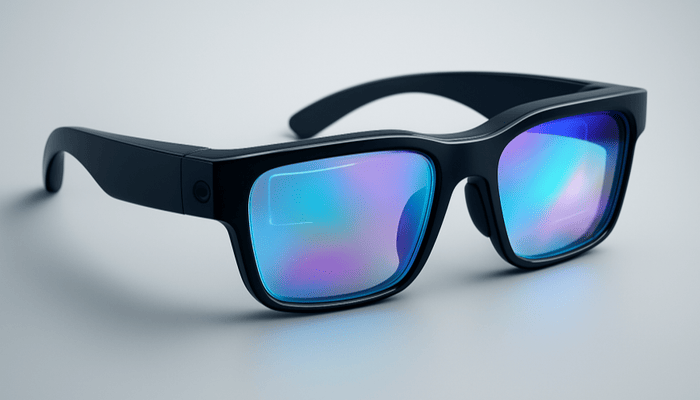
Smart glasses are wearable computers built into a pair of glasses. While they look similar to ordinary eyewear, they contain tiny electronic components such as cameras, microphones, speakers, sensors, processors, wireless communication systems, and rechargeable batteries.
Some smart glasses simply provide audio features, allowing users to listen to music or talk on the phone without earbuds. Others include cameras that can capture photos and videos from the wearer’s perspective.
The most advanced smart glasses use augmented reality (AR). Instead of blocking the real world, augmented reality adds digital information to what you already see. Imagine walking down a street while arrows appear in front of you showing the correct direction, or looking at a restaurant and instantly seeing its reviews floating beside the building. The real environment remains visible, but useful digital information is added to it.
This combination of the physical and digital worlds is what makes smart glasses so different from smartphones.
How Smart Glasses Work
Although they may appear simple on the outside, smart glasses contain remarkably advanced technology.
Tiny cameras observe the surrounding environment. Motion sensors detect how your head moves. GPS determines your location outdoors, while wireless connections communicate with cloud-based services. Small processors analyze information locally, and artificial intelligence can recognize objects, understand spoken language, or answer questions.
Many smart glasses include miniature projectors or waveguide displays that direct images toward the user’s eyes. Instead of looking down at a phone screen, digital information appears directly within the field of view.
Voice recognition allows users to control many features simply by speaking. Instead of tapping a screen, someone might ask for directions, send a message, play music, or search for information using natural language.
These technologies combine computer science, optics, physics, electronics, and artificial intelligence into a device that fits on a person’s face.
Why Smartphones Became So Successful
To understand whether smart glasses can replace smartphones, it helps to understand why smartphones became so dominant in the first place.
Smartphones combine dozens of devices into one portable computer. They function as cameras, GPS navigators, calculators, gaming systems, music players, televisions, communication devices, payment systems, and internet browsers.
Their large touchscreens allow users to read articles, watch videos, edit documents, play games, and interact with thousands of applications.
The smartphone ecosystem has also matured over many years. Millions of apps are available, developers continually improve software, and billions of people already know how to use these devices.
Replacing smartphones means replacing not only the hardware but also this enormous digital ecosystem.
The Biggest Advantage of Smart Glasses
Perhaps the greatest strength of smart glasses is that they allow people to remain connected without constantly looking at a screen.
Anyone who has walked through a busy city has likely seen people staring down at their phones while walking. This behavior can reduce awareness of traffic, obstacles, and other people.
Smart glasses offer a different approach.
Instead of forcing users to shift their attention between the real world and a phone, important information can appear naturally within their field of vision.
Imagine riding a bicycle while navigation directions appear ahead without taking your hands off the handlebars. A traveler could receive instant language translations during conversations. A mechanic repairing an engine could view instructions while keeping both hands free.
This hands-free experience represents one of the strongest arguments in favor of smart glasses.
Artificial Intelligence Makes Smart Glasses More Useful
The rapid development of artificial intelligence has significantly increased the potential of smart glasses.
Modern AI systems can recognize speech, summarize information, identify landmarks, answer questions, translate languages, and understand images captured by onboard cameras.
Instead of opening multiple apps, users may simply ask questions naturally.
A student could ask for the meaning of a scientific term while reading a textbook.
A tourist could ask about the history of a famous building while looking directly at it.
Someone cooking dinner could receive step-by-step instructions without touching a screen.
Artificial intelligence turns smart glasses into an intelligent assistant that is always available.
As AI continues improving, smart glasses may become even more capable.
Navigation Could Become Much Easier
Navigation is one area where smart glasses may outperform smartphones.
Today, people often stop walking to check a map or hold their phones while following directions.
With augmented reality, arrows can appear directly on roads or sidewalks.
Instead of interpreting a map, users simply follow visual guidance naturally integrated into the environment.
For drivers, cyclists, and pedestrians, this approach could reduce distractions while improving navigation accuracy.
Scientists and engineers continue researching how to display this information safely without overwhelming users.
Real-Time Language Translation
One of the most exciting possibilities involves language translation.
Modern artificial intelligence already performs surprisingly accurate translations for many languages.
When combined with smart glasses, translated text could appear almost instantly during conversations.
Imagine visiting another country and understanding signs, restaurant menus, or spoken conversations without carrying a separate device.
Although current systems are not perfect, improvements in machine learning continue making real-time translation faster and more accurate.
This capability could transform international travel, education, and business communication.
Smart Glasses in Healthcare
Healthcare offers another promising application.
Doctors performing surgery could view patient information without looking away from the operating table.
Nurses might receive medication instructions while treating patients.
People with visual impairments could use object recognition and navigation assistance to move more safely.
Researchers are also exploring systems that recognize faces, identify obstacles, read printed text aloud, or provide reminders for people experiencing memory loss.
These medical applications demonstrate that smart glasses are much more than entertainment devices.
Learning in a New Way
Education could also change significantly.
Students studying biology might see three-dimensional models of organs floating above their desks.
Physics students could visualize electric fields or planetary motion.
History lessons could recreate ancient cities through augmented reality.
Instead of reading about scientific concepts, learners could interact with them visually.
Research suggests that immersive learning experiences may improve understanding and memory in certain educational settings, although effectiveness depends on how the technology is designed and used.
Working More Efficiently
Many industries are already experimenting with smart glasses.
Warehouse workers can receive picking instructions directly in front of their eyes.
Engineers can inspect complex machinery while viewing technical diagrams.
Construction workers can compare building plans with actual structures.
Remote experts can guide technicians by seeing exactly what they are looking at.
These applications reduce the need to repeatedly stop working to consult paper manuals or smartphones.
For many professions, this hands-free access to information can improve productivity.
Why Smartphones Still Have Major Advantages
Despite these exciting possibilities, smartphones remain extremely difficult to replace.
One obvious reason is screen size.
Reading long articles, watching movies, editing photos, creating presentations, and playing complex games are much easier on a large touchscreen than through small displays inside glasses.
Typing also remains far more practical on smartphones.
Although voice recognition has improved dramatically, many people still prefer typing messages, emails, or documents.
Battery life presents another challenge.
Smart glasses have limited space for batteries. Running cameras, displays, sensors, wireless communication, and artificial intelligence requires considerable energy.
Smartphones can carry much larger batteries because of their size.
Until battery technology improves, smart glasses may struggle to match the all-day performance people expect from smartphones.
Privacy Concerns
Privacy is one of the biggest challenges facing smart glasses.
Many models include cameras that can quietly capture photos or videos.
People nearby may not always know whether recording is taking place.
This uncertainty raises important ethical questions.
How should recording be indicated?
Where should smart glasses be allowed?
How can personal privacy be protected?
Some manufacturers include visible lights that activate when cameras are recording, helping people recognize when images are being captured.
Even so, privacy concerns remain an important topic as wearable technology becomes more widespread.
Social Acceptance Matters
Technology succeeds not only because it works but because people are comfortable using it.
Smartphones became socially acceptable surprisingly quickly.
Smart glasses face a different challenge because they are worn directly on the face.
Some people may feel uncomfortable speaking to someone who appears to be wearing a camera.
Others may worry about being recorded without permission.
Design also plays a major role.
If smart glasses are bulky or unusual-looking, many consumers may hesitate to wear them in public.
Manufacturers are working to create devices that resemble ordinary eyeglasses while hiding increasingly advanced technology inside.
The Challenge of Display Technology
Creating comfortable displays for smart glasses is remarkably difficult.
The images must remain bright enough to see outdoors while avoiding excessive battery consumption.
They must appear clear without blocking the user’s view of the real world.
They also need to remain comfortable during long periods of use.
Achieving these goals requires sophisticated optical engineering involving waveguides, tiny projectors, and advanced display materials.
Scientists continue making rapid progress, but perfecting these systems remains an active area of research.
Health and Safety Questions
Researchers are also studying how long-term use of wearable displays affects people.
Extended viewing may contribute to eye fatigue in some situations, depending on brightness, focus distance, and usage patterns.
Designers aim to minimize discomfort by carefully controlling display placement and optical characteristics.
Another important issue involves distraction.
Although augmented reality can reduce the need to look at a phone, displaying too much information at the wrong moment could interfere with attention.
For example, notifications appearing while driving could become dangerous if poorly designed.
Human-centered design will play a crucial role in making smart glasses both useful and safe.
Cost Remains a Barrier
Many advanced smart glasses remain expensive compared with smartphones.
High-quality displays, miniature processors, precision optics, cameras, and specialized sensors increase manufacturing costs.
As production expands and technology matures, prices will likely decline, much as they did for smartphones over the past two decades.
Until then, cost may limit widespread adoption.
The Future of Smart Glasses
Technology rarely replaces older devices overnight.
Desktop computers still exist despite smartphones.
Tablets coexist with laptops.
Smartwatches complement smartphones rather than replacing them.
A similar pattern may emerge for smart glasses.
Instead of completely replacing smartphones, smart glasses may initially work alongside them.
The phone could remain in a pocket, handling demanding tasks such as gaming, document editing, and video production, while the glasses provide quick access to notifications, navigation, communication, and artificial intelligence.
As processors become more efficient, batteries improve, displays become brighter, and AI grows more capable, smart glasses may gradually take over more daily activities.
The transition, however, is likely to happen over many years rather than suddenly.
Could Smartphones Eventually Disappear?
History shows that technology evolves through continuous improvement rather than abrupt replacement.
Radios did not disappear when televisions arrived.
Books still exist despite electronic readers.
Laptops continue to thrive alongside tablets.
The same may happen with smartphones.
Rather than disappearing entirely, smartphones could become smaller, less visible, or serve mainly as computing hubs connected wirelessly to wearable devices.
In this future, smart glasses would become the primary interface through which people interact with digital information.
Whether this vision becomes reality depends on advances in battery technology, artificial intelligence, display engineering, privacy protection, affordability, and user acceptance.
The Bottom Line
Smart glasses represent one of the most promising developments in wearable technology. By combining augmented reality, artificial intelligence, advanced sensors, and hands-free interaction, they offer a new way of connecting with digital information without constantly looking down at a screen. Their potential extends far beyond convenience, with applications in healthcare, education, manufacturing, communication, navigation, and accessibility.
However, replacing smartphones is a much greater challenge than simply creating better hardware. Smartphones have become deeply integrated into modern life because they offer powerful computing, large displays, mature software ecosystems, reliable battery life, and familiar ways of interacting with technology. Smart glasses must match or exceed these strengths while also addressing concerns about privacy, comfort, safety, and cost.
For the foreseeable future, the most likely future is one in which smart glasses and smartphones work together rather than compete directly. Smart glasses will increasingly handle quick interactions, real-time information, and AI-assisted tasks, while smartphones continue to support activities that benefit from larger screens and more powerful hardware.
As science and engineering continue to advance, the balance may gradually shift. One day, reaching into a pocket for a smartphone could feel as outdated as carrying a portable music player or a paper road map. Whether that day arrives in the next decade or much later, smart glasses have already begun reshaping how humans interact with the digital world, bringing technology closer to becoming a seamless part of everyday life rather than something held in the hand.