On a clear night, when you look up at the sky, it can feel as though you are staring into an endless ocean of stars. Some shine brightly, others appear faint and distant, while a few planets slowly wander across the heavens. For thousands of years, people have gazed at the night sky with wonder, asking questions that still inspire scientists today. Why do stars shine? How are black holes formed? What are galaxies made of? How did the universe begin?
The science that seeks answers to these questions is called astrophysics.
Astrophysics is one of the most exciting branches of science because it combines the laws of physics with the mysteries of the universe. It helps us understand everything from the birth of stars to the expansion of the cosmos. Every new discovery brings us closer to understanding our place in a universe that is far larger and more fascinating than we once imagined.
The Meaning of Astrophysics
Astrophysics is the branch of science that uses the principles of physics to study objects and phenomena in space. While astronomy focuses on observing celestial objects such as stars, planets, galaxies, and nebulae, astrophysics goes a step further by asking how and why these objects behave the way they do.
Instead of simply recording where a star is located, an astrophysicist wants to know what the star is made of, how it produces energy, how old it is, how it formed, and what will happen to it in the future.
In simple terms, astronomy tells us what is in the universe, while astrophysics explains how the universe works.
Why Astrophysics Is Important
Astrophysics is much more than the study of distant stars. It helps answer some of humanity’s biggest questions.
Where did the universe come from?
How do planets form?
Could life exist elsewhere?
What happens inside a black hole?
What is dark matter?
What is dark energy?
By studying these mysteries, astrophysicists deepen our understanding of nature itself. Their discoveries also lead to technologies that improve life on Earth. Research in astrophysics has contributed to advances in satellite communication, GPS navigation, digital imaging, medical technology, computer science, and materials engineering.
Although the stars seem unimaginably far away, studying them often leads to innovations that affect our everyday lives.
The Difference Between Astronomy and Astrophysics
People often use the terms astronomy and astrophysics interchangeably, but they are not exactly the same.
Astronomy is the broader science of observing and cataloging celestial objects. Astronomers measure the positions, motions, brightness, and characteristics of stars, planets, galaxies, comets, and other objects in space.
Astrophysics uses the laws of physics to explain these observations.
For example, an astronomer may discover a new star, while an astrophysicist studies the physical processes occurring inside that star, such as nuclear fusion, gravity, temperature, magnetic fields, and energy production.
Today, the two fields are closely connected, and many scientists work in both areas.
What Does an Astrophysicist Study?
Astrophysics covers almost every object in the universe.
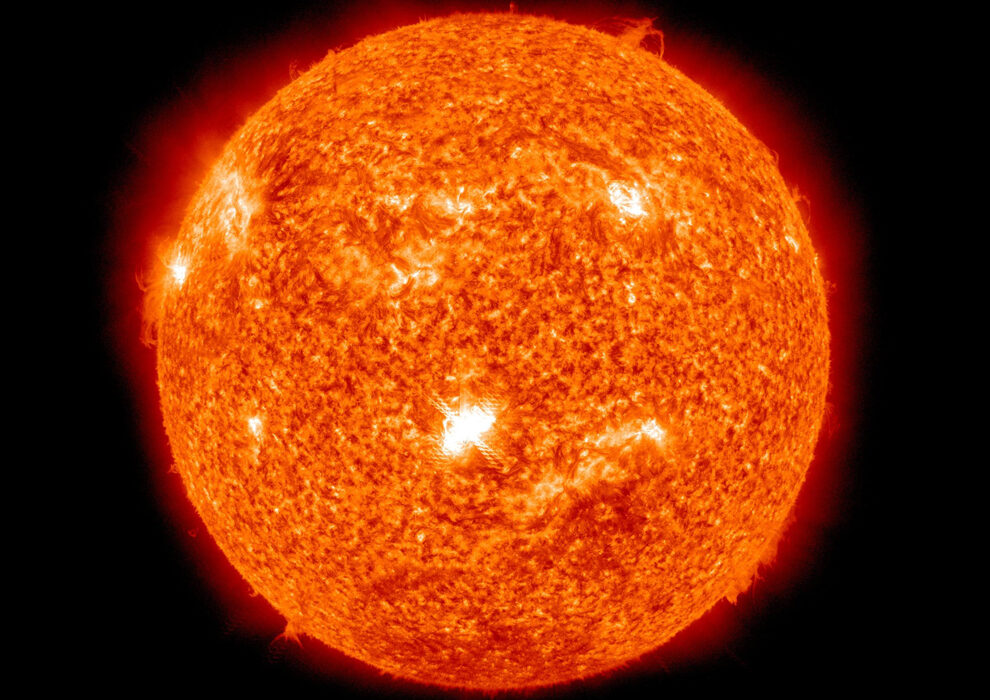
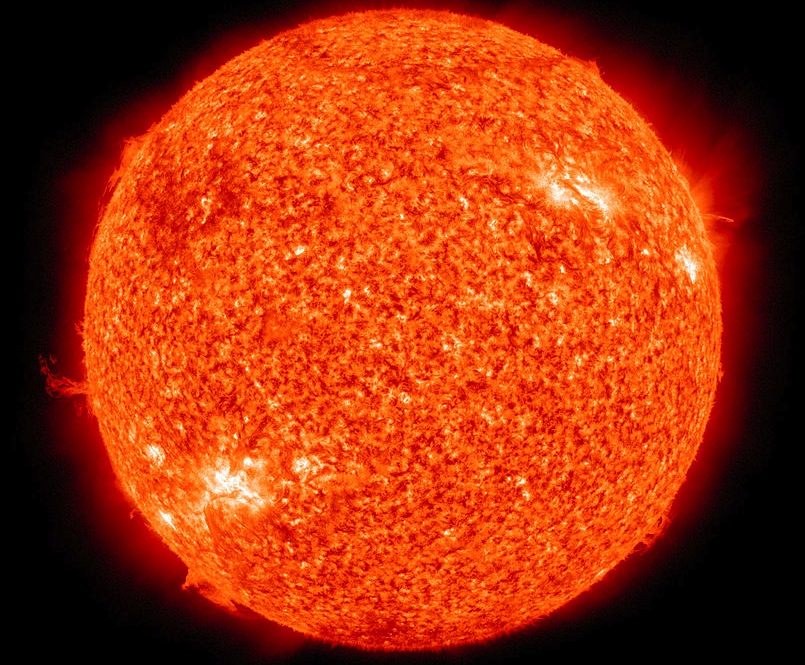
Astrophysicists study the Sun to understand how stars generate energy through nuclear fusion. They investigate planets to learn how planetary systems form and evolve. They analyze distant galaxies to uncover how the universe has changed over billions of years.
They also explore black holes, neutron stars, white dwarfs, pulsars, quasars, nebulae, supernova explosions, dark matter, dark energy, and the large-scale structure of the universe.
In addition, astrophysicists study cosmic radiation, gravitational waves, magnetic fields, high-energy particles, and even the conditions that existed shortly after the Big Bang.
The field stretches from tiny subatomic particles to structures spanning billions of light-years.
The Role of Physics in Astrophysics
Physics is the foundation of astrophysics.
The same physical laws that cause an apple to fall from a tree also keep planets orbiting stars and galaxies bound together.
Gravity shapes the formation of stars and galaxies.
Thermodynamics explains how stars produce and transfer heat.
Electromagnetism helps scientists understand light, radio waves, and magnetic fields.
Quantum mechanics describes the behavior of atoms and particles inside stars.
Nuclear physics explains how stars create the elements that make up planets—and even our own bodies.
Without physics, the universe would simply be a collection of beautiful objects. Physics allows us to understand why those objects exist and how they evolve.
How Do Scientists Study Objects That Are So Far Away?
Unlike many other sciences, astrophysics rarely involves direct experiments with its subjects.
No one can travel to a distant galaxy or collect a sample from a black hole.
Instead, astrophysicists rely on the information carried by light and other forms of electromagnetic radiation.
Every star, galaxy, or nebula emits light that contains valuable clues about its temperature, composition, motion, magnetic fields, and age.
Using telescopes equipped with sensitive instruments, scientists analyze this light in remarkable detail.
By studying different wavelengths—including visible light, infrared radiation, ultraviolet light, radio waves, X-rays, and gamma rays—they can uncover information that would otherwise remain hidden.
In recent years, scientists have also begun studying the universe using gravitational waves and high-energy particles known as neutrinos, opening entirely new ways of exploring the cosmos.
Stars: The Cosmic Factories
Stars are among the most important objects in astrophysics.
A star is a giant sphere of hot gas held together by gravity. Deep inside its core, hydrogen atoms fuse to form helium, releasing enormous amounts of energy.
This process, called nuclear fusion, produces the light and heat that stars emit.
Stars are not eternal.
They are born inside enormous clouds of gas and dust called nebulae. Over millions of years, gravity compresses these clouds until nuclear fusion begins.
Depending on their mass, stars spend millions or even billions of years shining before eventually reaching the end of their lives.
Some become white dwarfs.
Others explode as spectacular supernovae.
The most massive stars collapse into neutron stars or black holes.
Every atom of carbon, oxygen, calcium, and iron in our bodies was forged inside ancient stars, making us, in a very real sense, products of the cosmos.
Galaxies: Cities of Stars
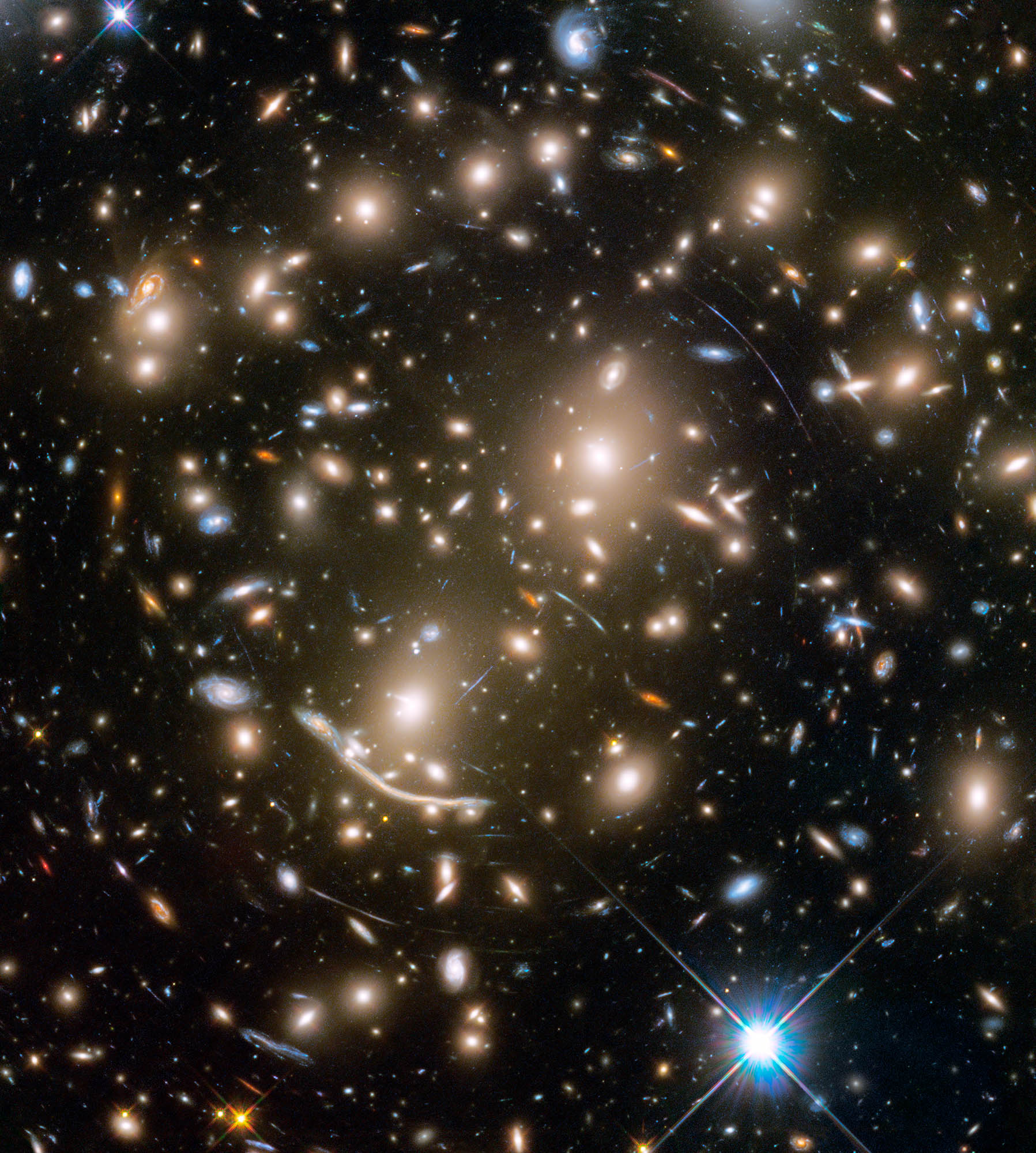
A galaxy is a vast collection of stars, planets, gas, dust, and dark matter held together by gravity.
Our own galaxy, the Milky Way, contains hundreds of billions of stars and stretches roughly 100,000 light-years across.
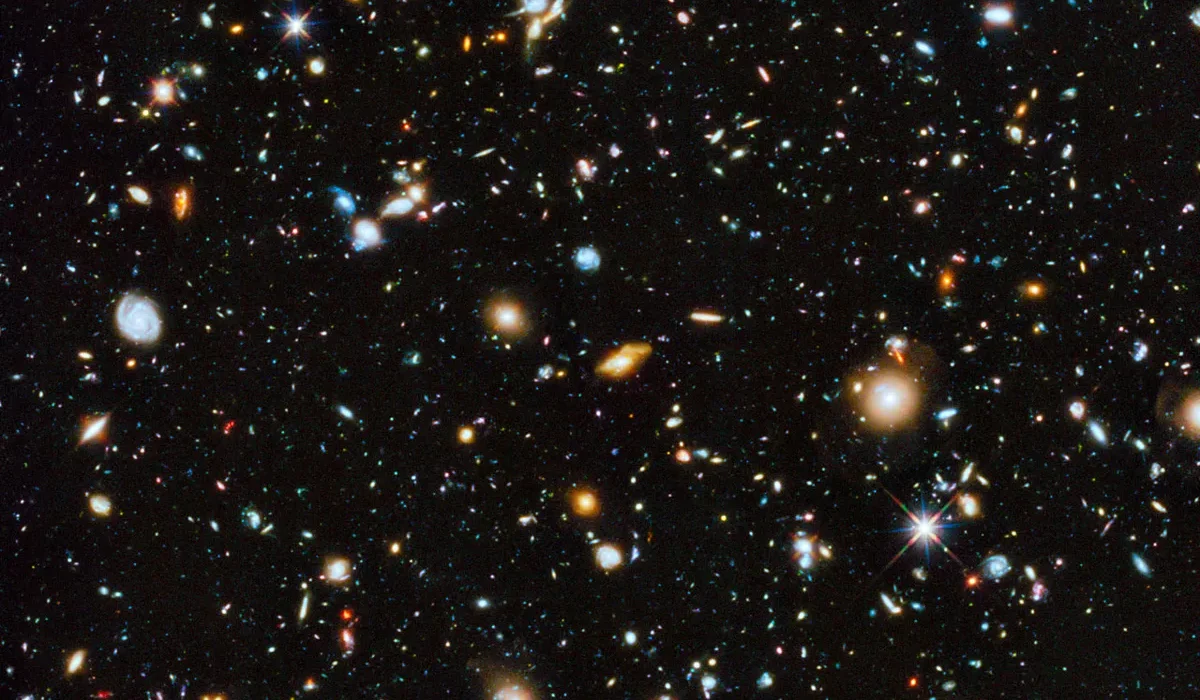
The universe contains hundreds of billions of galaxies, each with its own history and structure.
Some galaxies are spiral-shaped, like the Milky Way.
Others are elliptical or irregular.
Astrophysicists study how galaxies form, interact, merge, and evolve over billions of years.
These investigations reveal how the universe itself has changed since its earliest moments.
Black Holes: Gravity at Its Most Extreme
Few objects capture the imagination like black holes.
A black hole forms when a massive star collapses under its own gravity after exhausting its nuclear fuel.
The gravitational pull becomes so intense that nothing—not even light—can escape once it crosses a boundary called the event horizon.
Although black holes cannot be seen directly, astrophysicists detect them by observing their effects on nearby stars and gas.
Material falling toward a black hole becomes incredibly hot and emits powerful X-rays before disappearing beyond the event horizon.
In recent years, astronomers achieved a historic milestone by capturing the first images of black holes using a worldwide network of radio telescopes.
These observations confirmed predictions made by Albert Einstein’s theory of general relativity.
The Expanding Universe
One of the greatest discoveries in astrophysics is that the universe is expanding.
In the 1920s, astronomer Edwin Hubble found that distant galaxies are moving away from us.
Even more remarkably, galaxies farther away are receding faster than nearby ones.
This observation showed that space itself is expanding.
Tracing this expansion backward leads scientists to the conclusion that the universe began about 13.8 billion years ago in the event known as the Big Bang.
Since then, the universe has continued to grow larger and cooler, eventually allowing galaxies, stars, planets, and life to emerge.
Modern observations suggest that the expansion of the universe is actually accelerating, a surprising discovery that points to the mysterious influence of dark energy.
Dark Matter and Dark Energy
Despite centuries of progress, astrophysicists still do not fully understand most of the universe.
Visible matter—including stars, planets, gas, and dust—accounts for only a small fraction of the universe’s total mass and energy.
Most of the universe appears to consist of dark matter and dark energy.
Dark matter does not emit, absorb, or reflect light, making it invisible to telescopes. Scientists infer its presence because its gravity affects the motion of stars and galaxies.
Dark energy is even more mysterious.
It appears to drive the accelerating expansion of the universe, yet its true nature remains unknown.
Together, these invisible components dominate the cosmos, reminding us that many of the universe’s greatest secrets remain unsolved.
Exoplanets and the Search for Life
Astrophysics also plays a major role in one of humanity’s most exciting quests: the search for life beyond Earth.
Thousands of planets have been discovered orbiting stars other than the Sun. These worlds, known as exoplanets, come in extraordinary varieties.
Some are rocky like Earth.
Others are giant gas planets larger than Jupiter.
Some orbit multiple stars, while others may have global oceans or thick atmospheres.
Astrophysicists analyze these planets to determine their sizes, temperatures, compositions, and potential habitability.
Future telescopes may detect chemical signatures in exoplanet atmospheres that could indicate biological activity.
Although no evidence of extraterrestrial life has yet been confirmed, the search continues with growing optimism.
The Tools of Astrophysics
Astrophysics depends on powerful instruments that allow scientists to observe the universe in extraordinary detail.
Ground-based telescopes located on mountaintops capture visible and infrared light while minimizing atmospheric interference.
Space telescopes orbit above Earth’s atmosphere, providing crystal-clear views across many wavelengths.
Radio telescopes detect radio waves emitted by distant galaxies and pulsars.
X-ray and gamma-ray observatories study some of the universe’s most energetic events, including black holes, neutron stars, and exploding stars.
Gravitational-wave detectors measure tiny distortions in spacetime produced by colliding black holes and neutron stars.
Together, these instruments allow scientists to explore the universe in ways that were once unimaginable.
Mathematics: The Language of the Cosmos
Astrophysics relies heavily on mathematics.
Equations allow scientists to predict planetary orbits, calculate the masses of stars, estimate the ages of galaxies, simulate supernova explosions, and model the evolution of the entire universe.
Computers perform enormous simulations that recreate billions of years of cosmic history, helping researchers test ideas that cannot be investigated through direct experiments.
Mathematics transforms observations into understanding.
Astrophysics and Everyday Life
At first glance, astrophysics may seem disconnected from ordinary life.
After all, what do distant galaxies have to do with daily routines?
The answer is: quite a lot.
Technologies originally developed for astrophysical research have found practical applications in medicine, communications, environmental monitoring, computing, and engineering.
Digital camera sensors, image-processing techniques, satellite technology, wireless communication systems, advanced detectors, and precision timing methods all owe part of their development to research connected with space science.
Even our understanding of climate and Earth’s atmosphere benefits from technologies created to study other planets.
The Human Side of Astrophysics
Astrophysics is driven by curiosity.
It begins with simple questions that children often ask.
Why do stars twinkle?
What is beyond our Solar System?
Can we travel to other galaxies?
What happens inside a black hole?
These questions inspire generations of scientists to push the boundaries of knowledge.
Every new telescope, every space mission, and every discovery reminds us that there is still so much left to explore.
The universe is not just a collection of distant objects—it is a story that humanity is slowly learning to read.
The Future of Astrophysics
The future of astrophysics promises discoveries that may reshape our understanding of reality.
New telescopes are peering deeper into the universe than ever before, revealing galaxies that formed only a few hundred million years after the Big Bang.
Scientists are searching for Earth-like planets around nearby stars, studying the first moments of cosmic history, and investigating the mysterious nature of dark matter and dark energy.
Artificial intelligence is helping researchers analyze enormous amounts of astronomical data, leading to discoveries that would have been impossible only a decade ago.
Future missions may uncover evidence of life beyond Earth, reveal the origins of black holes, or even explain how gravity fits into the quantum world.
A Journey That Never Ends
Astrophysics is far more than the study of stars and galaxies. It is a journey to understand the universe at its deepest level. By applying the laws of physics to the cosmos, astrophysicists reveal how stars are born, why galaxies evolve, how black holes shape space and time, and how the universe itself came into existence.
Every discovery reminds us that we are part of something unimaginably vast. The atoms in our bodies were forged inside ancient stars, the light reaching our eyes has traveled across millions or even billions of years, and every glance at the night sky connects us with the history of the cosmos.
As our technology improves and our curiosity continues to grow, astrophysics will keep uncovering new wonders. It teaches us that no matter how much we learn, the universe always has another mystery waiting just beyond the next horizon.