For thousands of years, people have looked up at the night sky with a sense of wonder. Ancient civilizations saw patterns in the stars, tracked the movements of the Moon, and wondered what lay beyond the glowing lights above them. Long before telescopes or spacecraft existed, the sky inspired questions that shaped human history.
Astronomy is the scientific study of everything beyond Earth’s atmosphere, including the Sun, Moon, planets, stars, galaxies, black holes, and the universe itself. Over centuries, countless discoveries have transformed our understanding of the cosmos. Some completely changed the way humanity sees its place in the universe, while others opened entirely new fields of scientific research.
The history of astronomy is a story of curiosity, courage, and remarkable discoveries. Each breakthrough has brought us closer to understanding the vast universe we inhabit.
Realizing That Earth Is Not the Center of the Universe
For much of human history, many people believed that Earth stood motionless at the center of the universe. According to this geocentric model, the Sun, Moon, planets, and stars all revolved around our planet.
This idea seemed obvious because the sky appeared to move around Earth every day. However, careful observations gradually revealed that this picture was incomplete.
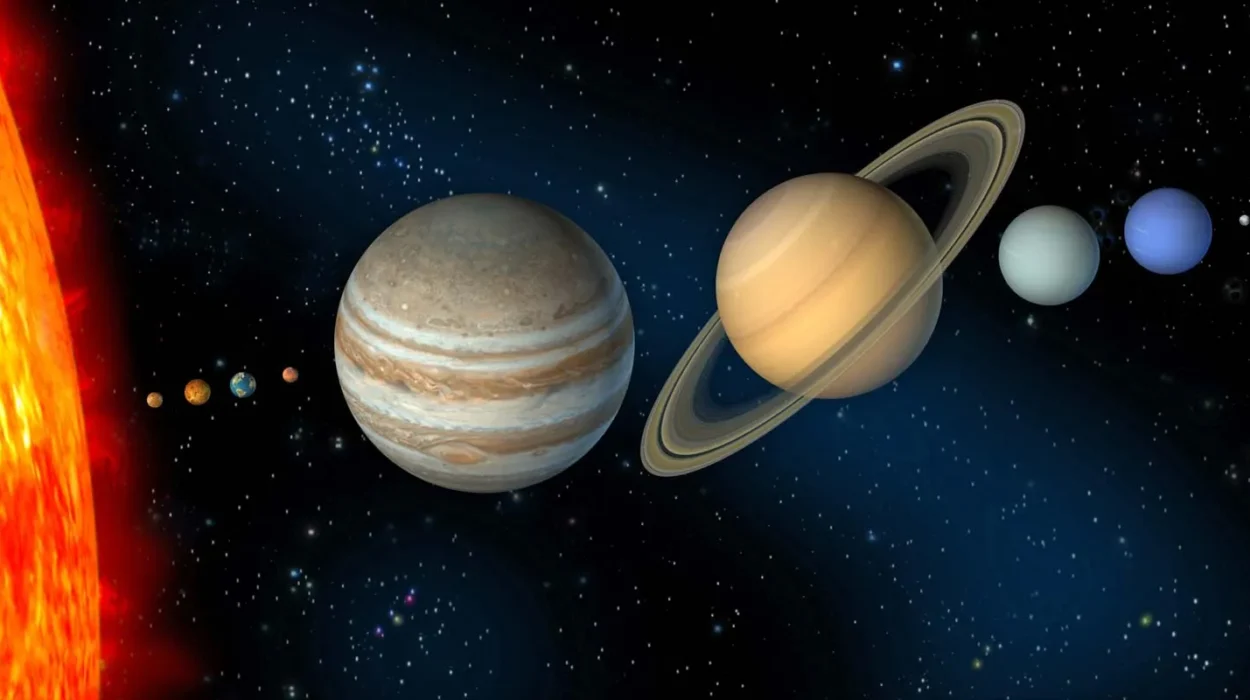
In the sixteenth century, the Polish astronomer Nicolaus Copernicus proposed a revolutionary idea: the Sun, not Earth, occupies the central position of the Solar System. In his heliocentric model, Earth is simply one of several planets orbiting the Sun.
At first, this idea faced strong opposition because it challenged centuries of accepted belief. Yet over time, further observations confirmed that Copernicus was correct.
This discovery fundamentally changed humanity’s view of the universe. Earth was no longer the center of everything but one planet among many.
Galileo’s Telescope Changed Everything
One of the greatest turning points in astronomy came when Galileo Galilei pointed a telescope toward the sky in 1609.
Although he did not invent the telescope, Galileo greatly improved its design and became one of the first people to use it systematically for astronomical observations.
What he saw transformed science forever.
The Moon was not a perfectly smooth sphere but covered with mountains, valleys, and craters.
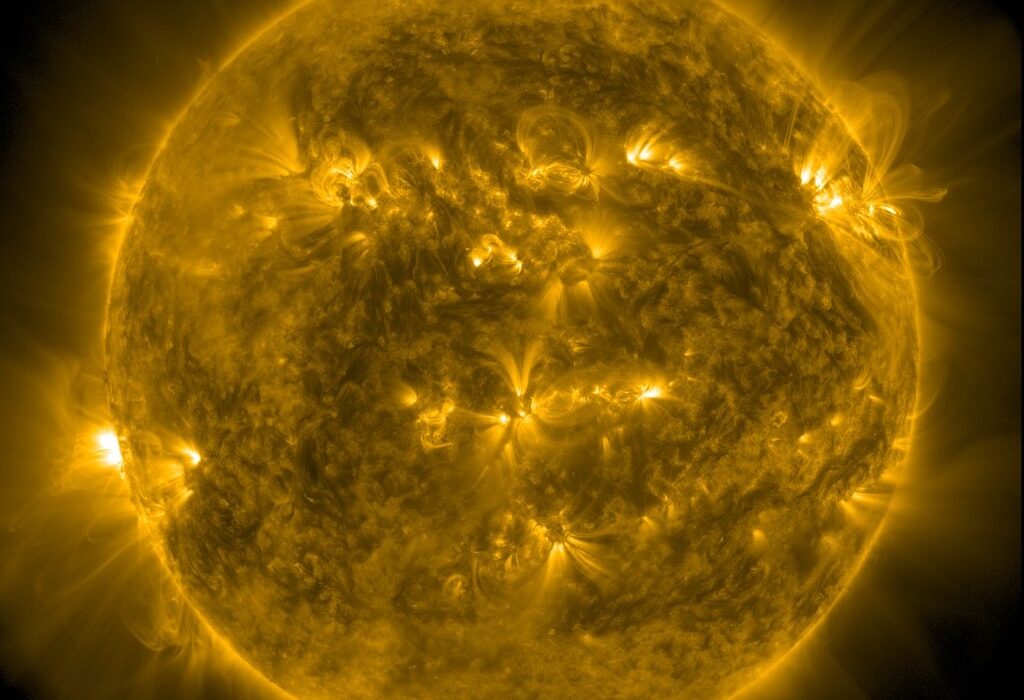
The Sun contained dark sunspots that moved across its surface, showing that the Sun itself rotates.
Most importantly, Galileo discovered four large moons orbiting Jupiter. These moons—Io, Europa, Ganymede, and Callisto—proved that not everything revolves around Earth.
He also observed the phases of Venus, providing powerful evidence that Venus orbits the Sun.
Galileo’s discoveries marked the beginning of modern observational astronomy and demonstrated the incredible power of telescopes.
Johannes Kepler Revealed How Planets Really Move
After analyzing years of precise observations collected by Danish astronomer Tycho Brahe, Johannes Kepler discovered that planets do not travel around the Sun in perfect circles.
Instead, they move in ellipses, with the Sun located at one focus of each orbit.
Kepler also discovered that planets move faster when they are closer to the Sun and slower when they are farther away.
These findings became known as Kepler’s laws of planetary motion.
They accurately described planetary orbits and later helped Isaac Newton uncover the force responsible for those motions.
Even today, spacecraft missions throughout the Solar System rely on Kepler’s principles.
Newton Explained Gravity
One of the greatest scientific achievements in history came when Sir Isaac Newton explained why planets remain in orbit.
Newton proposed that every object with mass attracts every other object through gravity.
The same force that causes an apple to fall from a tree also keeps the Moon orbiting Earth and Earth orbiting the Sun.
For the first time, the movements of objects on Earth and in space were explained by a single universal law.
Newton’s law of universal gravitation unified the heavens and Earth under one set of physical principles.
His work laid the foundation for classical physics and astronomy for more than two centuries.
Discovering Uranus Expanded the Solar System
Until the eighteenth century, only six planets were known because they could all be seen with the naked eye.
In 1781, British astronomer William Herschel discovered Uranus using a telescope.
This was the first planet ever found with scientific instruments rather than by ancient observers.
The discovery doubled the known size of the Solar System and demonstrated that entirely new worlds could still be found.
It also encouraged astronomers to search more carefully, leading to even more discoveries.
Neptune Was Found Through Mathematics
One of astronomy’s most extraordinary successes occurred in the nineteenth century.
Astronomers noticed that Uranus was not moving exactly as expected. Something unseen seemed to be pulling on it.
Instead of searching the sky randomly, mathematicians calculated where an unknown planet should be located based on its gravitational influence.
In 1846, astronomers pointed their telescopes toward the predicted position and found Neptune almost exactly where mathematics had indicated.
This remarkable achievement showed that mathematical physics could reveal objects long before they were directly observed.
The Discovery of Pluto and the Evolution of Planetary Science
In 1930, American astronomer Clyde Tombaugh discovered Pluto after carefully comparing photographs of the night sky.
For decades, Pluto was celebrated as the Solar System’s ninth planet.
However, astronomers later found many similar icy objects beyond Neptune in a region called the Kuiper Belt.
In 2006, the International Astronomical Union introduced a new definition of a planet. Pluto met some of the criteria but not all, leading to its reclassification as a dwarf planet.
Although Pluto is no longer considered one of the eight major planets, its discovery remains an important milestone that expanded our understanding of the outer Solar System.
The Milky Way Is Only One Galaxy
For centuries, people believed the Milky Way represented the entire universe.
That changed dramatically during the twentieth century.
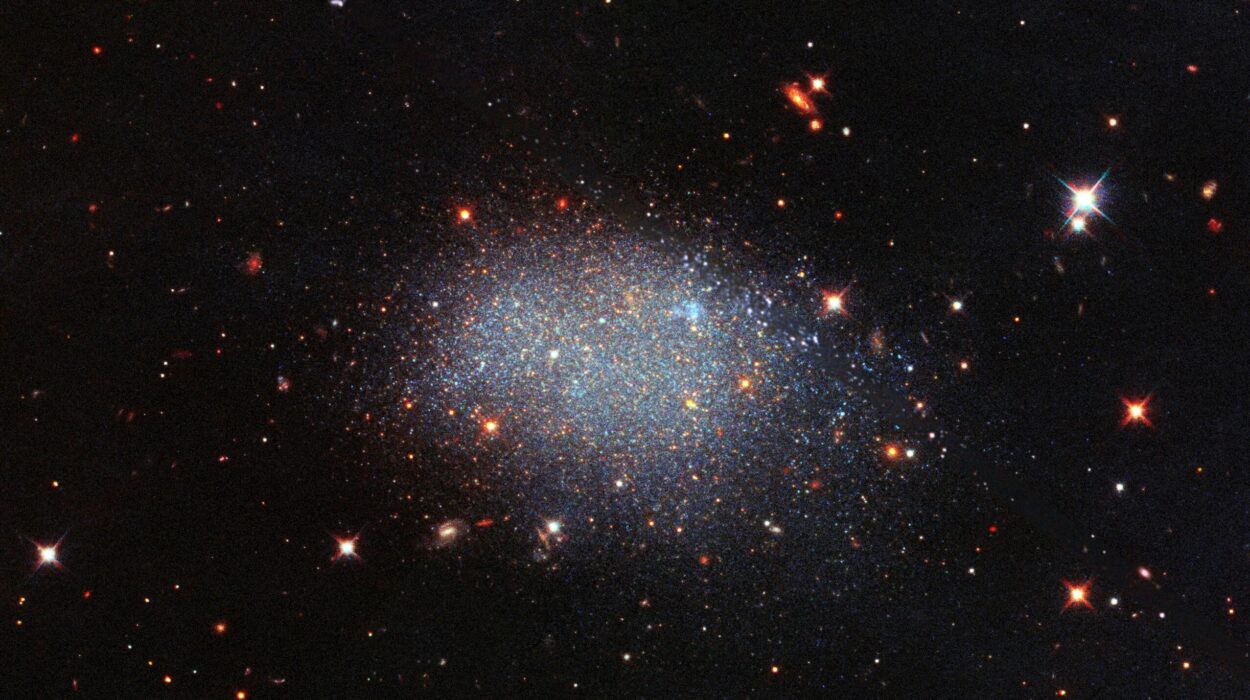
Using powerful telescopes, astronomer Edwin Hubble demonstrated that fuzzy spiral objects once thought to be nearby clouds were actually enormous galaxies located far beyond the Milky Way.
Each galaxy contains millions, billions, or even trillions of stars.
This discovery revealed that the universe is vastly larger than anyone had imagined.
Today, astronomers estimate that the observable universe contains hundreds of billions of galaxies.
The Universe Is Expanding
Perhaps one of the most astonishing discoveries in astronomy came from Edwin Hubble’s observations during the 1920s.
He found that distant galaxies are moving away from us.
Even more surprising, the farther away a galaxy is, the faster it appears to be receding.
This relationship showed that space itself is expanding.
Rather than existing forever in an unchanging state, the universe has been growing larger over time.
This discovery laid the foundation for modern cosmology and eventually led to the Big Bang theory.
The Big Bang Theory
As evidence accumulated, astronomers concluded that the expanding universe must have been much smaller, denser, and hotter in the distant past.
This idea became known as the Big Bang theory.
According to modern cosmology, the universe began approximately 13.8 billion years ago in an extremely hot, dense state before expanding and cooling.
Over billions of years, matter gathered under gravity to form stars, galaxies, planets, and eventually the conditions necessary for life.
The Big Bang is not an explosion occurring in empty space. Instead, it describes the expansion of space itself.
Multiple lines of evidence strongly support this theory today.
Discovering the Cosmic Microwave Background
In 1965, radio astronomers Arno Penzias and Robert Wilson accidentally detected a faint microwave signal coming equally from every direction in space.
This mysterious radiation turned out to be the afterglow of the early universe.
Known as the Cosmic Microwave Background, it represents light released when the universe was only about 380,000 years old.
This discovery provided one of the strongest pieces of evidence supporting the Big Bang theory.
Today, detailed maps of this ancient radiation help scientists understand the universe’s age, composition, and evolution.
Understanding How Stars Produce Energy
For centuries, astronomers wondered how stars could shine continuously for millions or billions of years.
The answer came through nuclear physics.
Inside stars, immense pressure and temperature allow hydrogen nuclei to fuse into helium.
This process, called nuclear fusion, releases enormous amounts of energy.
Our Sun converts roughly 600 million tons of hydrogen into helium every second, producing the sunlight that supports nearly all life on Earth.
Understanding stellar fusion explained one of astronomy’s oldest mysteries.
Discovering Black Holes
Albert Einstein’s theory of general relativity predicted that extremely massive objects could warp space and time so strongly that nothing—not even light—could escape.
For many years, black holes remained theoretical.
Eventually, astronomers found overwhelming evidence for their existence.
Today, black holes are observed indirectly through their gravitational effects, their interactions with nearby matter, and the powerful radiation emitted by material falling toward them.
In 2019, the Event Horizon Telescope collaboration released the first direct image of the shadow of a supermassive black hole.
This historic achievement confirmed predictions made more than a century earlier.
Discovering Pulsars
In 1967, graduate student Jocelyn Bell Burnell detected a strange repeating radio signal unlike anything previously observed.
At first, its perfectly regular pulses seemed almost unbelievable.
The source turned out to be a rapidly rotating neutron star left behind after a massive star exploded.
These objects, known as pulsars, rotate with extraordinary precision.
Some spin hundreds of times every second.
Pulsars have become valuable tools for studying gravity, dense matter, and even detecting gravitational waves.
Finding Planets Around Other Stars
For most of history, humanity knew only the planets orbiting our own Sun.
That changed in the 1990s when astronomers confirmed the existence of planets orbiting other stars.
These worlds are known as exoplanets.
Since then, thousands have been discovered using space telescopes and ground-based observatories.
Some are giant gas planets larger than Jupiter.
Others are rocky worlds similar in size to Earth.
A number orbit within regions where temperatures may allow liquid water to exist.
The discovery of exoplanets has transformed astronomy and raised exciting questions about the possibility of life elsewhere in the universe.
Detecting Gravitational Waves
In 2015, scientists achieved one of the greatest experimental successes in modern astronomy.
The Laser Interferometer Gravitational-Wave Observatory, or LIGO, detected tiny ripples in spacetime produced by two merging black holes more than a billion light-years away.
These ripples, called gravitational waves, had been predicted by Einstein a century earlier.
Their detection opened an entirely new way of studying the universe.
Instead of observing only light, astronomers can now “listen” to cosmic events through gravitational waves.
This marked the birth of gravitational-wave astronomy.
Capturing the First Image of a Black Hole
For decades, black holes were known only through indirect evidence.
In 2019, an international team using the Event Horizon Telescope released the first image of a black hole’s shadow.
The image showed the supermassive black hole at the center of the galaxy Messier 87.
Although the black hole itself cannot be seen, glowing gas surrounding it revealed the dark shadow predicted by general relativity.
The achievement required combining observations from radio telescopes located around the world, effectively creating an Earth-sized telescope.
It stands as one of the most remarkable accomplishments in the history of astronomy.
Discovering That the Universe Is Mostly Invisible
One of the biggest surprises in modern astronomy is that the stars, planets, and galaxies we can see make up only a small fraction of the universe.
Astronomers have found strong evidence that invisible dark matter provides much of the gravitational pull shaping galaxies and galaxy clusters.
Even more mysterious is dark energy, which appears to be driving the universe’s accelerating expansion.
Together, dark matter and dark energy are thought to account for about 95 percent of the universe’s total mass-energy content.
Although scientists still do not know exactly what they are, discovering their existence has transformed modern cosmology.
Exploring the Solar System with Spacecraft
The Space Age revolutionized astronomy.
Instead of observing planets only through telescopes, spacecraft have visited nearly every major world in the Solar System.
The Apollo missions landed humans on the Moon.
The Voyager spacecraft explored the outer planets before continuing into interstellar space.
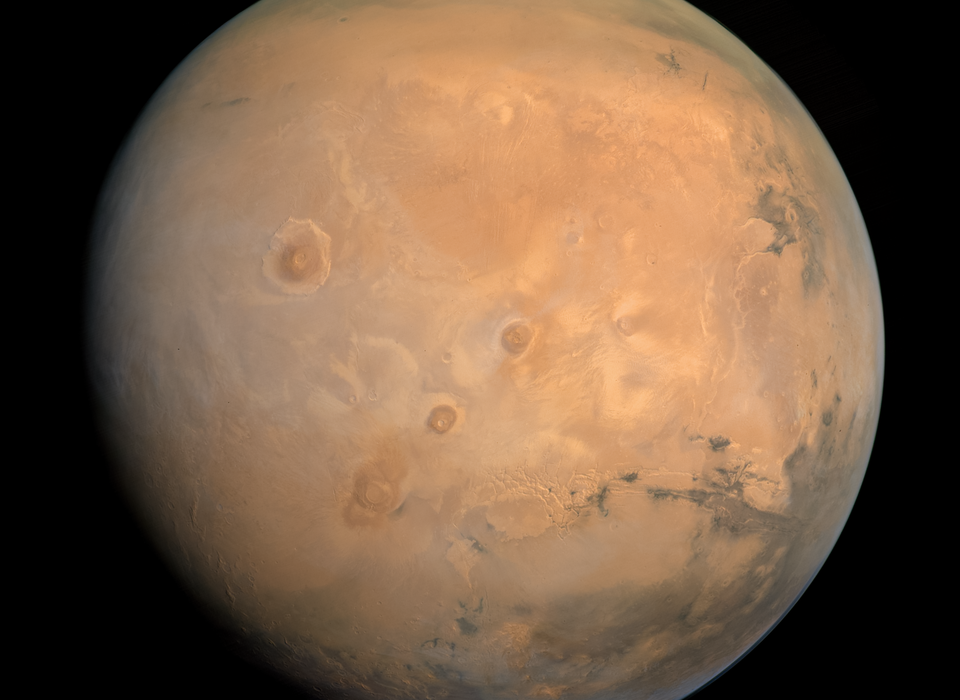
Mars rovers have examined ancient riverbeds and searched for evidence of past habitability.
Spacecraft have orbited Saturn, landed on comets, visited asteroids, and flown past Pluto.
Each mission has revealed astonishing new details and reminded us that exploration is far from complete.
The James Webb Space Telescope Opened a New Window on the Universe
The launch of the James Webb Space Telescope marked another major milestone in astronomy.
Observing primarily in infrared light, Webb can peer through clouds of dust, study the atmospheres of distant exoplanets, observe stars as they form, and detect galaxies that existed only a few hundred million years after the Big Bang.
Its extraordinary sensitivity is providing new insights into cosmic history and helping answer questions that previous telescopes could not address.
Each new observation reminds scientists that the universe still holds countless surprises.
Astronomy Continues to Rewrite Our Story
The history of astronomy is far more than a collection of scientific discoveries. It is the story of humanity learning that the universe is far larger, older, and more extraordinary than anyone once imagined.
Each discovery has challenged old assumptions while revealing new mysteries. We learned that Earth is not the center of the Solar System, that the Sun is just one ordinary star among hundreds of billions in the Milky Way, that our galaxy is only one among countless others, and that most of the universe is made of mysterious dark matter and dark energy.
Yet the greatest lesson astronomy has taught us may be that every answer leads to new questions. As more powerful telescopes, spacecraft, and observatories continue to explore the cosmos, future generations will undoubtedly make discoveries as astonishing as those that transformed our understanding in the past.
The universe remains a vast frontier of mystery, and the greatest discoveries in the history of astronomy may still lie ahead, waiting for curious minds to uncover them.