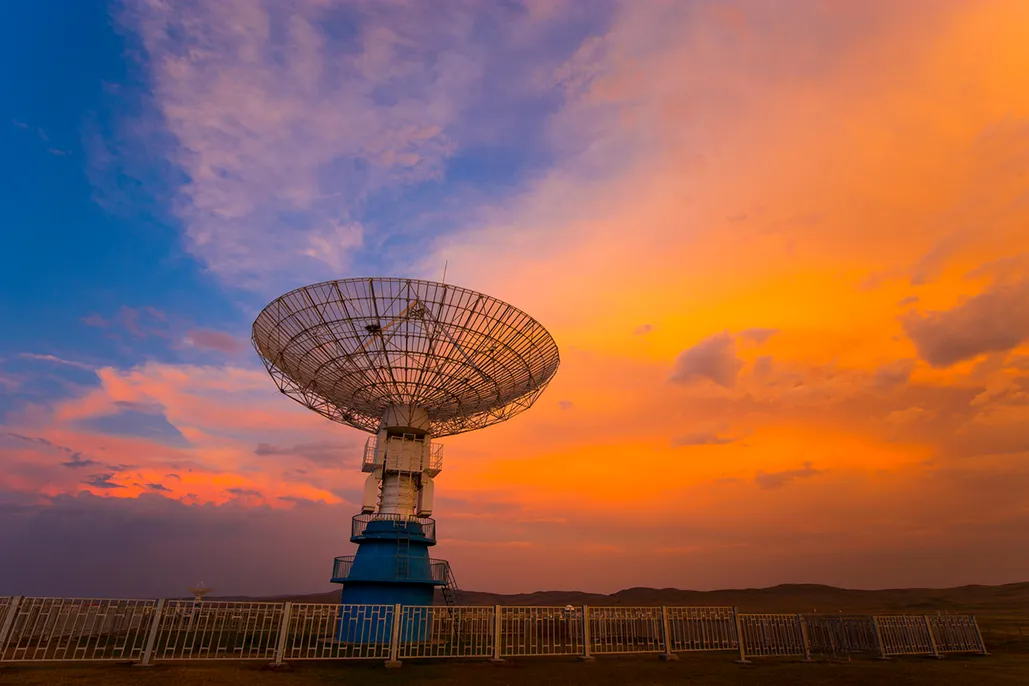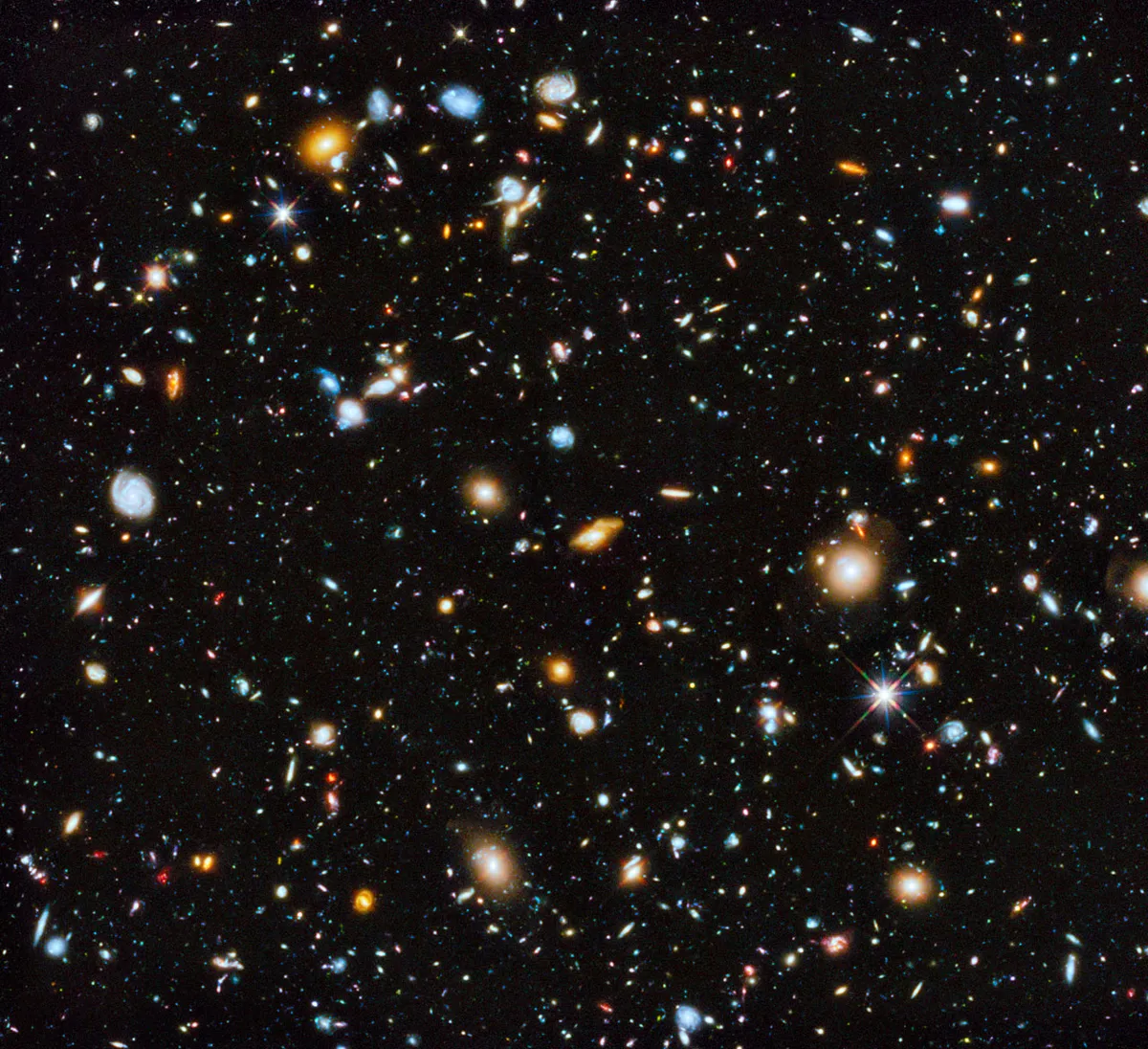
The universe is so unimaginably vast that it challenges the limits of human imagination. On a clear night, the stars scattered across the sky may seem close enough to count, yet even the nearest stars are separated from us by distances so enormous that ordinary units like kilometers or miles become almost meaningless. Beyond those stars lie billions of galaxies, each containing billions or even trillions of stars, stretching across a cosmos that has been expanding for nearly 13.8 billion years.
One of the greatest achievements in the history of science has been humanity’s ability to measure these incredible distances. Without ever traveling beyond our Solar System, scientists have developed remarkably accurate methods to estimate the size of planets, stars, galaxies, and ultimately the observable universe itself. These measurements rely not on guesswork but on mathematics, physics, careful observation, and increasingly sophisticated technology.
Understanding how scientists measure the size of the universe is also a journey through the history of astronomy itself. Every new technique has allowed humanity to see farther into space and further back in time, revealing a universe far larger and more fascinating than anyone once imagined.
Why Measuring the Universe Is So Difficult
Measuring everyday distances on Earth is relatively simple. A ruler can measure the length of a book, and satellites can accurately determine the distance between cities. But space is an entirely different challenge.
The Moon is about 384,400 kilometers (238,900 miles) from Earth. The Sun is nearly 150 million kilometers (93 million miles) away. Even these numbers are enormous, yet they are tiny compared with the distances separating stars and galaxies.
The nearest star beyond the Sun, Proxima Centauri, lies about 4.24 light-years away. That means its light takes more than four years to reach Earth while traveling at nearly 300,000 kilometers (186,000 miles) every second.
Galaxies are millions of light-years away, while the most distant galaxies ever observed emitted their light over 13 billion years ago.
Because no spacecraft can travel these distances within a human lifetime, scientists must rely on indirect methods based entirely on the behavior of light and the laws of physics.
Light Is the Cosmic Messenger
Nearly everything astronomers know about the universe comes from light.
Stars, planets, galaxies, nebulae, and black holes all send information across space in the form of electromagnetic radiation. This includes visible light, radio waves, infrared radiation, ultraviolet light, X-rays, and gamma rays.
Unlike sound, light can travel through the vacuum of space. As it journeys toward Earth, it carries valuable clues about where an object is located, how fast it is moving, what it is made of, and how far away it is.
Every measurement of the universe begins with analyzing this ancient light.
Understanding the Light-Year
One of the first concepts needed to understand cosmic distances is the light-year.
Despite its name, a light-year is not a measure of time. It is a measure of distance.
A light-year is the distance light travels in one year through empty space.
Since light moves at approximately 299,792,458 meters per second (about 186,282 miles per second), it travels nearly 9.46 trillion kilometers (5.88 trillion miles) in one year.
Using light-years makes enormous distances easier to describe.
Instead of saying a star is 40 trillion kilometers away, astronomers simply say it is about four light-years away.
Similarly, the Milky Way Galaxy spans roughly 100,000 light-years, while the neighboring Andromeda Galaxy lies about 2.5 million light-years from Earth.
Measuring Nearby Objects with Radar
The first step in the cosmic distance scale begins within our own Solar System.
Scientists can directly measure distances to nearby planets using radar.
A powerful radio signal is transmitted toward a planet such as Venus or Mars. The signal bounces off the planet’s surface and returns to Earth.
Because radio waves travel at the speed of light, scientists simply measure how long the round trip takes.
Using this method, distances within the Solar System can be determined with extraordinary precision, often accurate to within a few meters.
These measurements provide the foundation for measuring much greater distances beyond the Solar System.
Using Parallax to Measure Nearby Stars
For stars beyond our Solar System, scientists use a technique called stellar parallax.
Hold your thumb at arm’s length and look at it first with one eye, then the other. Your thumb appears to shift against the distant background.
The thumb has not moved. The change occurs because your eyes observe it from slightly different positions.
Astronomers use exactly the same principle.
As Earth orbits the Sun, it changes position by about 300 million kilometers over six months. Nearby stars appear to shift slightly against much more distant stars.
Although the shift is incredibly tiny, modern telescopes can measure it with remarkable precision.
The amount of this apparent motion reveals the star’s distance.
The European Space Agency’s Gaia spacecraft has measured parallaxes for more than a billion stars, creating the most detailed three-dimensional map of our Milky Way ever produced.
Standard Candles: Nature’s Cosmic Distance Markers
Eventually stars become so distant that even parallax no longer works.
Astronomers then rely on objects known as standard candles.
A standard candle is an astronomical object whose true brightness is already known.
Imagine seeing two identical light bulbs.
If one appears dimmer, you know it must be farther away.
The same principle works in space.
By comparing an object’s known intrinsic brightness with how bright it appears from Earth, scientists calculate its distance.
One of the most important standard candles is the Cepheid variable star.
Cepheid Variable Stars
Cepheid variables are stars whose brightness rises and falls in a regular cycle.
Early in the twentieth century, American astronomer Henrietta Swan Leavitt made a groundbreaking discovery.
She found that the time required for a Cepheid to brighten and dim is directly related to its true brightness.
A Cepheid that changes slowly is naturally brighter than one that changes rapidly.
By measuring the star’s pulsation period, astronomers know its actual luminosity.
Comparing that value with its observed brightness reveals its distance.
This discovery transformed astronomy because it allowed scientists to measure distances to nearby galaxies for the first time.
Type Ia Supernovae
For galaxies much farther away, astronomers use exploding stars known as Type Ia supernovae.
These spectacular explosions occur when a white dwarf star reaches a critical mass in certain binary star systems.
Because these explosions reach nearly the same peak brightness every time, they serve as excellent standard candles.
Type Ia supernovae can be observed across billions of light-years.
They have allowed astronomers to measure the expansion of the universe and led to the remarkable discovery that this expansion is accelerating.
This unexpected finding eventually earned the 2011 Nobel Prize in Physics.
Building the Cosmic Distance Ladder
No single method can measure every distance in the universe.
Instead, astronomers construct what is known as the cosmic distance ladder.
Each technique builds upon the previous one.
Radar accurately measures distances within the Solar System.
Parallax calibrates nearby stars.
Cepheid variables extend measurements to nearby galaxies.
Type Ia supernovae reach across much of the observable universe.
Additional techniques continue extending these measurements even farther.
Each “rung” of the ladder is carefully checked against the others, improving the overall accuracy of cosmic distance measurements.
Redshift and the Expanding Universe
One of the most powerful tools for measuring the universe comes from the expansion of space itself.
In the 1920s, astronomer Edwin Hubble discovered that nearly all distant galaxies are moving away from us.
The farther away a galaxy is, the faster it appears to recede.
This relationship became known as Hubble’s Law.
As galaxies move away, the light they emit stretches into longer wavelengths.
This effect is called redshift because visible light shifts toward the red end of the spectrum.
The amount of redshift tells astronomers how rapidly a galaxy is moving away.
Using Hubble’s Law, that speed can be converted into an approximate distance.
Today, redshift remains one of the most important methods for studying the large-scale structure of the universe.
Looking Back in Time
One of the most fascinating consequences of measuring vast distances is that astronomers are also looking into the past.
Because light travels at a finite speed, every observation shows objects as they were when the light began its journey.
The Sun appears as it was about eight minutes ago.
Proxima Centauri appears as it was more than four years ago.
The Andromeda Galaxy appears as it existed about 2.5 million years ago.
Some galaxies observed by the James Webb Space Telescope emitted their light over 13 billion years ago, when the universe was still in its infancy.
In astronomy, greater distance means deeper history.
Measuring the Size of the Observable Universe
Modern observations indicate that the universe is approximately 13.8 billion years old.
At first glance, it might seem that the observable universe should have a radius of 13.8 billion light-years.
However, space itself has expanded while light has been traveling toward us.
As a result, those extremely distant galaxies are now much farther away than the distance their light has traveled.
Current measurements indicate that the observable universe has a radius of about 46.5 billion light-years.
This means its diameter is approximately 93 billion light-years.
Within this enormous volume are hundreds of billions—and possibly even trillions—of galaxies.
Does the Universe Have an Edge?
When people hear that the observable universe is about 93 billion light-years across, they often imagine a giant sphere with a physical boundary.
In reality, the observable universe is simply the portion of the cosmos whose light has had enough time to reach Earth since the Big Bang.
Beyond this horizon, there may be vastly more universe that remains permanently beyond our view.
Current observations suggest that the entire universe may be much larger than the observable universe.
It could even be infinite, although scientists do not yet know.
Because light from extremely distant regions has not had enough time to reach us, these areas remain inaccessible to observation.
Powerful Telescopes Help Measure the Cosmos
Modern astronomy depends on incredibly advanced telescopes.
Ground-based observatories use giant mirrors and sophisticated instruments to study distant galaxies.
Space telescopes avoid Earth’s atmosphere, providing sharper views of the universe.
The Hubble Space Telescope revolutionized distance measurements by observing Cepheid variables in distant galaxies.
The Gaia spacecraft precisely maps stars throughout the Milky Way.
The James Webb Space Telescope is revealing some of the earliest galaxies ever formed, allowing astronomers to study the universe’s first few hundred million years.
Each new generation of telescopes extends humanity’s reach farther into space.
Mathematics Makes Cosmic Measurements Possible
Behind every astronomical observation lies mathematics.
Scientists use geometry, calculus, statistics, spectroscopy, and Einstein’s theory of relativity to transform tiny signals into accurate distance estimates.
Computer models simulate galaxy formation, stellar evolution, and cosmic expansion.
Massive databases combine observations from thousands of telescopes worldwide.
Without mathematics, the universe would remain little more than a beautiful mystery.
How Accurate Are These Measurements?
Although measuring cosmic distances is extraordinarily challenging, modern astronomy has achieved remarkable precision.
Distances within the Solar System are known with astonishing accuracy.
Nearby stellar distances measured by Gaia often have uncertainties of less than one percent.
Measurements involving distant galaxies are more difficult because they rely on multiple techniques and complex models.
Scientists continuously refine these methods by comparing independent observations and improving telescope technology.
As a result, our picture of the universe becomes increasingly accurate with each passing year.
Why Measuring the Universe Matters
Understanding cosmic distances is about much more than satisfying curiosity.
Knowing how far away stars and galaxies are allows scientists to determine their true sizes, masses, temperatures, and ages.
Distance measurements reveal how galaxies evolve, how stars are born and die, how black holes grow, and how the universe has expanded over billions of years.
They also help scientists investigate dark matter, dark energy, and the ultimate fate of the cosmos.
Without accurate distance measurements, modern astronomy and cosmology would be impossible.
The Endless Journey of Discovery
Human beings have always looked toward the night sky with wonder. What once appeared to be tiny points of light has become an immense universe filled with countless galaxies, mysterious black holes, brilliant stars, and worlds beyond imagination. Remarkably, scientists have learned to measure these unimaginable distances without ever leaving Earth, relying on the universal laws of physics and the information carried by light.
Every improvement in technology allows us to see farther into space and deeper into cosmic history. Yet every new measurement also reveals new mysteries waiting to be solved. As telescopes become more powerful and our understanding of the universe grows, the story of measuring the cosmos continues to unfold.
The universe may be vast beyond comprehension, but through careful observation, scientific reasoning, and human curiosity, we have learned to map its immense scale with astonishing precision. Each new measurement reminds us that although we occupy only a tiny corner of the cosmos, our ability to understand it is one of humanity’s greatest achievements.