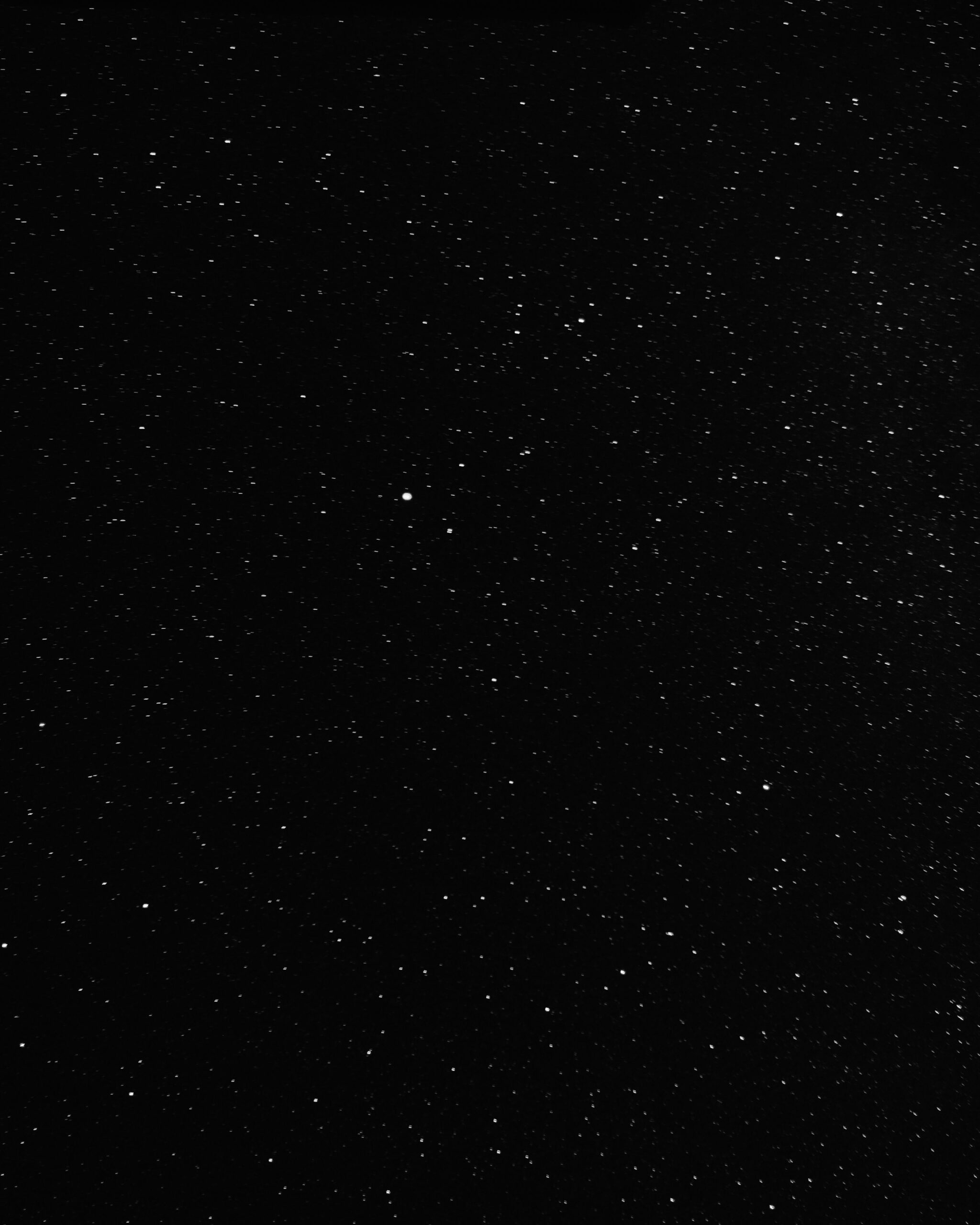
On a bright sunny day, the sky above us glows a beautiful blue. At sunset, it transforms into breathtaking shades of orange, pink, and red. But when astronauts leave Earth and look out the window of a spacecraft, they see something entirely different. Even while the Sun shines brilliantly nearby, the vastness of space appears incredibly dark—almost perfectly black.
This contrast is one of the most fascinating sights in the universe. How can space remain black when it is filled with stars, galaxies, and the powerful light of the Sun? If the Sun is so bright that it can illuminate our entire planet, why doesn’t its light brighten space itself?
The answer lies in the nature of light, the absence of Earth’s atmosphere, the immense size of the universe, and the way our eyes perceive brightness. Together, these factors explain why the universe appears as a dark cosmic ocean scattered with brilliant islands of light.
The Simple Answer
Space looks black because there is almost nothing in it to scatter sunlight toward our eyes.
On Earth, sunlight interacts with billions upon billions of tiny molecules in the atmosphere. These molecules redirect light in every direction, allowing the entire sky to glow.
Outer space is almost a perfect vacuum. There are extremely few particles floating between planets and stars. Without enough material to scatter light, most sunlight simply travels in straight lines through space without illuminating the darkness around it.
As a result, unless light enters your eyes directly from the Sun, a star, or another bright object, the surrounding space appears black.
What Is Light?
To understand why space is dark, it helps to understand what light actually is.
Light is a form of electromagnetic radiation. It travels through empty space at an astonishing speed of about 299,792 kilometers (186,282 miles) per second.
Unlike sound, which requires air or another material to travel through, light does not need a medium. It can move effortlessly across the vacuum of space.
Every second, trillions of photons—the tiny packets of light energy—leave the Sun and spread outward in every direction.
Some of those photons reach Earth in about eight minutes.
Others continue traveling for billions of years across the universe.
But simply having light present does not automatically make everything bright.
Why the Sky Is Blue on Earth
The blue daytime sky provides the key to solving the mystery.
Earth is surrounded by an atmosphere made mostly of nitrogen and oxygen molecules.
When sunlight enters the atmosphere, these tiny molecules scatter shorter wavelengths of visible light—especially blue light—much more effectively than longer wavelengths like red.
This process is known as Rayleigh scattering.
Because blue light is scattered in every direction, our eyes receive blue light no matter where we look in the sky.
The atmosphere effectively turns the entire sky into a giant glowing surface.
Even when you look away from the Sun, scattered sunlight still reaches your eyes.
That is why the daytime sky appears bright and blue.
Space Has Almost No Atmosphere
Now imagine removing Earth’s atmosphere completely.
Without those air molecules, sunlight would no longer scatter throughout the sky.
Instead, sunlight would travel in straight lines.
You would see the Sun as an intensely bright disk, but everywhere else the sky would become completely black.
This is exactly what astronauts experience.
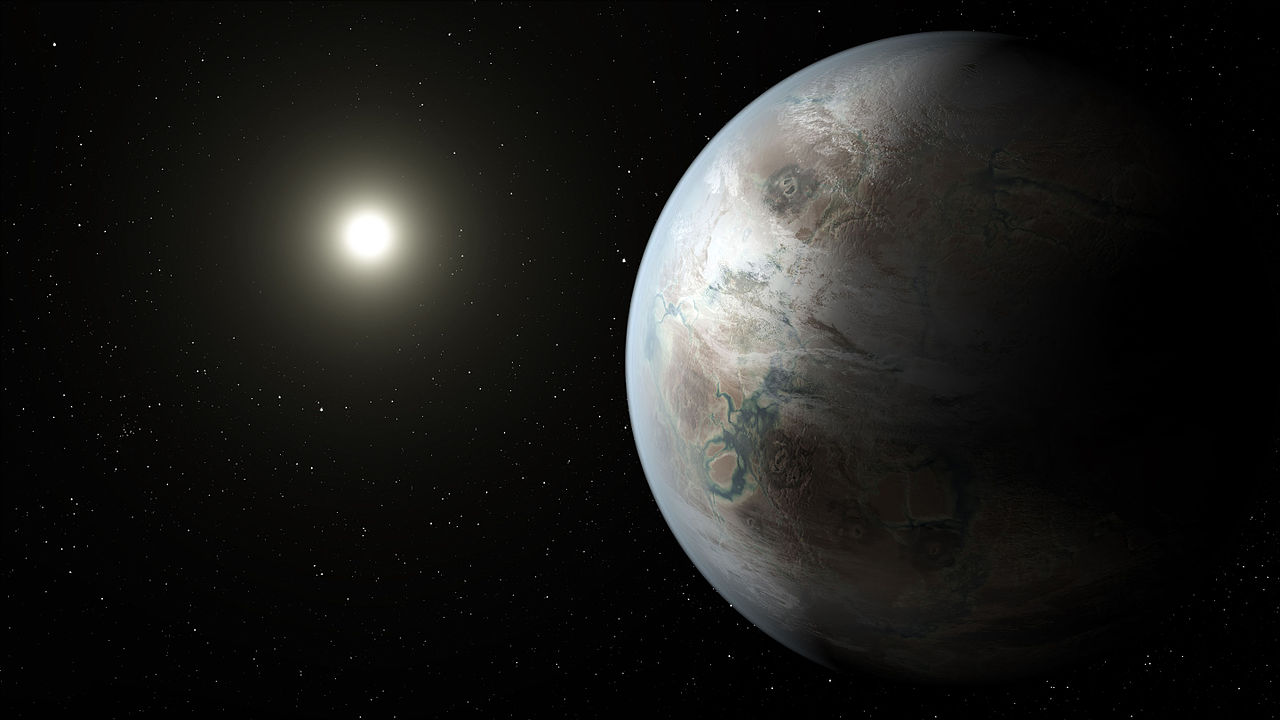
Even while orbiting Earth during daytime, astronauts see a brilliant Sun suspended against a pitch-black background.
The absence of atmospheric scattering is the main reason space appears dark.
Light Needs Something to Scatter
One common misunderstanding is believing that light itself fills space like glowing fog.
In reality, light is invisible while it is traveling through empty space.
You only see light when it reaches your eyes directly or when it reflects from or scatters off an object.
Think about shining a flashlight across a perfectly clean room.
If the air contains dust or smoke, you can clearly see the beam.
But if the air is exceptionally clean, the beam becomes almost invisible unless it strikes a wall.
The same principle applies in space.
There simply are not enough particles floating around to make sunlight visible throughout the vacuum.
The Vacuum of Space
Although space is not completely empty, it comes remarkably close.
The regions between planets and stars contain incredibly few atoms and molecules.
Near Earth, space contains only a handful of particles per cubic centimeter.
Farther away, especially between galaxies, there may be fewer than one atom in an entire cubic meter.
Compared with Earth’s atmosphere, this is unimaginably empty.
Without enough particles to scatter sunlight, the vast emptiness remains dark.
The Sun Does Not Light Up Empty Space
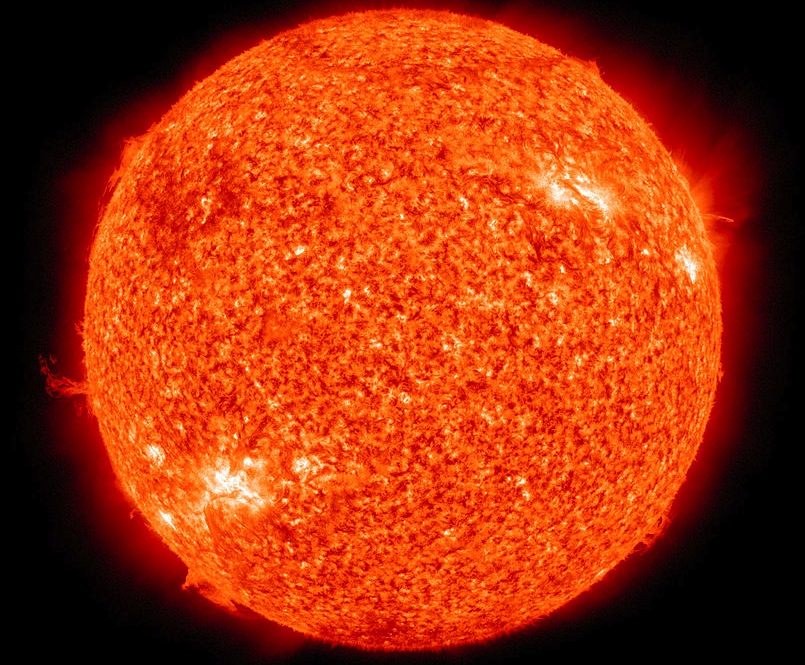
The Sun is unimaginably bright.
It produces about 3.8 × 10²⁶ watts of energy every second.
Its light illuminates planets, moons, asteroids, and comets throughout the Solar System.
Yet the space between these objects stays black.
This may seem surprising at first.
The reason is that sunlight passes through empty space without leaving a visible trail.
When sunlight reaches Earth, it reflects from the ground, buildings, oceans, and clouds.
These reflections allow us to see our surroundings.
In empty space, however, there are very few surfaces from which light can bounce.
Without reflection or scattering, the darkness remains.
Why Astronauts See Black Space During the Day
Many people imagine astronauts floating in a bright blue sky above Earth.
In reality, photographs taken from the International Space Station often show Earth glowing brilliantly beneath a completely black sky.
This happens because astronauts are above nearly all of Earth’s atmosphere.
Very little scattering occurs there.
Their eyes and cameras receive direct sunlight from the Sun and reflected light from Earth.
But the surrounding vacuum contributes almost no scattered light.
As a result, the background remains black even in full daylight.
The Brightness of the Sun Makes the Darkness More Noticeable
Our eyes constantly adjust to different levels of brightness.
When looking toward the Sun or the sunlit side of Earth, our pupils become smaller to protect our vision.
This adaptation reduces our sensitivity to faint light.
Any dim background stars become much harder to see.
This is similar to trying to observe stars from a brightly lit city.
Artificial lights overwhelm your eyes, making the stars appear fewer and fainter.
In space, the brilliant Sun creates a similar effect.
Only after blocking the Sun can astronauts clearly observe many faint stars.
If Space Is Black, Why Can We See Stars?
The darkness of space does not mean there is no light.
It simply means there is very little scattered light.
Stars are visible because they produce their own light.
Each star sends enormous numbers of photons across the universe.
Some of those photons eventually reach Earth or spacecraft.
When they enter our eyes or telescopes directly, we see stars as bright points against the black background.
The darkness actually helps stars stand out more clearly.
Galaxies Shine in the Darkness
The universe contains hundreds of billions of galaxies, each holding billions or even trillions of stars.
Despite this staggering number, enormous distances separate these galaxies.
Light spreads out as it travels.
By the time light from distant galaxies reaches us, it has become incredibly faint.
Only powerful telescopes can detect many of them.
To our eyes, most of the universe therefore remains dark.
Why Isn’t the Entire Night Sky Bright?
This question puzzled astronomers for centuries.
If the universe contains countless stars extending infinitely in every direction, shouldn’t every part of the sky eventually contain a star?
If so, the night sky should be dazzlingly bright rather than dark.
This puzzle is known as Olbers’ Paradox.
The solution comes from modern cosmology.
The Universe Has a Beginning
The universe is approximately 13.8 billion years old.
Because light travels at a finite speed, we can only observe objects whose light has had enough time to reach us.
Many regions of the universe are simply too distant.
Their light has not yet arrived.
As a result, much of the sky remains dark.
If the universe had existed forever in an unchanging state, the night sky would indeed be much brighter.
Its finite age solves much of the paradox.
The Universe Is Expanding
Another important reason involves cosmic expansion.
The universe has been expanding since the Big Bang.
As galaxies move farther away, the light they emit stretches into longer wavelengths.
This phenomenon is called redshift.
Some light originally emitted as visible light eventually shifts into infrared, microwave, or radio wavelengths that human eyes cannot detect.
Although the energy still exists, it becomes invisible to us.
This contributes to the darkness of the sky.
The Cosmic Microwave Background
Interestingly, space is not completely dark.
The universe is filled with an extremely faint glow known as the Cosmic Microwave Background (CMB).
This radiation is the leftover heat from the Big Bang.
Today it has cooled to only about 2.7 kelvin, just above absolute zero.
Because it exists in microwave wavelengths rather than visible light, humans cannot see it with their eyes.
Specialized instruments can detect this ancient radiation, providing a snapshot of the infant universe.
Dust and Gas in Space
Space does contain clouds of gas and dust.
These regions sometimes scatter or reflect light, producing beautiful objects such as nebulae.
Nebulae can glow in spectacular colors because nearby stars excite the gas within them.
However, these glowing clouds occupy only tiny portions of the universe.
The overwhelming majority of space remains nearly empty.
Black Holes Are Not the Reason
Many people assume space is black because of black holes.
This is a common misconception.
Black holes are fascinating objects whose gravity is so strong that even light cannot escape once it passes the event horizon.
However, black holes occupy only a tiny fraction of the universe.
They do not make all of space dark.
The black appearance of space is primarily caused by the absence of scattered light, not by black holes absorbing everything.
Can Space Ever Look Bright?
Yes.
Certain regions of space can appear extremely bright.
Near massive stars, glowing nebulae shine brilliantly.
Dense star clusters fill the sky with countless stars.
The center of our Milky Way galaxy contains enormous concentrations of stars that would create a spectacular view if we could safely observe them nearby.
Even so, the empty regions between these bright objects remain dark.
The universe is a mixture of brilliant light sources separated by vast expanses of nearly empty space.
How Cameras Capture Black Space
Modern space photographs often show deep black backgrounds.
This accurately represents what cameras detect.
Exposure settings also play an important role.
When photographing bright objects like Earth, the Moon, or the Sun, cameras use short exposure times.
These settings prevent bright objects from becoming overexposed.
However, the shorter exposure also means faint stars may not appear in the image.
Long-exposure photographs, on the other hand, reveal thousands of stars that are invisible in ordinary images.
This is why some space photographs show star-filled skies while others display only darkness.
What Would You See If You Were Floating in Space?
Imagine standing safely in open space wearing a protective spacesuit.
The Sun would appear far brighter than it ever looks from Earth’s surface because there would be no atmosphere to dim its light.
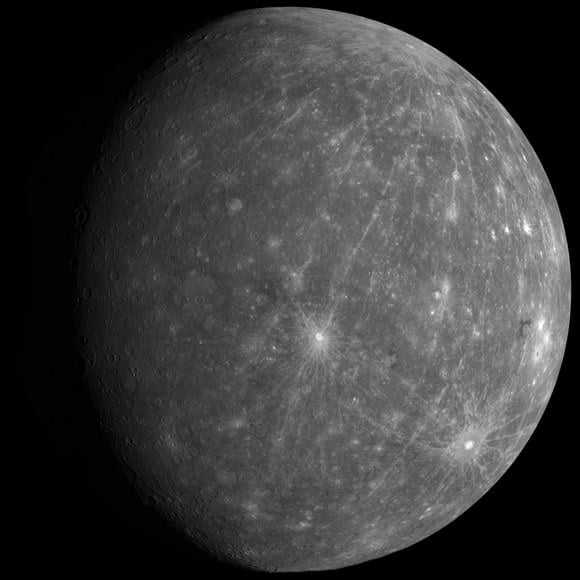
Nearby planets might glow brilliantly with reflected sunlight.
Stars would sparkle sharply without the twinkling caused by Earth’s atmosphere.
Yet between all these objects, the universe would remain astonishingly black.
The contrast between brilliant light and profound darkness would be unlike anything experienced on Earth.
The Beauty Hidden in the Darkness
At first glance, the darkness of space may seem empty or lifeless.
In reality, it reveals one of the universe’s most remarkable truths.
The black background allows stars, planets, galaxies, and nebulae to stand out with extraordinary clarity.
Without darkness, the magnificent structures of the cosmos would be much harder to appreciate.
The blackness of space is not the absence of wonder.
It is the canvas upon which the universe paints its brightest masterpieces.
Conclusion
Space is black because there is almost nothing there to scatter sunlight toward our eyes. On Earth, our atmosphere fills the sky with blue light through a process called Rayleigh scattering. Beyond the atmosphere, however, sunlight travels through an almost perfect vacuum in straight lines, leaving the surrounding space dark unless light comes directly from the Sun, a star, or another luminous object.
The immense distances between celestial objects, the finite age of the universe, and the ongoing expansion of space all contribute to the darkness we observe. Although the cosmos contains unimaginable numbers of stars and galaxies, they are separated by vast stretches of nearly empty space. Rather than making the universe seem empty, this darkness highlights the brilliance of every star, every planet, and every galaxy, reminding us that the black sky is not a sign of nothingness, but the breathtaking backdrop of an extraordinary universe.