The Sun is the heart of our solar system. It provides the light that brightens our days, the warmth that makes Earth habitable, and the energy that powers nearly every living thing on our planet. Every planet in the solar system travels around this enormous star, but an interesting question often comes to mind: Can you actually see the Sun from every planet?
The simple answer is yes. Every planet in our solar system can see the Sun because they all orbit it. However, the Sun does not look the same from every world. Its size, brightness, color, and even the way it appears in the sky change dramatically depending on how far a planet is from the Sun and what kind of atmosphere surrounds it.
A journey from the scorching surface of Mercury to the icy realm of Neptune reveals that the Sun has many different faces.
Why Every Planet Can See the Sun
The Sun sits at the center of the solar system, while the eight planets travel around it in elliptical orbits. Because every planet orbits the Sun, the star is always somewhere in its sky whenever it is above the horizon.
The only exception occurs during nighttime, when the planet has rotated so that its location faces away from the Sun. Just as people on Earth cannot see the Sun at midnight, observers on other planets experience their own day and night cycles.
Although every planet sees the same Sun, the experience is far from identical. Distance plays the biggest role. As a planet gets farther away, the Sun appears smaller and its light becomes weaker.
The Sun from Mercury
Mercury is the closest planet to the Sun, orbiting at an average distance of about 58 million kilometers (36 million miles). Standing on Mercury during the day would be an unforgettable experience.
The Sun would appear enormous—more than twice the diameter it appears from Earth. Because Mercury follows an elliptical orbit, its distance from the Sun changes significantly. At its closest point, called perihelion, the Sun can appear more than three times wider than it does from Earth.
The sunlight on Mercury is incredibly intense. During the daytime, temperatures can soar above 430°C (800°F), making Mercury one of the hottest places in the solar system.
Without a thick atmosphere to scatter sunlight, the sky above Mercury would remain almost completely black, even while the dazzling Sun shines overhead.
The Sun from Venus
Venus is often called Earth’s twin because it is nearly the same size as our planet, but its environment is completely different.
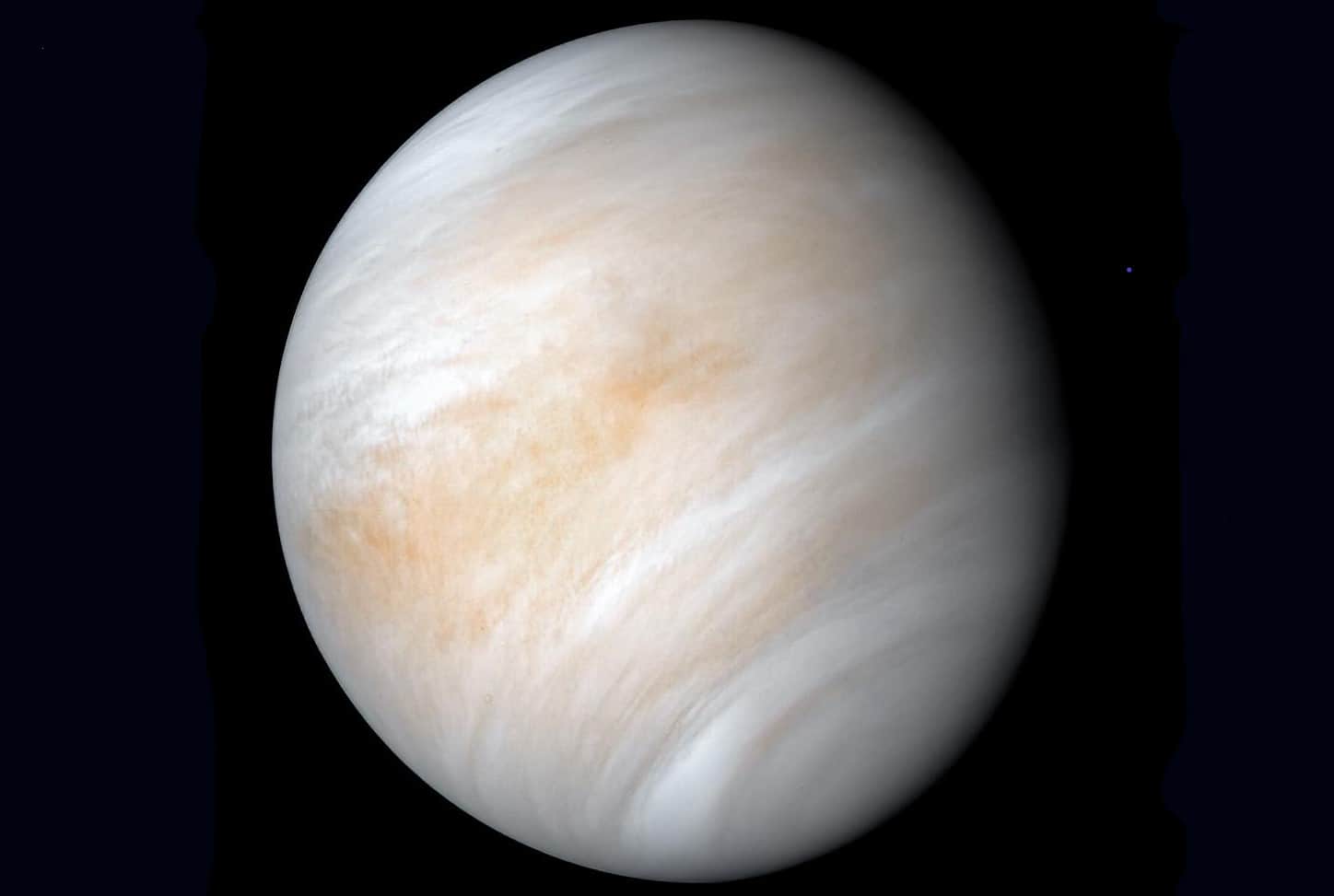
Venus has an extremely dense atmosphere made mostly of carbon dioxide, covered by thick clouds of sulfuric acid. These clouds block direct views of the Sun from the planet’s surface.
If you stood on Venus, you would not see a sharp, bright solar disk like we do on Earth. Instead, the Sun would appear as a faint glowing patch hidden behind dense yellowish clouds. The sky would look hazy and dim despite the enormous amount of sunlight reaching the upper atmosphere.
Above the clouds, however, the Sun shines brilliantly and appears much larger than it does from Earth because Venus orbits closer to it.
The Sun from Earth
Earth offers what many scientists consider an ideal view of the Sun.
At an average distance of about 150 million kilometers (93 million miles), the Sun appears large enough to dominate the daytime sky while remaining far enough away to create stable conditions for life.
Earth’s atmosphere scatters blue light, giving the sky its familiar color during the day. At sunrise and sunset, sunlight passes through more of the atmosphere, causing the Sun to glow orange, red, or golden.
Our Moon and the Sun appear almost exactly the same size in Earth’s sky. This remarkable coincidence allows total solar eclipses, during which the Moon can completely cover the Sun’s bright surface and reveal its glowing outer atmosphere, known as the corona.
The Sun from Mars
Mars lies about one and a half times farther from the Sun than Earth.
As a result, the Sun appears noticeably smaller. It still shines brightly enough to illuminate the Martian landscape, but only about 43 percent as much sunlight reaches Mars compared with Earth.
The sky on Mars often has a reddish or butterscotch color because of fine dust suspended in its thin atmosphere.
One of the most fascinating sights on Mars is a sunset. Unlike Earth’s red sunsets, Martian sunsets often have a bluish glow around the Sun. This happens because tiny dust particles scatter red light while allowing blue light to remain concentrated near the Sun.
Even though the Sun appears smaller, it is still clearly recognizable as the brilliant center of the solar system.
The Sun from Jupiter
Jupiter is more than five times farther from the Sun than Earth.
From this giant planet, the Sun looks much smaller but still extremely bright. It resembles a brilliant white star with a clearly visible disk rather than the large Sun we know on Earth.
Only about four percent of Earth’s sunlight reaches Jupiter.
Even so, this reduced sunlight is still strong enough to illuminate Jupiter’s colorful cloud tops.
If someone could float high above Jupiter’s atmosphere, they would see the Sun shining against the darkness of space, much smaller than it appears from Earth but impossible to miss.
The Sun from Saturn
Saturn is famous for its magnificent rings, but its view of the Sun is equally fascinating.
Located nearly 1.4 billion kilometers (886 million miles) from the Sun, Saturn receives only about one percent of the sunlight that Earth does.
The Sun appears much smaller than on Earth, yet it remains the brightest object in Saturn’s sky.
The rings themselves reflect sunlight beautifully, creating one of the most spectacular scenes anywhere in the solar system.
Despite the weaker sunlight, Saturn is far from completely dark. The Sun still provides enough light for spacecraft to capture detailed photographs without requiring artificial lighting.
The Sun from Uranus
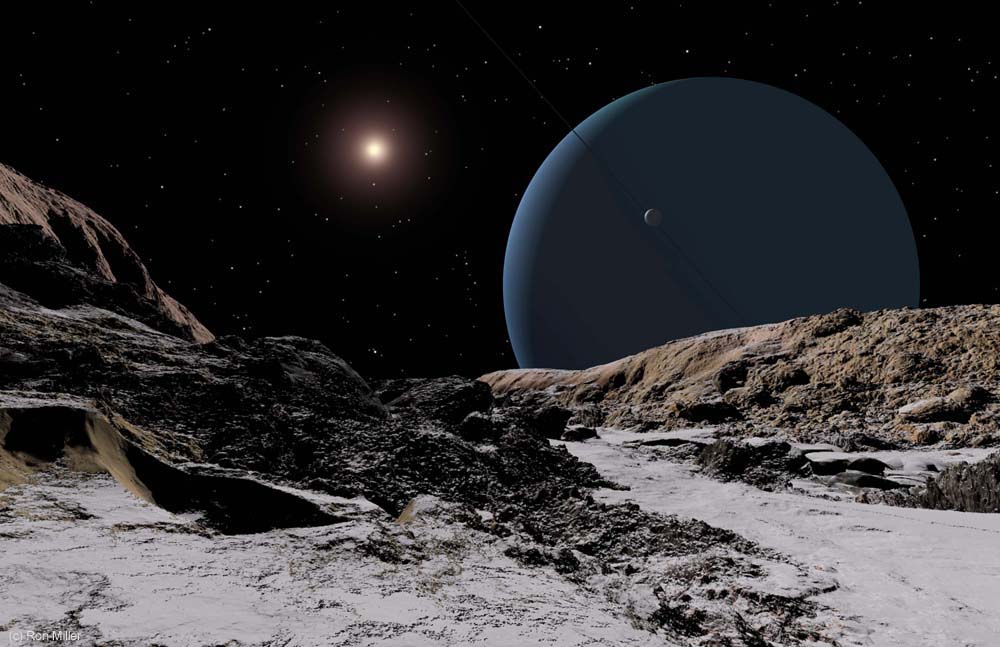
Uranus orbits almost three billion kilometers (1.8 billion miles) from the Sun.
At this distance, the Sun appears tiny—only a fraction of its apparent size in Earth’s sky.
Nevertheless, it still looks unmistakably like the Sun rather than an ordinary star. It shines with an intense brilliance that far exceeds every other object in the sky.
Because Uranus rotates on its side, some regions experience decades of continuous daylight followed by decades of darkness. During these extraordinarily long summers, the tiny Sun remains above the horizon for years without setting.
The Sun from Neptune
Neptune is the most distant major planet in our solar system, orbiting about 4.5 billion kilometers (2.8 billion miles) from the Sun.
From Neptune, the Sun appears surprisingly small. It occupies only about one-thirtieth of the width it appears from Earth.
Yet appearances can be deceptive.
Even from this immense distance, the Sun remains far brighter than any star in Neptune’s sky. It would still cast shadows, although daylight would resemble the brightness of twilight on Earth.
The sunlight reaching Neptune is only about one nine-hundredth as intense as the sunlight reaching Earth.
Even so, it is enough to illuminate Neptune’s blue atmosphere and drive weather systems that include some of the fastest winds in the solar system.
Why Does the Sun Look Smaller on Distant Planets?
The apparent size of any object depends on its distance.
Imagine holding a coin close to your face. It looks large. Move it across the room, and it appears much smaller, even though its actual size never changes.
The same principle applies to the Sun.
The farther a planet is from the Sun, the smaller the Sun appears in its sky. This change follows the basic geometry of perspective. The Sun itself remains about 1.39 million kilometers (864,000 miles) across, but increasing distance makes its apparent diameter shrink.
This is why Mercury sees an enormous Sun while Neptune sees only a tiny solar disk.
Why Is the Sun Still So Bright from Neptune?
It may seem surprising that the Sun can still be the brightest object in Neptune’s sky despite being so far away.
The reason lies in the Sun’s incredible power.
Every second, the Sun releases about 3.8 × 10²⁶ watts of energy. This enormous energy spreads outward in every direction through space.
Although the light becomes weaker with distance, the Sun begins so incredibly bright that even after traveling billions of kilometers, it still outshines every distant star by a tremendous margin.
Could the Sun Ever Look Like Just Another Star?
Within our solar system, the answer is no.
Even from Neptune, the Sun remains clearly visible as a small disk rather than a point of light. Human eyes—or spacecraft cameras—could easily distinguish it from surrounding stars.
Only after traveling far beyond the outer planets into interstellar space would the Sun gradually shrink until it eventually resembled an unusually bright star among countless others.
This is the perspective that future interstellar probes may one day experience.
How Atmospheres Change the View
Distance is not the only factor that determines how the Sun appears.
A planet’s atmosphere can dramatically alter its appearance.
Earth’s atmosphere scatters sunlight, creating blue skies and colorful sunsets.
Venus hides the Sun behind thick clouds.
Mars fills the sky with fine dust, producing unusual blue sunsets.
Mercury has almost no atmosphere, so the Sun shines against a black sky.
The giant planets possess deep, cloudy atmospheres that create entirely different lighting conditions from those found on rocky worlds.
Each planet offers its own unique view of the same star.
Could Humans Watch the Sun Safely from Other Planets?
No matter which planet you visit, looking directly at the Sun without proper protection would be dangerous.
The Sun emits intense visible light along with ultraviolet and infrared radiation that can permanently damage the eyes.
Even on distant planets like Neptune, the Sun is still bright enough to require caution.
Astronomers use specially designed solar filters to observe the Sun safely, whether from Earth or aboard spacecraft.
What Spacecraft Have Taught Us
Robotic explorers have provided humanity with remarkable views of the Sun from across the solar system.
Spacecraft orbiting Mercury have photographed the Sun as an enormous blazing disk.
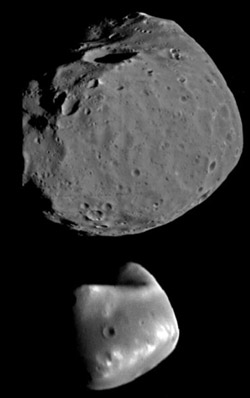
Orbiters around Mars have captured unusual sunsets and eclipses caused by the tiny moons Phobos and Deimos.
The Voyager spacecraft photographed the Sun from billions of kilometers away, revealing it as a brilliant point surrounded by the darkness of interstellar space.
These missions remind us that although the Sun’s appearance changes with distance, it remains the central beacon of our planetary neighborhood.
The Same Star, Countless Different Views
Every planet in the solar system shares the same Sun, yet no two worlds experience it in exactly the same way. On Mercury, it dominates the sky with overwhelming intensity. On Venus, it glows behind thick clouds. From Earth, it creates blue skies and breathtaking sunsets. On Mars, it paints the horizon with unusual colors. Around the giant planets, it shrinks into a brilliant but distant disk, while on Neptune it shines like a tiny jewel that still floods the icy world with enough light to cast shadows.
These changing views remind us that our perspective depends not only on where we stand but also on the environment around us. The Sun itself remains the same immense, powerful star, faithfully illuminating every planet that circles it.
Whether viewed from the blazing plains of Mercury or the frozen edge of Neptune, the Sun is always there—an unchanging source of light, energy, and life, binding the entire solar system together through gravity and its endless radiance.