The night sky has fascinated humanity since the dawn of civilization. Long before telescopes and spacecraft, people looked upward to understand the changing seasons, navigate across oceans, and tell stories about the stars. Among the most important regions of the sky that ancient astronomers carefully observed was a narrow band where the Sun, Moon, and planets appear to travel. This region is known as the zodiac.
Today, many people associate the zodiac with astrology and horoscopes. However, in astronomy, the zodiac has a very different meaning. It is not about predicting personalities or future events. Instead, it refers to a specific area of the sky that plays a central role in understanding the motions of the Solar System.
The astronomical zodiac is a real part of the celestial sphere, defined by the apparent path of the Sun and the movements of the planets. It has been studied for thousands of years and remains an essential concept in modern astronomy.
Understanding the Meaning of the Zodiac
In astronomy, the zodiac is the broad band of the sky centered on the ecliptic, which is the apparent path the Sun follows across the celestial sphere during the course of a year.
Although it looks as though the Sun moves around Earth, this apparent motion is actually caused by Earth’s orbit around the Sun. As Earth travels through space, the Sun appears to shift gradually against the background stars.
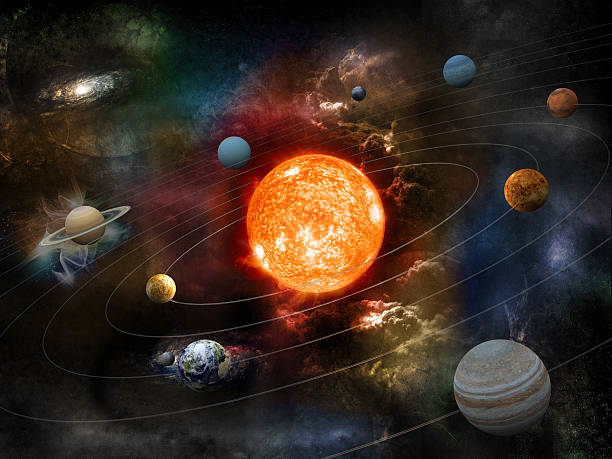
Because the planets orbit the Sun in nearly the same flat plane as Earth, they also appear to move close to this same path. The Moon’s orbit is slightly tilted, but it too remains close to the ecliptic most of the time.
As a result, nearly all the familiar objects of the Solar System—the Sun, Moon, and planets—can be found within the zodiac.
Where Is the Zodiac in the Sky?
Imagine a giant invisible circle stretching across the sky. This circle marks the ecliptic, the Sun’s apparent yearly path.
The zodiac is not just a thin line but a broad belt surrounding the ecliptic. This belt extends several degrees north and south of the Sun’s path, providing enough space to include the apparent motions of the Moon and the planets.
If you watch the sky over many months, you will notice that the Sun slowly moves through different constellations along this path. The planets also wander through this same region, sometimes moving eastward against the background stars and occasionally appearing to move backward in a phenomenon known as retrograde motion.
Because all the major planets stay close to the ecliptic, astronomers often search for them within the zodiac.
Why Is It Called the Zodiac?
The word zodiac comes from the ancient Greek word zōidiakòs kýklos, meaning “circle of little animals.”
Many of the constellations along the ecliptic were named after animals, such as Aries the Ram, Taurus the Bull, Leo the Lion, Scorpio the Scorpion, and Pisces the Fish. Although not every zodiac constellation represents an animal, the name eventually became associated with the entire celestial belt.
The origins of these constellations go back even further, to ancient Babylonian astronomers who divided the sky into recognizable patterns more than 2,500 years ago.
The Zodiac Constellations
As the Sun appears to travel around the sky during the year, it passes through a series of constellations.
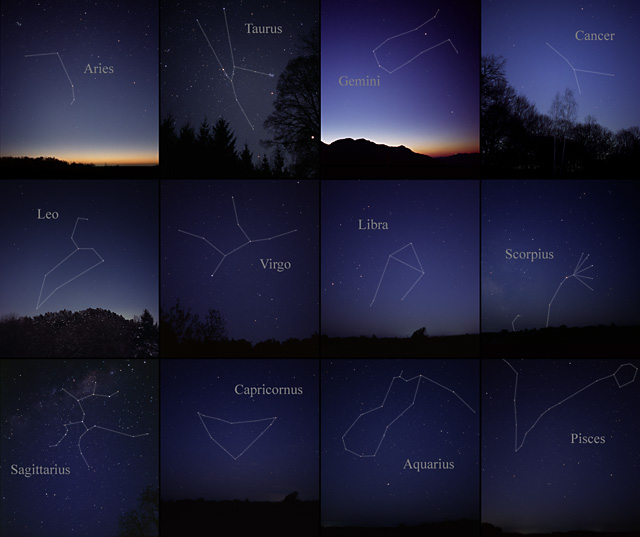
Traditionally, there are twelve zodiac constellations. These constellations form the basis of both ancient astronomy and the zodiac signs used in astrology.
The twelve traditional zodiac constellations are Aries, Taurus, Gemini, Cancer, Leo, Virgo, Libra, Scorpius, Sagittarius, Capricornus, Aquarius, and Pisces.
Each constellation occupies a different amount of space in the sky. They are not equal in size, and the Sun spends different amounts of time passing through each one.
This is an important scientific fact that differs from the simplified divisions used in astrology.
There Are Actually Thirteen Zodiac Constellations
One of the most surprising facts in astronomy is that the Sun actually passes through thirteen constellations, not twelve.
Between Scorpius and Sagittarius lies the constellation Ophiuchus, often called the Serpent Bearer.
The Sun moves through Ophiuchus every year, usually between late November and mid-December.
Astronomers have recognized Ophiuchus as one of the official constellations for many decades. However, it is generally not included in traditional astrological zodiac systems because those systems were established long before modern constellation boundaries were officially defined.
This difference highlights the distinction between astronomy and astrology.
The Ecliptic: The Heart of the Zodiac
The ecliptic is the most important feature of the zodiac.
It represents the projection of Earth’s orbital plane onto the celestial sphere.
Since Earth circles the Sun once every year, the Sun appears to move along this path at a steady rate, completing one full circuit annually.
The ecliptic also serves as the reference plane for much of modern astronomy. Astronomers use it to describe the positions and motions of planets, asteroids, and many other Solar System objects.
Without understanding the ecliptic, it would be difficult to explain why the planets remain concentrated in one region of the sky.
Why Do the Planets Stay in the Zodiac?
The planets formed billions of years ago from a giant rotating disk of gas and dust surrounding the young Sun.
Because they formed within this flattened disk, the planets continue to orbit in nearly the same plane today.
As viewed from Earth, these nearly aligned orbits cause the planets to remain close to the ecliptic.
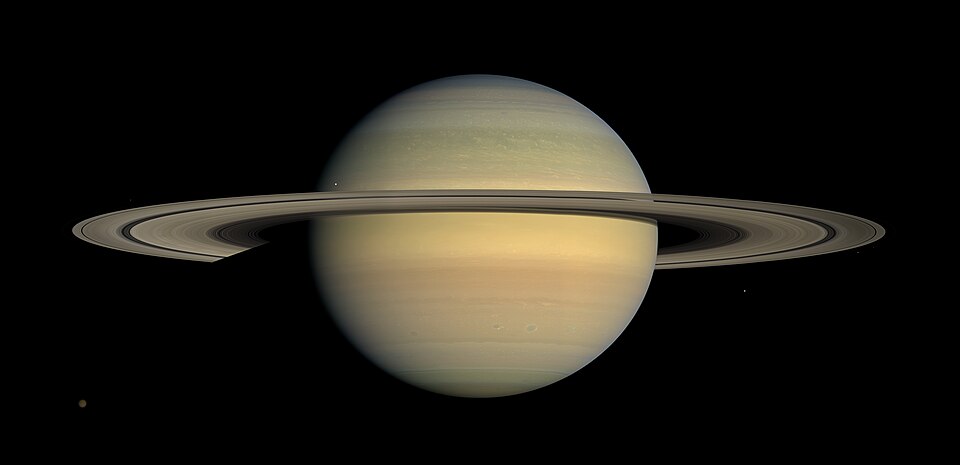
Mercury, Venus, Mars, Jupiter, and Saturn all stay within the zodiac.
Even Uranus and Neptune, despite their great distances from the Sun, also appear within this same broad band.
This shared orbital plane is one of the reasons the zodiac exists.
The Moon and the Zodiac
The Moon also travels through the zodiac.
Unlike the Sun, which takes about one year to complete its journey around the ecliptic, the Moon completes its orbit in about 27.3 days relative to the stars.
This means the Moon moves rapidly through the zodiac constellations, visiting each one in only a few days.
Its orbit is tilted by about five degrees relative to the ecliptic, which is why solar and lunar eclipses do not occur every month.
Eclipses happen only when the Moon crosses the ecliptic at the right time during its orbit.
How Ancient Civilizations Used the Zodiac
Thousands of years ago, people carefully observed the zodiac because it helped them measure time.
Ancient civilizations in Mesopotamia, Egypt, Greece, India, China, and many other parts of the world noticed that the Sun returned to the same background stars each year.
These repeating patterns allowed them to create calendars, predict seasonal changes, and determine the best times for planting and harvesting crops.
The zodiac also helped sailors navigate before modern instruments existed.
Although different cultures developed their own interpretations of the constellations, the underlying astronomical observations were remarkably accurate.
Zodiac Constellations Are Real Star Patterns
The zodiac constellations are genuine groups of stars recognized by astronomers.
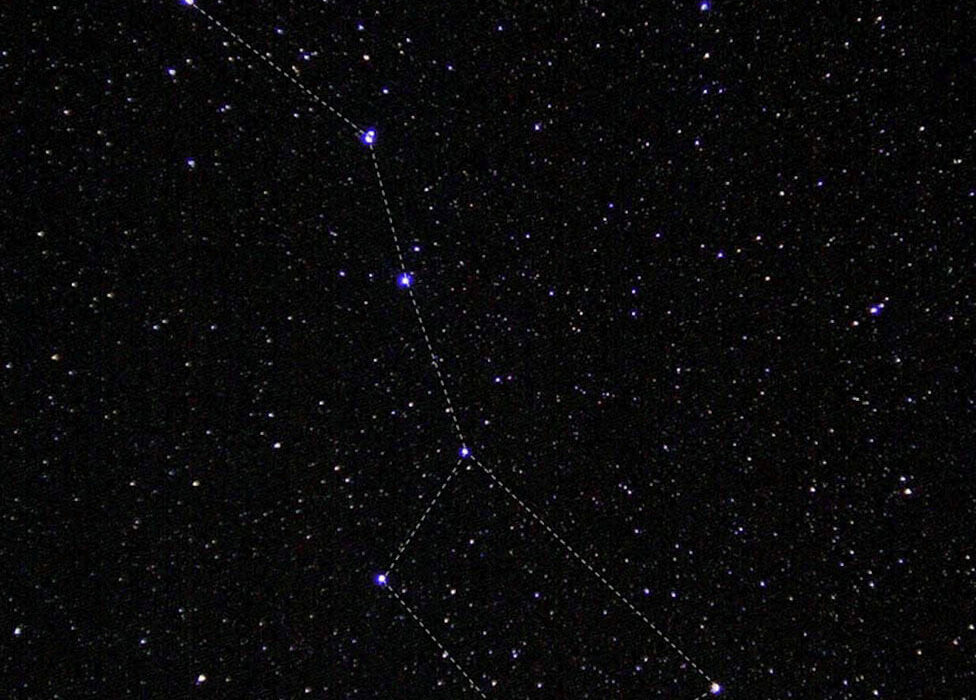
However, the stars within each constellation are usually not physically close to one another.
Instead, they simply appear near each other from Earth’s perspective.
Some stars within a single constellation may be only a few dozen light-years away, while others are hundreds or even thousands of light-years distant.
The familiar patterns exist because of our viewing angle, not because the stars form actual physical groups in space.
Astronomy and Astrology Are Not the Same
One of the most common misunderstandings about the zodiac is the confusion between astronomy and astrology.
Astronomy is a natural science based on observation, measurement, mathematics, experimentation, and evidence.
Astrology is a belief system that suggests the positions of celestial objects influence human personalities or future events.
Modern scientific research has found no reliable evidence that zodiac signs or planetary positions determine personality traits or predict life outcomes.
Astronomers study the zodiac because it describes the actual motions of celestial objects across the sky, not because it predicts human behavior.
Understanding this distinction is important for appreciating the scientific meaning of the zodiac.
Why Zodiac Signs No Longer Match the Constellations
Many people are surprised to learn that the zodiac signs commonly used today no longer line up perfectly with the actual constellations.
The main reason is a phenomenon called the precession of Earth’s axis.
Earth does not spin perfectly upright. Instead, its axis slowly wobbles like a spinning top.
This wobble causes the positions of the equinoxes to shift gradually over time.
The complete cycle takes about 26,000 years.
Because of this slow movement, the Sun’s position relative to the background constellations has changed significantly since the zodiac system was first established more than two thousand years ago.
As a result, the Sun is often located in a different astronomical constellation than the traditional zodiac sign associated with a person’s birth date.
The International Astronomical Union and Official Constellations
In 1930, the International Astronomical Union (IAU) officially defined the boundaries of all 88 constellations that cover the entire sky.
These boundaries are precise and leave no gaps between constellations.
The zodiac constellations are part of this official system.
Because of these standardized boundaries, astronomers can accurately determine exactly which constellation contains the Sun, Moon, or a planet on any given date.
This modern system provides consistency for astronomical observations around the world.
The Zodiac and Eclipses
The zodiac is closely connected with eclipses.
Solar eclipses occur when the Moon passes directly between Earth and the Sun.
Lunar eclipses happen when Earth moves between the Sun and the Moon.
Since the Moon’s orbit crosses the ecliptic at only two points, eclipses can occur only when the Sun is near one of these crossing points, known as the lunar nodes.
Because these nodes lie within the zodiac, eclipse predictions are fundamentally tied to the geometry of the zodiacal band.
Zodiacal Light: A Beautiful Sky Phenomenon
The zodiac gives its name to another fascinating astronomical phenomenon called zodiacal light.
Under very dark skies, observers may see a faint triangular glow extending upward from the horizon before sunrise or after sunset.
This glow is not produced by stars.
Instead, it is sunlight reflecting from countless tiny dust particles scattered throughout the inner Solar System.
These dust particles orbit the Sun mainly within the same plane as the planets, making the glow appear along the zodiac.
Zodiacal light is one of the most delicate and beautiful sights visible in the night sky.
Why the Zodiac Is Important in Modern Astronomy
Although astronomy has advanced far beyond the methods of ancient skywatchers, the zodiac remains extremely useful.
Astronomers use it to describe planetary positions.
Space missions calculate spacecraft trajectories relative to the ecliptic.
Planetarium software maps the locations of celestial objects within the zodiac.
Skywatchers know where to search for planets because they remain near this celestial pathway.
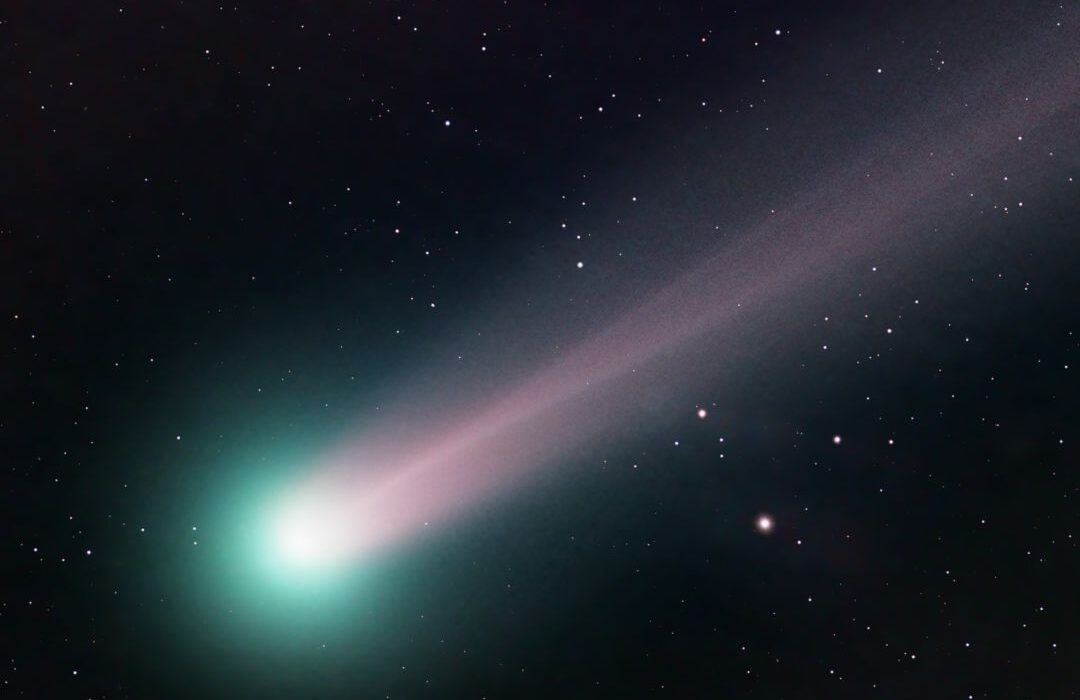
The zodiac also helps scientists study asteroids, comets, meteoroid streams, and interplanetary dust distributed throughout the Solar System.
It continues to serve as one of the most practical reference systems in observational astronomy.
Observing the Zodiac Yourself
You do not need an expensive telescope to appreciate the zodiac.
Simply watching the sky over several months reveals its presence.
The Sun cannot be observed directly without proper solar equipment, but its changing position among the background stars becomes evident through seasonal constellations.
The Moon visibly travels through different zodiac constellations from week to week.
Bright planets such as Venus, Mars, Jupiter, and Saturn are often easy to spot because they remain close to the zodiac.
With a simple star map or astronomy app, anyone can follow their journeys across the sky and witness the dynamic motions of our Solar System.
The Zodiac Connects Earth to the Cosmos
The zodiac reminds us that Earth is not isolated in space. Our planet is one member of a vast Solar System moving around the Sun. Every year, as Earth completes its orbit, the Sun appears to journey through a familiar path among the stars—a celestial highway shared by the Moon and the planets.
This recurring motion links our everyday experience with the grand mechanics of the cosmos. It reflects the orderly movements that have shaped calendars, guided explorers, inspired cultures, and deepened humanity’s understanding of the universe.
Conclusion
In astronomy, the zodiac is the broad band of the sky surrounding the ecliptic, where the Sun, Moon, and planets appear to travel because of the geometry of the Solar System. It is defined by real constellations and governed by the laws of celestial mechanics, not by predictions about human lives. The zodiac has helped civilizations measure time, navigate the world, and explore the heavens for thousands of years.
Far from being merely a collection of familiar names, the zodiac is a window into the structure and motion of our cosmic neighborhood. By understanding its true astronomical meaning, we gain a deeper appreciation of the elegant rhythms that govern the sky above us and the remarkable universe we call home.