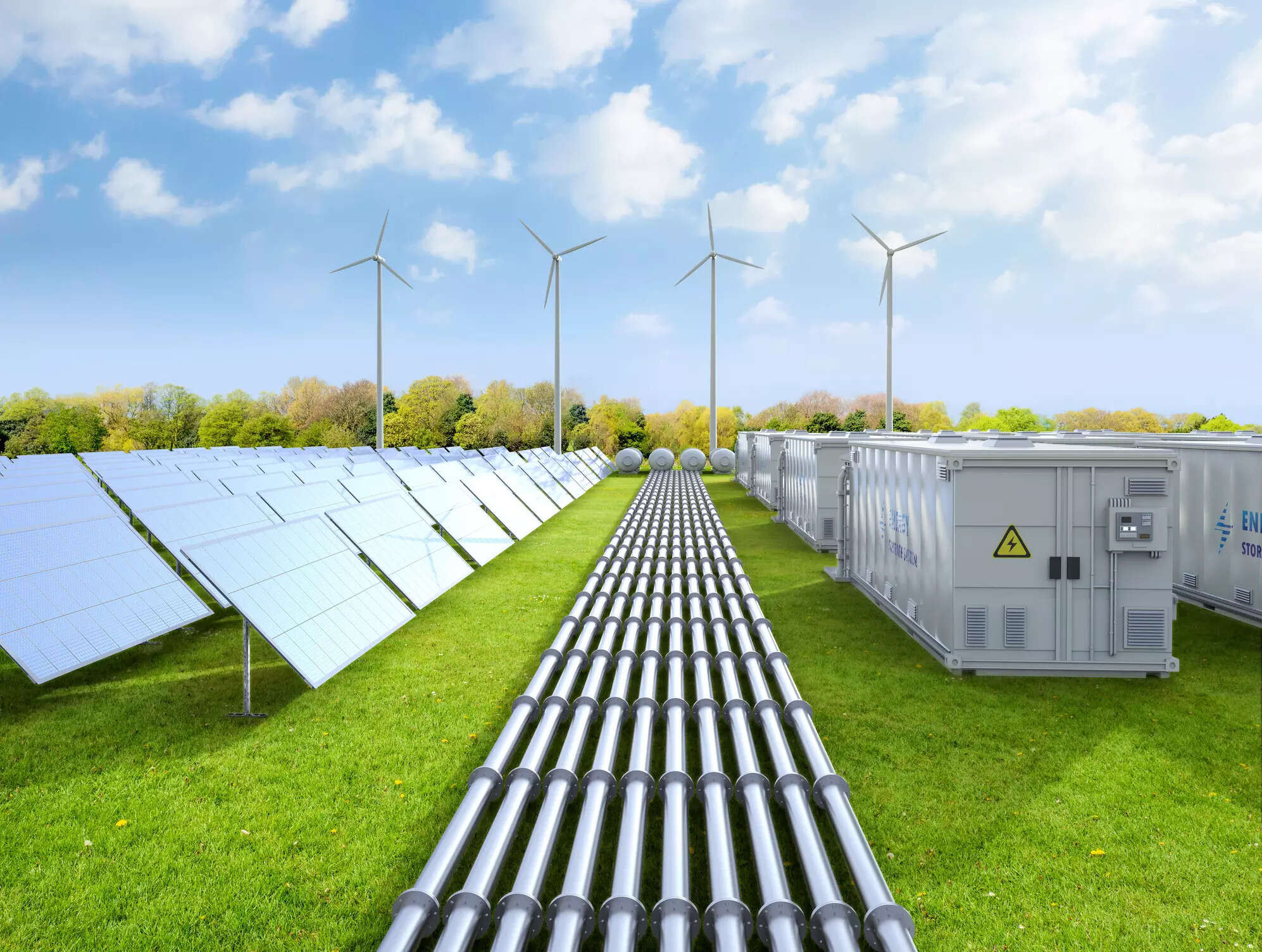
Renewable energy has become one of humanity’s greatest hopes for building a cleaner, healthier, and more sustainable future. Around the world, solar panels are capturing sunlight, wind turbines are turning with the breeze, and hydroelectric dams continue generating electricity from flowing water. These technologies are helping reduce dependence on fossil fuels and lowering greenhouse gas emissions that contribute to climate change.
Yet one important challenge remains. The sun does not always shine, and the wind does not always blow. Solar panels generate little or no electricity at night, while wind turbines can remain still on calm days. People, however, need electricity every hour of every day. Homes must stay lit after sunset, hospitals cannot lose power during storms, and factories need a reliable supply of energy to keep operating.
This is where renewable energy storage becomes essential. Energy storage acts like a giant rechargeable reservoir, collecting electricity when renewable energy production is high and releasing it when demand increases or renewable generation decreases. Without effective storage, the full potential of renewable energy cannot be realized.
As science and engineering continue to advance, the future of renewable energy storage is becoming one of the most exciting areas of modern technology. New discoveries are making storage systems more efficient, more affordable, safer, and capable of supporting a world increasingly powered by clean energy.
Why Energy Storage Matters
Electricity is unique because it must usually be used almost immediately after it is generated. Traditional power plants powered by coal, natural gas, or nuclear energy can adjust their output to meet changing demand. Renewable energy sources, however, depend on natural conditions that cannot be controlled.
Imagine a sunny afternoon when solar panels produce far more electricity than nearby homes need. Without storage, much of that valuable clean energy may go unused. Later that evening, when people return home, switch on lights, cook dinner, and charge electric vehicles, solar generation has already stopped.
Energy storage solves this mismatch. It captures excess electricity during periods of high production and delivers it back to the electrical grid whenever it is needed. This makes renewable energy far more dependable and allows clean electricity to be available even when weather conditions change.
As countries increase their use of renewable energy, storage systems become increasingly important for maintaining stable and reliable electricity supplies.
Understanding How Energy Storage Works
At its simplest, energy storage involves saving energy for future use. Although this idea sounds straightforward, scientists have developed many different ways to accomplish it.
Some storage systems rely on chemical reactions inside batteries. Others store energy by pumping water uphill, compressing air into underground chambers, spinning massive flywheels, or producing hydrogen fuel.
Each method converts electrical energy into another form that can later be converted back into electricity. The goal is always the same: reduce waste, improve reliability, and provide clean power whenever people need it.
The future will likely include many different storage technologies working together rather than relying on a single solution.
Lithium-Ion Batteries: Today’s Leading Technology
When most people think about energy storage, they think of batteries. Lithium-ion batteries have become the most widely used technology for storing renewable electricity.
These batteries power smartphones, laptops, electric vehicles, and increasingly, entire neighborhoods connected to renewable energy systems.
Lithium-ion batteries work by moving lithium ions between two electrodes through a chemical process that can be reversed many thousands of times. When electricity is available, the battery charges. When electricity is needed, the battery discharges stored energy.
Over the past two decades, lithium-ion technology has improved dramatically. Batteries have become smaller, lighter, more energy-dense, and less expensive. These improvements have made renewable energy projects more practical and economically competitive.
However, lithium-ion batteries also have limitations. Their materials can be expensive, they gradually lose capacity over many charging cycles, and mining some battery materials can create environmental and social challenges. Scientists continue working to improve battery chemistry while reducing dependence on scarce resources.
Beyond Lithium: The Next Generation of Batteries
The future of renewable energy storage will almost certainly involve new battery technologies that go beyond lithium-ion.
Researchers are exploring sodium-ion batteries, which use sodium instead of lithium. Sodium is one of the most abundant elements on Earth and is widely available in seawater and mineral deposits. Although sodium-ion batteries currently store somewhat less energy than lithium-ion batteries, they could become an affordable option for large-scale energy storage.
Solid-state batteries are another promising innovation. Unlike conventional batteries that contain liquid electrolytes, solid-state batteries use solid materials to transport ions. This design may improve safety by reducing the risk of leaks or fires while also increasing energy density and battery lifespan.
Scientists are also studying lithium-sulfur batteries, metal-air batteries, and other advanced chemistries that could significantly increase energy storage capacity while lowering manufacturing costs.
Although many of these technologies are still being refined, they have the potential to transform renewable energy storage over the coming decades.
Flow Batteries for Large-Scale Storage
Not all batteries are designed for portable electronics or electric vehicles. Some are specifically built to store electricity for entire communities or electrical grids.
Flow batteries are one example.
Unlike traditional batteries that store energy inside solid electrodes, flow batteries store energy in liquid electrolytes contained in external tanks. These liquids circulate through a central electrochemical cell where electricity is stored or released.
One major advantage of flow batteries is their ability to operate for many years with relatively little degradation. Their storage capacity can also be increased simply by enlarging the storage tanks.
Because of these characteristics, flow batteries are attracting attention for supporting renewable energy on a much larger scale.
Pumped Hydroelectric Storage
Long before modern batteries became common, engineers developed one of the world’s most effective energy storage systems: pumped hydroelectric storage.
This method uses two reservoirs located at different elevations.
When renewable electricity is abundant, pumps move water from the lower reservoir to the upper reservoir. Later, when electricity demand rises, water flows back downhill through turbines, generating electricity.
Pumped hydro systems can store enormous amounts of energy for extended periods. They remain the largest form of grid-scale electricity storage worldwide.
Although building new facilities requires suitable geography and significant infrastructure, pumped hydro will likely continue playing an important role in renewable energy systems for decades.
Hydrogen as an Energy Storage Solution
Hydrogen is gaining increasing attention as a potential storage medium for renewable energy.
When renewable electricity is plentiful, it can power a device called an electrolyzer, which splits water into hydrogen and oxygen through electrolysis.
The hydrogen can then be stored in tanks, underground caverns, or pipelines.
Later, it can be converted back into electricity using fuel cells or burned in specialized power plants under carefully controlled conditions.
Hydrogen offers an important advantage over batteries. It can store energy for weeks, months, or even seasons, making it especially valuable for balancing long-term fluctuations in renewable energy production.
Scientists continue working to improve electrolyzer efficiency, reduce production costs, and expand hydrogen infrastructure.
Thermal Energy Storage
Sometimes electricity does not need to be stored as electricity.
Instead, renewable energy can be stored as heat.
Thermal energy storage systems collect excess heat using materials such as molten salts, water, rocks, or specially designed phase-change materials.
Concentrated solar power plants already use molten salt systems to store heat collected during sunny hours. The stored heat can later produce steam that drives turbines even after sunset.
Future buildings may also incorporate advanced thermal storage systems that reduce electricity demand by storing heating or cooling energy for later use.
Gravity-Based Energy Storage
One of the most creative ideas emerging in renewable energy storage involves gravity.
Just as pumped hydro stores energy by raising water, gravity storage systems lift heavy blocks or other massive objects when renewable electricity is available.
When electricity is needed, these objects slowly descend, driving generators that produce power.
Although still under development, gravity storage technologies aim to provide long-lasting storage with relatively low environmental impact and long operational lifetimes.
Compressed Air Energy Storage
Another innovative approach stores energy by compressing air.
During periods of excess renewable electricity, powerful compressors force air into underground caverns or specially designed storage tanks.
When electricity demand increases, the compressed air is released through turbines that generate electricity.
Modern versions of compressed air energy storage seek to improve efficiency by capturing and reusing heat generated during compression.
These systems could provide reliable large-scale storage while complementing batteries and other technologies.
Artificial Intelligence and Smart Energy Storage
The future of energy storage will not depend solely on better hardware. Intelligent software will also play an increasingly important role.
Artificial intelligence can analyze weather forecasts, electricity demand, renewable energy production, and battery performance in real time.
Using these data, AI systems can determine the optimal times to charge and discharge storage systems, improving efficiency and extending battery life.
Smart grids connected to advanced storage systems will allow electricity to flow more efficiently across entire regions, reducing waste and improving reliability.
Recycling Batteries for a Sustainable Future
As battery use expands worldwide, recycling becomes increasingly important.
Many battery materials, including lithium, cobalt, nickel, and copper, can potentially be recovered and reused.
Advanced recycling technologies are improving rapidly, allowing valuable materials to re-enter manufacturing rather than being discarded.
A strong recycling industry can reduce mining requirements, lower environmental impacts, strengthen supply chains, and make renewable energy storage more sustainable over the long term.
Researchers are also designing batteries that are easier to recycle from the beginning, creating a more circular economy.
Renewable Energy Storage and Electric Vehicles
Electric vehicles and renewable energy storage are becoming closely connected.
Many electric vehicles contain large battery packs that remain unused while parked for much of the day.
Future technologies may allow these batteries to temporarily supply electricity back to homes or the electrical grid when needed, before being recharged later.
This concept, often called vehicle-to-grid technology, could transform millions of electric vehicles into distributed energy storage resources.
If widely adopted, it could increase grid flexibility while supporting greater use of renewable energy.
The Role of Renewable Energy Storage in Climate Change
Reducing greenhouse gas emissions requires replacing fossil fuels with cleaner energy sources.
Renewable energy storage makes this transition possible by overcoming the natural variability of solar and wind power.
Reliable storage allows electrical grids to operate with much higher percentages of renewable electricity while maintaining stability.
As storage technologies improve, countries can reduce reliance on coal- and gas-fired power plants that are often used to balance fluctuations in renewable generation.
This transition can significantly reduce carbon dioxide emissions while improving air quality and public health.
Challenges That Still Need to Be Solved
Despite remarkable progress, renewable energy storage still faces important scientific, engineering, and economic challenges.
Many storage technologies remain expensive for widespread deployment. Researchers continue working to lower manufacturing costs while increasing efficiency and extending operational lifetimes.
Access to certain battery materials may become constrained as global demand grows. Scientists are therefore searching for more abundant alternatives and improving recycling methods.
Large-scale storage projects also require careful planning, supportive infrastructure, updated electrical grids, and policies that encourage investment in clean technologies.
Addressing these challenges will require collaboration among scientists, engineers, governments, industries, and communities around the world.
Global Research Is Accelerating
Research into renewable energy storage is advancing faster than ever before.
Universities, national laboratories, technology companies, and energy providers are testing new battery chemistries, exploring advanced materials, improving manufacturing techniques, and developing smarter energy management systems.
Every year brings new discoveries that improve storage capacity, charging speed, safety, durability, and affordability.
Many technologies that once existed only in research laboratories are now entering commercial use, demonstrating how rapidly this field continues to evolve.
A Future Powered by Clean Energy
Imagine a future where homes generate electricity from rooftop solar panels during the day and store enough energy to remain powered throughout the night. Imagine cities where wind farms continue supplying clean electricity even after the wind slows because advanced storage systems seamlessly fill the gap. Picture hospitals, schools, and emergency services operating reliably during natural disasters thanks to resilient energy storage networks.
This future is becoming increasingly achievable.
Renewable energy storage is transforming from a supporting technology into one of the central pillars of modern energy systems. It allows clean electricity to become available whenever it is needed, making renewable energy more practical, dependable, and accessible.
As battery technologies improve, hydrogen production expands, smart grids become more intelligent, and innovative storage methods mature, renewable energy will continue replacing fossil fuels across the world. The transition will not happen overnight, but each scientific breakthrough brings society closer to a cleaner, more resilient, and more sustainable energy future.
Ultimately, the future of renewable energy storage is about much more than storing electricity. It is about creating an energy system that is reliable, affordable, environmentally responsible, and capable of supporting billions of people while protecting the planet for generations to come. Every improvement in energy storage strengthens the foundation of a future where clean energy is available not only when nature provides it, but whenever humanity needs it.